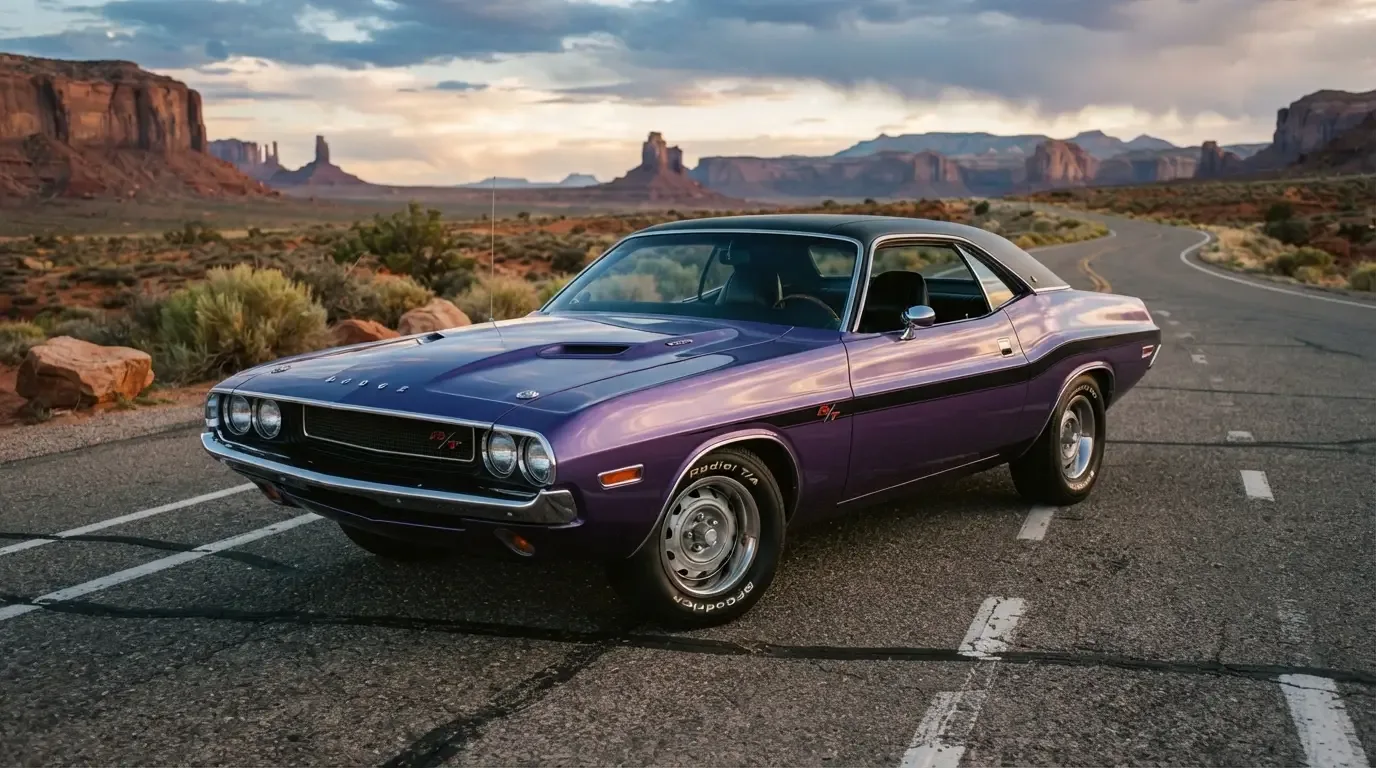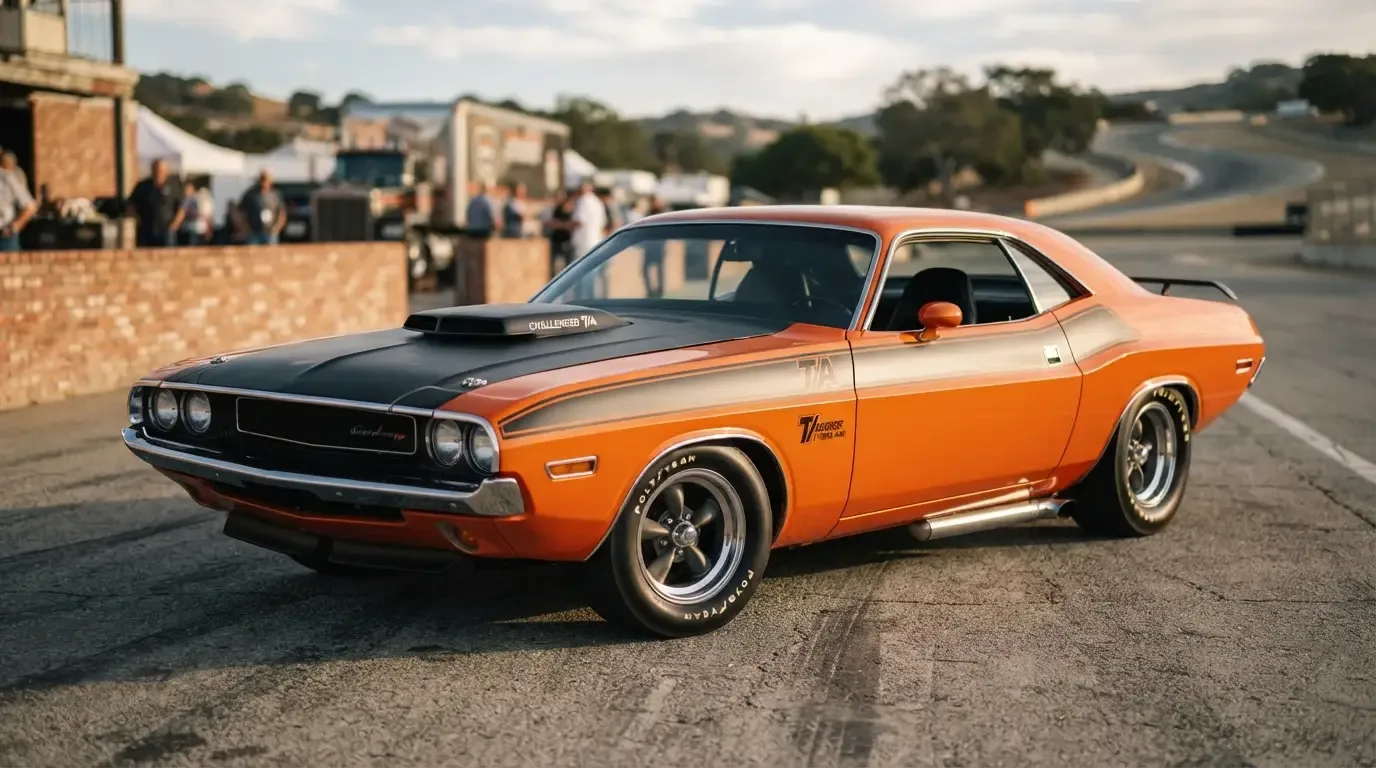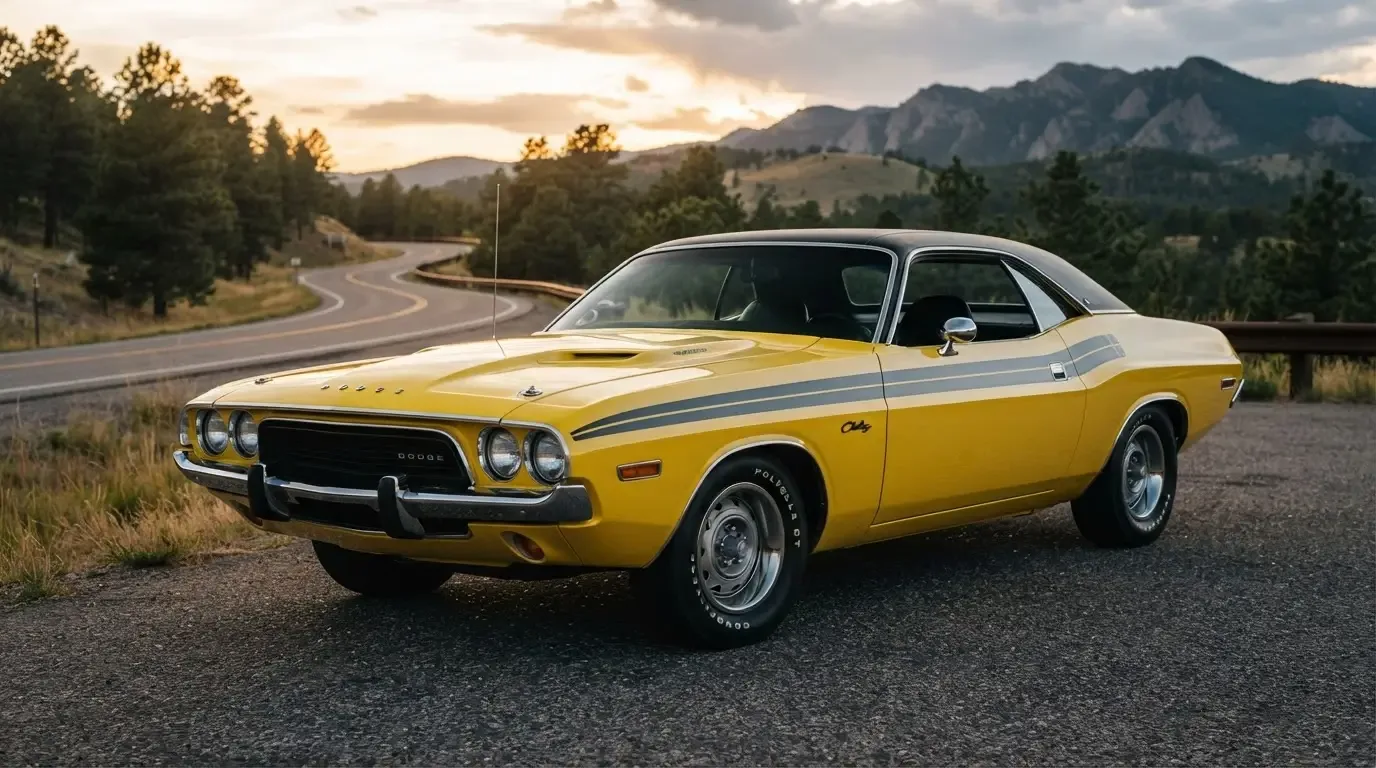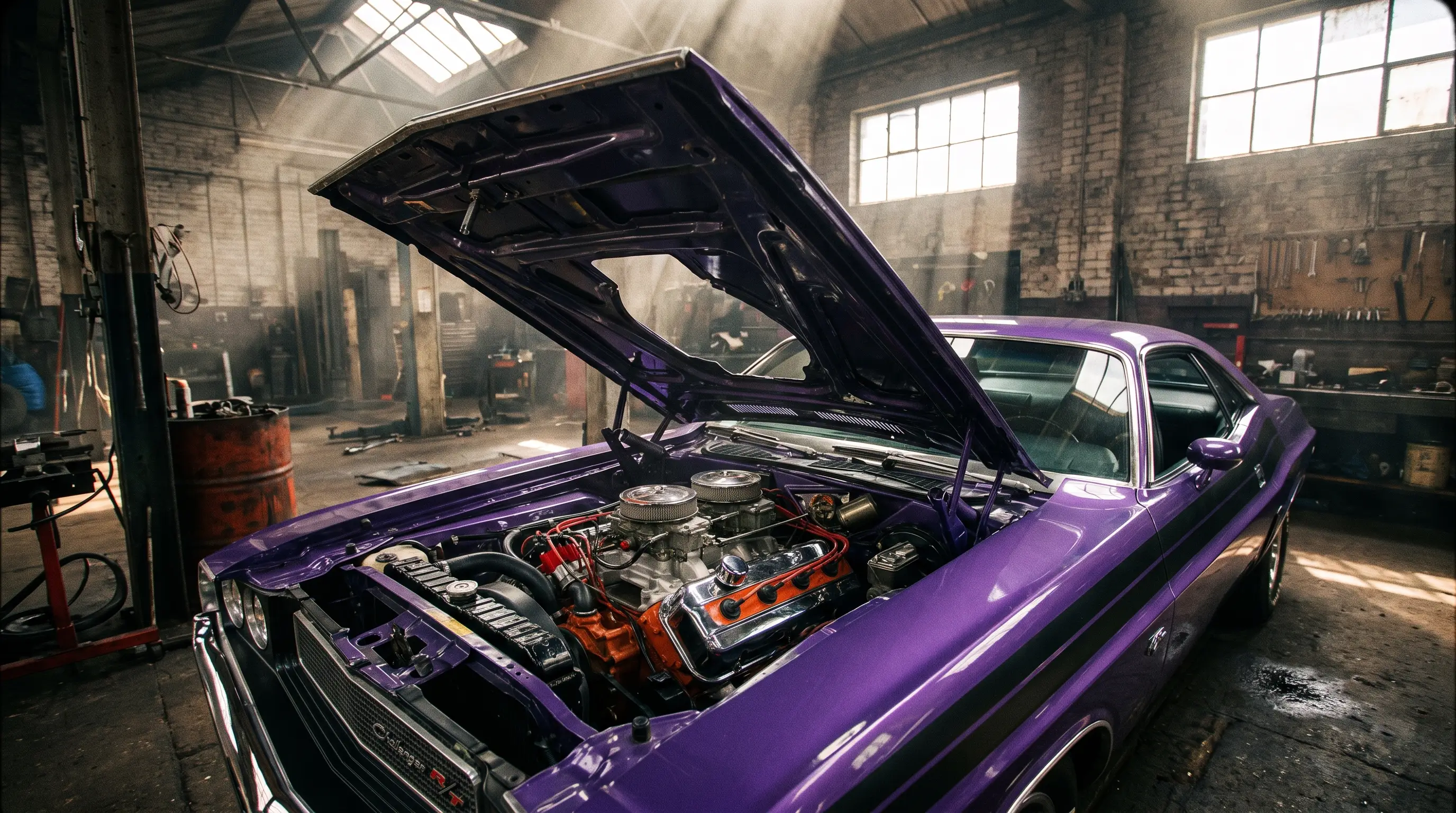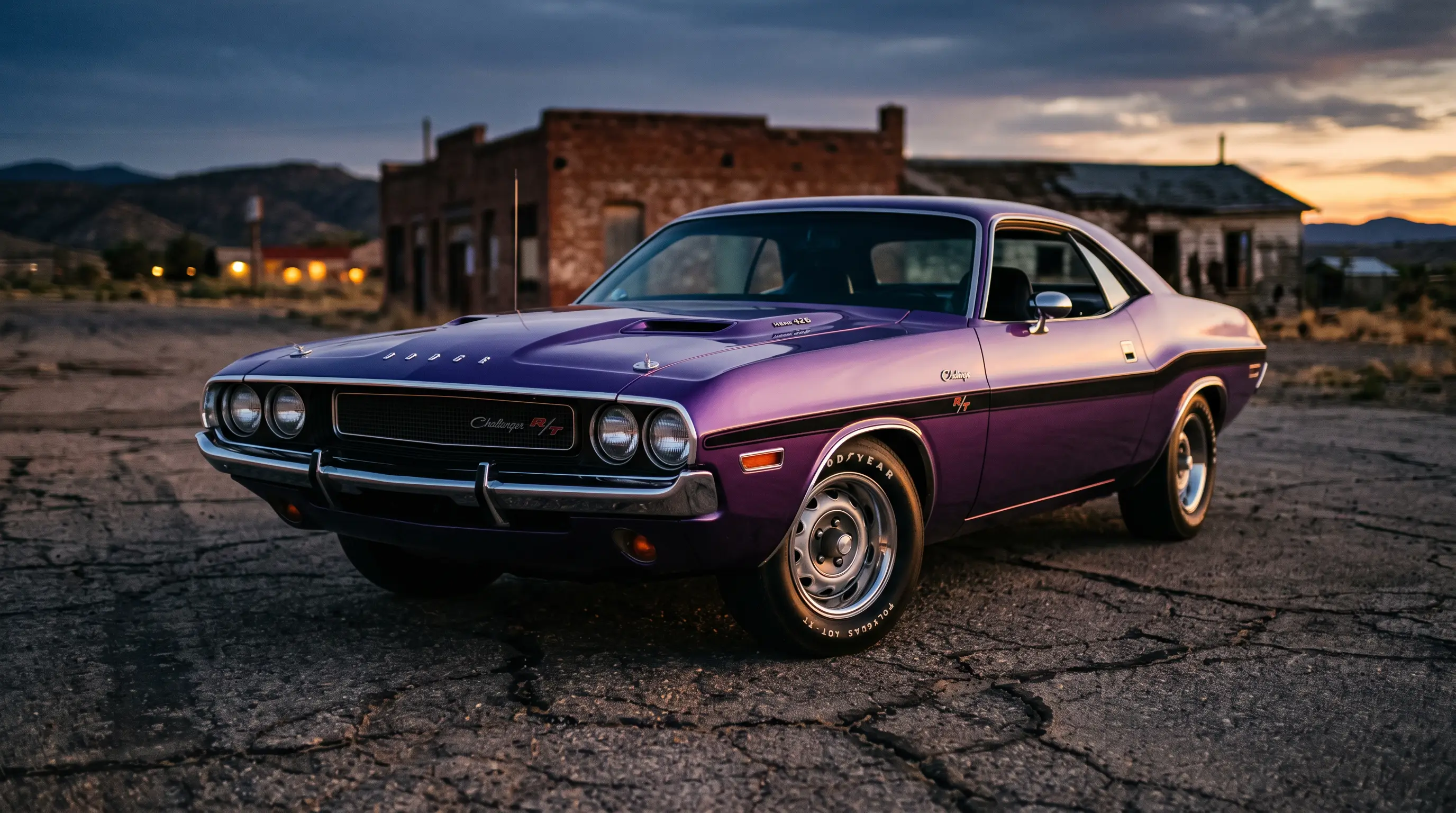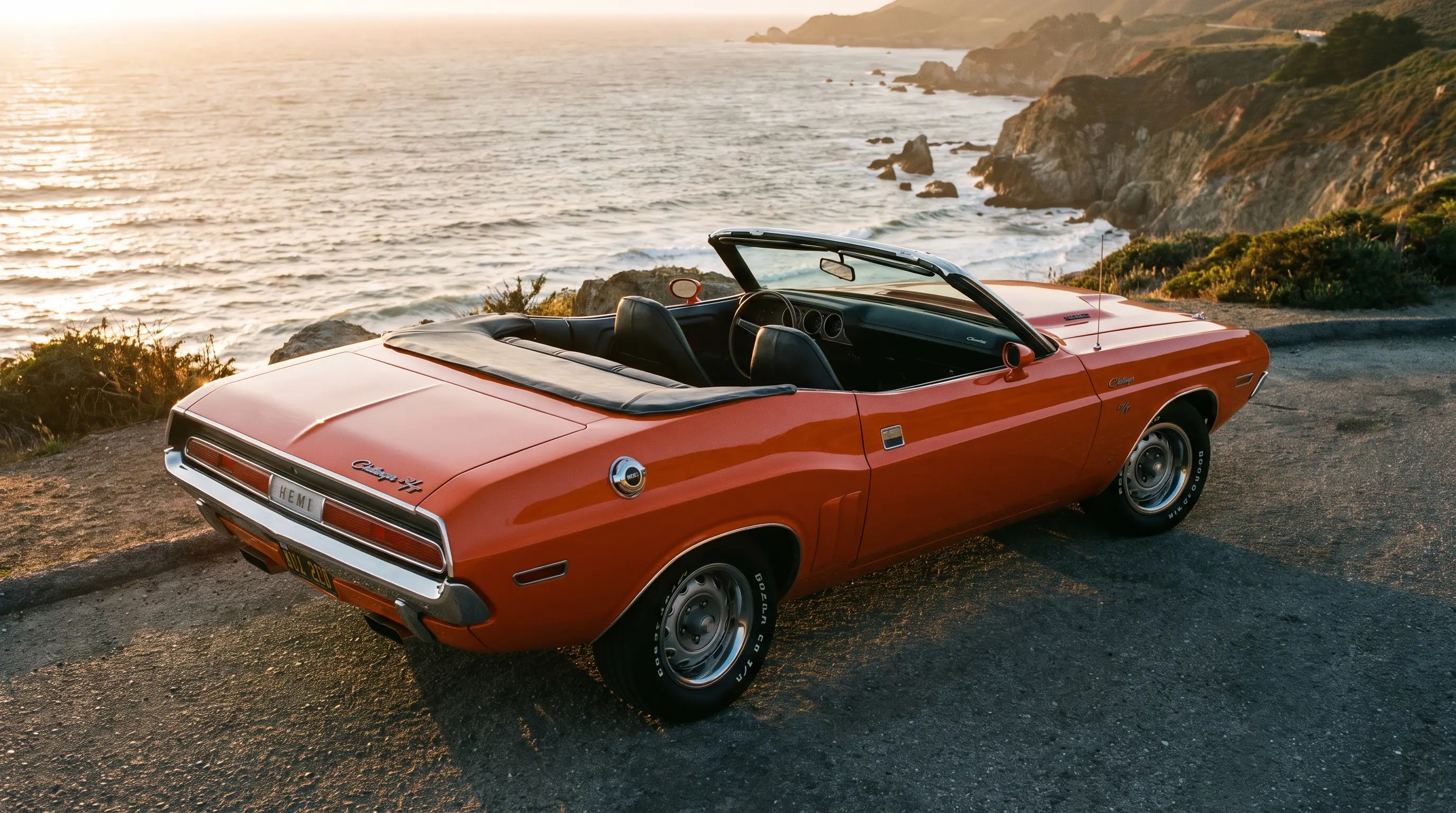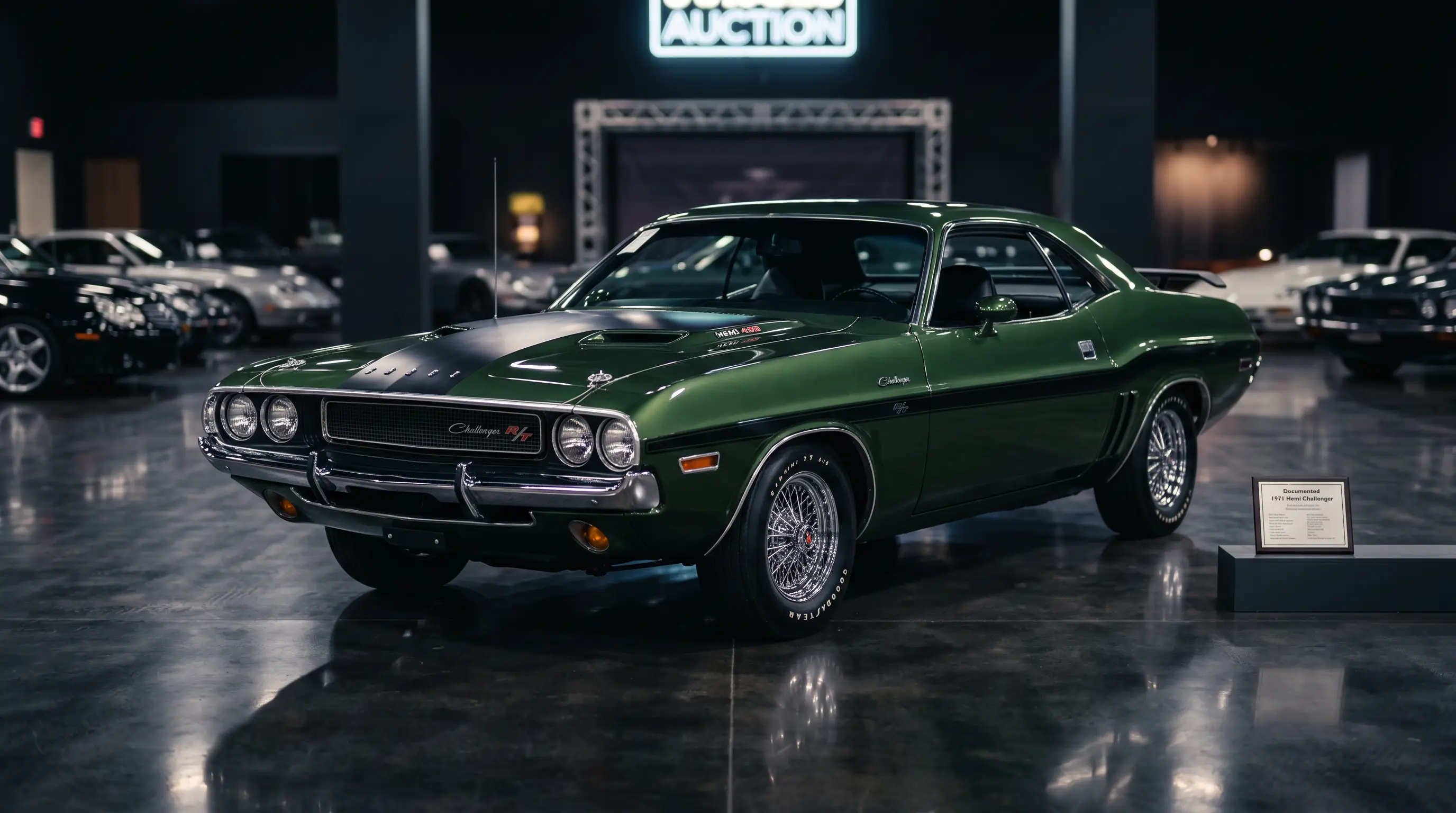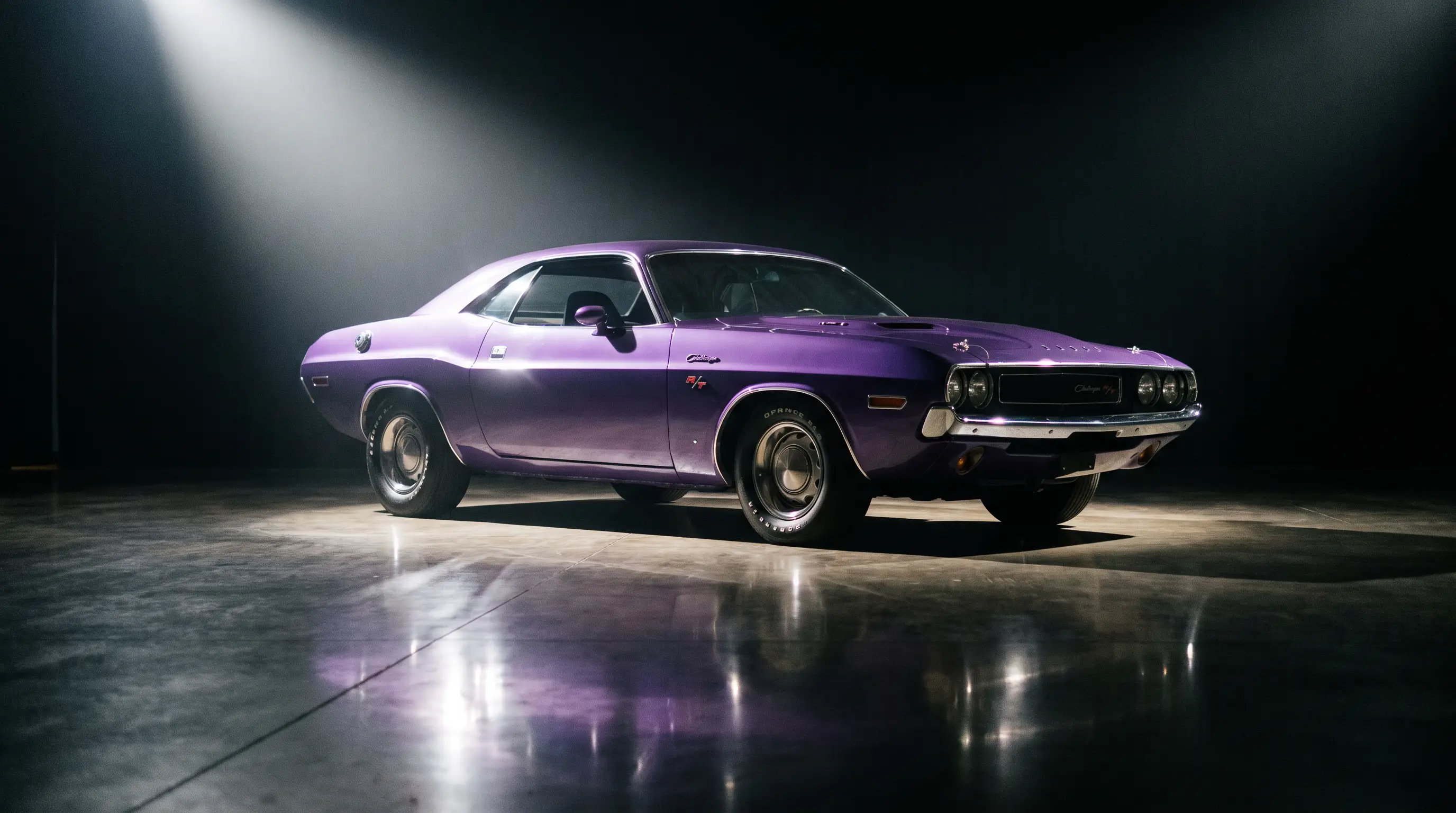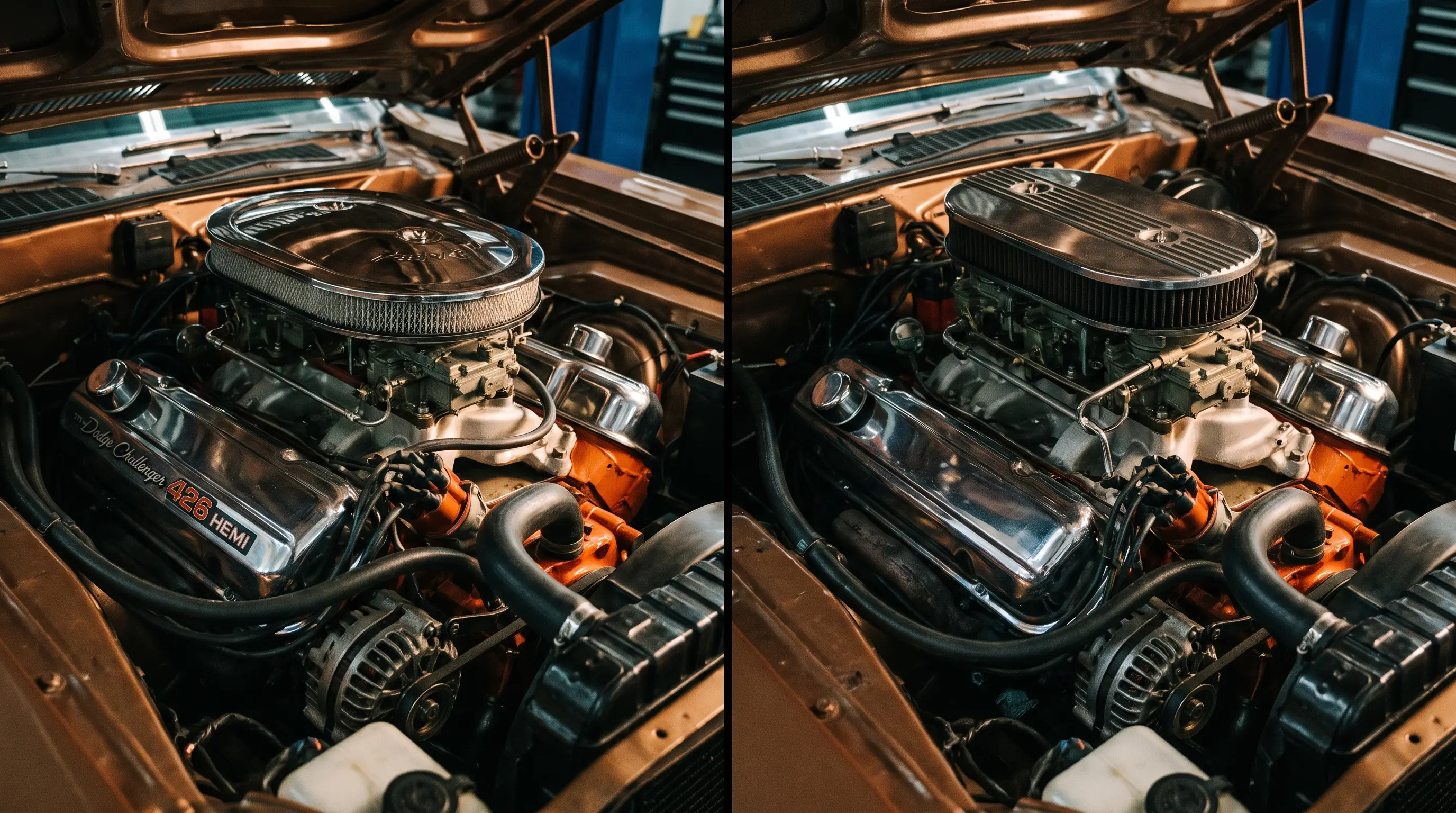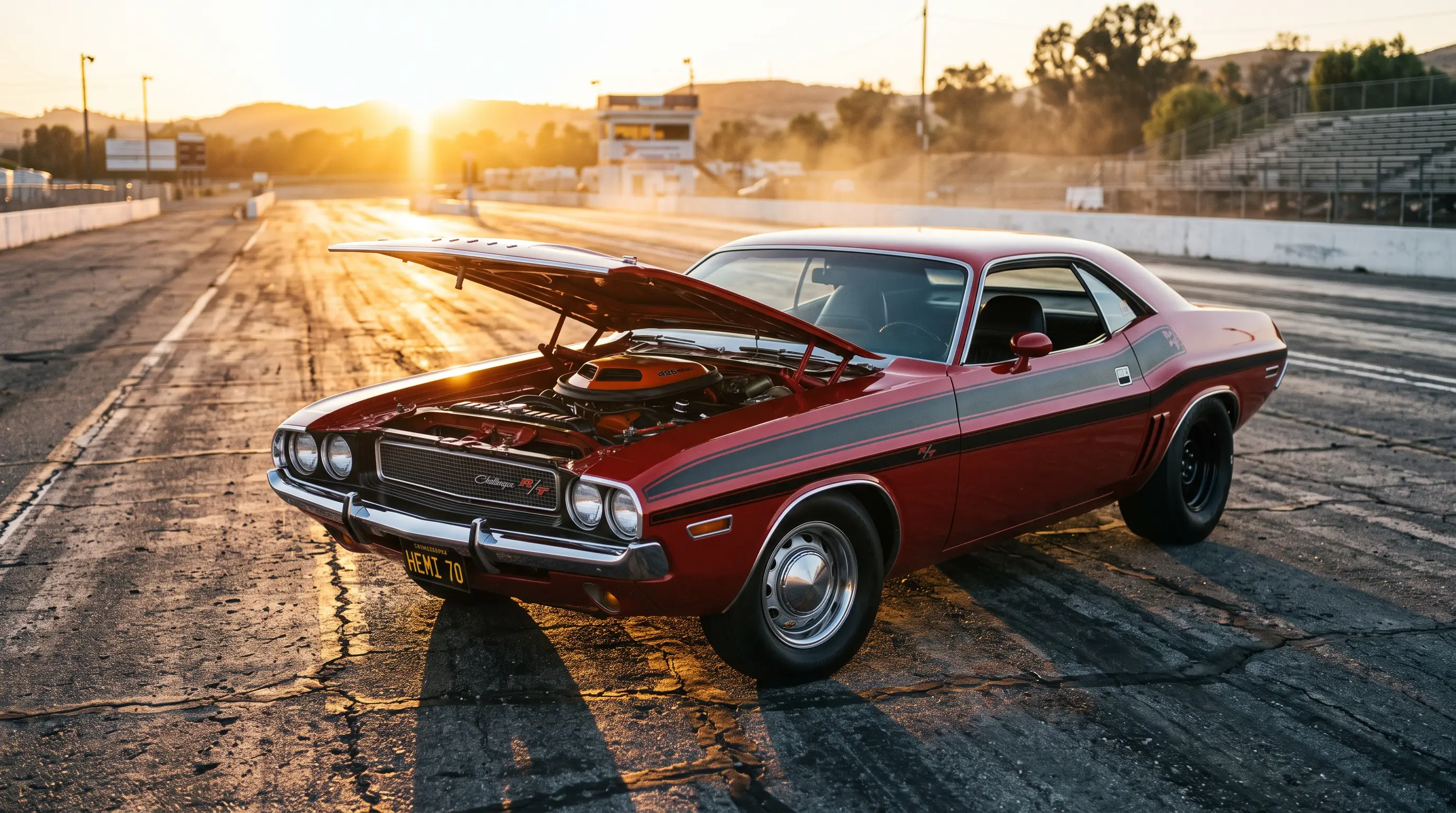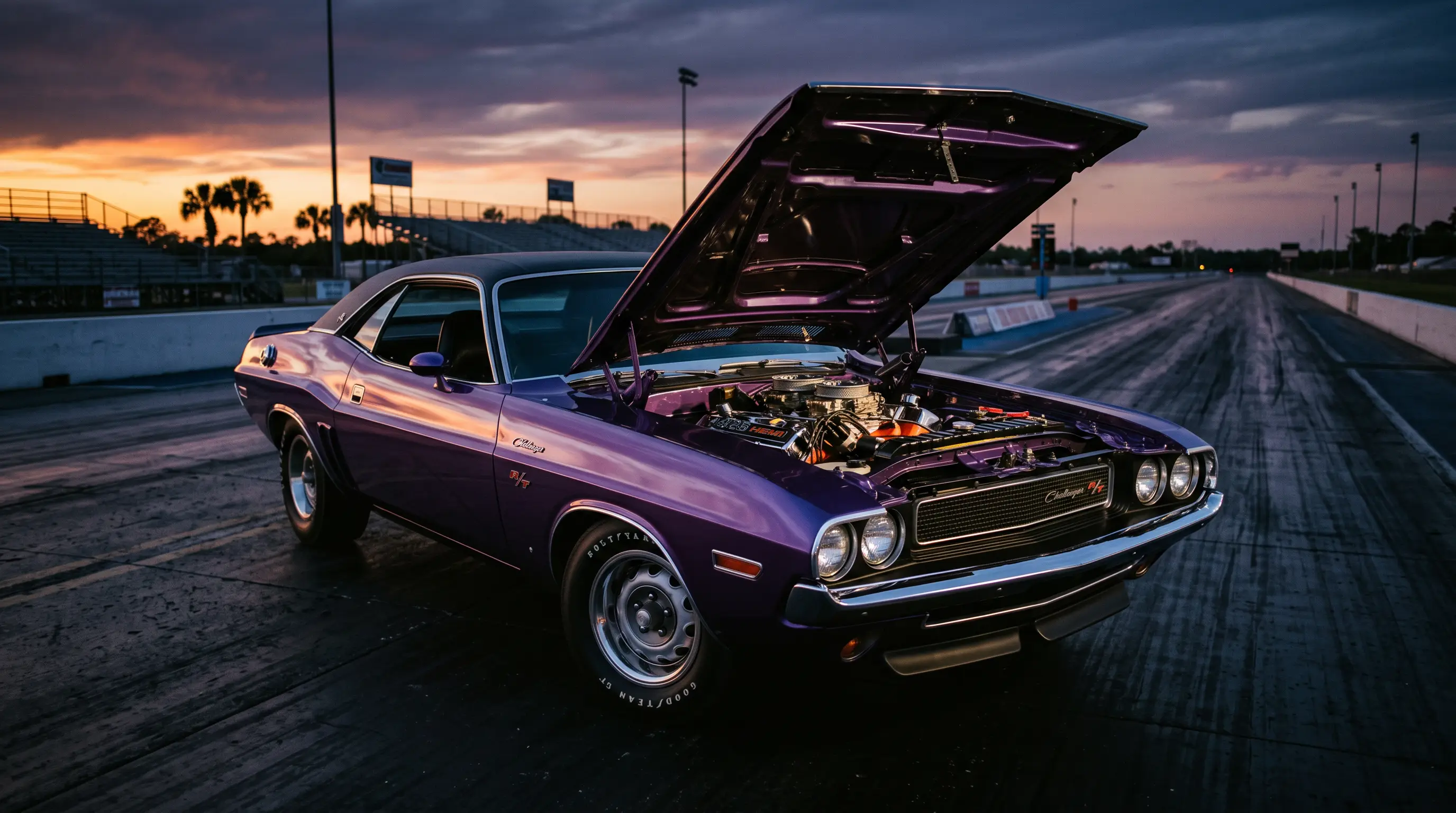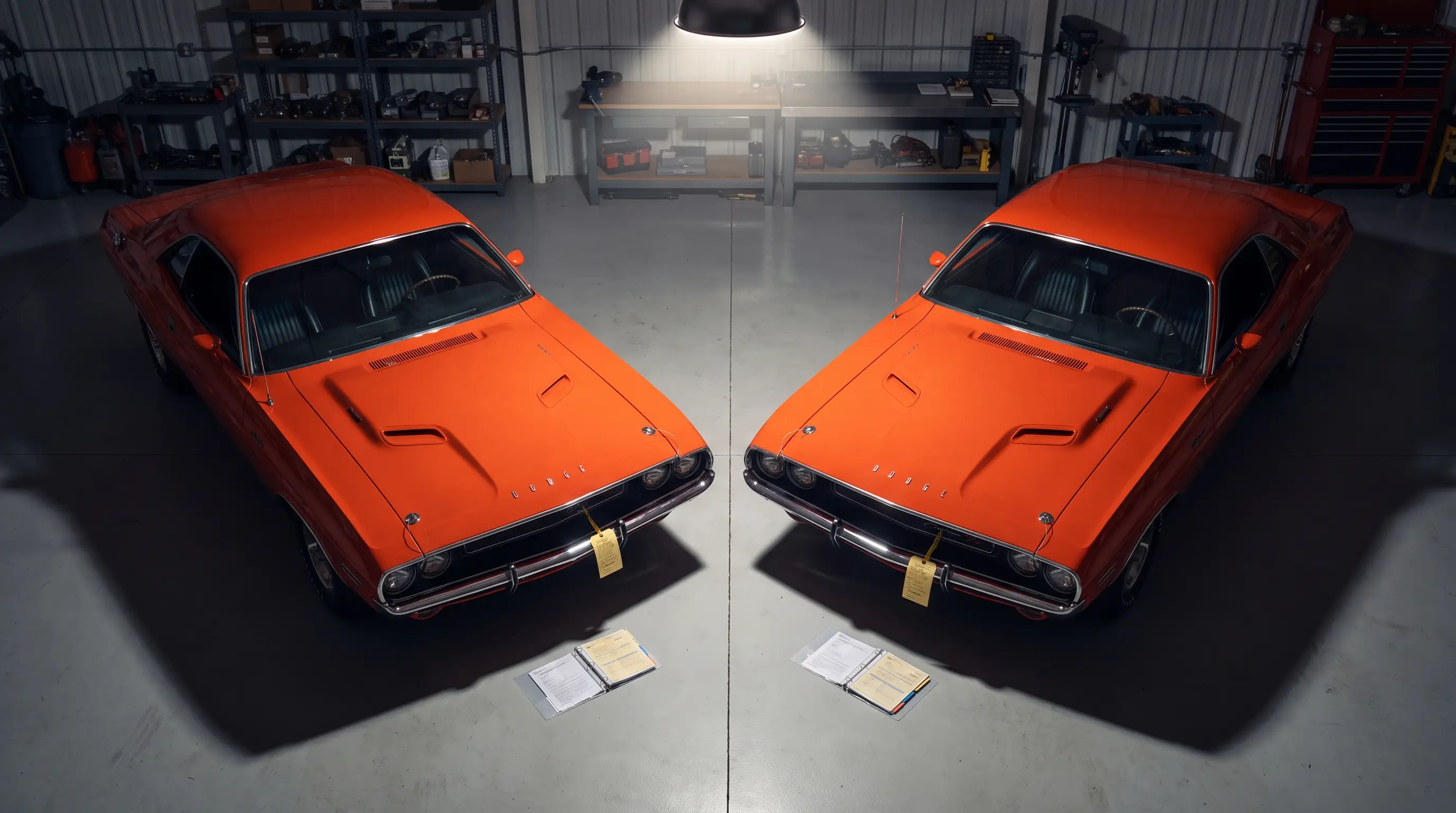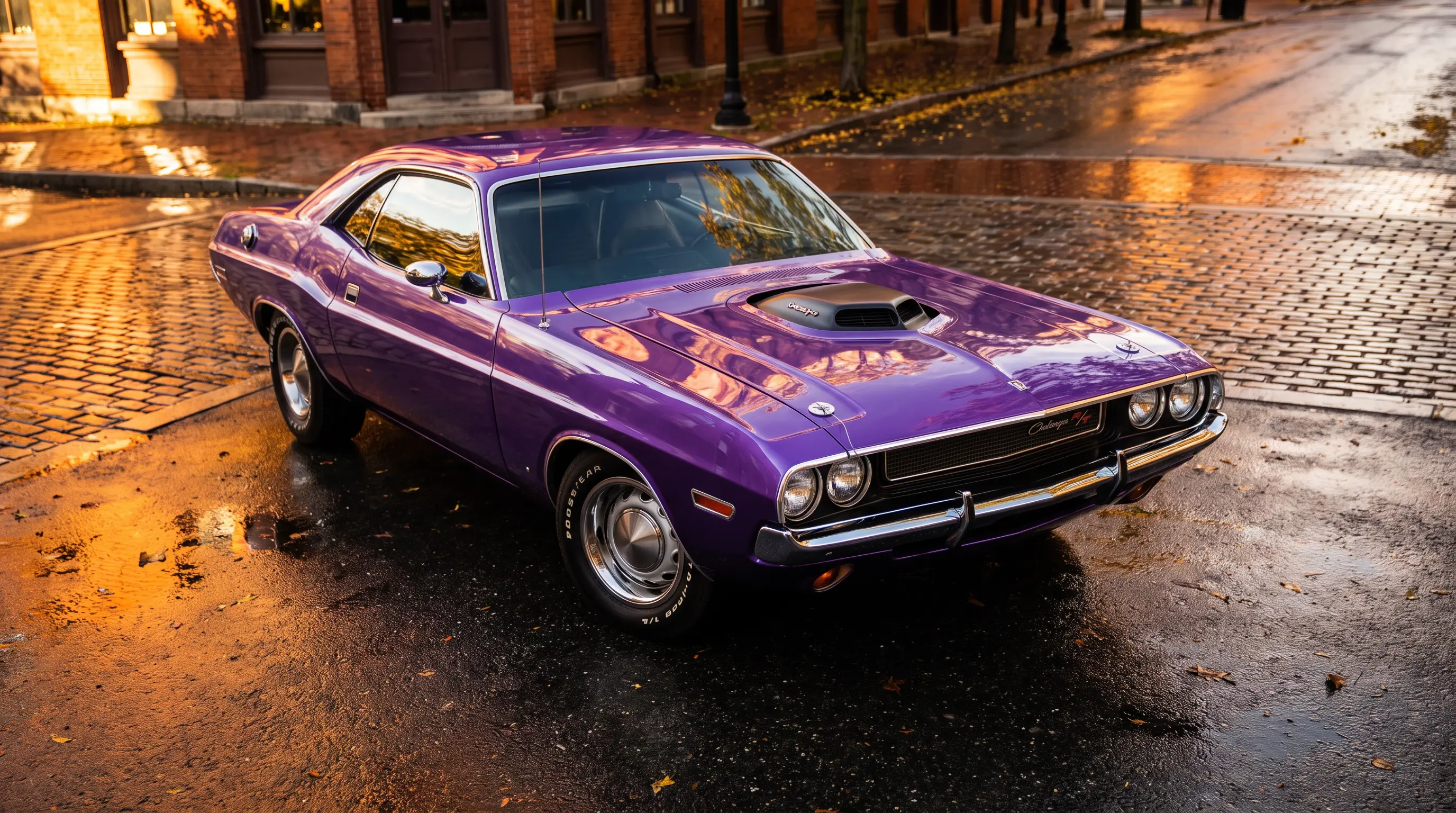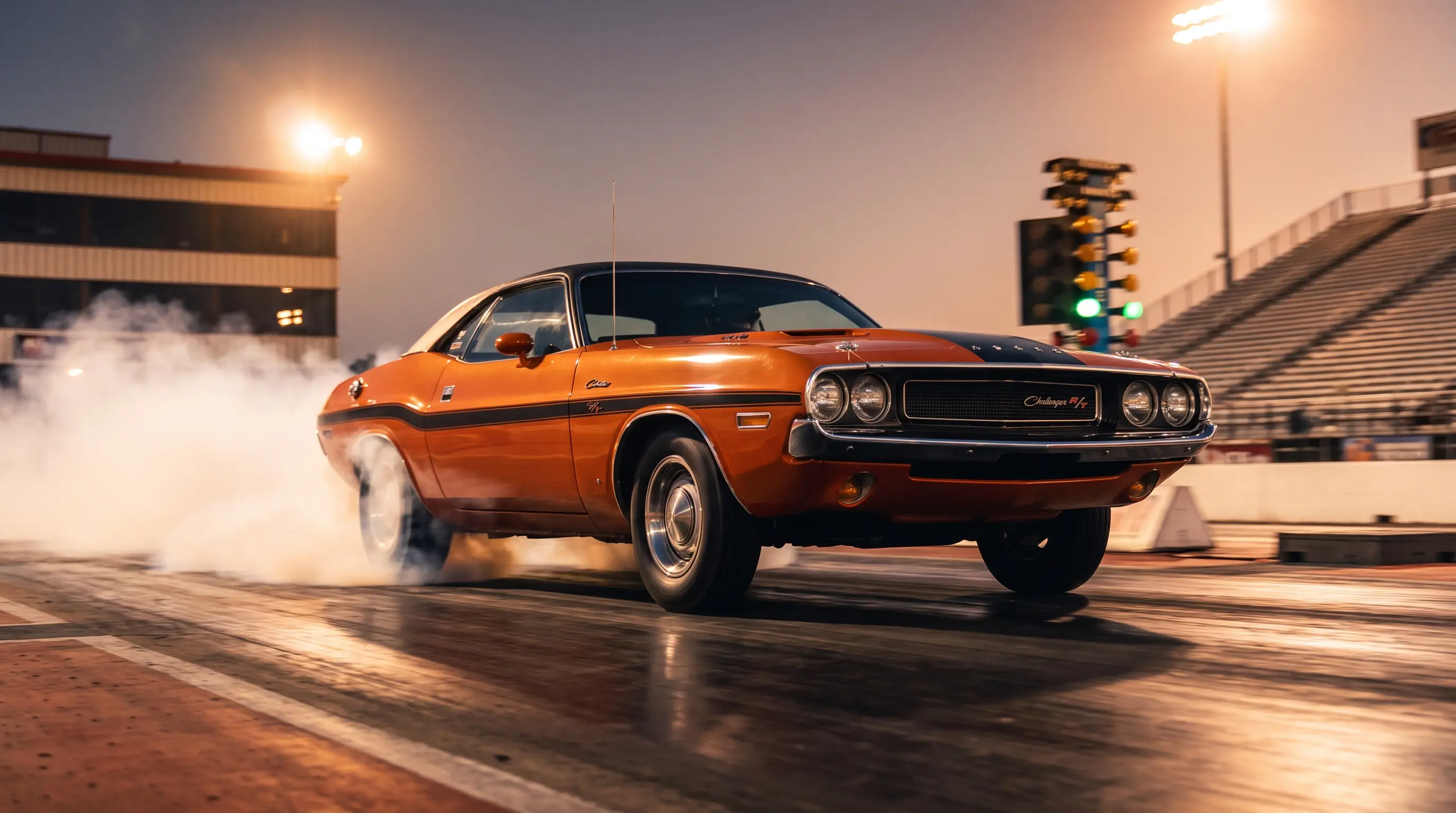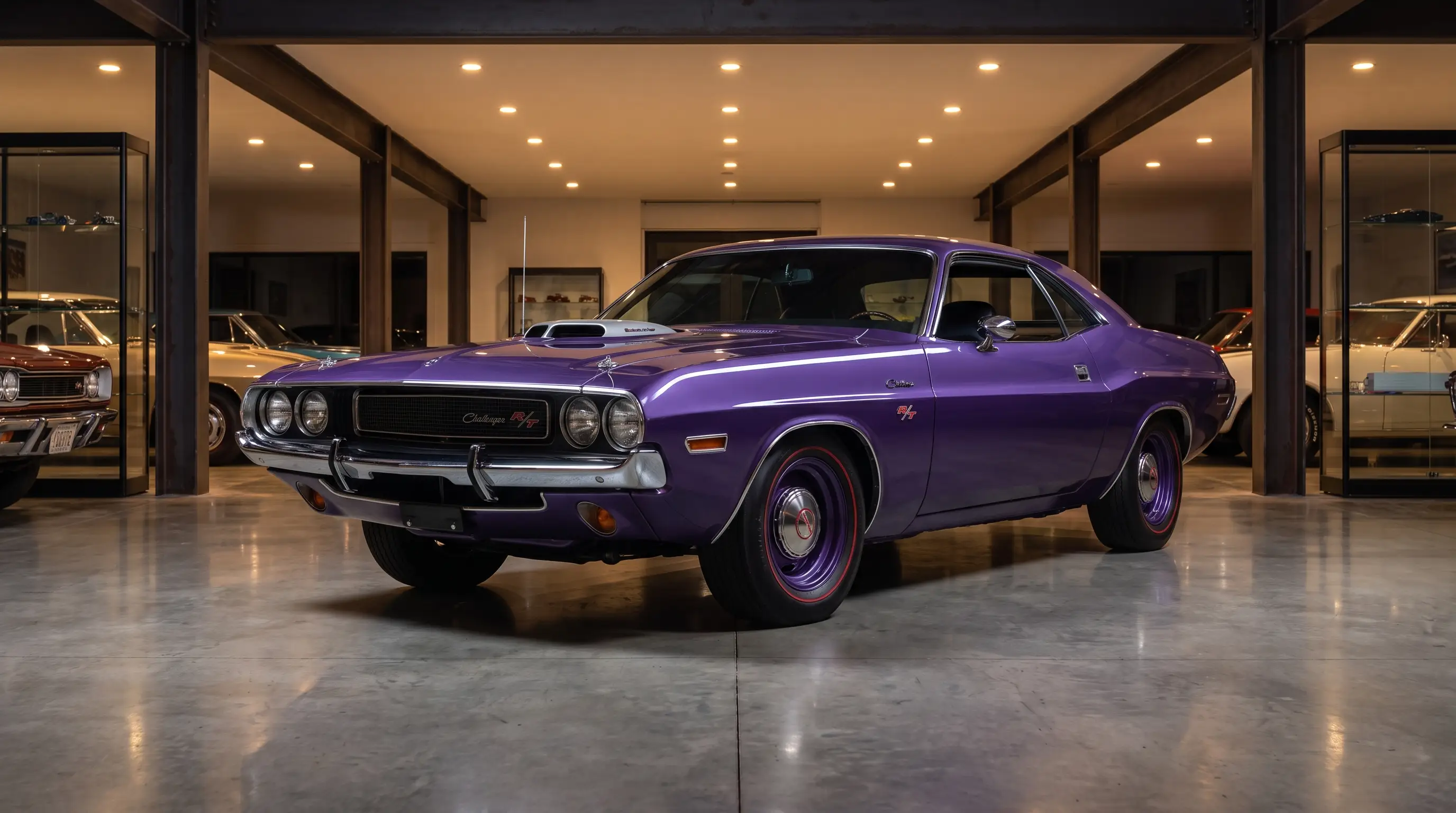
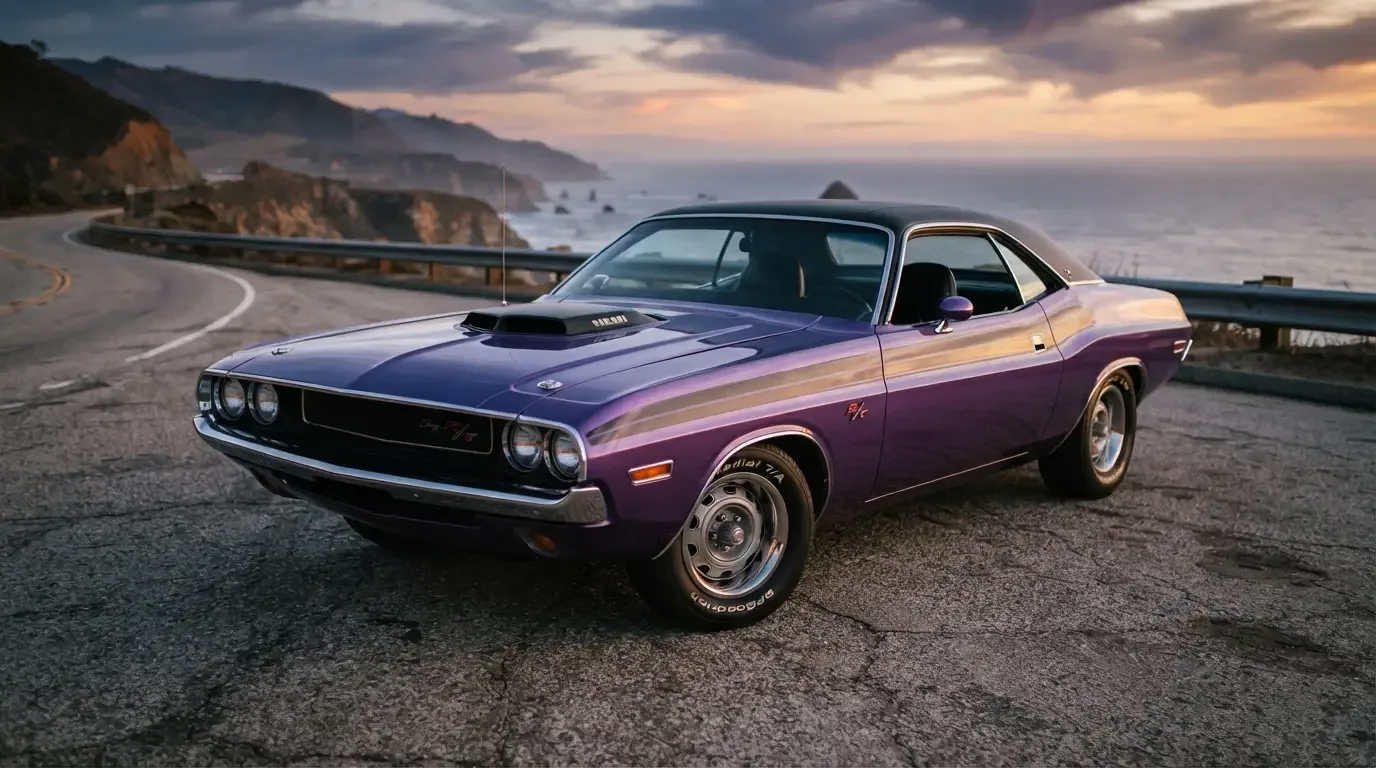
Every model line has one configuration that sits at the top of the value curve and drags everything else up behind it. For the E-body, that car is the Hemi Challenger. The 426 Hemi was the most expensive, most powerful, and least common engine you could order in a 1970 or 1971 Challenger, and it is the single option that turns a good muscle car into a serious financial asset. From an appraisal standpoint, the Hemi is where the E-body market stops being about nostalgia and starts being about scarcity, documentation, and downside risk.
What the 426 Hemi actually was
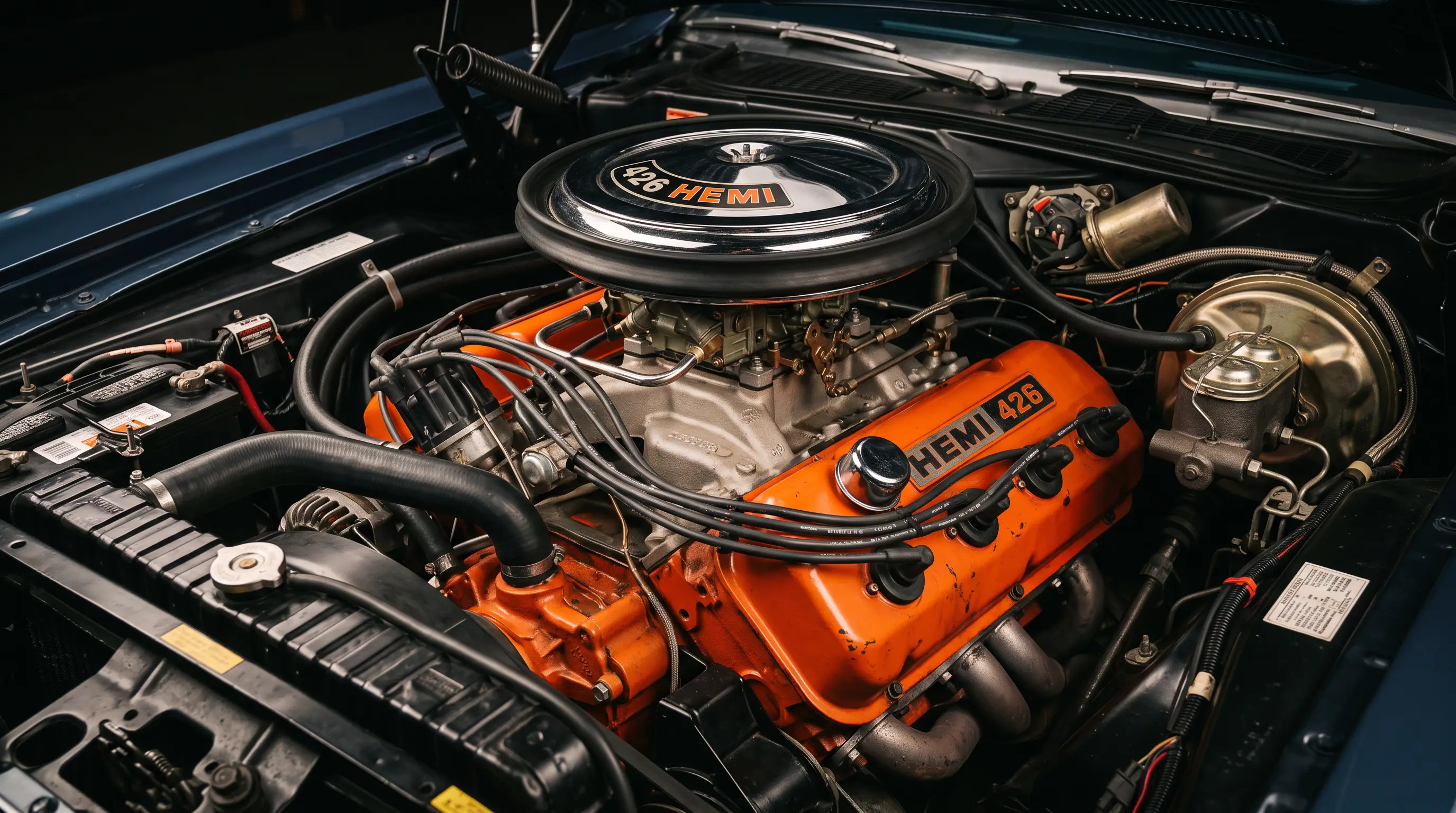
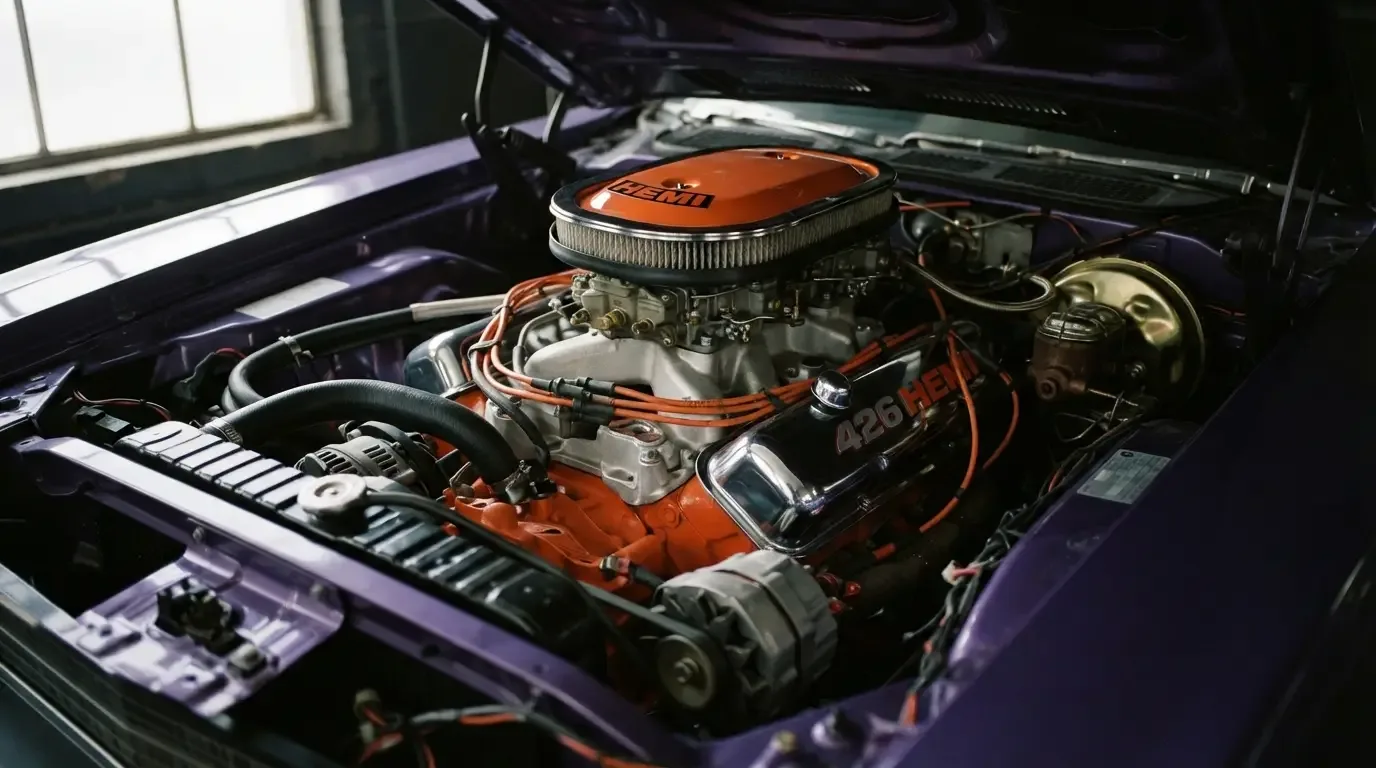
The Hemi took its name from its hemispherical combustion chambers, a design that allowed larger valves and better breathing than a conventional wedge head. Chrysler had raced the layout, then released a street version, the 426 Street Hemi, in 1966. By the time it reached the Challenger for 1970 it carried a gross rating of 425 horsepower, fed by two four-barrel carburetors. Nearly everyone agrees that figure was conservative, quoted low in part to manage insurance attention. The engine earned its "elephant motor" nickname from its physical size and weight, and it was as much a handful to live with as it was to pay for.
For the broader model background, our more on the dodge challenger coverage sets the stage. This piece is narrower. It is about the one engine that defines the ceiling of the market.
The production numbers that set the value
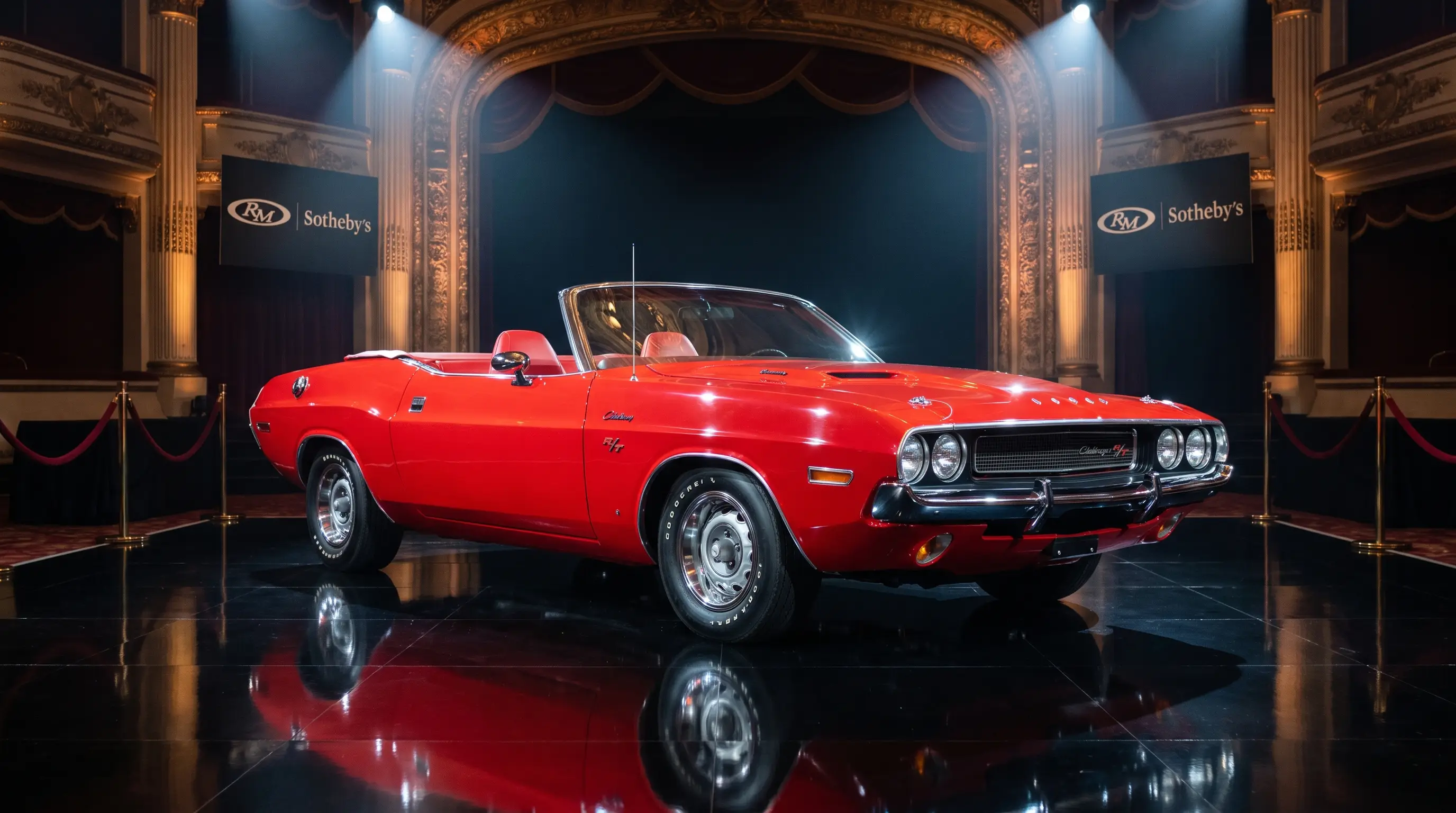
Scarcity is the whole appraisal story here. Dodge built only 356 Hemi Challengers for 1970, across every body style and transmission combined. Convertibles were the rarest slice of all, with just nine built for the year, split four automatics and five four-speeds. The 1971 count was smaller still, because by then the muscle market was already contracting. Put simply, the Hemi Challenger was rare when new because it was expensive and hard to insure, and it is rarer now because attrition took its share over five decades.
That scarcity cuts two ways for a buyer. It supports strong values and good liquidity at the top of the market, but it also means every genuine car is known, tracked, and expensive to get wrong. There is no bargain Hemi Challenger. If the price looks like a bargain, the risk is that the car is not what the seller claims.
The convertible case is worth isolating because it sits at the very top of the pyramid. Dodge built the Hemi engine in tiny numbers, and only a fraction of those cars were convertibles, and only a fraction of those left the factory with a four-speed manual. Each filter cuts the population further, until you reach configurations that number in the low single digits for a given year, such as the five four-speed Hemi convertibles built for 1970. Cars that rare stop behaving like ordinary collectibles and start behaving like unique lots, where a single sale can reset the entire market's expectation. An appraiser treats them individually rather than by comparable, because there often is no true comparable to point to.
Why documentation is the entire game
From an appraiser's chair, a Hemi Challenger is only worth Hemi money when the paperwork closes the loop. The fender tag, the engine block casting and stamping, the broadcast sheet where it survives, and a documented ownership history all have to agree. A car missing its original engine, what the hobby calls a numbers-matching failure, can lose a very large fraction of its value even if a correct-date replacement Hemi is installed. The gap between a fully documented, numbers-matching Hemi car and a re-engined or undocumented one is one of the widest in the entire collector market.
This is where buyers get hurt. The Hemi badge and even a real 426 under the hood are not enough. The question is always whether this specific engine was born in this specific car, and whether the paper proves it. Provenance is not a nice extra on a Hemi Challenger. It is most of the asset.
| Hemi Challenger factor | Detail |
|---|---|
| Engine | 426 Hemi V8 |
| Carburetion | Dual four-barrel |
| Gross rating | 425 hp |
| Availability | Challenger R/T, 1970 to 1971 |
| 1970 production | 356, all body styles |
| Rarest variant | Hemi convertible |
| Value driver | Numbers-matching documentation |
The racing bloodline behind the badge
The Hemi's value is not purely a scarcity trick. The engine carried a genuine competition pedigree that the market understands and pays for. The 426 layout was developed for racing before Chrysler ever sold a street version, and it built its reputation on the track. The Street Hemi that reached the Challenger was a detuned relative of a proven race engine, and buyers in 1970 knew they were paying for hardware with a real motorsport history, not a marketing package with a loud name.
That bloodline is why the Hemi commands a premium over engines with similar or even higher street output. A collector is not only buying displacement and horsepower. They are buying a direct link to Chrysler's racing program, and that provenance holds its worth better than raw specification alone. When an appraiser values a Hemi car, the engine's competition heritage is part of the intangible that supports the price, and it is a large part of why the badge has never lost its pull.
The 440 Six Pack as the value alternative
Any honest appraisal of the Hemi has to mention the car right below it, the 440 Six Pack. The 440 offered comparable straight-line performance for far less money when new, and it remains the sensible alternative today. It is more common, less costly to buy, and less expensive to own, while still delivering the big-block E-body experience. For many buyers the 440 Six Pack is the smarter purchase, because it captures most of what makes a Hemi car special without the six-figure entry price or the razor-thin margin for error on documentation.
Understanding that alternative sharpens the case for the Hemi. You pay the Hemi premium for rarity, for the racing name, and for the position at the very top of the market, not for a meaningful gap in how the two cars drive. A buyer who wants the ultimate E-body pays it gladly. A buyer who wants the experience for a fraction of the outlay looks one step down the ladder, and there is no shame in that choice. Knowing where the line sits is part of buying either car intelligently.
Reading the risk, not just the reward
A Hemi Challenger is a strong asset with real liquidity, but it carries specific downside. The engines are expensive to service and rebuild, correct parts are costly, and any repair that touches originality can affect value. Restoration quality matters enormously, because a heavy-handed or incorrect restoration can hurt a Hemi car more than honest wear would. And because the market for six-figure muscle cars is thinner than the market for affordable drivers, values can move more sharply at the top when the collector economy shifts.
None of that argues against ownership. It argues for buying with your eyes open. The Hemi Challenger rewards the buyer who treats it as a documented asset and punishes the buyer who treats it as a trophy and skips the diligence. The upside is genuine. So is the exposure if the paperwork does not hold.
Liquidity is the other factor an appraiser weighs. A fully documented Hemi car sells, and sells well, because the pool of serious buyers for a blue-chip muscle car is small but committed and well funded. The catch is that this same pool is discerning. A car with a question mark over its engine or its history can sit unsold at a strong price and then trade at a discount when the doubt finally forces the issue. Clean cars are liquid. Cloudy ones are not, no matter how good they look. That difference in salability is itself part of the value, and it is why the best Hemi Challengers change hands quietly among people who already know exactly what they are buying.
"I have appraised Hemi cars that were flawless drivers and worth a fraction of their asking price, and rough ones worth a fortune. The difference was never the paint. It was whether the engine was born in the car and whether the file proved it. On a Hemi Challenger, the documentation is the appraisal."
- Marcus Feld
The Hemi as the anchor of the whole model
The reason the Hemi matters beyond its own small production run is that it sets the top of the E-body value ladder and pulls the rest of the range up with it. When a documented Hemi convertible sells for a headline figure, it lifts the perceived value of every 440 Six Pack, every R/T, and every clean 383 car below it. The Hemi is the reference point the entire market measures itself against, which is why its numbers get quoted so often and its cars get scrutinized so hard. Remove the Hemi from the picture and the whole E-body value ladder settles lower, because the ceiling is what gives every rung beneath it room to climb.
That role did not last long. The Hemi left the Challenger after 1971 as regulation and economics closed in, and the later cars are a different, quieter story. For how the model changed once the big engines were gone, there is more from this era worth reading, because the contrast between the Hemi years and what followed is stark.
The Hemi Challenger is the E-body at its most valuable and its most demanding. It is a small, well-documented population of cars where the engine defines the price, the paperwork defines the engine, and the downside for getting either wrong is measured in tens of thousands of dollars. Approached carefully it is one of the blue-chip holdings of the muscle world. If you want to study what the genuine cars trade for and how the market prices originality, you can find a classic Challenger and start comparing documented examples against the claims. On a Hemi, that comparison is the difference between an asset and a lesson.
Sources and notes
- Dodge Challenger (1970) - Wikipedia
- 1970 Dodge Challenger R/T Hemi Convertible - Sports Car Market
- 1970 Dodge Challenger Option and MSRP Price List - Amazing Classic Cars
- 1970 Dodge Challenger Base - Hagerty Valuation Tools
- Rare Rides: The 1970 Dodge Challenger R/T Hemi Convertible - Street Muscle
- 1970 Dodge Challenger R/T Hemi - Cars of Dreams Museum