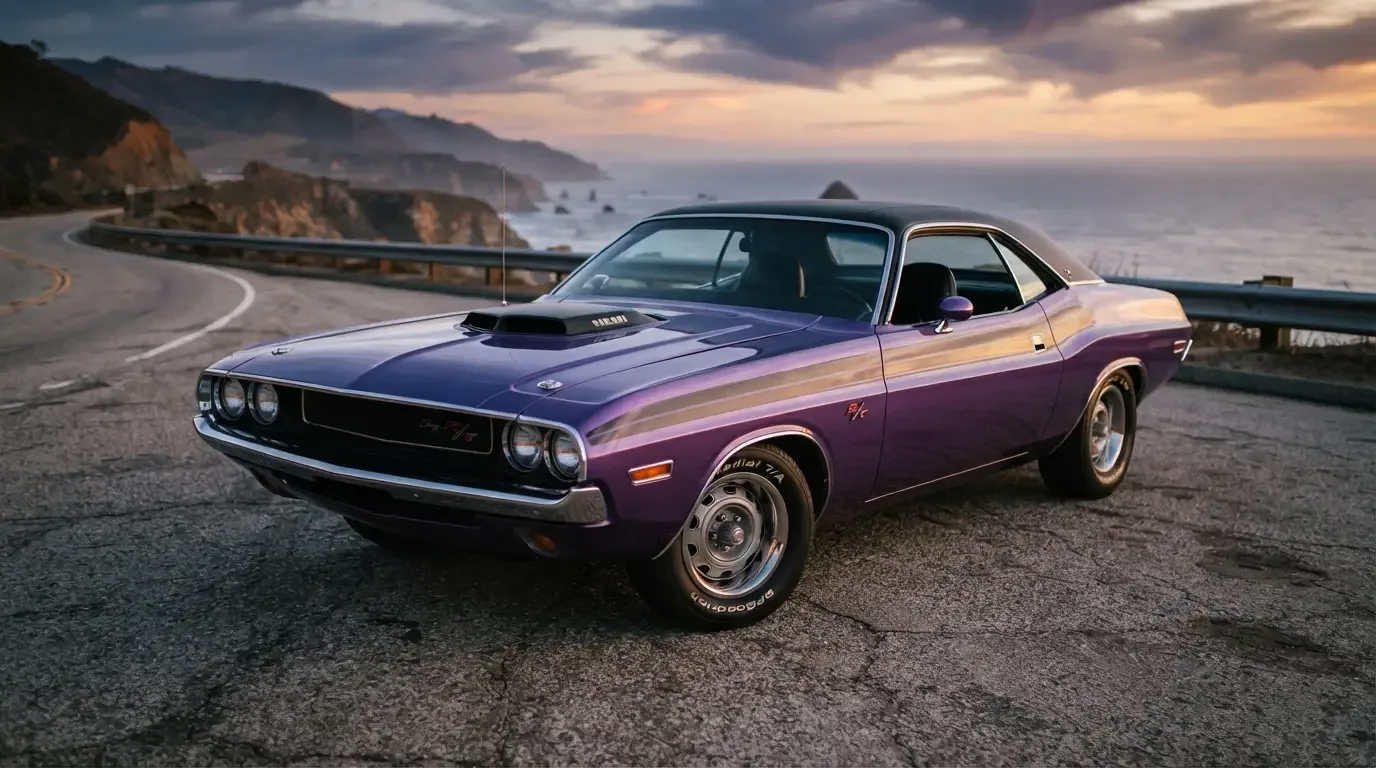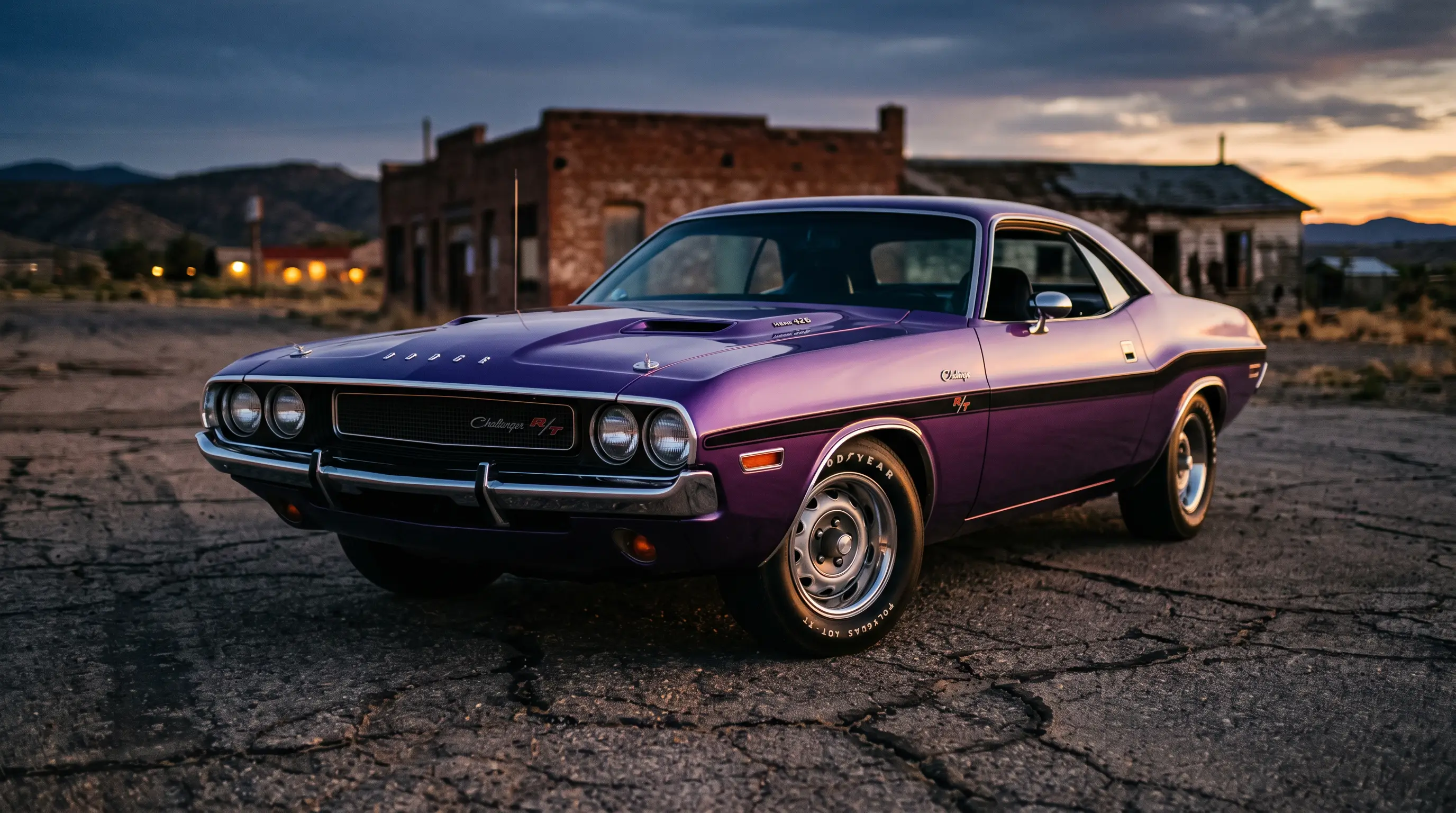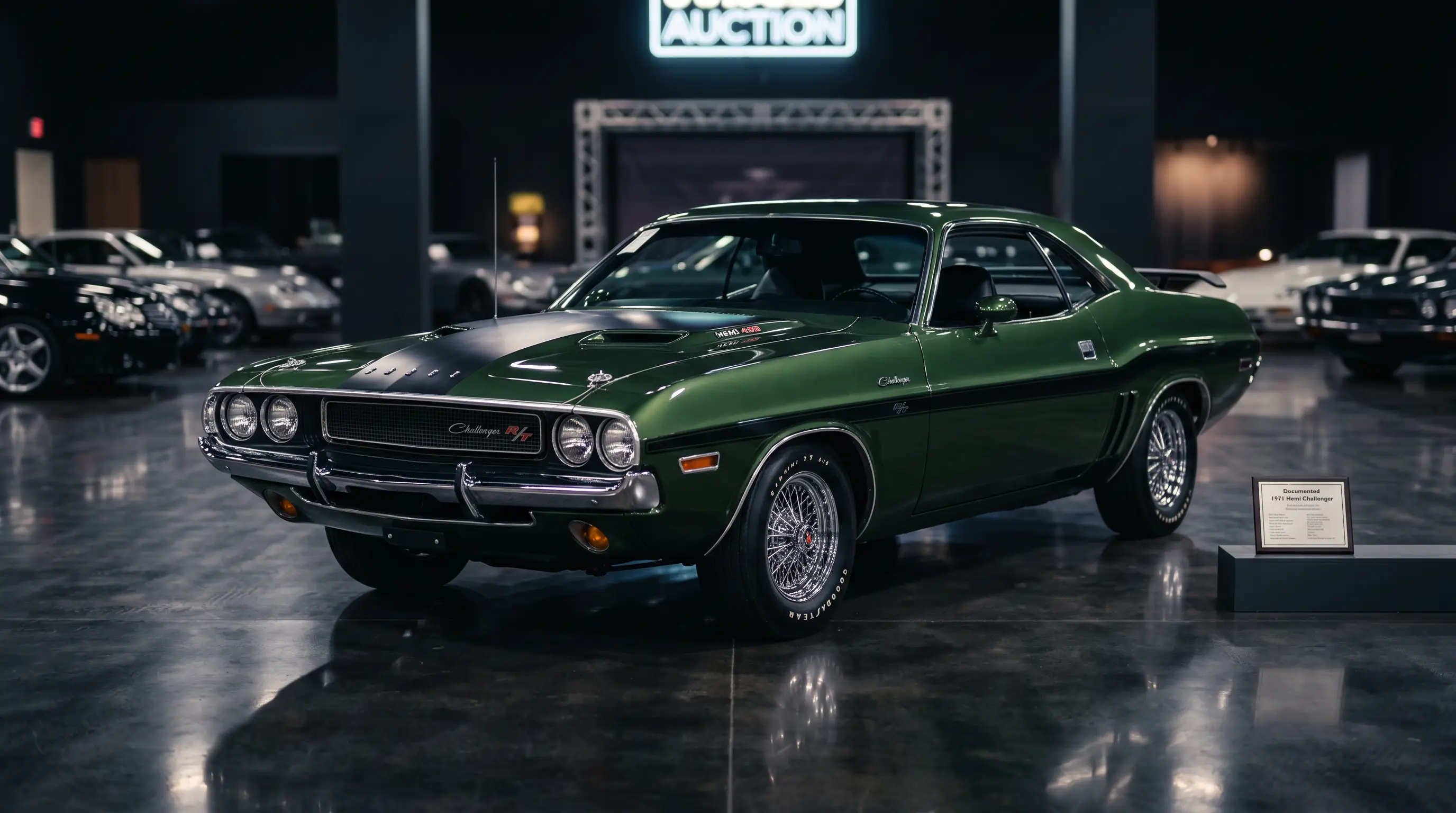
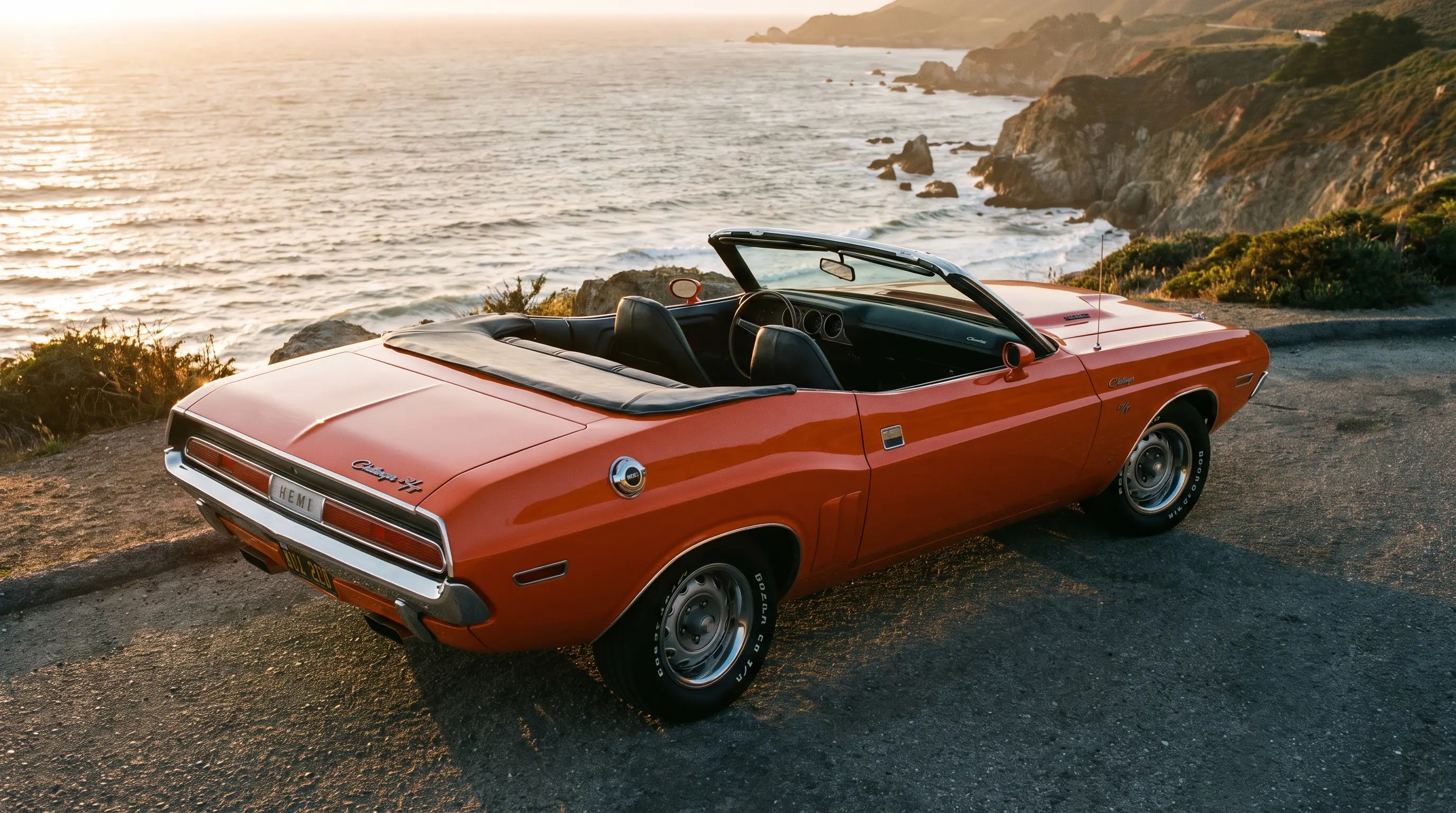
The hemi challenger convertible is the single rarest configuration Dodge offered on this model, full stop. Coupes with the 426 Hemi were already scarce. Drop the top and the number of documented survivors shrinks to a handful, low enough that most collectors will go an entire career without seeing one in person outside of a major auction or a top tier concours event. That is not marketing language. That is what the surviving population actually looks like.
Why so few were built
Three factors stacked against this configuration from day one. The Hemi engine option was already the most expensive line item on the order form, which limited take rate on its own. Convertibles cost more than coupes across the board, further shrinking the buyer pool willing to pay for both options together. And insurance underwriters in 1970 were actively penalizing high output engines with steep premium increases, which pushed plenty of buyers who might have wanted the combination toward a coupe or a smaller engine instead. Stack all three factors together and you get a genuinely tiny number of cars ordered this way from the factory.
For the background on how the Hemi ended up in this car at all, read the background on the engine's history in the Challenger lineup before diving into the convertible specifics.
| Factor | Effect |
|---|---|
| Hemi engine option | Most expensive engine on the order sheet |
| Convertible body style | Higher base cost than coupe |
| Insurance premiums (1970) | Steep increases on high output engines |
| Resulting take rate | Lowest of any Hemi Challenger configuration |
| Surviving documented examples | Small enough to track individually by club researchers |
What survival looked like over fifty years
A car this expensive to order in 1970 did not automatically get preserved. Plenty of high value classics from this era were driven hard, wrecked, or neglected once the muscle car market cooled through the 1970s and insurance costs made ownership painful for a daily driver. The convertibles that survived in documented, matching numbers condition mostly did so because an owner somewhere along the ownership chain recognized what they had and treated the car as something worth protecting rather than something worth driving into the ground. That is a thinner margin for survival than most people assume when they picture a valuable car simply existing in a garage somewhere, untouched, for five decades.
The number that actually sets the price
Rarity alone does not set a final sale price, documentation does. A verified, matching numbers hemi challenger convertible with a clean broadcast sheet sells in a different universe than an undocumented example claiming the same specification, no matter how convincing the car looks in person. This is the configuration where that gap matters most, because the incentive to build a convincing tribute car is highest exactly where genuine examples are scarcest. Buyers evaluating a car with this specification claimed should treat verification as the first step, not a formality handled after a deposit changes hands.
"The rarest configuration attracts the most convincing fakes. That is not an accident, that is basic market logic, and it is exactly why paperwork matters more here than anywhere else in the lineup."
- Dan Reeves
What a real inspection has to cover
Given how much is riding on documentation with this specific configuration, I want to be specific about what an actual verification process looks like rather than leaving it as an abstract recommendation. It starts with the broadcast sheet if one survives, cross referenced against the fender tag codes stamped at the factory. Casting numbers on the block, heads, and transmission need to match known correct part numbers for the claimed production date, not just look roughly right to an untrained eye. The convertible top mechanism and frame reinforcements specific to open top Challengers of this era also need physical inspection, since a coupe converted to a convertible configuration after the fact is a documented fraud pattern in this hobby, not a hypothetical risk.
None of this is quick, and none of it should be rushed regardless of how much pressure a seller applies around a competing buyer supposedly waiting in the wings. A car this rare justifies the time it takes to verify properly, and any seller unwilling to allow that level of scrutiny before a sale closes is giving you information about the car whether they intend to or not.
What a genuine sale actually looks like
When a legitimate hemi challenger convertible does come to market, the transaction rarely resembles a normal car sale. These deals tend to move through specialist dealers and auction houses with reputations built specifically around Mopar authentication, not general classic car platforms where a listing might sit for months. Serious buyers are often already known to the seller or the broker handling the transaction before the car is formally offered, because the pool of collectors capable of paying for and properly verifying this specific configuration is small enough that word travels fast within it. A car this rare rarely needs wide marketing to find its buyer.
That narrow buyer pool also means price discovery works differently here than in more liquid segments of the muscle car market. A single auction result can move the perceived value of every other documented example significantly, since there are so few comparable sales to average against. Anyone valuing a car in this category needs to weight recent verified sales heavily and treat older reference points with real caution, since the gap between a five year old comparable and current market reality can be substantial in a segment this thin.
Where this fits in the broader market
Anyone tracking values across the Hemi Challenger lineup should treat the convertible as its own distinct category rather than a simple multiple of coupe pricing, since the buyer pool competing for this specific configuration is smaller and more specialized than the broader Hemi market. Readers comparing this configuration against other high value Hemi Challenger variants will find the coupe pricing discussion worth a look too, since the two markets move somewhat independently despite sharing the same engine.
The bottom line is simple. This is the hardest Hemi Challenger configuration to find, the hardest to verify with confidence, and the most rewarding to actually own once verification checks out. Buyers serious about finding one, rather than reading about one, should shop classic Challenger listings with documentation requirements set before the search even begins, because a car this rare does not wait around for a slow decision once it surfaces with real paperwork attached, and the buyer who has financing and a trusted appraiser already lined up before that car appears is the one who actually ends up owning it, rather than the one reading about somebody else's purchase after the fact.