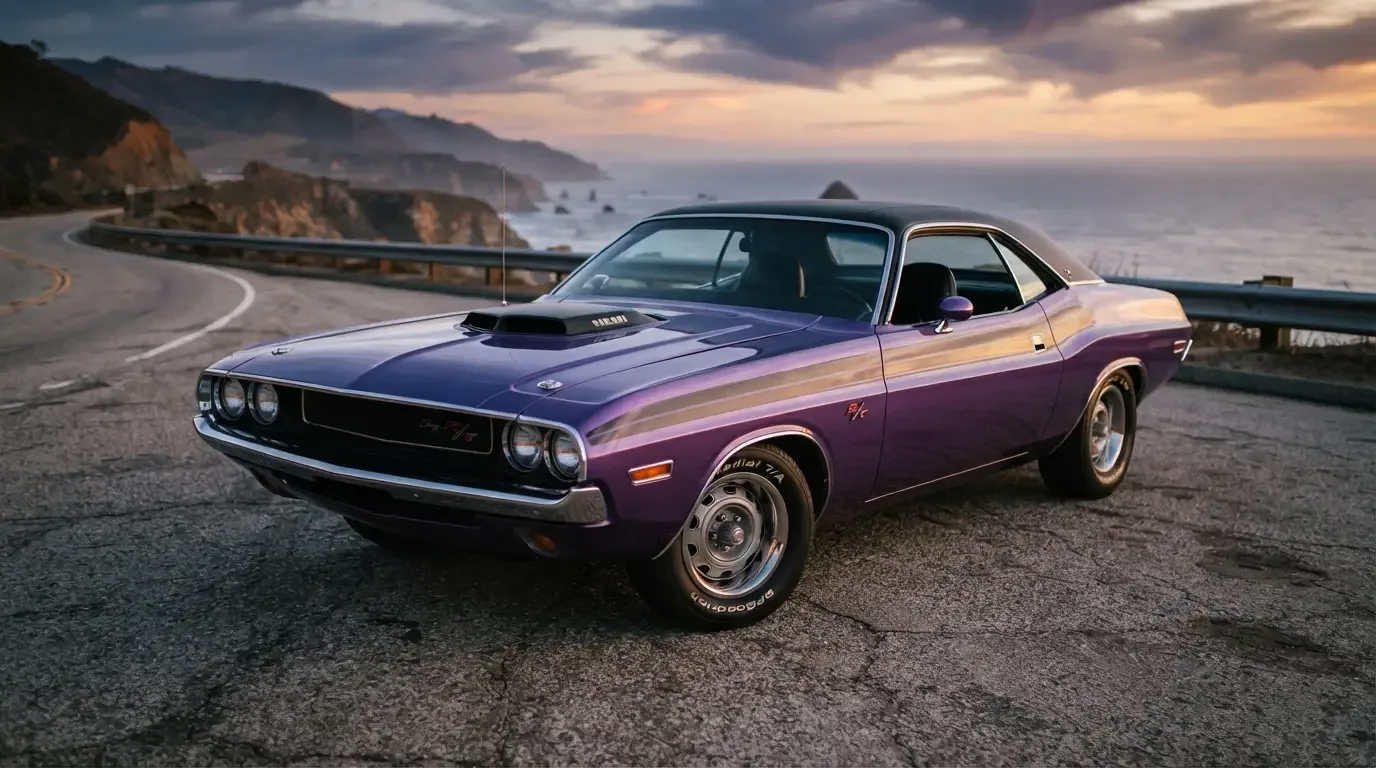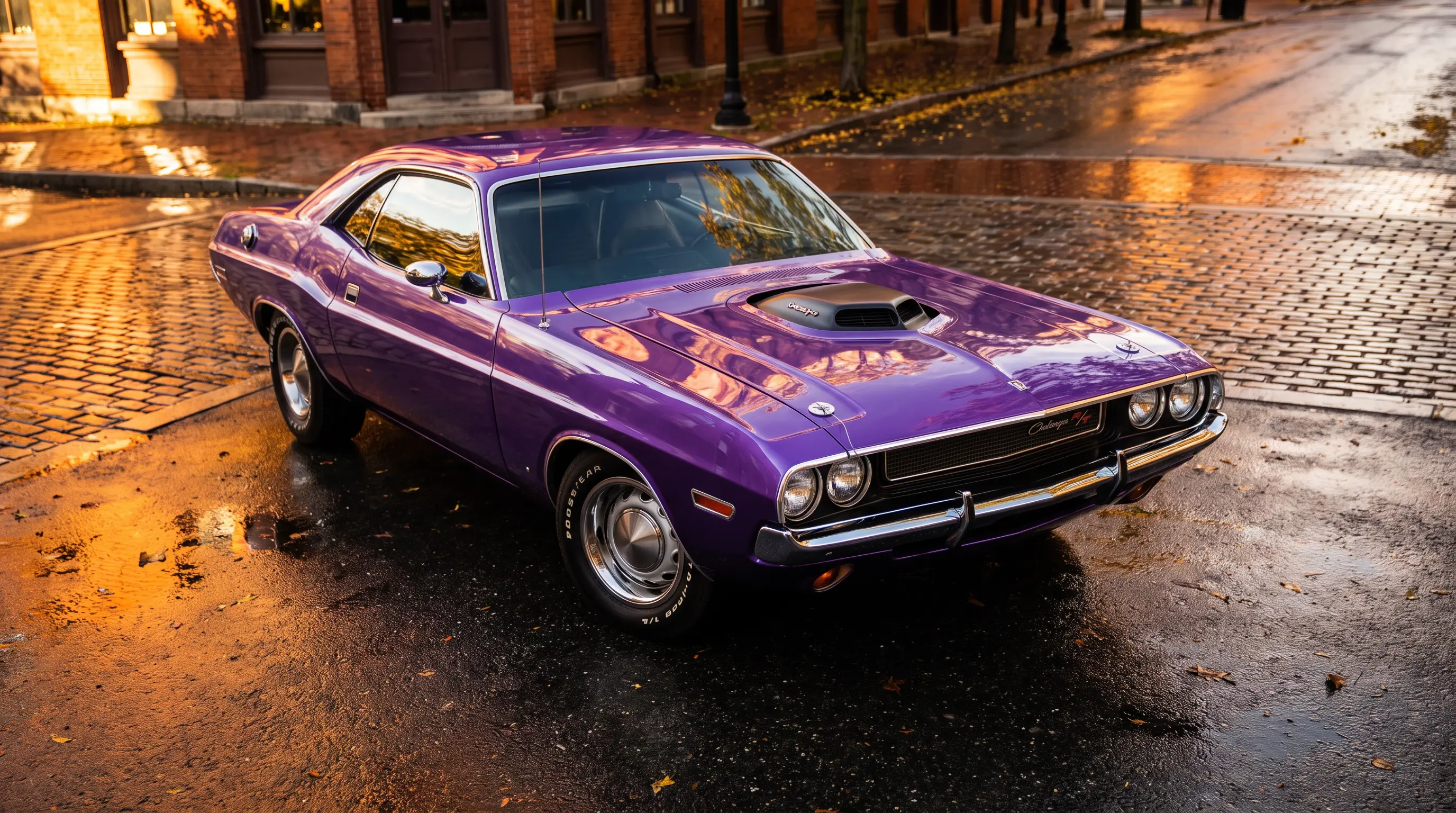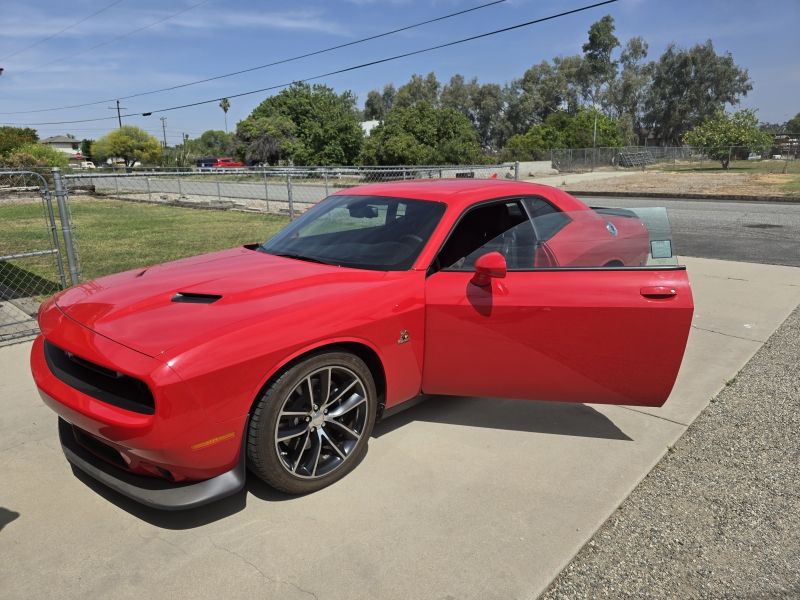
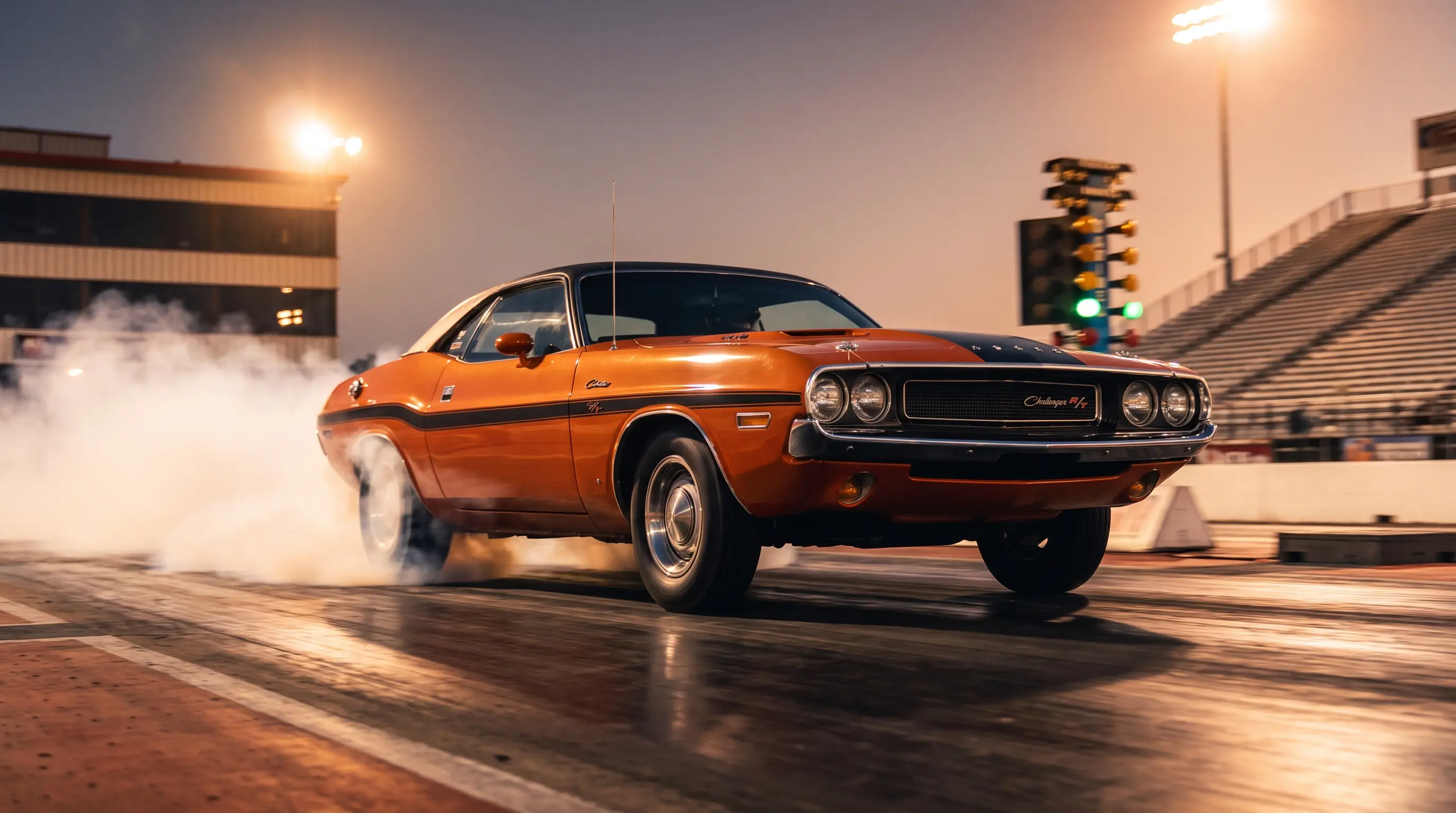
The Hemi Challenger was never really built for stoplights. Dodge dropped the 426 Hemi into the Challenger for 1970 knowing full well where the car would actually earn its reputation, and that place was the quarter mile, under lights, with a Christmas tree counting down instead of a traffic signal. For readers who want the whole arc of the car's development, our complete history covers the platform from the ground up. This piece is narrower. It is about what happened when that engine met a strip.
Why the 426 Hemi fit the strip and not the street
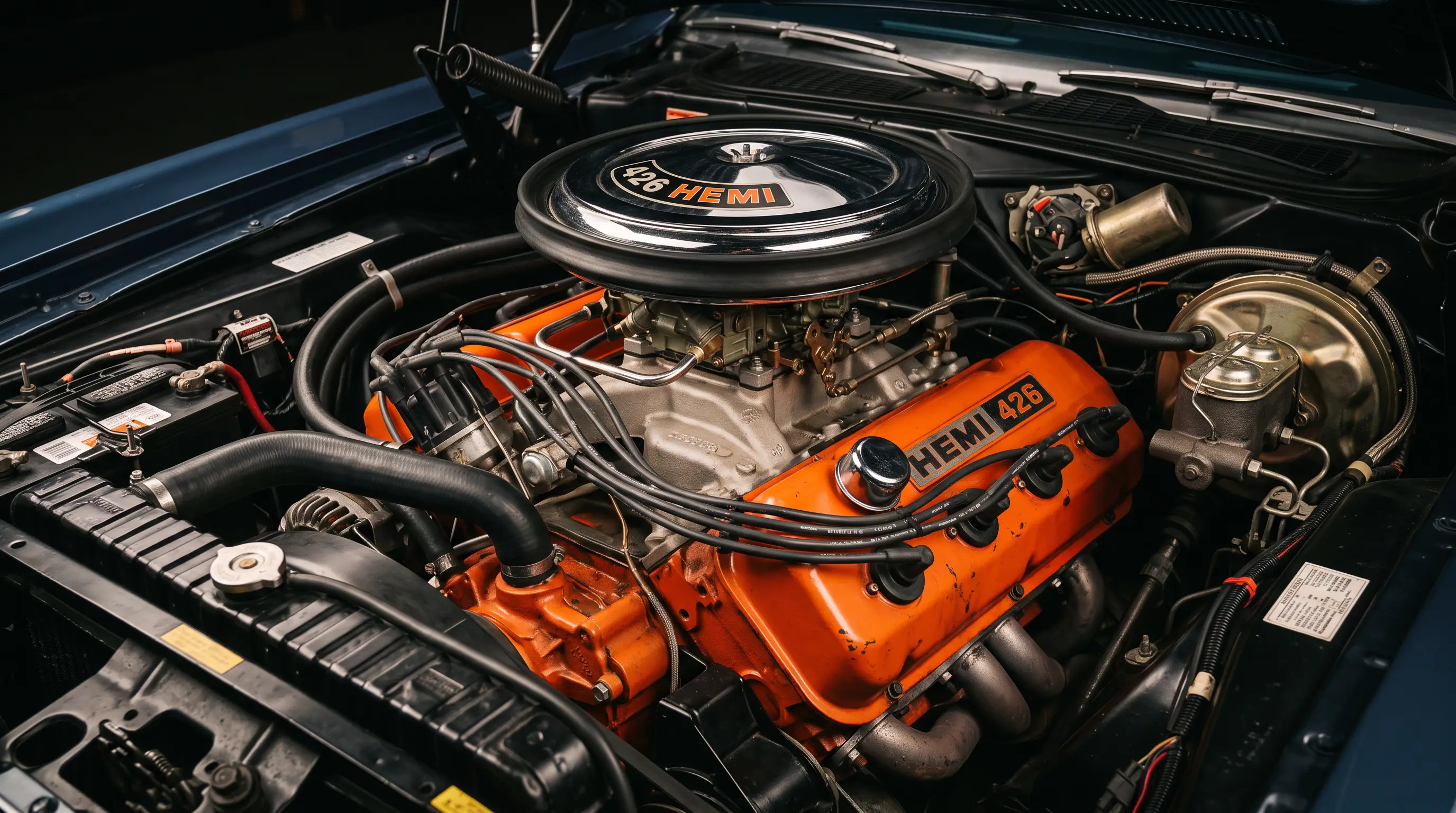
The 426 Hemi was a race engine that Chrysler happened to sell in a road car, and every decision baked into it reflects that priority. Hemispherical combustion chambers let engineers run bigger valves at steeper angles, which means more airflow at high RPM, which is exactly what you want when a car only has to survive a quarter mile rather than a daily commute. Dodge rated the Hemi Challenger at 425 horsepower, a number most engineers of the era considered conservative for insurance purposes rather than an honest dyno figure. On the street the engine was heavy, thirsty, and a chore to keep in tune. At the strip none of that mattered. What mattered was a torque curve that pulled hard through the top of second gear and a bottom end that could take repeated full-throttle runs without grenading.
Drag racers who bought new Hemi Challengers in 1970 were not chasing comfort. They were chasing elapsed times, and a stock Hemi Challenger with the right gearing and a competent driver could run in the low 14s or high 13s straight off the showroom floor, a number that embarrassed plenty of cars costing twice as much.
Factory support and the Super Stock connection
Dodge did not simply sell the Hemi Challenger and walk away. The factory backed drag racing directly through its involvement with Super Stock and Modified Production classes, and dealers who understood performance buyers pushed the Hemi option hard because they knew where their customers would be spending Saturday nights. The Challenger R/T with the Hemi option became a fixture at strips across the country, running against Hemi Barracudas, Hemi Road Runners, and the occasional big block Chevelle or Boss 429 Mustang that had wandered into the wrong lane.
What separated the serious cars from the weekend warriors was preparation, not raw parts. A well set up Hemi Challenger with slicks, a leaf spring tune, and a driver who understood how to launch a heavy car without spinning the tires could consistently run quicker than the factory numbers suggested. Less careful owners, meanwhile, spun away half a second at launch and blamed the car instead of their own right foot.
The four speed versus the automatic argument
Buyers ordering a Hemi Challenger for strip duty faced a real choice between the four speed manual and the TorqueFlite automatic, and the answer was not as obvious as it might seem today. The four speed rewarded a driver who could shift precisely under full throttle, but a missed shift on a heavy, torque laden Hemi could cost more time than a clean automatic run ever would. Plenty of serious racers actually preferred the TorqueFlite because it removed human error from the equation and let the engine do its work without interruption. The automatic also proved tougher in sustained drag use than some expected, largely because Chrysler had already spent years refining it in NASCAR and drag applications before the Challenger ever existed.
This is a case where the spec sheet tells you less than the timing slips do. Two identical Hemi Challengers, one with each transmission, could post nearly the same elapsed time in the hands of different drivers, which says more about seat time than about which gearbox was objectively faster.
What the drag strip did to survival rates
Here is the part collectors do not love to talk about. A car built to be raced tends to get raced hard, and racing hard breaks things. Hemi Challengers that spent their early lives at the strip suffered broken rear ends, cracked blocks, bent connecting rods, and the kind of frame damage that comes from repeated hard launches on a unibody car never quite engineered for that abuse. Many did not survive to see a second decade on the road, which is part of why genuine, numbers matching Hemi Challengers with real racing history are so scarce today. The ones that did survive often carry replacement drivetrain components, a detail that matters enormously to today's buyers and appraisers.
If that history interests you as a starting point for a purchase rather than just a story, you can browse Hemi cars for sale and see how current examples are described, including whether their drivetrains are original or replaced.
"A Hemi Challenger with a clean drag history isn't a flaw, it's provenance. The trick is telling honest race history from a car that just got beaten to death by someone who never logged a run."
- Emily Chen
Reading a car's strip history today
For anyone evaluating a Hemi Challenger now, the drag racing question is not academic. Look for evidence of reinforced frame rails, aftermarket traction bars, replaced rear axle housings, or logbooks and timing slips that document a car's competition years honestly. None of these things automatically hurt value if they are documented and period correct. What hurts value is an undisclosed history dressed up as a numbers matching survivor. The Hemi Challenger's identity was forged at the drag strip, and a car that wears that history openly is arguably more true to the model's original purpose than one that spent fifty years untouched in a garage.
Comparing the Hemi Challenger to its strip rivals
Put a Hemi Challenger next to a Hemi Cuda, a 440 Six Pack Road Runner, or a Boss 429 Mustang at the strip in 1970 and the differences were mostly about weight distribution and gearing, not raw power. The Challenger rode on a slightly longer wheelbase than the Barracuda it shared components with, which gave it marginally better weight transfer under launch but also added a touch more mass. Racers who understood the platform learned to compensate with rear spring preload and tire pressure rather than fighting the chassis. The Mustang crowd, by contrast, often struggled with the Boss 429's own weight distribution problems, which is part of why period magazines frequently gave the nod to the Mopar cars in stock class shootouts. None of these differences were dramatic enough to make one car a clear winner across every configuration, but they mattered to racers chasing tenths of a second.
What is often lost in modern retellings is how much the driver mattered relative to the machine. A mediocre driver in a Hemi Challenger could lose to a well driven 440 car all day long. The Hemi bought a ceiling, not a guarantee, and the racers who built reputations at the strip in the early seventies earned them through practice, not just through the parts list on their build sheet.