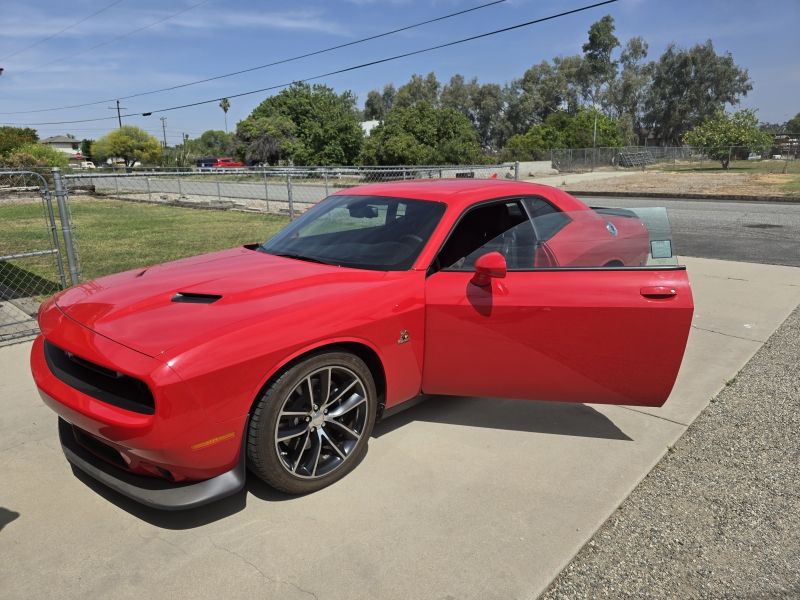
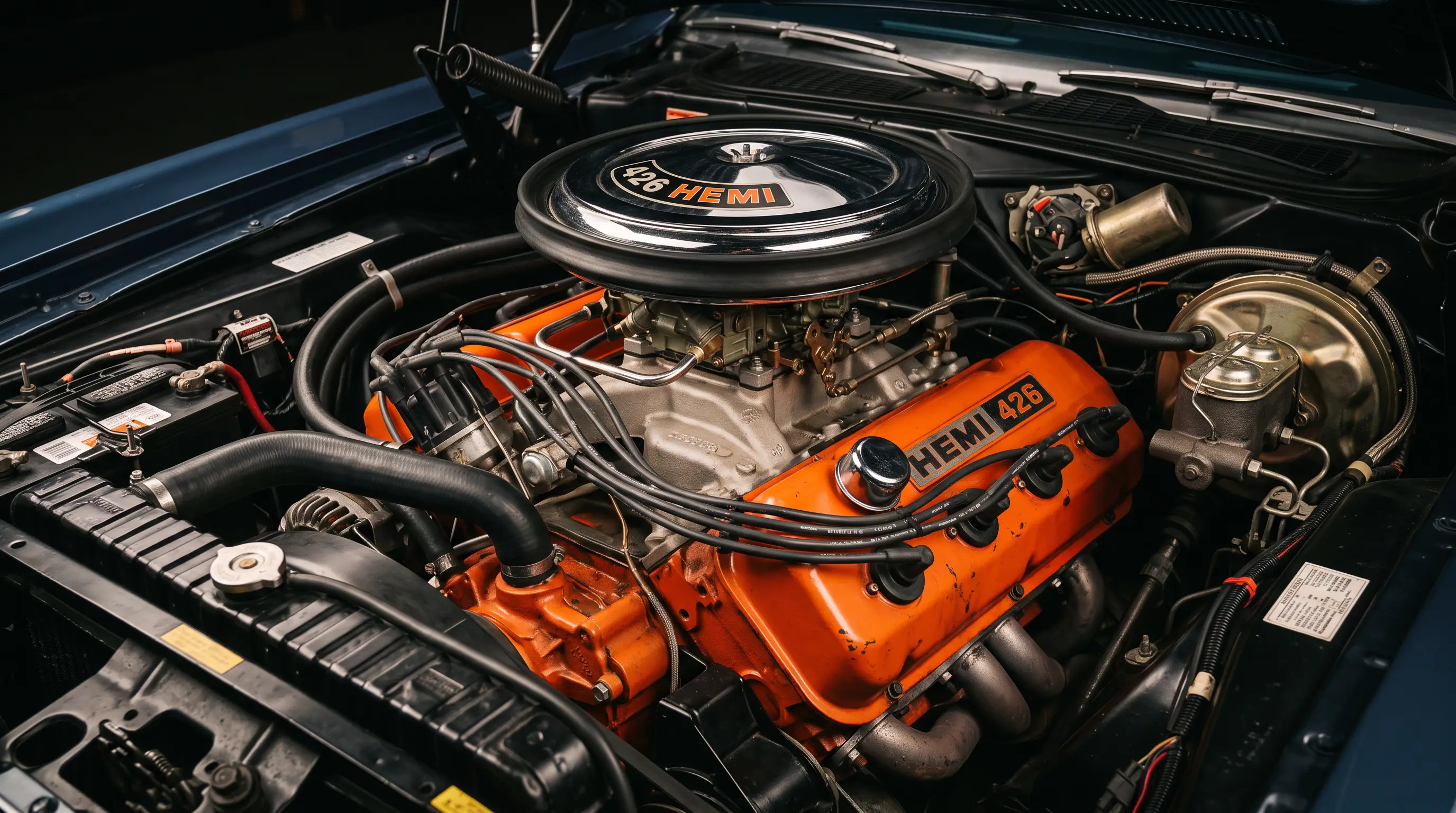
The word "Hemi" is not a model name. It is not a trim level either. It is a description of a combustion chamber shape, and Dodge slapped it on the Challenger's biggest engine option because the shape actually did something the badge could brag about. Here is the short version of hemi challenger history, with the marketing stripped out.
What hemi actually means
Hemispherical. That is the whole word. A hemi combustion chamber is domed, roughly half a sphere, with the spark plug sitting near the center and the valves splayed out at an angle instead of sitting parallel like they do in a conventional wedge chamber. The payoff is bigger valves, better airflow, and more even flame travel across the chamber. None of that is exotic engineering today. In 1951, when Chrysler first put a hemi head into production on the FirePower V8, it was a genuine breakthrough. That first hemi had nothing to do with the Challenger. It powered big, heavy Chrysler sedans, and it disappeared from the lineup by 1958 because it cost too much to build relative to what it gained on the street.
The number that matters here is simple: two decades passed between that first hemi and the 426 version that ended up in the Challenger. The name survived. The engine did not, not directly. Chrysler engineers went back to the well in the early sixties for a completely different reason, and that reason had nothing to do with road cars.
426 comes from racing, not from the showroom
NASCAR forced Chrysler's hand. Ford and other manufacturers were building faster engines, and Chrysler needed something that could win on Sunday, because in 1964 winning on Sunday still moved metal on Monday. The 426 Hemi debuted as a race only engine, banned outright by NASCAR for 1965 because it was too dominant, then brought back in a detuned street form for 1966 so Chrysler could keep racing it under homologation rules that required the engine be available to the public. That is the real origin story. The Challenger did not exist yet. The engine came first, the marketing came second, and the Challenger only got the option in 1970 because Chrysler needed a pony car flagship to compete with the Mustang and Camaro, five years after the 426 had already proven itself on ovals and drag strips.
The number 425
Dodge rated the Hemi Challenger at 425 horsepower. That number did not move for the whole run. Most people who actually dyno tested these engines put real output higher, likely closer to 450 or more, but 425 stayed on the window sticker because insurance companies were already circling muscle cars by 1970 and a lower published number kept premiums from climbing faster than they already were. This is not a conspiracy theory. It is a documented pattern across the entire industry in this era. The lesson for anyone reading a spec sheet from 1970 is straightforward: treat the published horsepower figure as a floor, not a ceiling.
Production numbers tell the rest of the story. Hemi Challengers were never common even when new. The engine cost a real premium over the standard 383 or 440, it demanded premium fuel and frequent tuning, and most buyers who wanted performance without the hassle picked the 440 Six Pack instead. That scarcity, not nostalgia, is what drives Hemi Challenger values today. Anyone curious about how that scarcity plays out in the collector market should read a related story that digs into that side of things directly.
Why the name still sells cars
Here is the blunt part. "Hemi" works as a badge because it sounds technical and because it is genuinely rare, not because the average buyer in 1970 or the average collector today understands combustion chamber geometry. Dodge revived the name decades later on modern trucks and cars precisely because the equity built into three letters in the sixties and seventies never faded. That is a marketing win built on a real engineering foundation, which is rarer than it sounds. Plenty of badges from this era were pure hype. Hemi was not. The chamber shape did real work, the racing record backed it up, and the scarcity was not manufactured, it was just expensive to build.
If you are chasing an actual Hemi Challenger rather than the branding on a modern truck, know what you are looking for. Numbers matching means the engine block, and ideally the transmission and rear end, all carry codes that trace back to the original build sheet for that specific car. Anything less is a Hemi powered Challenger, which is a fine car, just not the same asset. Challengers for sale now range across both categories, and the price gap between them is not small.
What the badge actually cost buyers in 1970
Ordering the Hemi option on a new Challenger was not a casual box to check. The engine added a substantial premium to the sticker price, and Chrysler required buyers to also order heavier duty suspension, brakes, and a beefed up cooling system just to keep the car running properly under sustained hard use. That package pushed the total cost well past what most buyers of a standard 383 or 440 R/T were spending. Dealers report that plenty of interested customers walked the option sheet, did the math, and quietly signed for the 440 Six Pack instead, which explains why the 440 outsold the Hemi by a wide margin across the Challenger's first generation. Documented production tells the real story. Dodge built 356 Hemi Challengers for 1970, split between 287 R/T hardtops, 60 R/T Special Edition hardtops, and just 9 convertibles, then built only 71 Hemi Challengers for 1971, all hardtops, with no convertible offered that year at all. Combined, fewer than 430 Hemi Challengers exist across the two model years the engine was offered in this car.
That low number is the actual engine behind today's high prices, not sentiment. Rare things cost more. The Hemi name gets the attention, but scarcity signs the check.
"People pay for the letters. Fine. Just check the block casting number before you pay for the letters, because plenty of Challengers wear a Hemi badge that the factory never bolted to that particular engine."
- Dan Reeves
The bottom line on the name
Three letters, one combustion chamber design, one racing program that forced Chrysler's hand, and one horsepower number that undersold the engine on purpose. That is the entire story of how Hemi ended up on a Challenger fender. No mystery, no myth, just a decade of engineering and a marketing department smart enough to keep using a name that had already earned its reputation on the track before it ever touched a pony car.
Sources and notes
- Wikipedia: Chrysler Hemi engine
- Supercar Blondie: How the NASCAR ban forced the Street Hemi into production
- Curbside Classic: 426 Hemi gross vs. net horsepower testing
- autoevolution: 1970 Hemi Challenger production breakdown
- autoevolution: 1971 Hemi Challenger production figures
- Wikipedia: Dodge Challenger (first generation)