Every few years a Hemi Challenger crosses an auction block and sets a new headline number, and every few years buyers who do not understand appraisal fundamentals draw the wrong lesson from it. The record sale is not a floor for the model. It is a ceiling reached by one specific car with one specific set of qualities that most Hemi Challengers on the market simply do not share. For context on how this model line got here, where this started is worth a read. This piece stays narrowly on the record breakers and what actually built their price tags.
What the record cars actually have in common
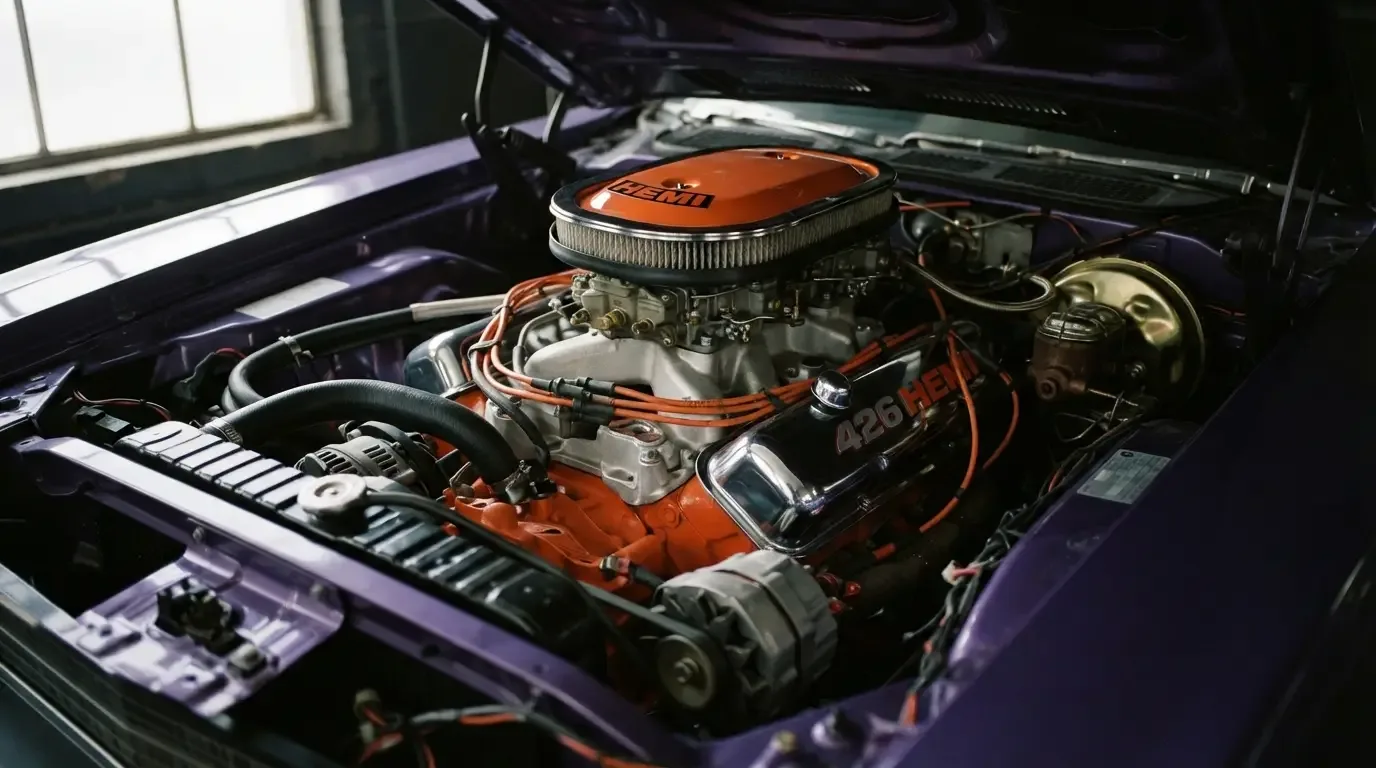
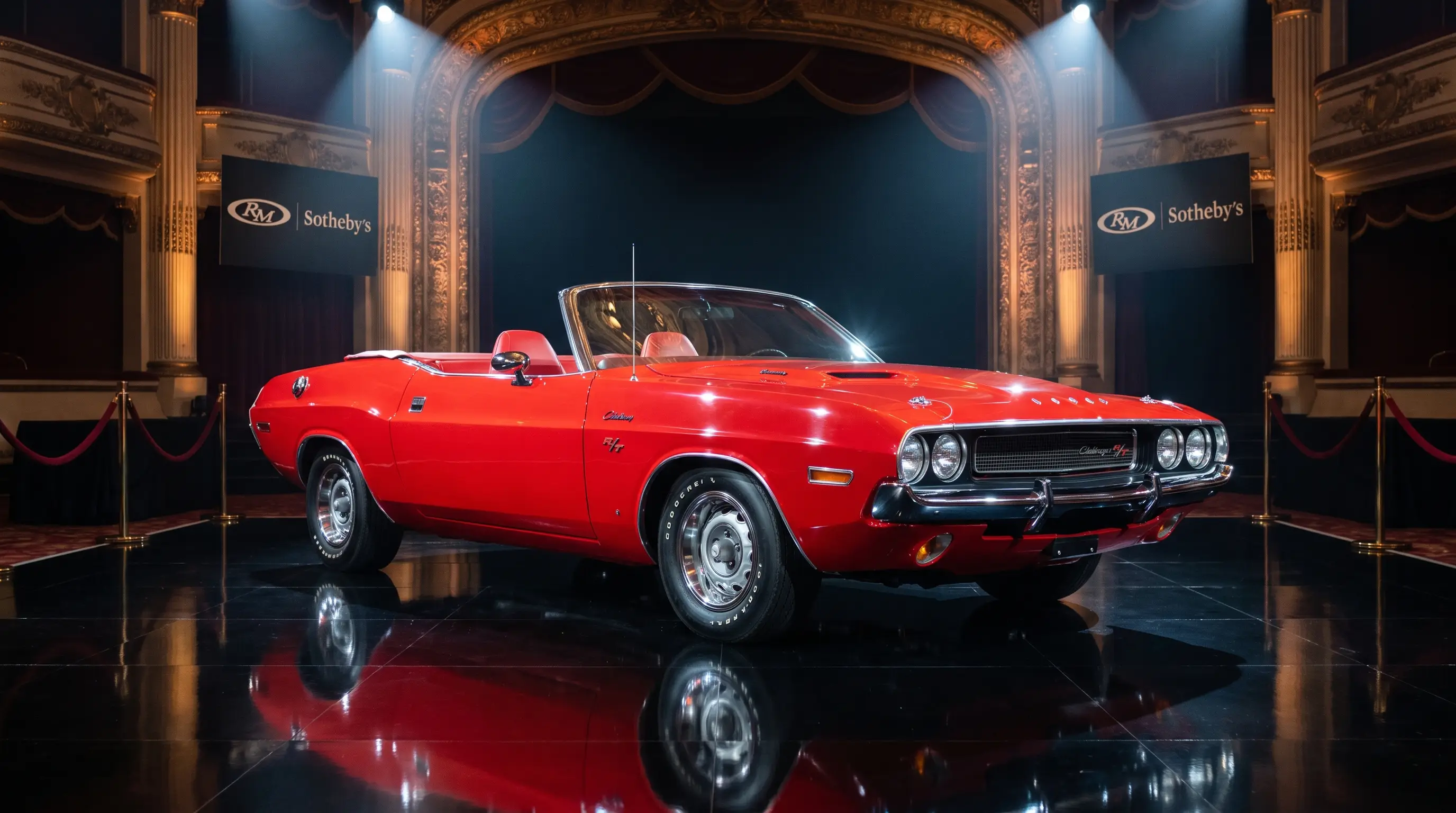
Strip away the auction house theater and the record setting Hemi Challengers share a short list of traits. They are convertibles, which is the single biggest lever in this segment given how few convertible Hemi Challengers Dodge built across the model's run. They carry four speed manual transmissions rather than automatics, another rarity premium. They retain fully numbers matching drivetrains verified against broadcast sheets and fender tag codes. And in most cases they carry a documented ownership history without gaps, often including original invoices or period photographs. Remove any one of those four qualities and the same car, mechanically identical, would sell for a fraction of the record price. This is not sentiment. It is straightforward scarcity math applied to a genuinely tiny production pool.
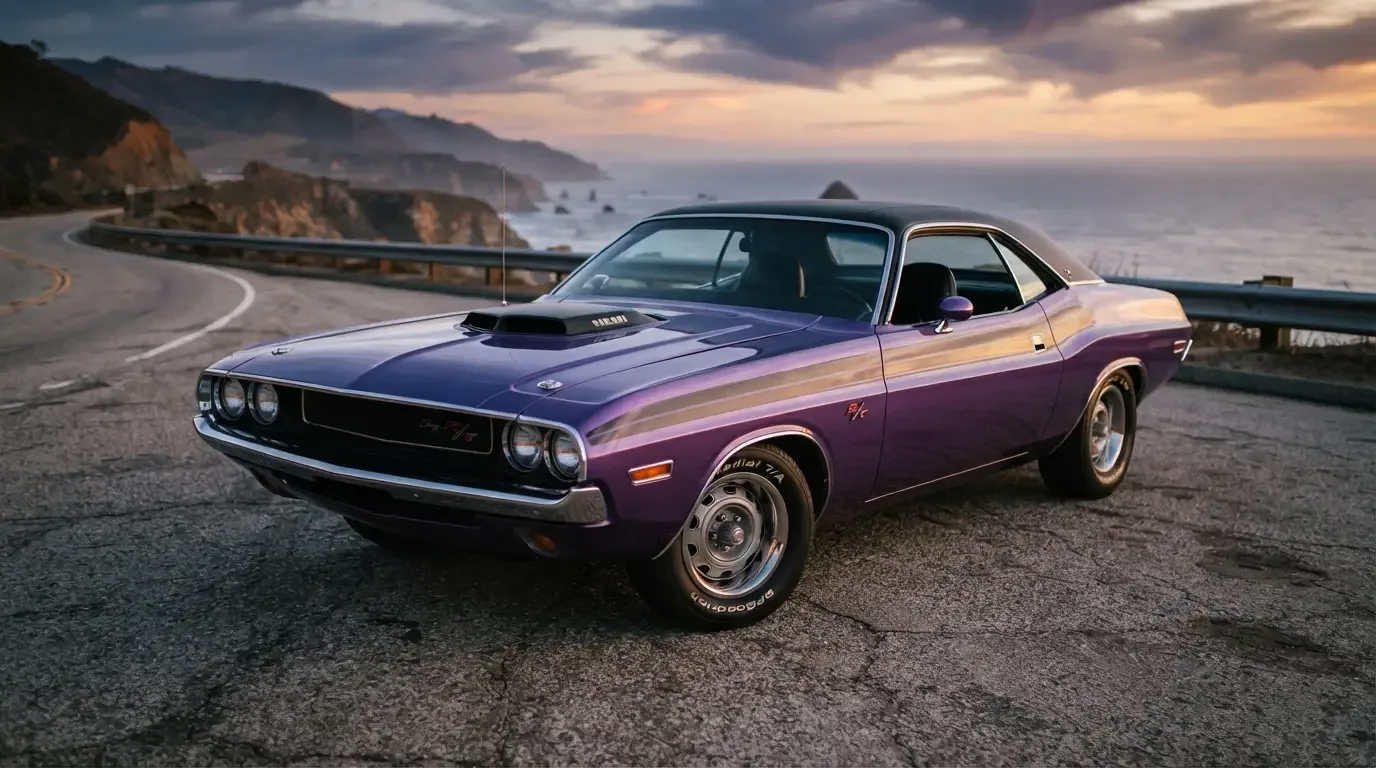
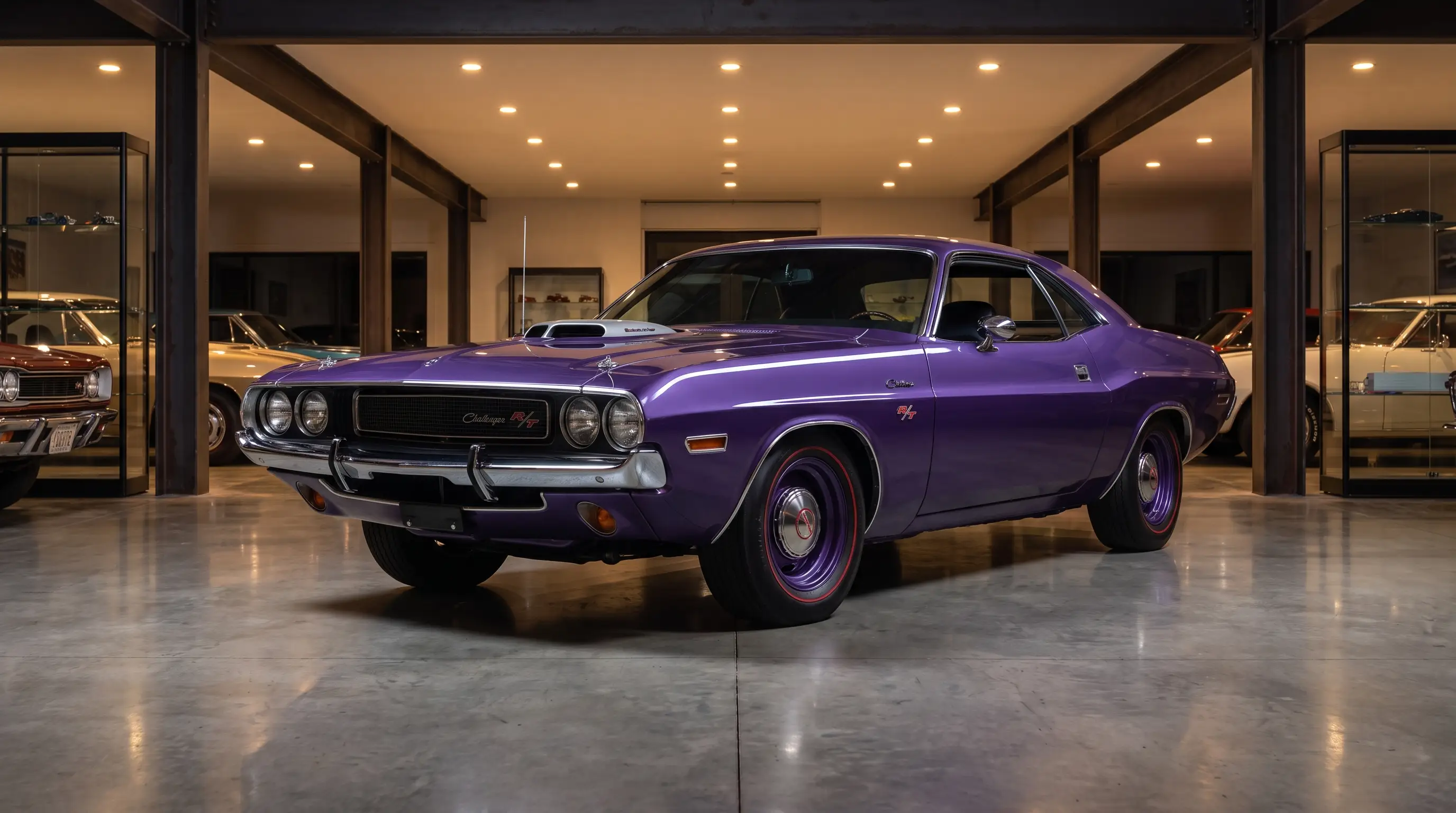
The best documented record among Hemi Challenger convertibles is a 1970 Challenger R/T convertible finished in Plum Crazy Purple, one of just five built with the factory 426 Hemi and a four speed manual, which sold for 1.43 million dollars at Mecum's Phoenix auction in 2019. That figure reflects the intersection of body style rarity, transmission rarity, and documentation rather than any single factor alone, and it remains the benchmark most appraisers point to when discussing the top of this market.
Why condition matters less than people assume
Buyers new to this segment often assume the most expensive car in any given sale must also be the most cosmetically perfect one. That is frequently not true. Appraisers weigh originality and documentation ahead of paint depth and panel gaps, because a numbers matching, well documented car with honest wear tells a truthful story that a flawless but partially restored or undocumented car cannot match. A concours quality restoration on a car missing its original engine will not touch the price of a rougher but fully verified survivor. This surprises people who assume collector cars work like new car showrooms, where shinier always means pricier. It does not work that way here, and treating it as if it does is how buyers overpay for the wrong car.
Liquidity: the part appraisers actually worry about
A high sale price does not automatically mean a liquid asset. The record setting Hemi Challengers sell to a very narrow pool of buyers who can write a seven figure check for a single car, and that pool shrinks further once you require the specific documentation and provenance serious money demands. This matters for anyone thinking about these cars as an investment rather than a passion purchase. Selling a six figure numbers matching hardtop is a manageable process with a reasonably deep buyer pool. Selling a seven figure convertible requires patience, the right auction placement, and often months of lead time to find a buyer willing to transact at that level. Illiquidity is the tradeoff for scarcity, and it is a real risk, not a footnote.
Downside risk in this segment is concentrated almost entirely in documentation failure. A car represented as numbers matching that later proves to carry a replacement engine can lose a large share of its assumed value overnight, and that risk grows with the size of the check being written. This is exactly why pre purchase verification matters more at the top of this market than anywhere else in it.
"The record price tells you what one perfect car sold for on one specific day. It does not tell you what your car is worth. Confusing the two is the single most common and most expensive mistake I see in this segment."
- Marcus Feld
What this means for a realistic buyer
Most people reading about record Hemi Challenger sales are not shopping in seven figures, and that is fine, because the record cars are not representative of the broader market anyway. A well documented numbers matching hardtop, non convertible, with an automatic transmission, will transact for a fraction of the headline number while still holding real long term value within the Hemi Challenger hierarchy. Buyers who want exposure to this model without competing for the rarest examples should shop that tier directly rather than chasing convertibles they cannot realistically acquire or afford to hold. You can shop classic Challenger listings to see where current asking prices sit across the full range of configurations, from six figure hardtops up toward the rarer convertibles that occasionally test seven figure territory.
The appraisal lesson buried in every record sale
Every record price this model has set follows the same formula: rarity of body style, rarity of transmission, verified originality, and documented history, stacked together in one car. None of those factors are replicable by restoration or by marketing. They either exist in a given car's actual history or they do not. That is the entire reason record prices in this segment keep climbing even as broader muscle car markets soften elsewhere. The pool of cars that can legitimately claim all four qualities is fixed, permanently, and demand for that fixed pool has nowhere to go but toward the buyers willing to pay for it.
Sources and notes
- TopSpeed: Most expensive Hemi-powered Mopars sold at auction
- Sports Car Market: 1970 Dodge Challenger R/T Hemi convertible profile
- Mecum Auctions: results archive
- Hagerty: 1970-74 Dodge Challenger buyer's guide
- Wikipedia: Dodge Challenger (first generation)
How to read a record price without misapplying it
When a new record sale gets announced, resist the urge to apply that number to any car you might be considering, even one that looks similar on paper. Ask four questions before adjusting your own valuation expectations. First, was the record car a convertible or a hardtop, since that single distinction alone can separate two otherwise comparable cars by a wide margin. Second, was the transmission a four speed or an automatic. Third, was the drivetrain fully numbers matching and independently verified, or simply represented as such by the seller. Fourth, did the sale include a buyer's premium in the reported figure, since headline numbers reported by the media sometimes include fees that inflate the apparent hammer price. Appraisers who skip these questions and simply extrapolate from a headline number end up with valuations that do not survive contact with an actual sale. The record cars are useful as evidence of what the absolute top of the market can support. They are not useful as a pricing guide for anything less than an identical car, and treating them otherwise is the fastest way to overpay at a sale where the excitement of a record headline pushes bidders past what the actual car in front of them supports.