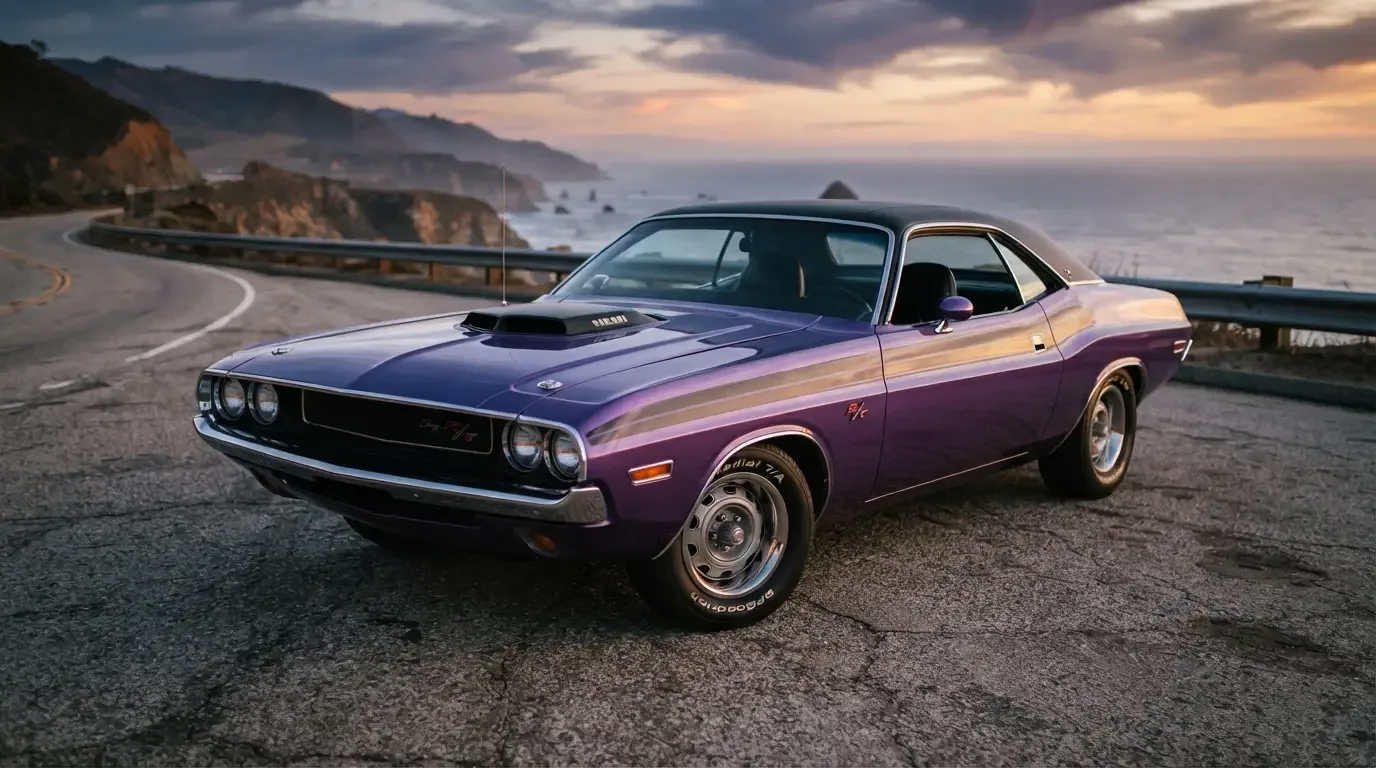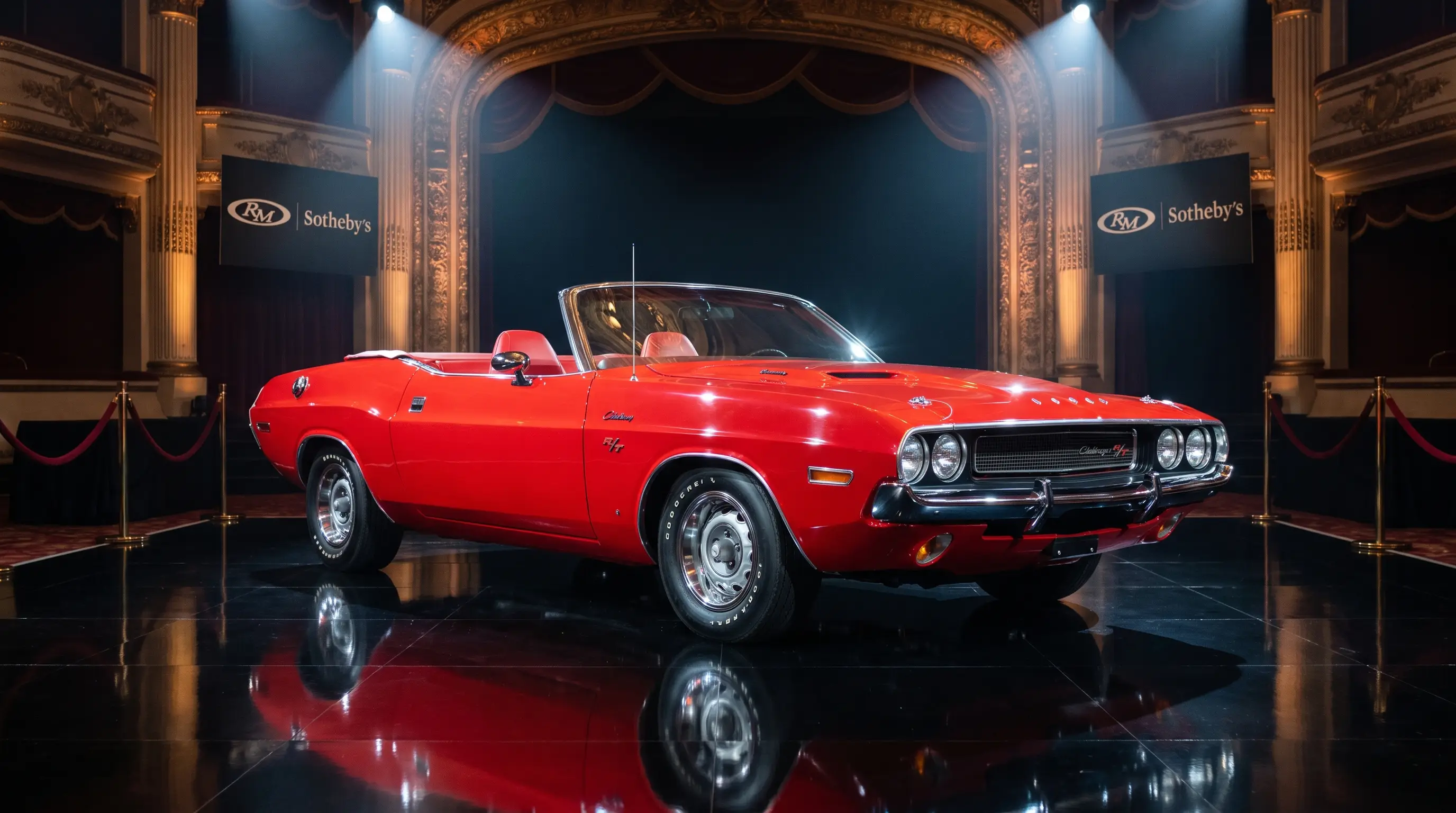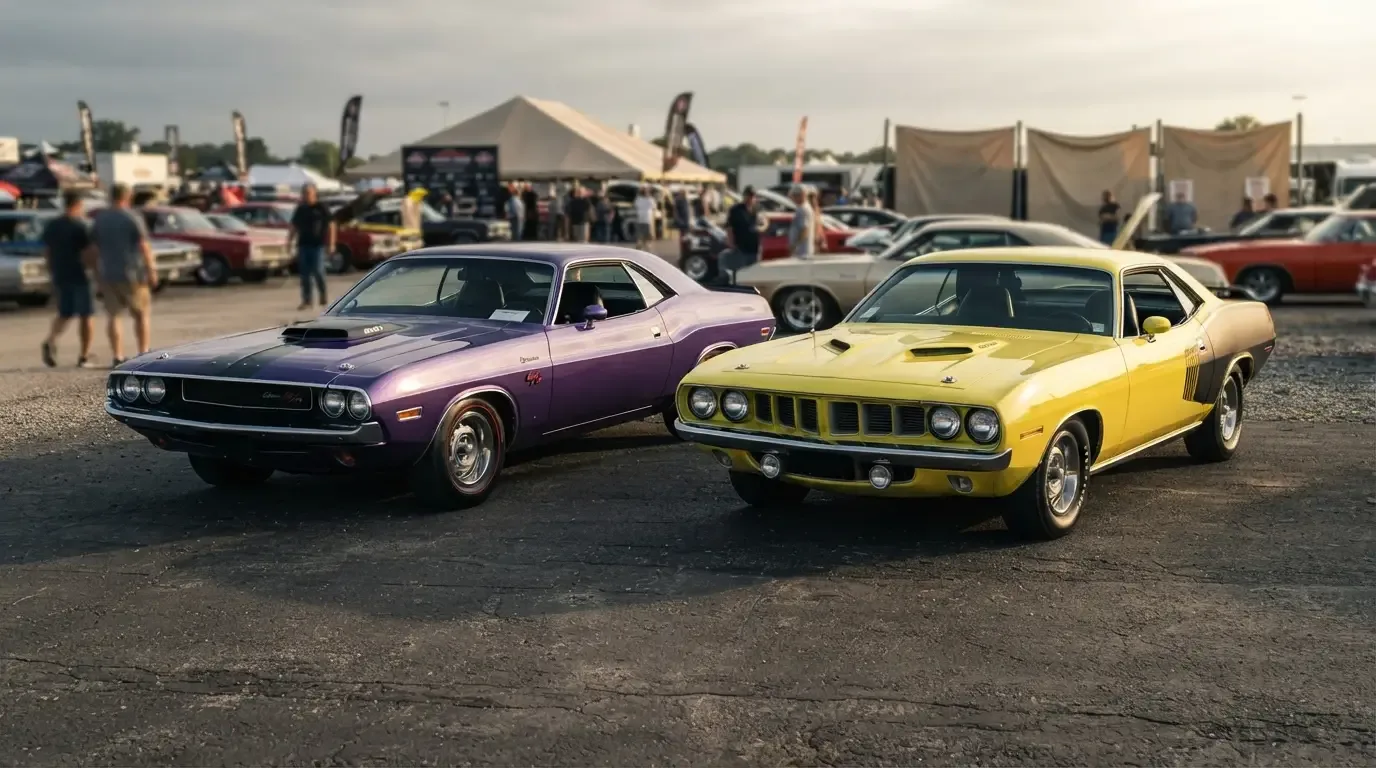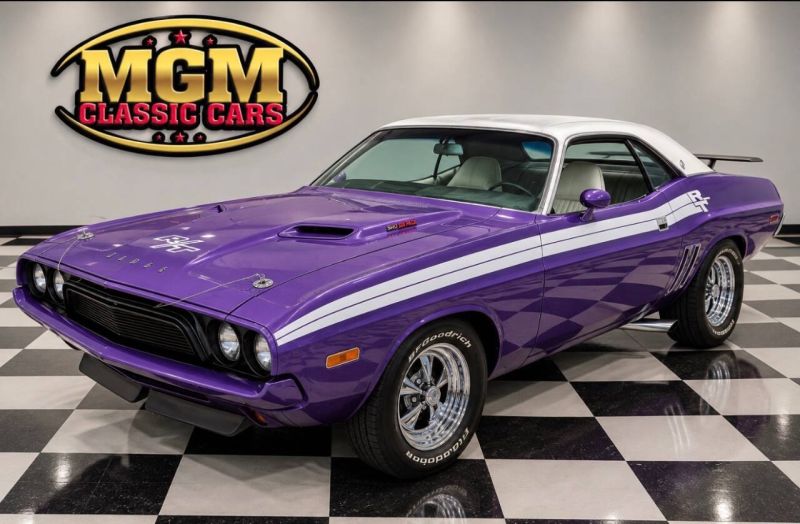
The 426 Hemi did not fall out of the sky into the Dodge Challenger's engine bay in 1970. It came from a specific group of Chrysler engineers who had spent most of the previous decade fighting a problem most people never think about: how do you get an engine to breathe better without redesigning the entire block. The 426 hemi engineering story starts on the racetrack years before the Challenger existed, and understanding that origin explains why the engine felt like it belonged in a race car even when it was sitting under the hood of a street coupe with air conditioning.
The racing problem that started it all
Chrysler's engineers, working under the direction of people like Tom Hoover, built the original 426 Hemi in the early 1960s specifically to win at NASCAR and at the drag strip, not to sell to the public. The hemispherical combustion chamber design, which gave the engine its name, allowed larger valves and a more direct path for the air-fuel mixture to move through the cylinder. That geometry is not a gimmick. It genuinely improves volumetric efficiency, letting the engine breathe more air per cycle than a conventional wedge-head design of similar displacement.
The tradeoff was complexity and cost. A hemispherical head needs more elaborate valve gear, generally with the valves splayed at an angle rather than sitting in a simple parallel row, which means a more complicated rocker arm arrangement and a wider, heavier cylinder head casting. Engineers accepted that cost because on a track, breathing efficiency wins races, and NASCAR victories in 1964 proved the math immediately. Chrysler's competitors noticed fast, and rule changes followed just as fast, which is part of why the street version eventually had to exist at all.
From racetrack rule to street engine
NASCAR briefly banned the race Hemi from competition, arguing it was not a production engine available to ordinary buyers. Chrysler's answer was to build a street-legal version, detuned for pump gasoline and emissions of the day but still carrying the same fundamental head design, and put it into regular production cars starting with the 1966 model year. That decision, forced by a sanctioning body rather than a marketing department, is why the 426 Hemi ended up in showrooms at all. By the time the Challenger arrived for 1970, the Hemi option had already been proven in B-body cars for several years, and Chrysler simply extended it to the new E-body platform.
Engineers had to adapt the big, wide engine to fit into a shorter, tighter engine bay than the Hemi had previously occupied, and that packaging work fell to a team focused less on glamour and more on clearances, motor mount geometry, and cooling capacity. None of that work makes headlines the way a quarter mile time does, but it is the difference between an engine that fits and runs reliably and one that is a maintenance nightmare from day one.
Why the design choices still matter
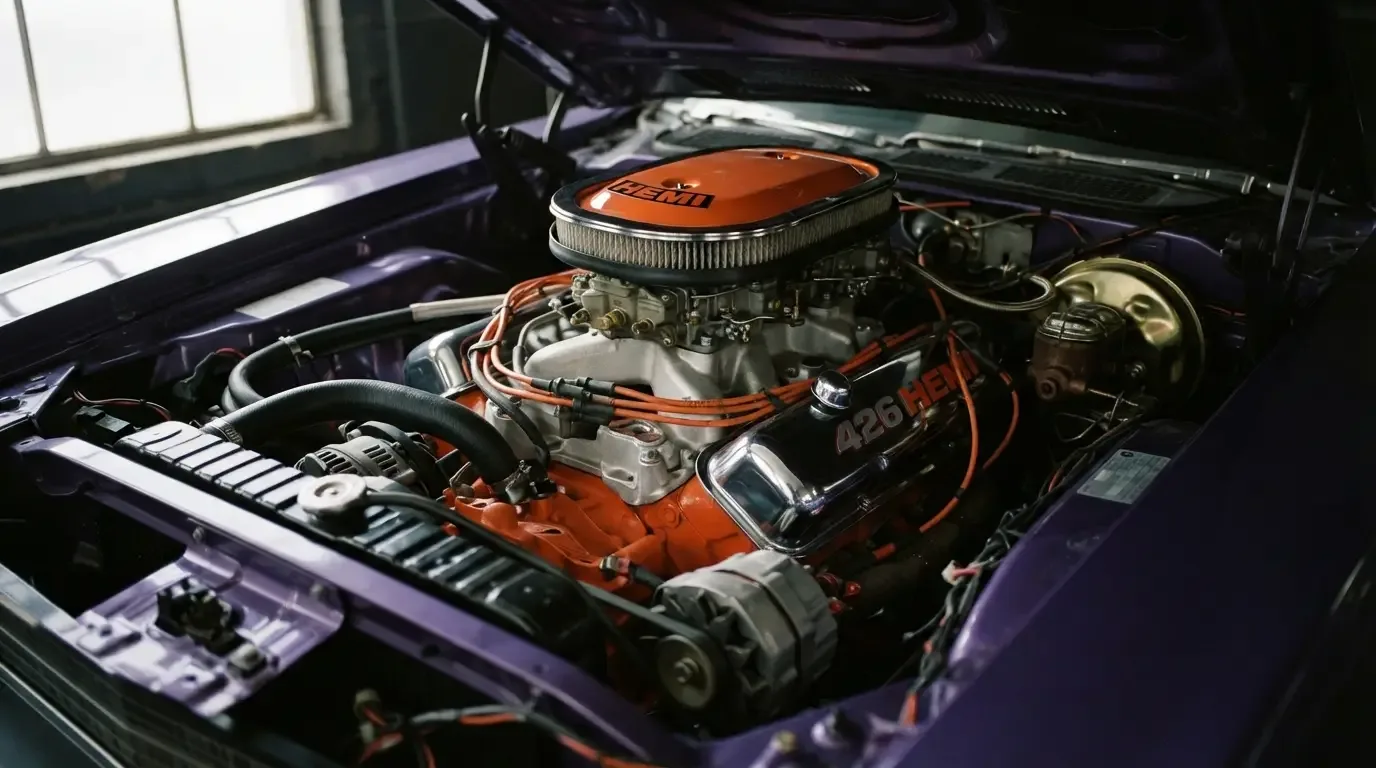
The dual four-barrel carburetor setup used on most Hemi applications was as much an engineering answer as a performance flex. Feeding an engine this large through a single carburetor created airflow compromises the hemispherical heads were specifically designed to avoid, so engineers specified two carburetors working in sequence to keep the fuel delivery matched to the engine's actual breathing capacity across the rev range. It was a coordinated system, not a collection of individually impressive parts bolted together for a spec sheet.
Cooling was another quiet engineering fight. A big block engine making this kind of power in a mid-size platform generates real heat, and Chrysler's engineers specified heavy duty radiators and, on many build combinations, fan shrouds and clutch fans engineered specifically to keep the Hemi from cooking itself in stop and go traffic, something a pure race engine never had to worry about. Street cars have different failure modes than race cars, and the engineering team had to solve for both at once.
"Nobody remembers the guy who figured out the cooling system, everybody remembers the quarter mile time, but the cooling system is the reason the quarter mile time happened more than once."
- Dan Reeves
The legacy those engineers left behind
What makes this engineering story worth revisiting is how deliberately unglamorous most of the actual work was. Nobody designed the 426 Hemi to be a legend. They designed it to solve a specific racing problem, then adapted that solution to survive daily use, emissions inspections, and insurance company scrutiny, all without abandoning the core hemispherical design that made it competitive in the first place. The legend came later, built by drivers and magazines and decades of bench racing. The engineering came first, and it came from a small group of people solving one hard problem after another with the tools 1960s Detroit actually had available.
For readers who want the full arc of how this engine ended up under a Challenger's hood specifically, more on the 426 hemi engineering story traces that path in detail. There is a related story worth reading too, covering how the engine's presence changed the calculus for one of the E-body's rarer body styles.
Materials and manufacturing constraints of the era
It is easy to forget how much of this engineering happened without the tools modern engineers take for granted. No computer modeling existed to simulate airflow through the combustion chamber before a single casting was poured. Engineers relied on flow bench testing, dynamometer runs, and a lot of iterative trial and error, building a head, testing it, measuring the results, and going back to the drawing board when the numbers did not match the theory. That process took years, not the weeks a modern simulation could compress it into, and it explains why the Hemi's development stretched across most of a decade before it reached the form that ended up in the Challenger.
Manufacturing the hemispherical heads themselves was also more expensive than producing a conventional wedge head, since the casting geometry was more complex and the machining tolerances for the splayed valve arrangement left less room for error. Chrysler absorbed that cost because the racing results justified it, and later because the street version's reputation justified charging a premium for the option on regular production cars. That premium is part of why Hemi cars were built in smaller numbers than their big block siblings, a scarcity that has everything to do with manufacturing cost and very little to do with artificial rarity.
Where the story leads today
Understanding the engineering behind the 426 Hemi changes how a person looks at the finished car. It is not just a number on a fender badge. It is the product of a specific chain of decisions made by engineers solving real problems under real constraints, and that context is part of what gives an original Hemi Challenger its lasting credibility with serious collectors. If that history has you looking for one of these cars in the metal, there are Challengers for sale now carrying the same engine this whole story is about.
Every Hemi Challenger on the road today is running an engine that started as a solution to a racing problem, got legislated into street production almost by accident, and then survived decades of changing tastes because the underlying engineering never stopped making sense. That is a more interesting story than any horsepower number by itself, and it is the reason this engine still commands the respect it does.