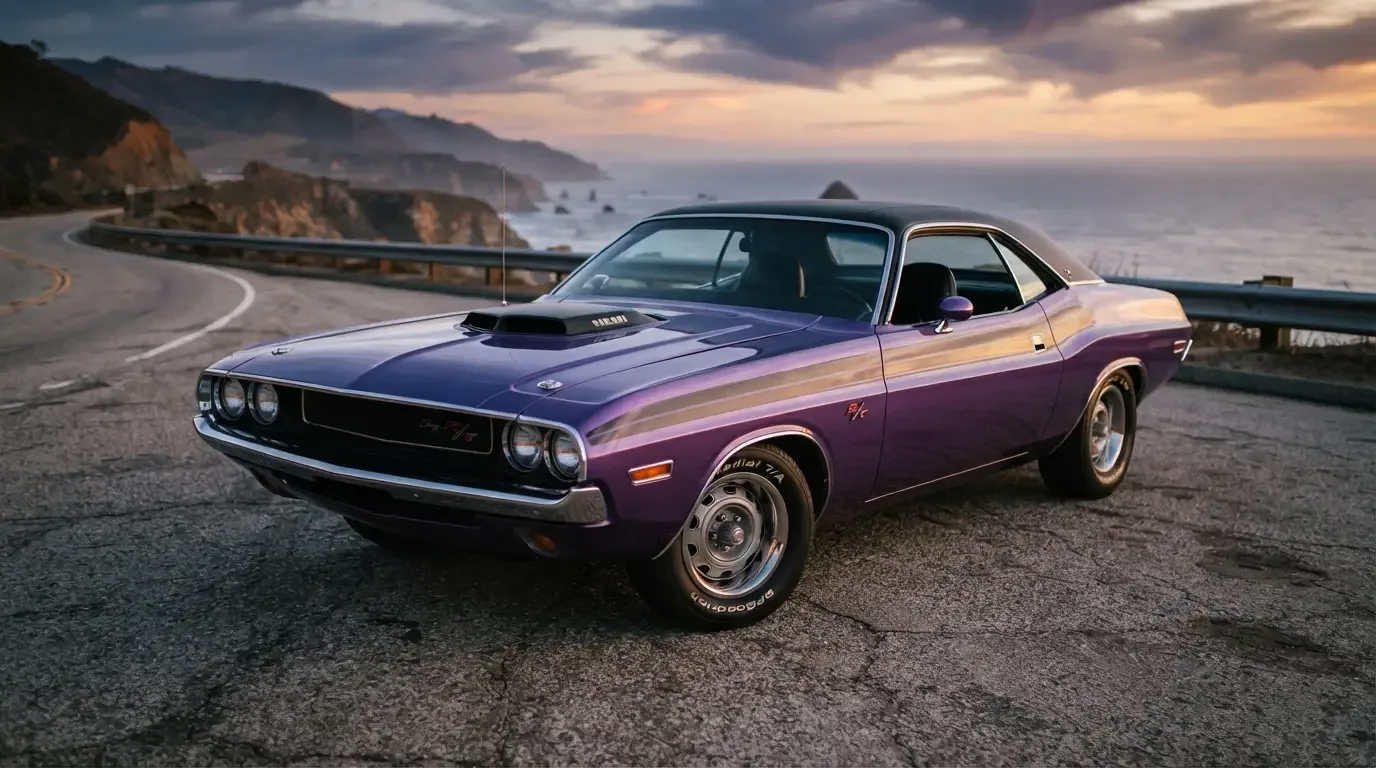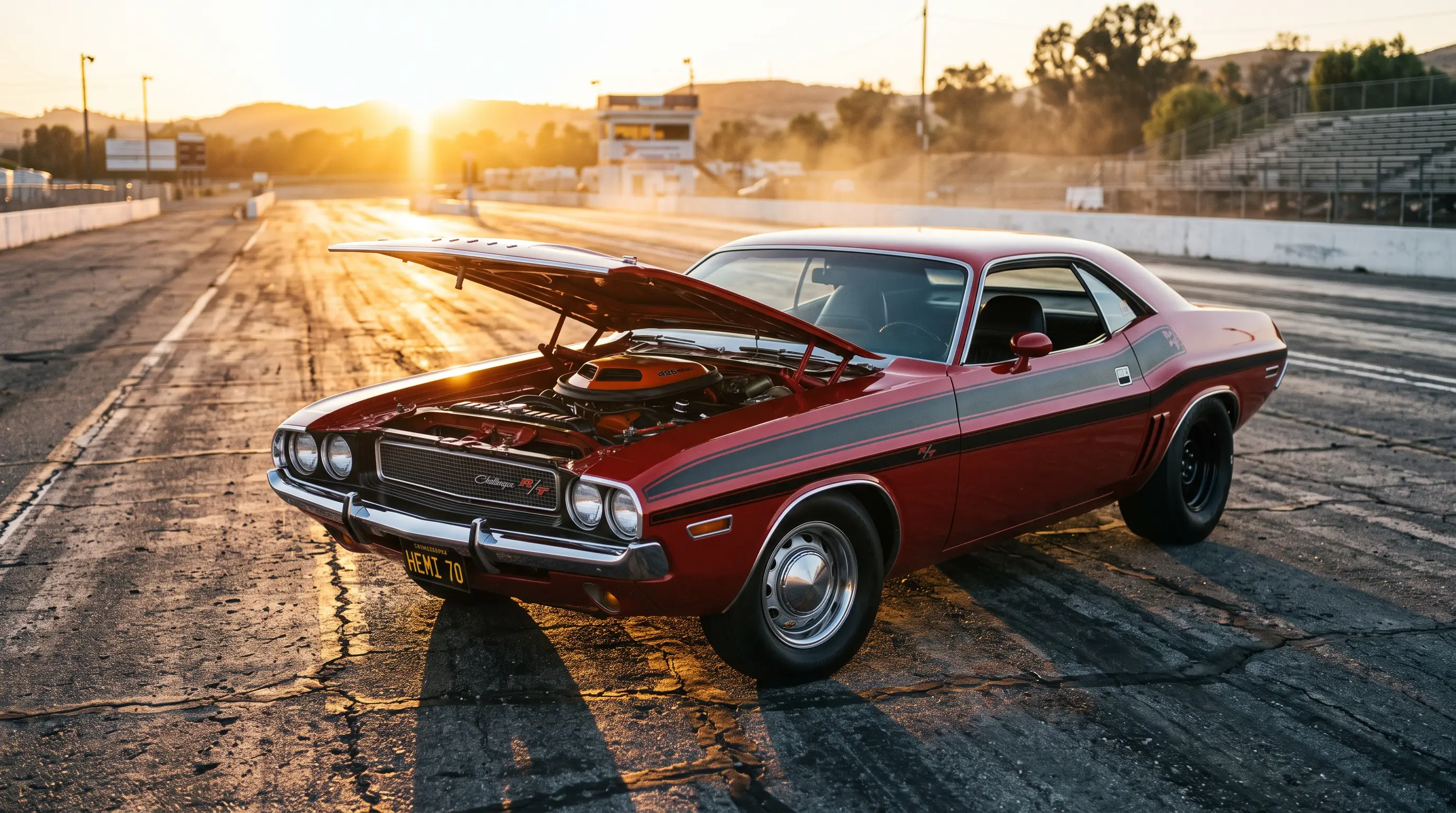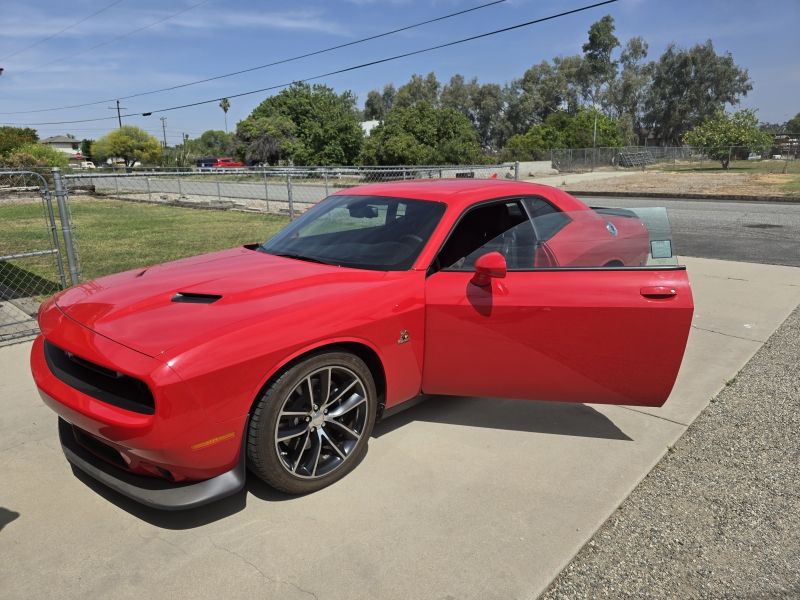
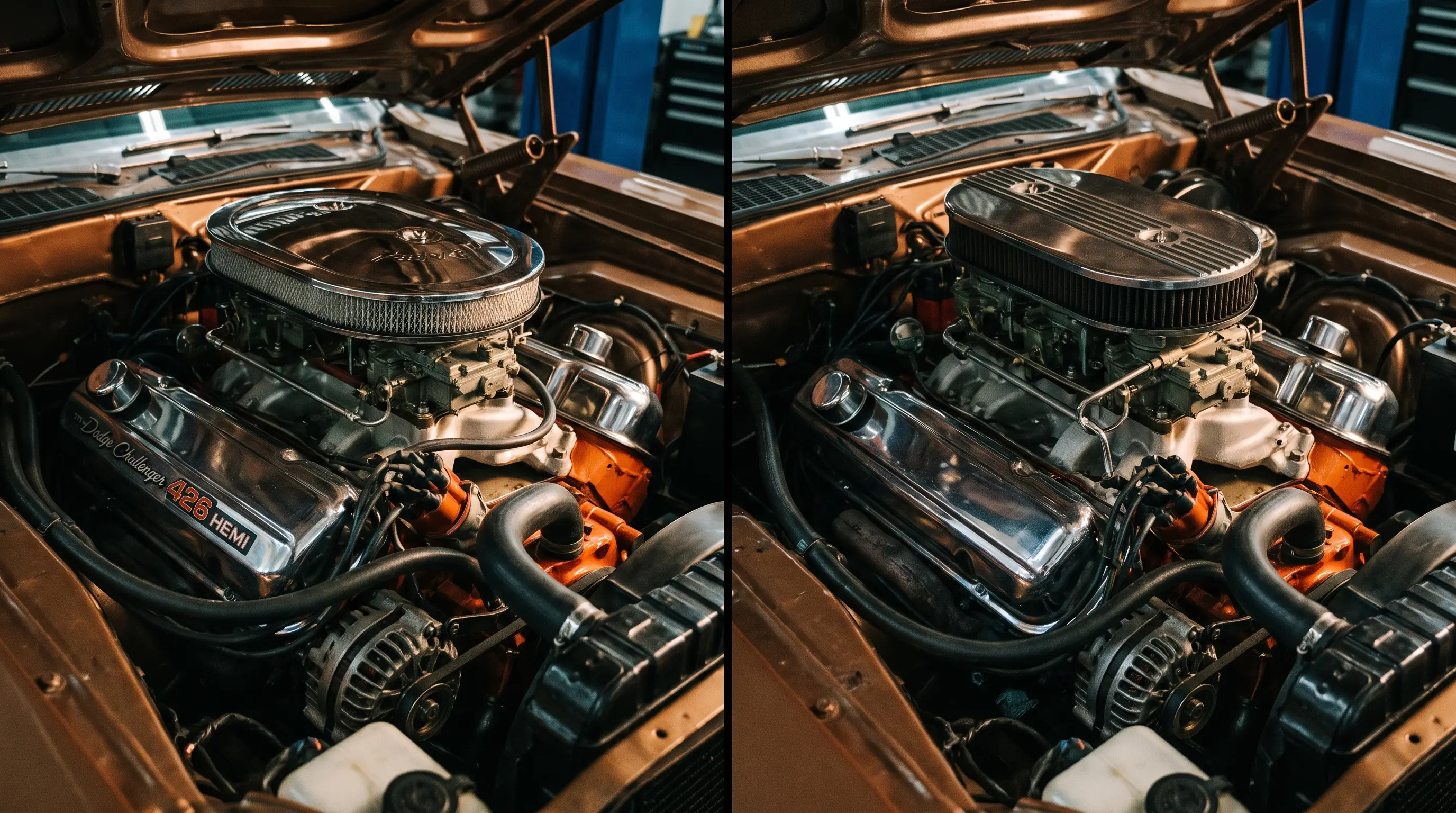
The hemi vs 440 six pack argument has been running in Dodge Challenger circles for over fifty years, and it has never really been settled, because the two engines were built to solve different problems. The 426 Hemi was Chrysler's uncompromising race motor stuffed into a street car with minimal apology. The 440 Six Pack was the pragmatic answer, most of the performance for a fraction of the cost and none of the drama. Both ended up in the Challenger, and both have passionate defenders who will argue the point at any car show that will have them.
What each engine actually was on paper
The 426 Hemi carried a factory rating of 425 horsepower, a number everyone in the industry understood at the time to be conservative for insurance purposes. Its hemispherical combustion chamber design, the source of the nickname, allowed larger valves and better breathing at high RPM than a conventional wedge head could manage. The 440 Six Pack, by contrast, used three two barrel carburetors on a wedge head design rated at 390 horsepower, a number that was closer to honest but still not the full story once you accounted for how the middle carburetor alone handled most street driving.
On raw output, the Hemi wins the spec sheet comfortably. But spec sheets do not settle real world arguments, and the gap between the two engines in actual street performance was smaller than the horsepower numbers suggest, particularly once you accounted for weight distribution. The Hemi's iron block and heads added real mass over the front axle that the 440 Six Pack shared but did not exceed by nearly as much.
Where the numbers get interesting
Quarter mile times between well tuned examples of each engine often landed within a few tenths of a second of each other, which surprised plenty of owners who assumed the Hemi's horsepower advantage would translate directly into a bigger performance gap. The Hemi's real advantage showed up higher in the RPM range, where its head design kept breathing efficiently long after a 440 wedge had started to run out of air. For a street car doing most of its work below five thousand RPM, that advantage mattered less than the brochures implied.
Cost told a different story entirely. The Hemi option added a substantial premium to a Challenger's window sticker and, more importantly, a much larger insurance surcharge that pushed plenty of genuinely interested buyers toward the 440 Six Pack instead. Chrysler sold vastly more 440 Six Pack Challengers than Hemi cars for exactly that reason, ordinary buyers doing ordinary math about what they could actually afford to insure.
Reliability and daily livability
This is where the analytical case for the 440 Six Pack gets stronger. The Hemi needed more attention to keep its dual quad carburetion in tune, ran hotter in stop and go traffic, and was less forgiving of a lazy maintenance schedule. Owners who drove their Challengers daily, rather than saving them for weekend runs, frequently reported the 440 as the easier engine to live with, a wedge design with a simpler top end and a broader powerband for everyday use.
None of that makes the Hemi the wrong choice. It makes it a different choice, one built around peak capability rather than everyday convenience. If you want the full story behind why Chrysler built the street Hemi the way it did, the engineering reasoning traces back to its NASCAR and drag racing origins, a pedigree the 440 never claimed and never needed to.
"Run the numbers honestly and the Hemi wins on paper every time, but the 440 Six Pack wins the argument about which engine most owners actually wanted to drive to work on a Monday."
- Emily Chen
| Spec | 426 Hemi | 440 Six Pack |
|---|---|---|
| Factory rated horsepower | 425 hp | 390 hp |
| Cylinder head design | Hemispherical, cross flow | Wedge, conventional |
| Carburetion | Dual four barrel | Triple two barrel |
| Displacement | 426 cubic inches | 440 cubic inches |
| Typical buyer priority | Peak capability | Value and drivability |
What owners actually chose in period
Sales data from Challenger's original run makes the buyer psychology plain. Dealers reported that customers who walked in intending to order a Hemi frequently walked out with a 440 Six Pack car once the insurance quote and the price difference were laid out side by side. That was not a failure of desire, it was simple math applied by working people spending real money on a car they still needed to drive to a job on Monday morning. The Hemi remained the aspirational choice, the one magazine road tests obsessed over, while the 440 Six Pack quietly became the more common performance Challenger on the road.
That gap between aspiration and actual sales volume is exactly why the surviving Hemi population is so much smaller today, and why the two engines occupy such different places in the current collector market despite being separated by only thirty five horsepower on paper.
Which one is actually the king
If the question is peak capability with cost as no object, the Hemi wins, full stop, its breathing advantage at high RPM is real engineering, not marketing. If the question is which engine delivered more usable performance per dollar to more Challenger buyers, the 440 Six Pack has the stronger claim, and Chrysler's own sales figures back that up. The honest answer to hemi vs 440 six pack is that it depends entirely on what you are optimizing for, and anyone who gives you a single answer without asking that question first is skipping the actual analysis.
Today the market has made its own judgment, values for documented Hemi cars have pulled well ahead of 440 Six Pack Challengers, but that reflects rarity and collector demand more than it reflects which engine was objectively the better street machine. Buyers weighing either option today can compare current browse classic Challenger listings against the performance data here before deciding which side of this old argument actually matters to how they plan to drive the car.
My own bias, and I will state it plainly since opinion is allowed here, leans toward the 440 Six Pack as the more interesting engineering compromise of the two. The Hemi gets the glory because it was never designed to compromise on anything, and that single mindedness makes for a great story. The 440 Six Pack had to balance cost, insurability, and performance simultaneously, and it did that balancing act well enough that most Challenger buyers in period picked it over the more famous option sitting right next to it on the order form, a fact that says more about real world engineering priorities than any dyno sheet ever will, and one worth remembering the next time someone insists the horsepower number alone settles the argument.