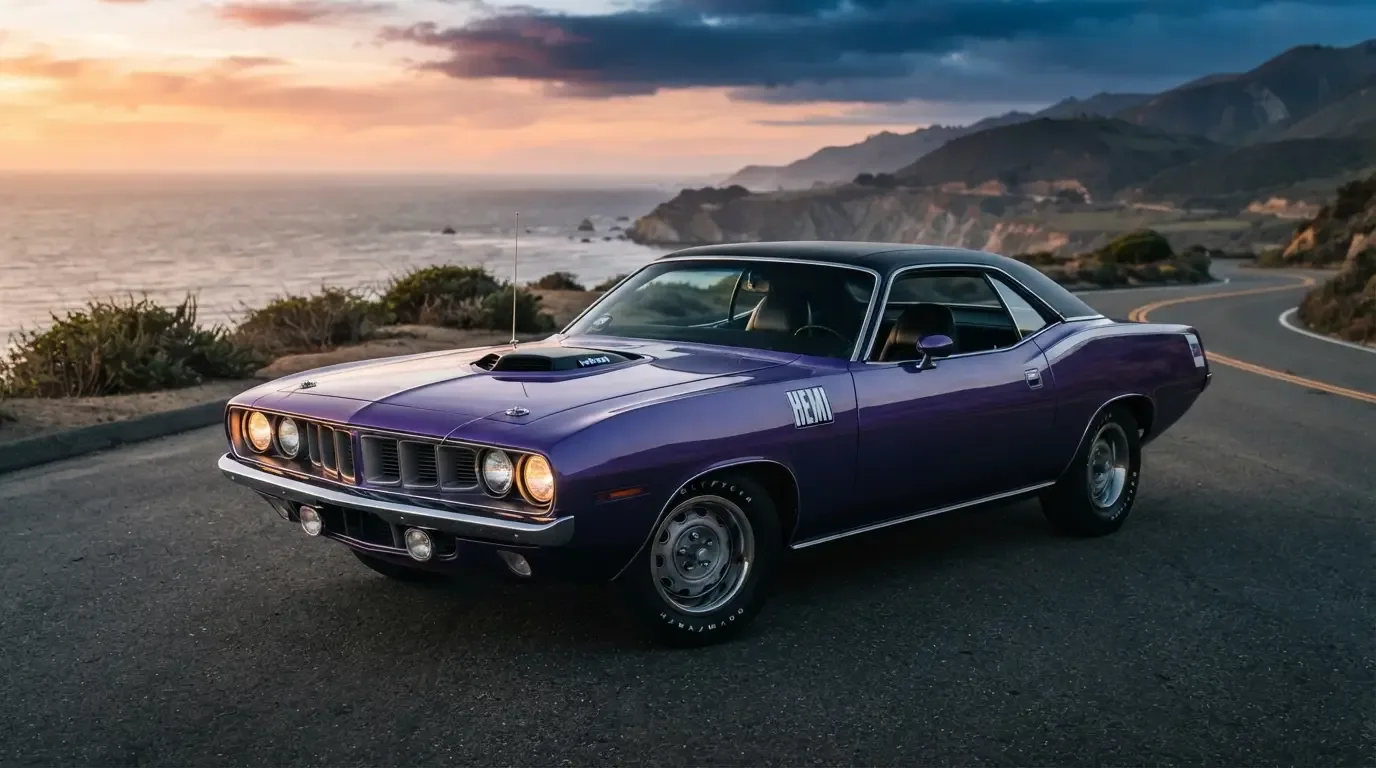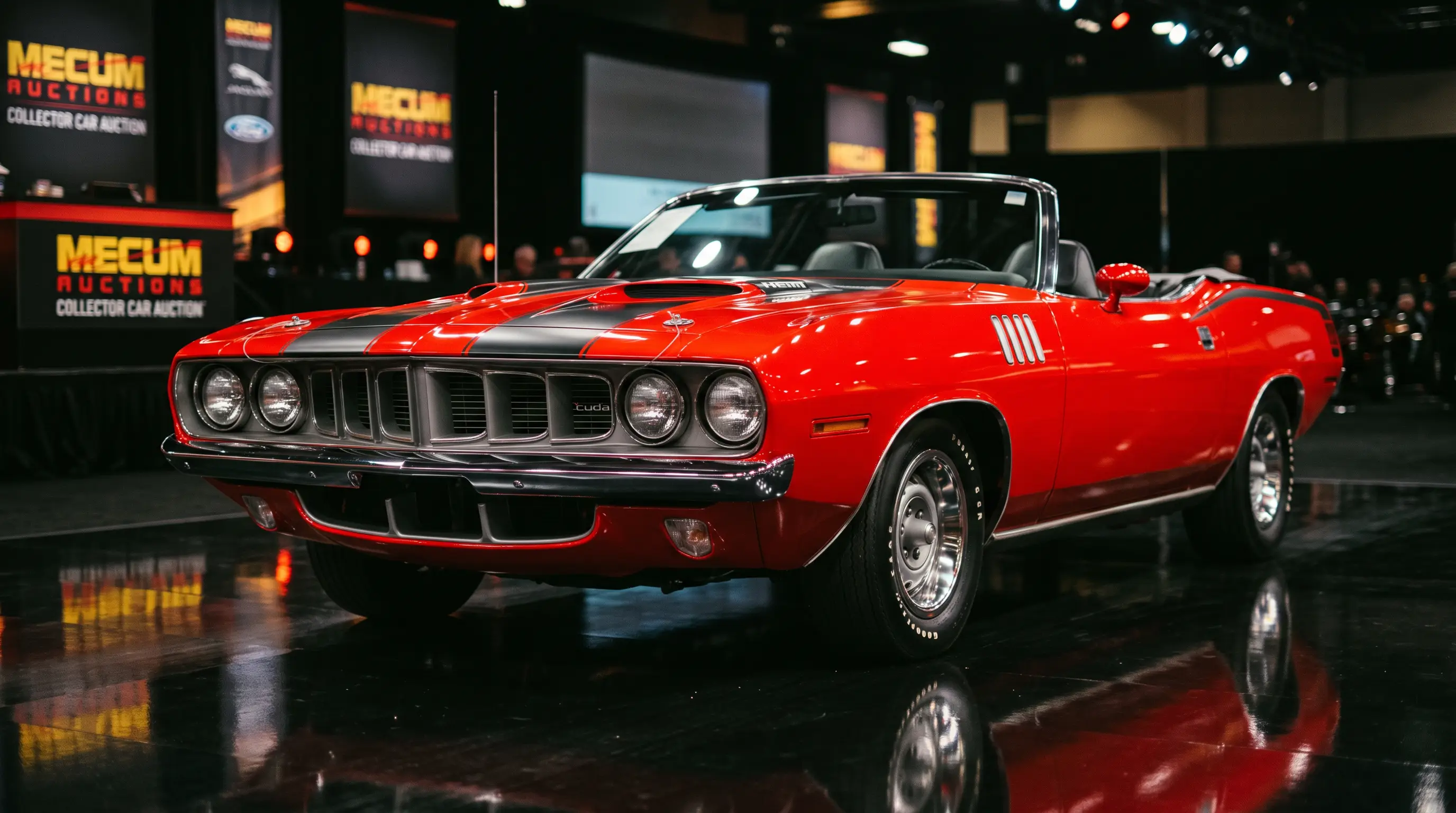
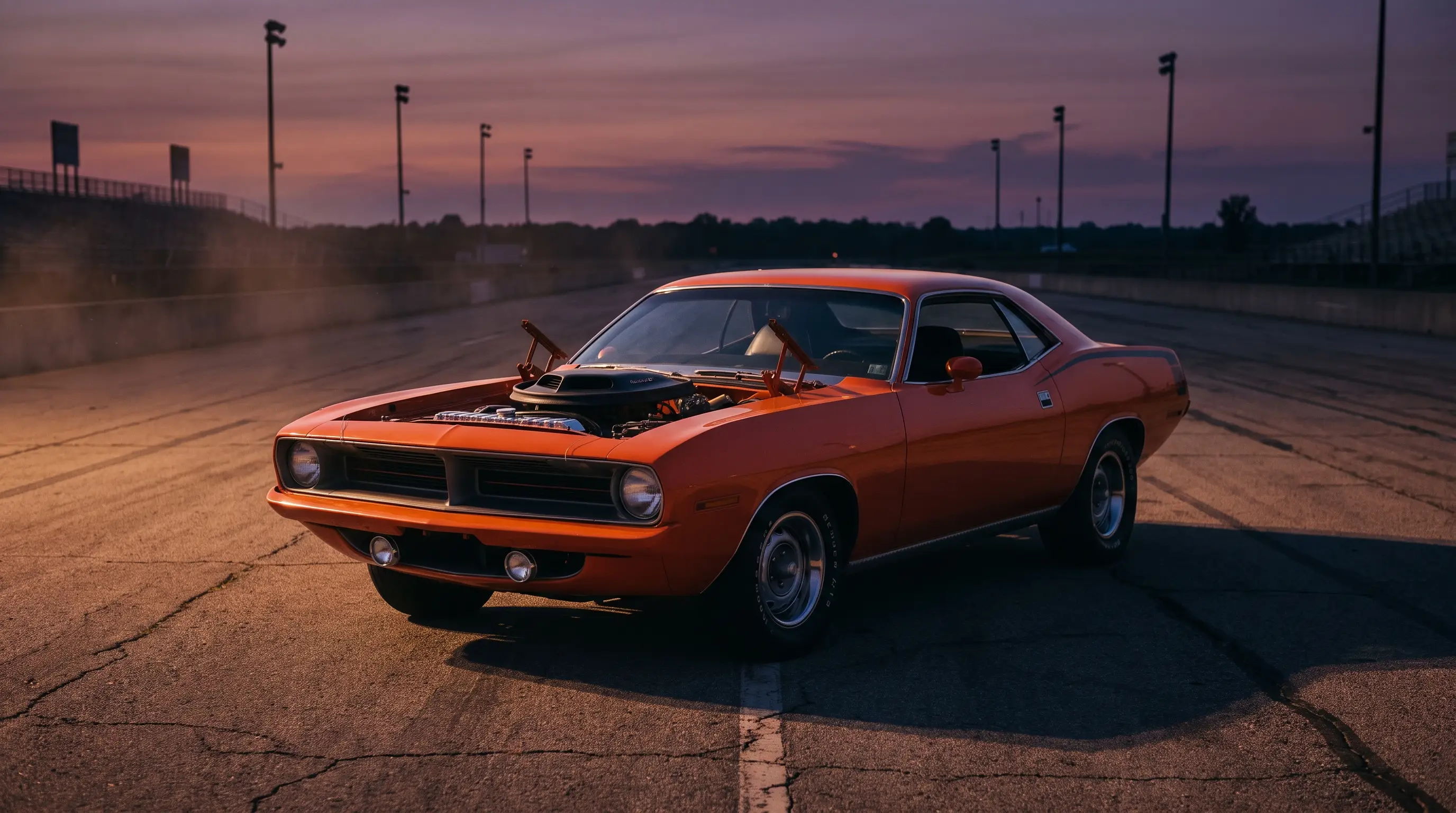
Here is the number that matters. The 426 hemi cuda made a factory-rated 425 horsepower, and that number was almost certainly understated the day it left the plant. Everything else about this engine, the mythology, the drag strip legend, the six-figure auction results, comes back to that one figure and how hard it is to actually put on the ground.
The rating everyone argues about
Chrysler advertised 425 horsepower and 490 lb-ft of torque for the street version of the 426 Hemi in 1970 and 1971, using a pair of Carter carburetors sitting on top of a dual-plane intake. Anyone who has looked at dyno numbers from independent testing of period-correct Hemis knows that figure was conservative, likely by a meaningful margin, a common practice across the entire industry at the time as manufacturers managed insurance underwriters as much as they managed marketing copy. The real number does not change the historical rating. It changes how you should think about what that rating actually meant on the street.
Displacement was 426 cubic inches, hemispherical combustion chambers, and a 10.25 to 1 compression ratio, numbers that made this one of the most serious engines any American manufacturer put in a production car during the entire muscle car era. The 1970-71 street Hemi ran hydraulic lifters, a change from the mechanical, solid-lifter valvetrain used on the 1966-69 street Hemi, adopted alongside a revised cam grind to help the engine live with emissions-era tuning. It was not subtle, it was not efficient, and it was not cheap to insure, all facts that directly shaped how few of these cars actually got built.
Two years, one engine, a shrinking window
The 426 Hemi was only available in the Cuda for the 1970 and 1971 model years before insurance costs and tightening emissions standards ended the option entirely for 1972. Two model years is a short window for any engine option, and it is the direct reason Hemi Cuda production numbers stayed thin even in the option's best years. Buyers who wanted this specific combination had exactly two chances to order one from a dealer, full stop, and that scarcity is baked into the car's reputation today as much as the horsepower figure is.
For the complete background on how this engine fit into the broader Hemi Cuda story across both model years, read hemi cuda history for the full picture.
| Spec | 426 Hemi (street, 1970-71) |
|---|---|
| Displacement | 426 cubic inches |
| Advertised horsepower | 425 hp |
| Advertised torque | 490 lb-ft |
| Carburetion | Dual four-barrel Carter carburetors |
| Valvetrain | Hydraulic lifters, hemispherical combustion chambers |
| Years offered in Cuda | 1970 and 1971 only |
What the number cost in real life
A 425 horsepower rating in 1970 meant an insurance premium that made plenty of buyers walk away from the option sheet entirely, and that single fact is the honest explanation for why so few Hemi Cudas exist today compared to lesser-engined cars from the same two model years. The engine was not held back by demand for performance. It was held back by what performance cost to insure and to order in the first place, a market reality that has nothing to do with the engineering and everything to do with why this specific combination stayed rare from day one.
What the option sheet actually cost
The 426 Hemi was not a line item you added casually. It came bundled with heavier-duty suspension, a stronger transmission and rear axle to handle the torque, and a broader set of supporting hardware that pushed the total option price well beyond what the engine alone would have cost on paper. That bundling was deliberate on Chrysler's part, an acknowledgment that 425 horsepower without the drivetrain to support it reliably was a warranty claim waiting to happen, and it is a large part of why the total cost delta between a small-block Cuda and a Hemi Cuda was so much bigger than the horsepower difference alone would suggest.
Run the actual dollar numbers from a 1970 order sheet and the picture gets clearer. The Hemi option, once every mandatory supporting component is added in, represented a meaningful percentage increase over a comparably equipped small-block car, before insurance is even factored into the equation. Buyers who wanted this specific combination were making a decision with real financial weight attached, not just checking a box for a bigger number on the fender, and that decision weight is baked into every original order that survives on a broadcast sheet today.
That original cost structure still echoes in today's market. A car ordered with every mandatory Hemi-supporting component intact and matching is worth measurably more than a car where those pieces have been swapped or lost over fifty years of ownership changes, because the complete, correct combination is what the factory actually built and what collectors are actually trying to buy back.
Why the number still holds up
Compare 425 horsepower against what most manufacturers were rating their top performance engines at in the same two years, and the Hemi still sits near the top of the entire era's output, understated dyno numbers or not. That comparative standing is exactly why the engine's reputation never faded the way some period performance claims eventually did once buyers got access to better testing equipment decades later. The number held up because independent testing kept confirming it undersold the real output rather than oversold it, which is the opposite of what happened to plenty of other manufacturers' advertised figures from the same period.
"Chrysler rated the 426 at 425 horsepower and everybody in the industry knew that number was light. Fifty years of dyno testing later, nobody has proven them wrong in the other direction."
- Dan Reeves
How it drove versus how it looked on paper
Numbers on a spec sheet only tell part of the story of what this engine was actually like to drive, and the part that does not show up in any table is how much attention the car demanded from its driver. The high compression ratio meant premium fuel was not optional, it was a requirement for avoiding detonation that could damage the engine in short order, and the whole combination demanded a level of tuning attention most owners were not used to giving a passenger car. This was not a car you bought and forgot about between oil changes.
That demanding nature is part of why so many original owners eventually sold their Hemi Cudas rather than keeping them long term. The engine that made the car special was also the engine that made it expensive and inconvenient to live with day to day, and that trade-off pushed plenty of cars into secondhand ownership within just a few years of their original purchase, often at prices far below what the same car commands today. Anyone reading period classified ads from the mid-1970s can find Hemi Cudas listed at a fraction of their original sticker price, sold by owners who had simply had enough of feeding and maintaining an engine built for wide open throttle rather than easy ownership.
Where the story goes from here
The 1971 model year added a specific variant worth its own separate look, covered in a related story on the convertible version of this same engine option, one of the rarest combinations Chrysler ever offered. And for anyone who has read this far and wants to see what is actually on the market carrying this engine or one like it today, Barracudas for sale now is a straightforward place to start comparing real listings against the numbers laid out here.
The 426 Hemi in the Cuda was two model years, one honest number that undersold itself, and a production run small enough that it built its own legend without needing any help from marketing copy. That combination is rare in this industry, and it is exactly why the number still matters more than fifty years later.
Sources and notes
- Wikipedia: Chrysler Hemi Engine
- Curbside Classic: How Many Real Horsepower Did the 1971 426 Hemi Really Make
- TopSpeed: A Complete Guide to 426 Street Hemi Production Figures
- Schneider Cams: 1970/1971 Stock Spec 426 Hemi Hydraulic Lifter Camshaft
- Motales: 426 Hemi, Mopar's Most Famous and Race-Happy Engine