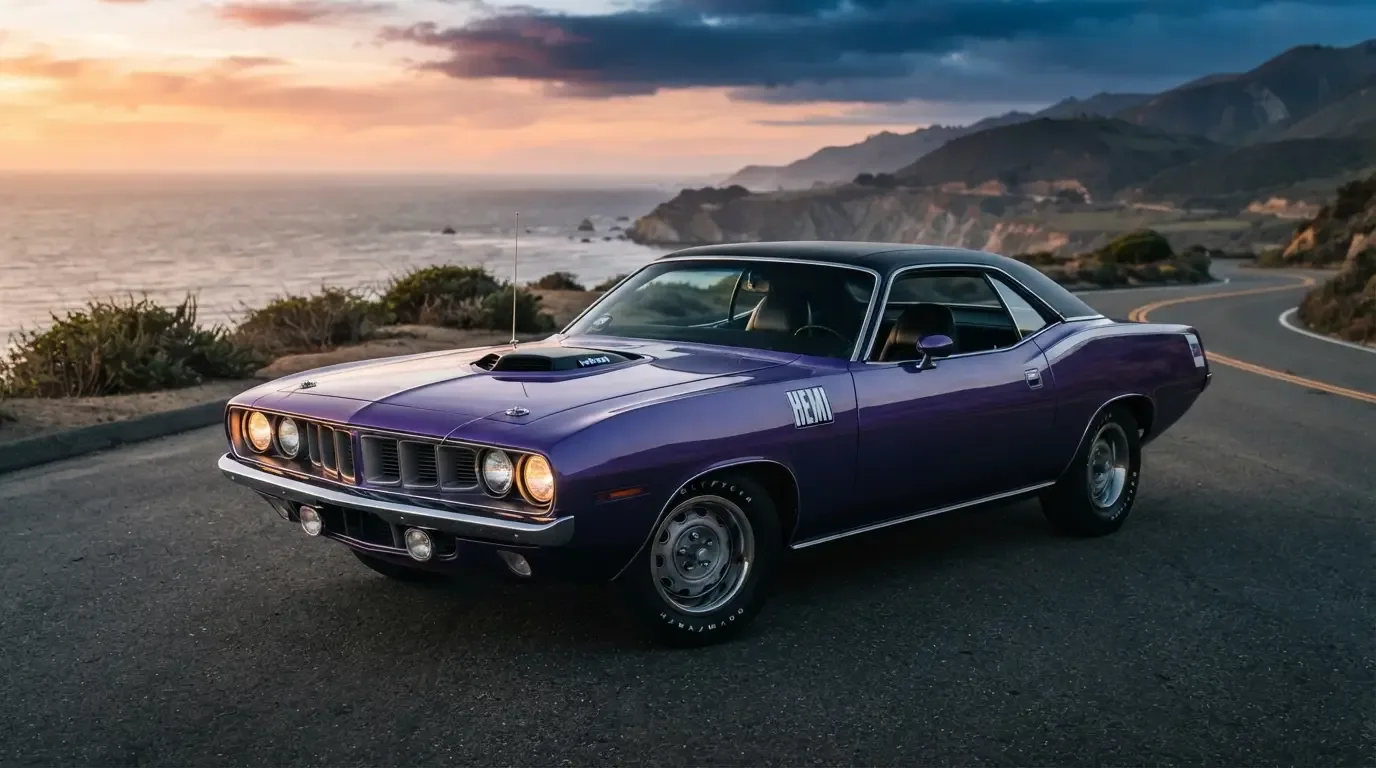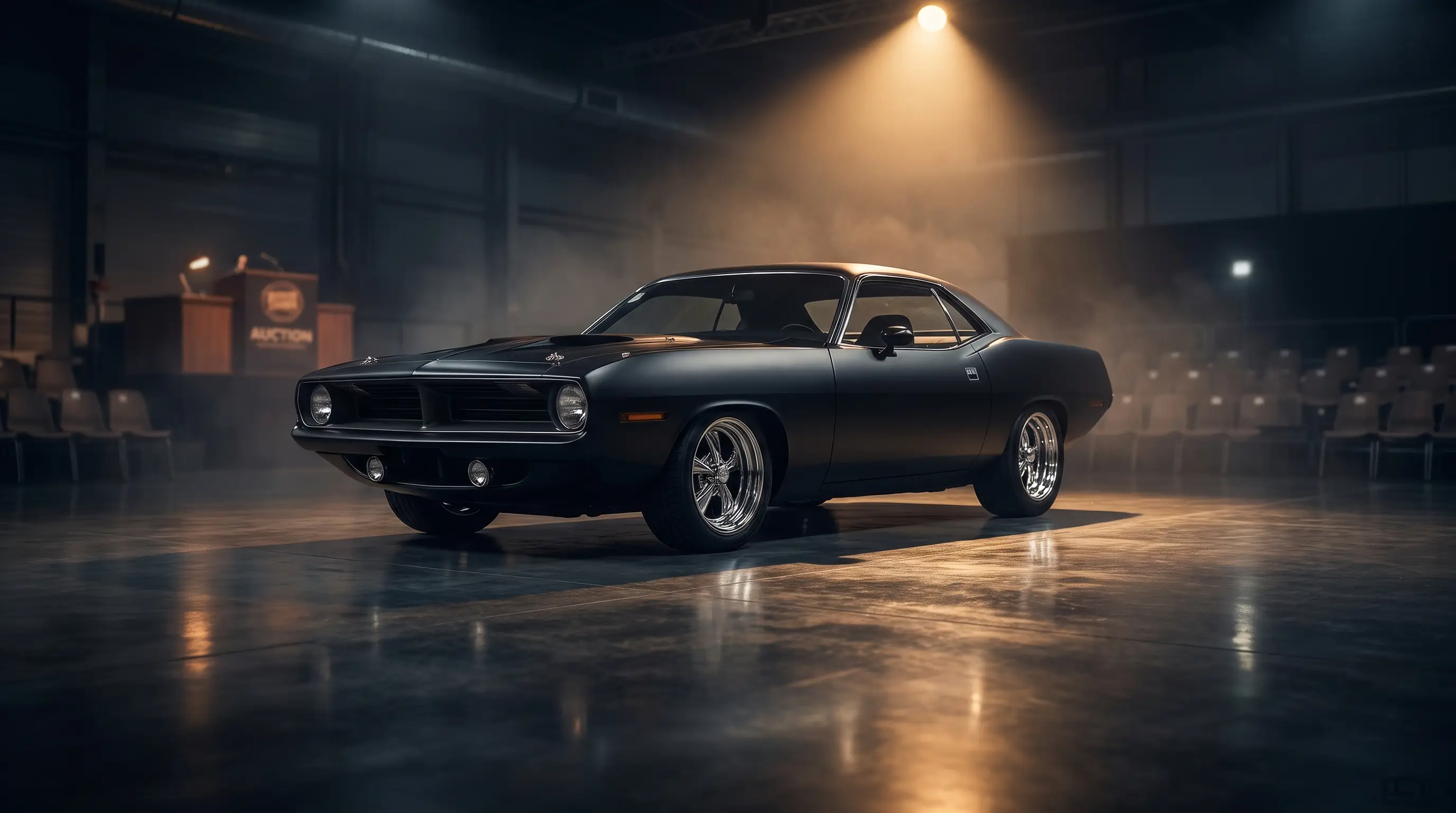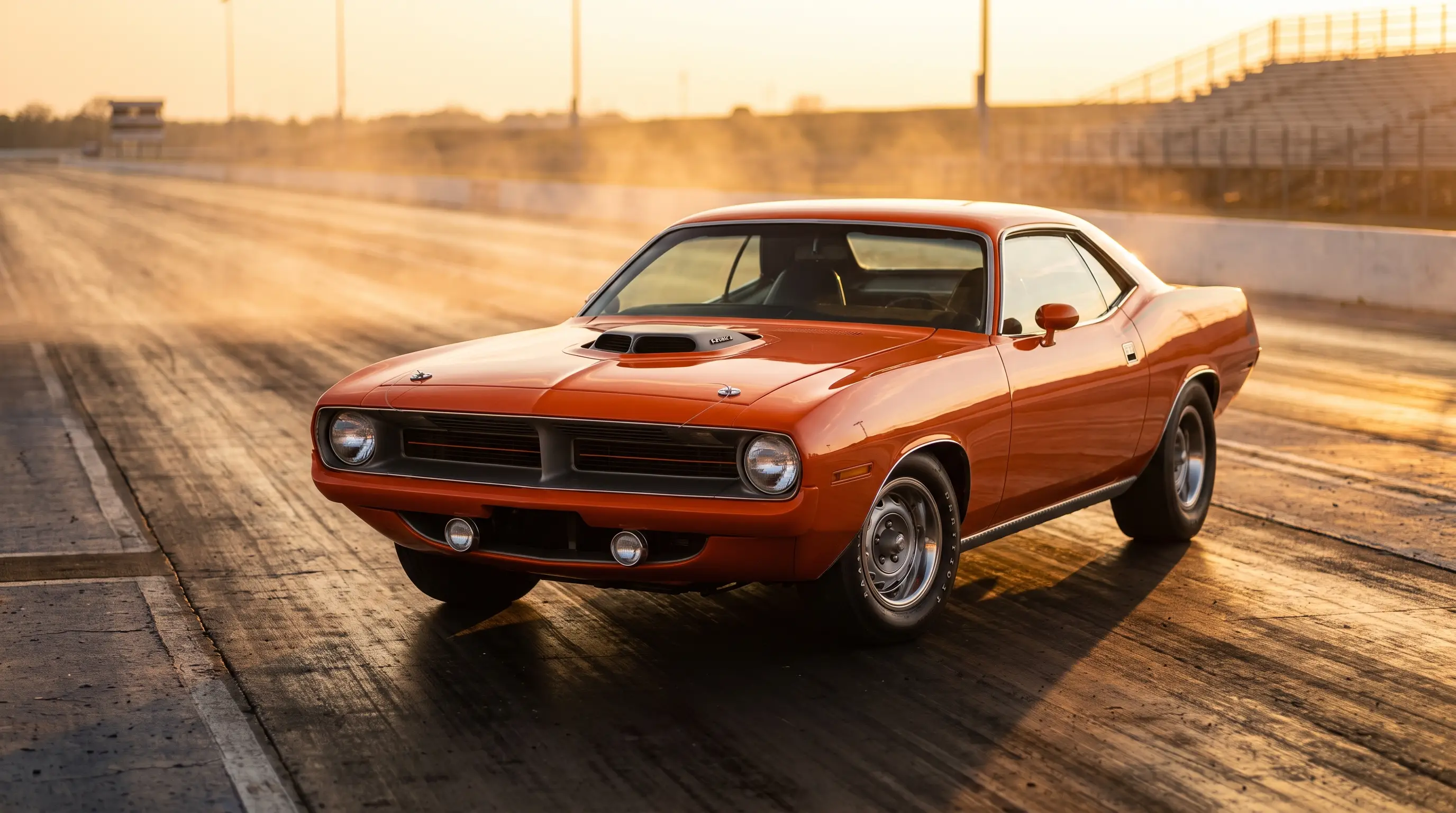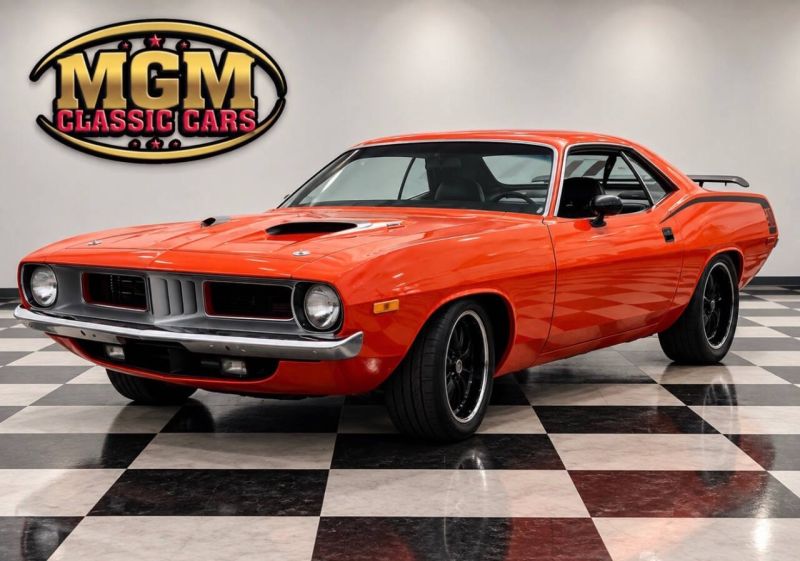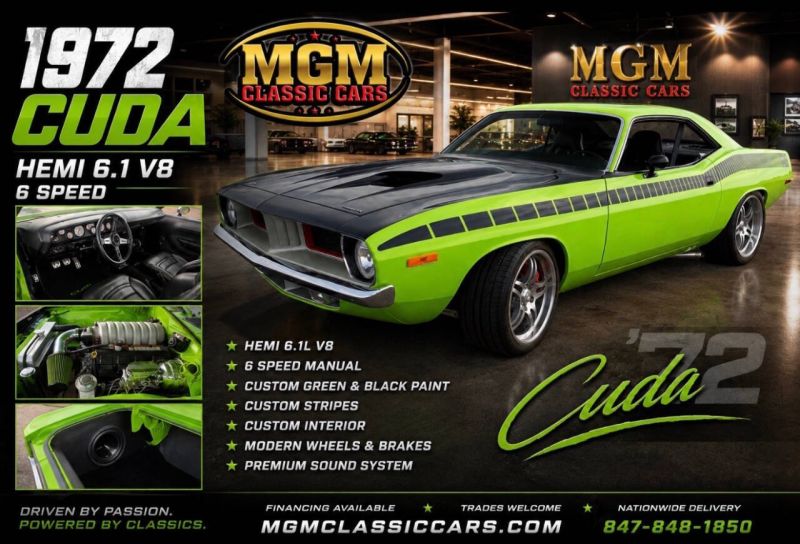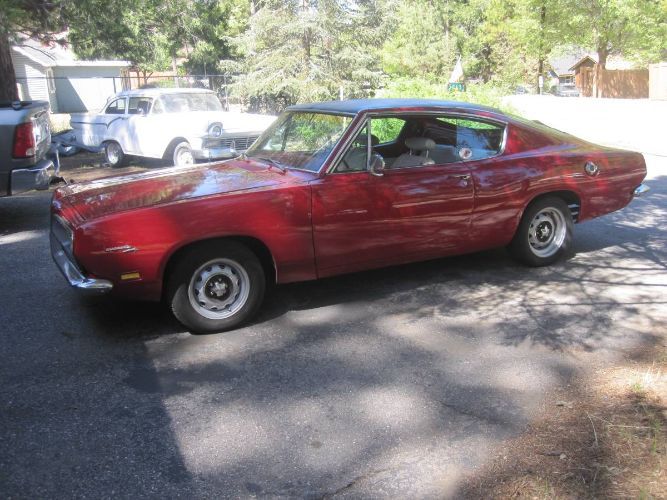
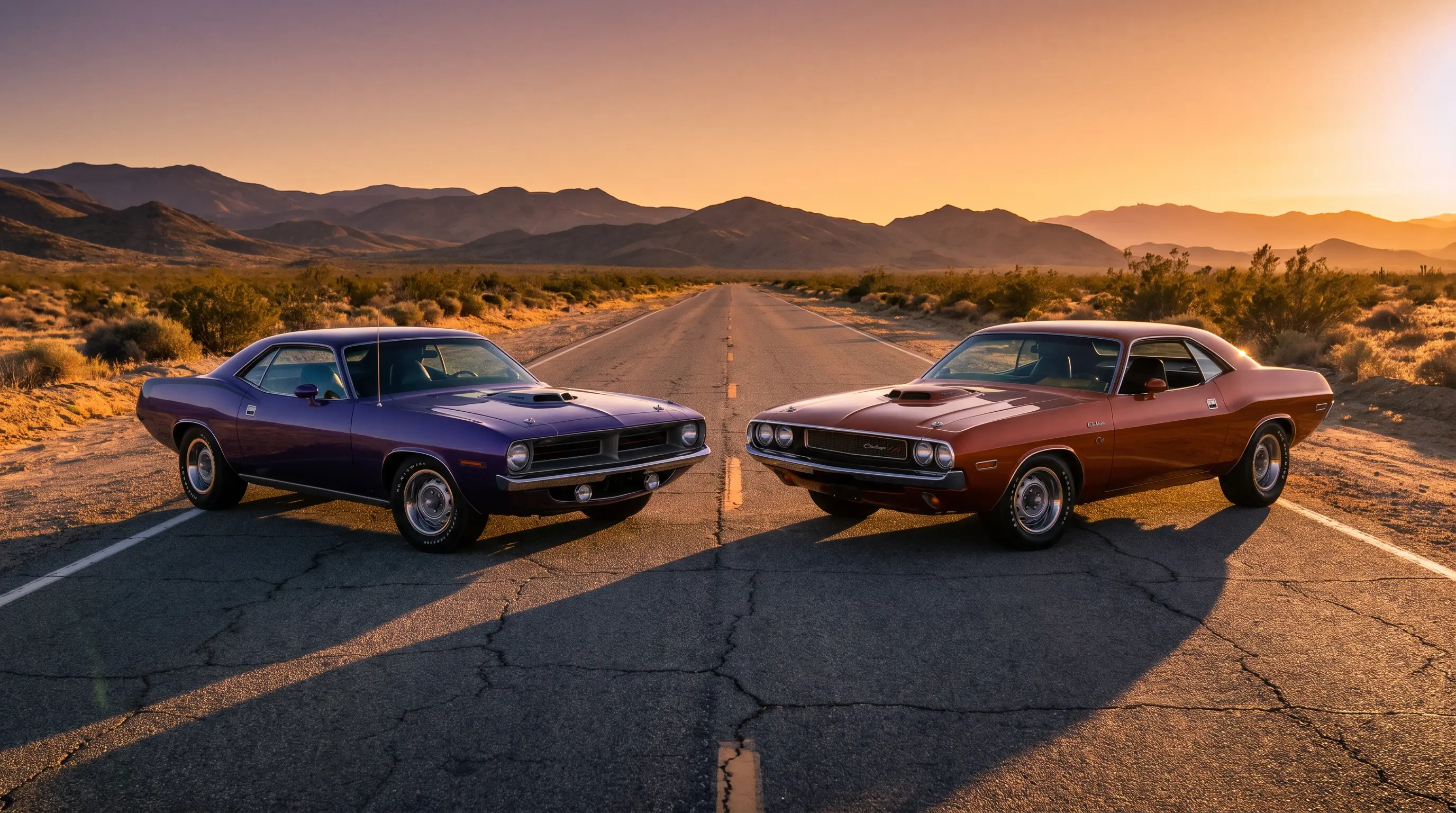
The hemi cuda vs challenger debate has been running since both cars sat on Plymouth and Dodge showroom floors sharing the same corporate parts bin. They are built on the same E body platform, offered with the same 426 Hemi option, and aimed at overlapping buyers. Yet ask any two Mopar collectors which one is the better car and you will get two confident, contradictory answers. I want to look at this the way an engineer would, by isolating what is actually different and what is just badge deep.
Shared architecture, different intent
Both cars ride on the same E body chassis, share suspension geometry, and were assembled with substantially overlapping engineering resources. That is not a coincidence. Chrysler built the platform once and let Plymouth and Dodge dress it differently for their respective dealer networks. The Challenger arrived with a longer wheelbase and a more conventional, slightly more upscale presentation. The Barracuda kept a tighter footprint and leaned harder into a compact, aggressive stance. Neither approach is objectively correct. They reflect two different reads on what a buyer walking into a Plymouth store wanted versus a buyer walking into a Dodge store.
Where the data gets interesting is in how each brand marketed the same Hemi option to different audiences. Plymouth positioned the Cuda as the purist's performance car within its lineup. Dodge positioned the Challenger as part of a broader personal luxury and performance range that included softer trims aimed at buyers who wanted the image without the full commitment. That positioning difference shows up in period sales literature and, eventually, in production numbers for each Hemi variant.
| Factor | Hemi Cuda | Hemi Challenger |
|---|---|---|
| Platform | E body, shorter wheelbase | E body, longer wheelbase |
| Hemi production era | 1970 to 1971 | 1970 to 1971 |
| Body styles with Hemi | Hardtop, convertible | Hardtop, convertible |
| Brand positioning | Purist performance nameplate | Personal luxury plus performance range |
| Total Hemi production, 1970-71 combined | Roughly 780 cars (666 in 1970, about 110-135 in 1971) | Roughly 427 cars (356 in 1970, 71 in 1971) |
Where the driving character actually diverges
Sit in both cars back to back and the differences stop being theoretical. The Cuda feels tighter and more immediate, a function of its shorter wheelbase and more compact cabin. The Challenger feels more composed at speed and slightly more forgiving over rough pavement, a direct result of the longer wheelbase Dodge specified. Neither trait makes one car objectively faster or better built. They represent two legitimate engineering answers to the same performance brief, executed by teams working from a shared parts catalog but different target customers.
This is the part of the hemi cuda vs challenger conversation that gets lost in casual arguments. People treat it as a brand loyalty question, Mopar versus Mopar, when it is really a question about which chassis tuning philosophy you personally prefer. There is no wrong answer here, only a preference, and preferences do not need to be defended with production statistics.
What the numbers do and do not tell you
Production figures get thrown around constantly in this debate, and they are useful, but only up to a point. Raw production counts tell you how many cars left the factory in a given configuration. They do not tell you how many survive today in original, numbers matching condition, which is the figure that actually drives collector interest and price. A model with higher original production but lower survival rates can end up rarer on the ground than a model with lower original production but better survival habits among owners.
Plymouth actually built more total Hemi Cudas than Dodge built Hemi Challengers across 1970 and 1971 combined, which surprises people who assume the Cuda was always the rarer nameplate. What makes the Cuda feel scarcer at the top end is the convertible split: Dodge built zero Hemi Challenger convertibles in 1971, while Plymouth kept offering a Hemi Cuda ragtop both years. This is why I push back when someone cites a single production number as proof that one car is definitively rarer or more desirable than the other. The real comparison requires knowing survival rates, restoration quality across surviving examples, and how many of those survivors carry full documentation. Without all three data points, a production number alone is an incomplete argument dressed up as a complete one.
Collector demand tells its own story
Whatever engineers intended in 1970, the collector market has rendered its own verdict over the following decades, and it does not always track with the original sales figures. Both cars command serious money today, but the Cuda has generally carried a premium in Hemi convertible form specifically, a gap that seems to trace back to relative survivor counts rather than any measurable difference in build quality or performance.
For readers who want the full background on why the Cuda side of this comparison carries the weight it does, the full story covers the production history and rarity factors that continue to shape how this car is valued relative to its Dodge sibling.
"When people ask me which one is better, I ask them what they mean by better. Faster in a straight line, more comfortable on a back road, or more valuable at auction. Those are three different questions with three different answers."
- Emily Chen
How restoration shops read the difference
Talk to any shop that has restored both cars and a consistent pattern emerges. Challenger bodies tend to present slightly more sourcing options for certain trim pieces, a byproduct of higher overall production volume across the model run. Cuda specific parts, particularly for the shorter body's unique panels, can require more patience to source correctly, which adds time and cost to a proper restoration regardless of engine configuration.
This sourcing gap does not reflect build quality at the factory level. It reflects sixty years of parts attrition acting on two different production volumes. A shop quoting a Cuda restoration will often build in extra lead time for panel sourcing that a Challenger project would not require to the same degree, and buyers evaluating a partially restored project car should factor that timeline difference into their budget before committing to either platform.
Mechanically, both cars respond to the same maintenance philosophy and the same engine architecture underneath the sheet metal, so a shop experienced with one adapts to the other with minimal friction. The real divergence shows up in body and trim work, not in the drivetrain both cars share.
The honest engineering verdict
If you strip away brand loyalty and collector premiums, the two cars are close enough mechanically that the deciding factor should be personal preference in cabin feel and proportions, not a belief that one is secretly superior. I have driven both extensively and would not tell a buyer they made a mistake choosing either one, provided they bought a well documented, mechanically sound example.
What I would tell a buyer is to test drive both before assuming brand reputation settles the question. The Cuda's tighter dimensions suit drivers who want an immediate, compact feel. The Challenger's longer wheelbase suits drivers who want a slightly more relaxed highway character. Neither preference is wrong, and neither should be talked out of you by someone with a strong opinion and a specific badge loyalty.
For anyone ready to compare real examples rather than spec sheets, you can browse classic Barracuda listings and get a feel for current market pricing and condition across the model, which tends to clarify these debates faster than any amount of forum argument ever will.