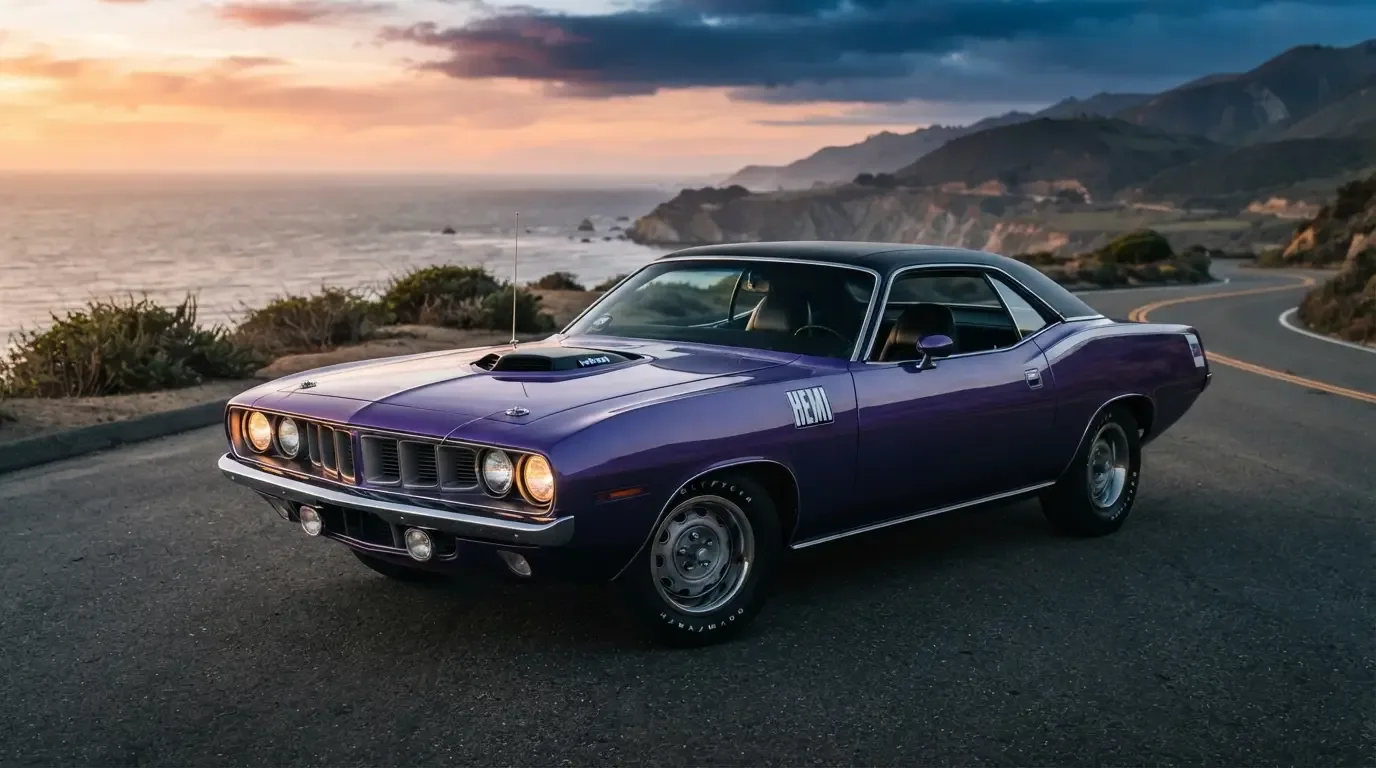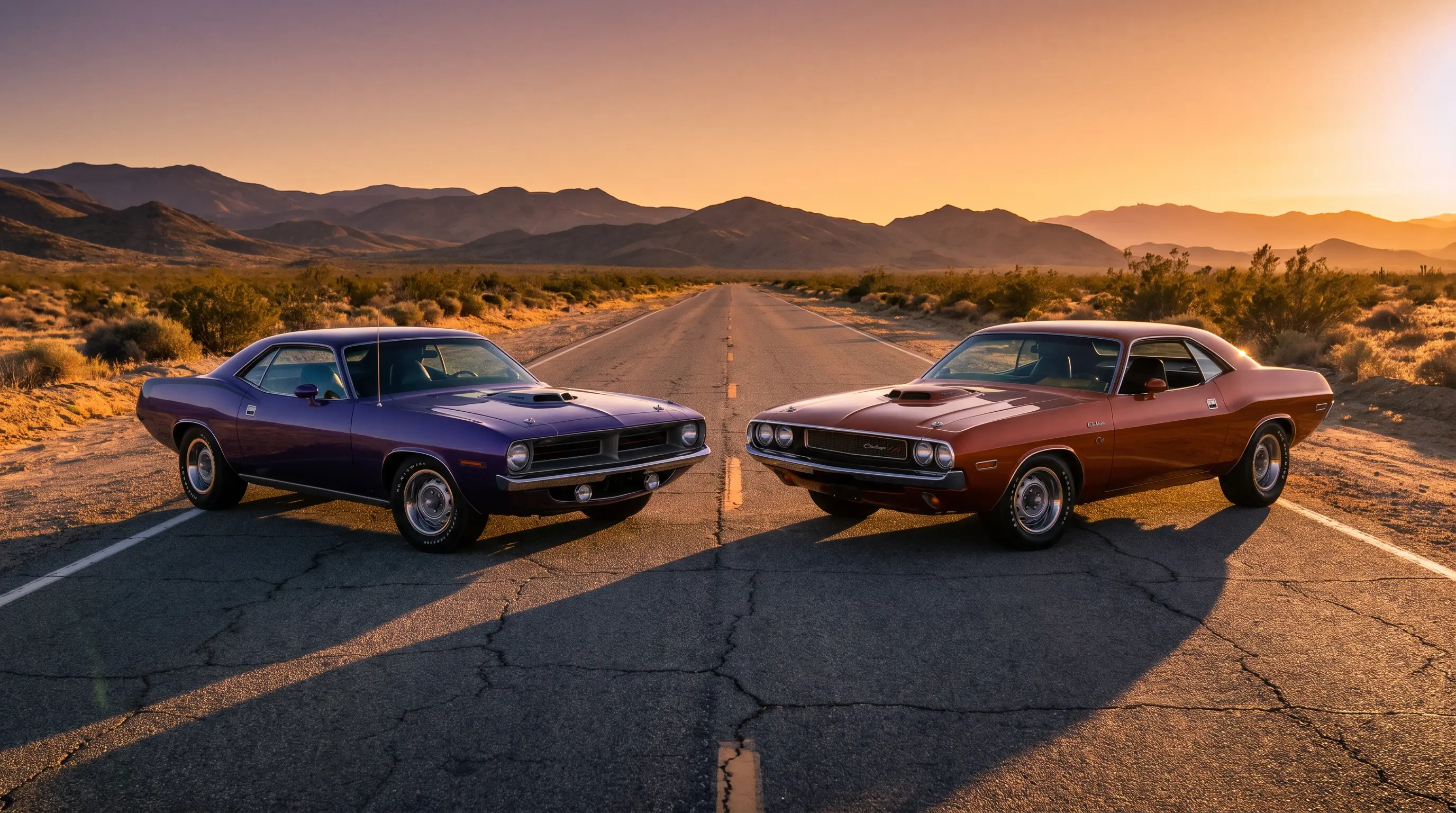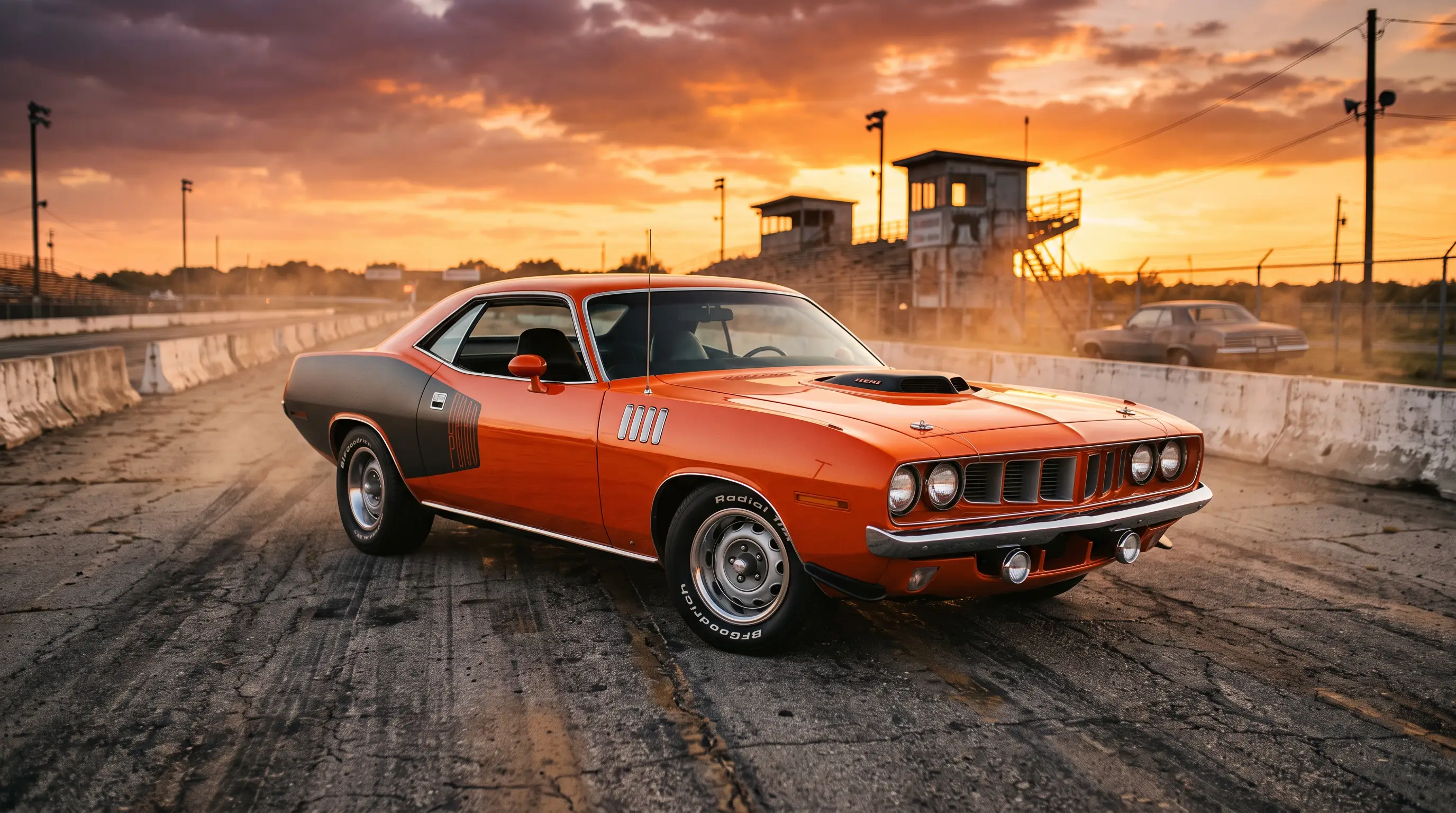
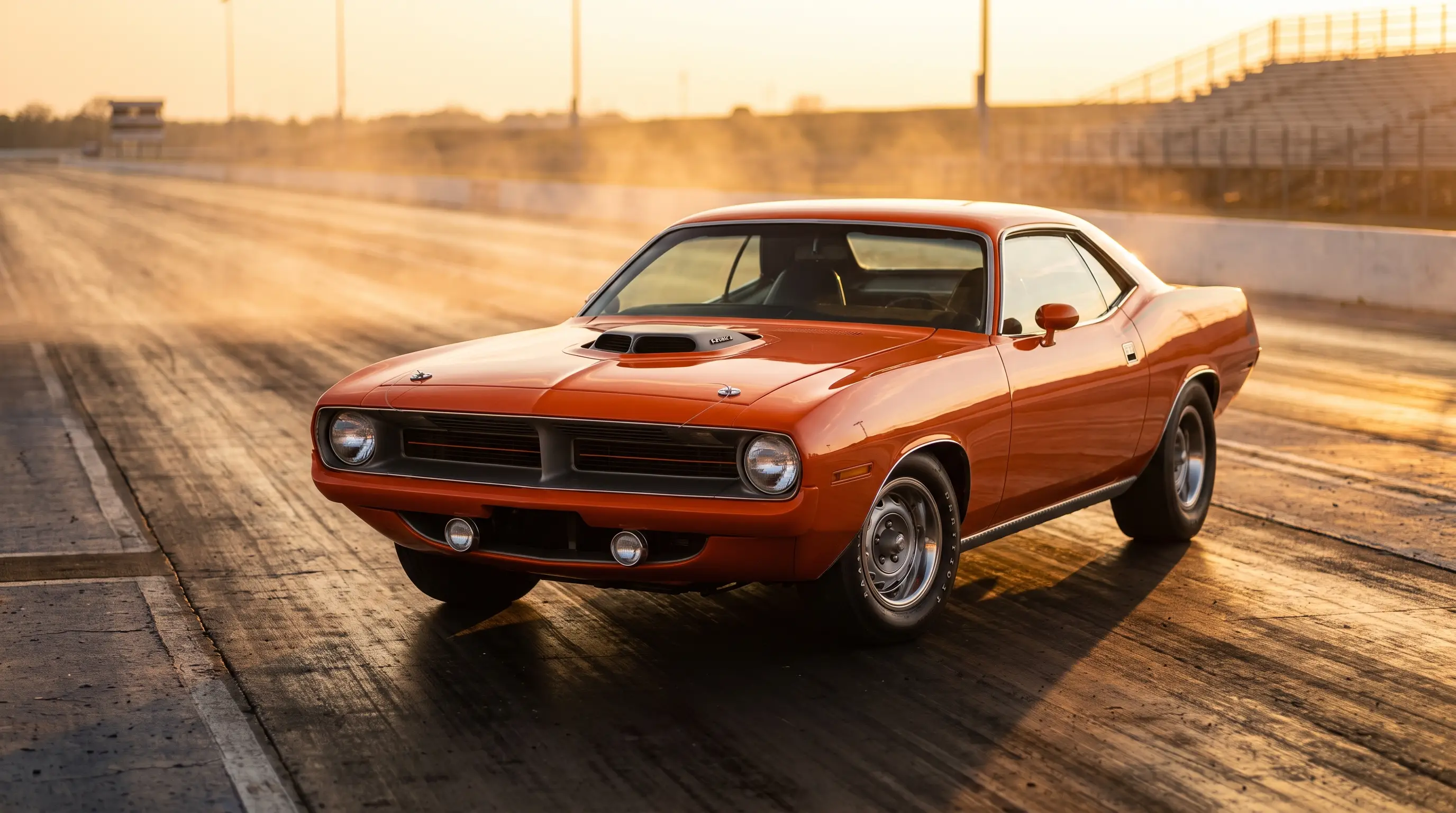
The 1970 Hemi Cuda is the year most collectors point to first. Not because it was the biggest seller. It was not. Because it was the first year the E body Barracuda existed at all, and the first year Plymouth could actually fit the 426 Hemi into the new chassis without compromise. That single fact changes how the entire model is remembered.
The number that matters
Production of the 1970 Hemi Cuda was small. Convertibles were smaller still. Plymouth built 666 Hemi Cudas for 1970, and only 14 of those were convertibles. That scarcity is not a footnote. It is the whole story. A low number, decades later, turns into a high price. Simple as that.
Buyers today are not paying for horsepower alone. Plenty of cars from this era made real power. They are paying for a specific, hard to replicate combination. New body. New engine fit. First year of a design that only lasted two model years before Plymouth moved on. First years carry weight in this hobby. This one carries more than most.
Why the body redesign mattered
Before 1970, the Barracuda shared its floor pan with the Valiant. It was a compact car with a fastback roofline bolted on. That platform could not comfortably house the 426 Hemi. Plymouth knew it. The fix was a full redesign, the E body, wider and lower, built specifically to fit big block power without the awkward compromises of the earlier cars.
That is why 1970 gets treated as the true starting point for serious Hemi Cuda collectors. Earlier Barracudas with big block options exist. They are interesting cars. They are not this car. The 1970 model is the first version built from the ground up around the idea of a Hemi powered pony car, and that distinction still drives value today.
| Spec | 1970 Hemi Cuda |
|---|---|
| Platform | New E body, first year |
| Engine | 426 Hemi V8 |
| Body styles offered | Hardtop, convertible |
| Transmission options | Four speed manual, three speed automatic |
Color codes and options that move the needle
Not every 1970 Hemi Cuda is priced the same. Color matters. A car finished in a common factory shade sells for less than one finished in a rare High Impact color with a matching interior. Buyers pay for the whole package, not just the engine bay.
Shaker hood. Pistol grip shifter on the four speed cars. Elastomeric bumpers. Dana rear end on some Hemi applications. Each option adds a little. Stack enough of them on one well documented car and the total adds up fast. I have seen two mechanically identical cars sell ten percent apart purely because one had a better options sheet.
None of this is complicated. More rarity, more money. Less rarity, less money. The market has been consistent about this for decades. It rewards the options list that tells the most complete story, and it punishes cars that cannot back up their claims with a paper trail.
The manual versus automatic question
Four speed cars generally bring more than automatics. Not always. Condition and documentation can flip that. But as a baseline, the manual gearbox carries a premium in this segment, and it has for a long time. Purists want the pistol grip shifter. That preference shows up directly in what people are willing to pay.
Automatics are not lesser cars. Plenty of buyers wanted the automatic new, and plenty of collectors prefer it today for daily driving comfort. But if you are asking which configuration commands the higher number at auction, the four speed wins more often than it loses. That is not opinion. That is what the sales data shows year after year.
What separates a real one from a project
A real 1970 Hemi Cuda has documentation. A broadcast sheet. A build sheet. Ideally a Galen Govier letter or equivalent authentication. Without that paper trail, you are buying a story, not a car. Plenty of clones exist wearing the right badges and the right stripes. They are not worth the same money, and they should not be sold as if they are.
I have looked at more than one car that presented beautifully and fell apart the moment someone asked for the paperwork. Presentation is easy to fake. A stamped, dated broadcast sheet is not. If you are buying, ask for it first. If it does not exist, walk, or negotiate the price down to what an unverified car is actually worth.
"Buyers who skip the paperwork step almost always regret it. The car looks the same either way. The price does not."
- Dan Reeves
How it compares to the year after
Plymouth kept building the Hemi Cuda for one more year after this. The changes were small but real, new grille, new taillights, a shorter production run overall. For the full comparison, a related story covers what changed and why the following year is often treated as the rarer of the two despite arriving second.
Neither year is objectively better. They are different snapshots of the same short lived idea. 1970 gets credit as the first. 1971 gets credit as the last and the rarer. Collectors argue about which matters more. The market has not fully settled the question either, which is part of why both years still sell strongly.
Why the number keeps climbing
Surviving 1970 Hemi Cudas do not increase in number. They only decrease. Cars get parked in permanent collections. Cars get lost to accidents, fires, and neglect before the hobby caught on to their value. Every year the pool of real, documented cars gets a little smaller, and the buyer pool chasing that shrinking pool has only grown.
That is a simple supply and demand story. Nothing exotic about it. Fixed, shrinking supply against rising, well funded demand pushes prices one direction over time. It does not move in a straight line. There are dips. There are corrections. But the long term trend has been up for decades, and nothing about the current supply picture suggests that changes soon.
The bottom line on 1970
If you want the car that started it all, this is the one. First year of the platform. First year the Hemi actually fit the way Plymouth wanted it to. That combination is why the 1970 Hemi Cuda still anchors this entire corner of the collector market, and why prices have not softened despite decades of ups and downs elsewhere in the muscle car segment.
For the fuller background on the model overall, our hemi cuda retrospective lays out the full production history across both years and explains why this platform still commands the attention it does more than five decades later.
If you are shopping rather than reading, Barracudas for sale now will show you what is actually on the market today, documentation and all. Do the homework before you buy. The number on the window means nothing without the paper behind it.