
People watch a pair of muscle cars stage at the line, hear the engines load up, see a string of lights drop, and think the whole thing is about horsepower. It is not. The fastest car does not always win, and once you understand the little tower of bulbs between the two lanes, you understand why. That tower is the Christmas Tree, and learning to read it is the difference between watching drag racing and actually knowing what you are looking at.
Car Features
6 min read
How Drag Racing Works: The Christmas Tree Explained
How drag racing works, from staging beams and the Christmas Tree to reaction time, elapsed time and trap speed. A clear guide to reading a run.
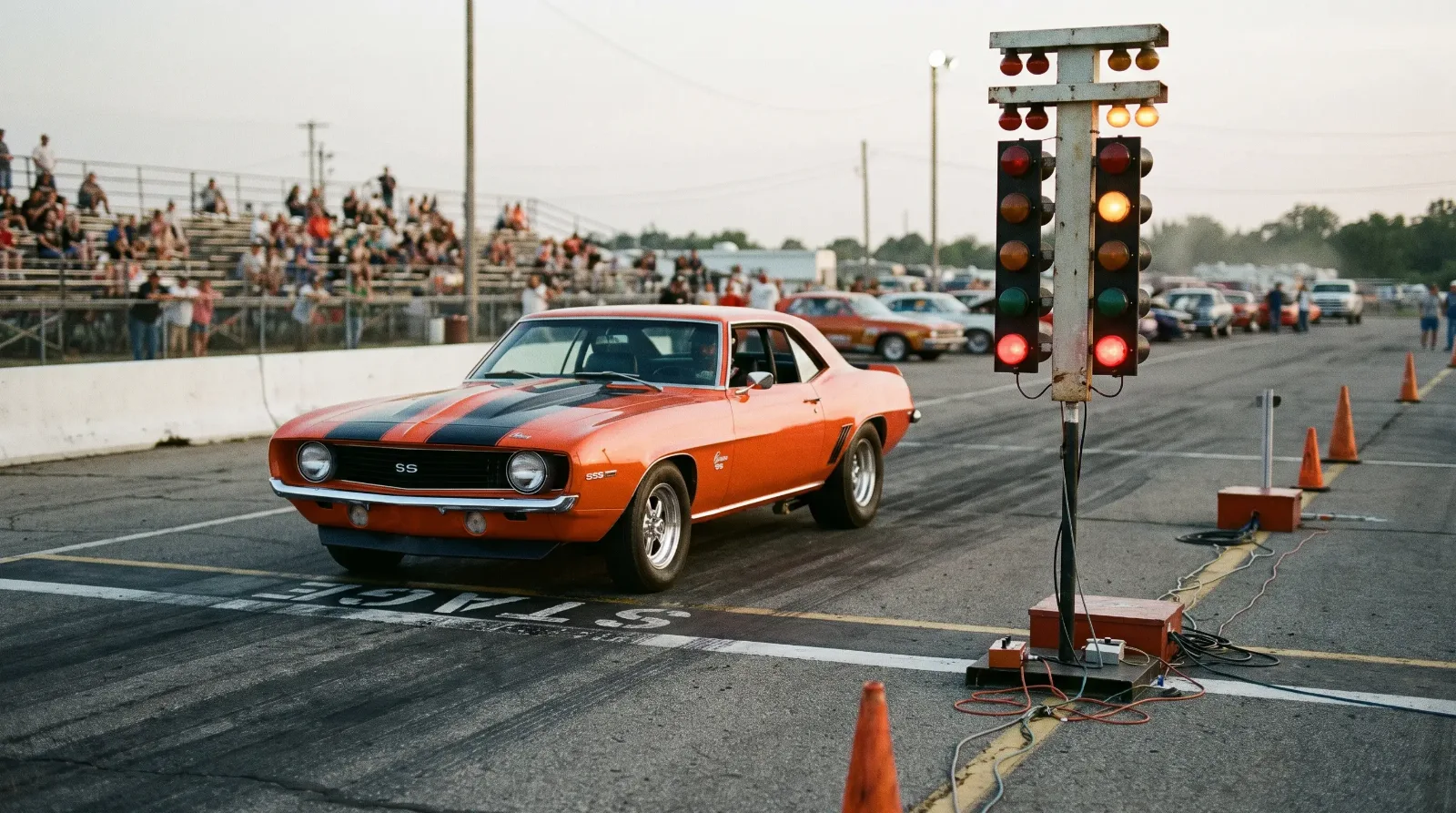
I have watched a lot of quick cars get beaten by slower ones because the driver in the slower car understood the Tree and his own reflexes better. The strip rewards precision as much as power. So here is how a run actually works, from the moment a car rolls up to the line to the number that flashes at the far end.
Staging: getting the car ready to launch
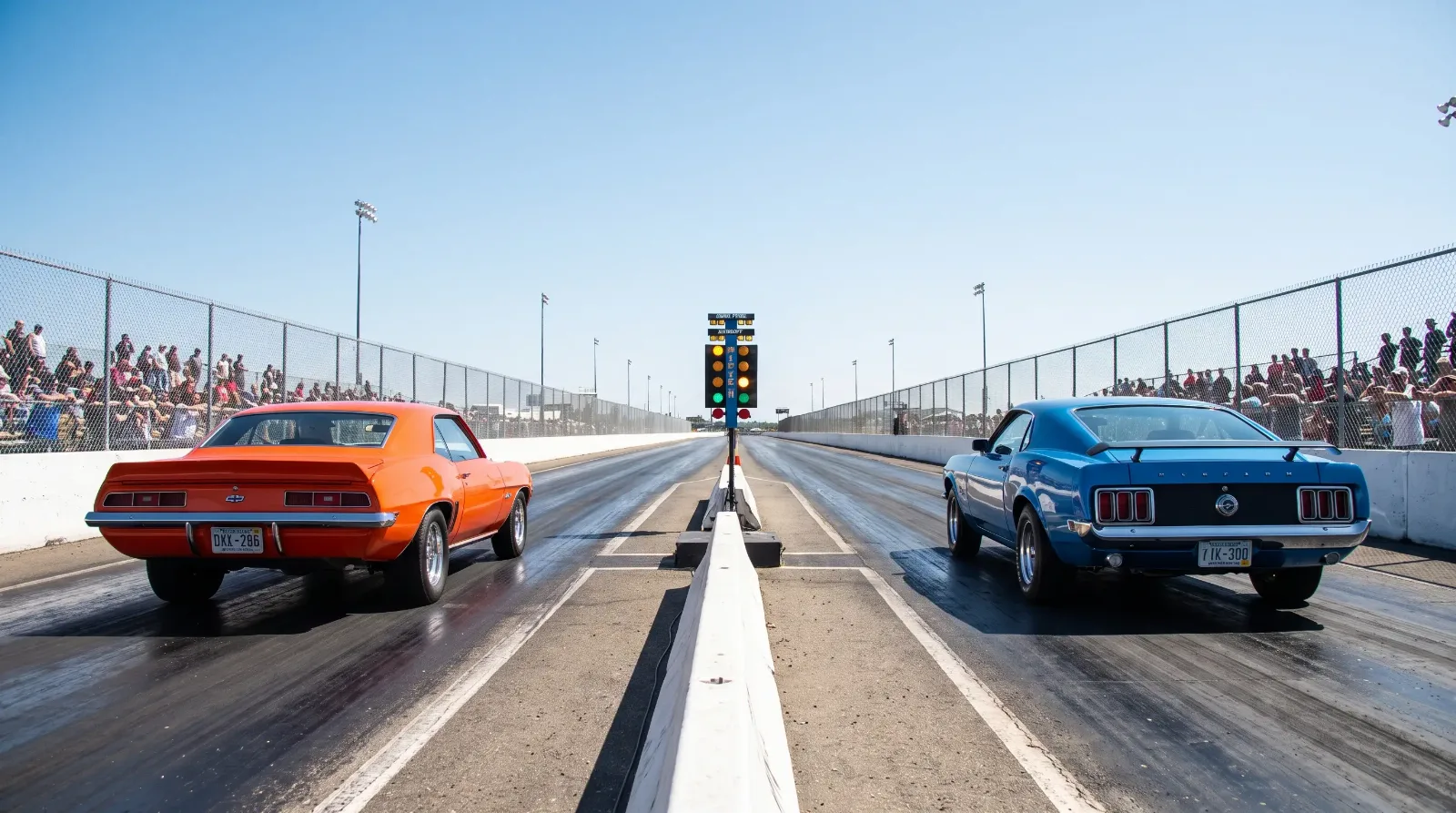
Before anything lights up, the driver has to stage. There are two light beams stretched across each lane near the starting line. The first beam is pre-stage, and rolling into it lights the top bulb on the Tree, telling everybody the car is about seven inches away from the start. The second beam is the stage beam, sitting right at the starting line. When the front tire breaks that beam, the stage bulb lights and the car is officially ready. Both drivers have to be staged before the sequence starts.
This is where the head games begin. A driver can roll in shallow, just barely breaking the beam, or roll in deep. Shallow staging means the tire has a hair more room to roll before it clears the beam, which can help a reaction time. Deep staging trades that away for other reasons. None of it is horsepower. All of it is technique, and it starts before the engine even has to prove anything. If you want the bigger picture of why this precision grew out of the muscle era, see why it matters to the whole story of American performance.
Reading the Christmas Tree
Once both cars are staged, the Tree runs its sequence down a column of amber bulbs to a green, with a red waiting for anybody who leaves too soon. There are two ways it can flash, and they change everything about how a driver reacts.
| Light | What it means | Driver response |
|---|---|---|
| Pre-stage bulb | Front tire about seven inches from the line | Ease forward to stage |
| Stage bulb | Front tire on the starting line, ready to run | Hold position, get set |
| Amber | Countdown to the green | Time the launch off the ambers |
| Green | Go | Already moving if the timing was right |
| Red | Left before the green, automatic loss | Foul, the run is over |
On a Pro Tree, all three amber bulbs flash at once, and the green comes four tenths of a second later. That is the .400 Tree, and it belongs to the heads-up classes where both cars leave on the same light. On a full Tree, sometimes called a Sportsman or bracket Tree, the ambers flash one at a time, five tenths apart, so a perfect light is a .500. Same tower, completely different rhythm. A driver who trains on one and shows up to the other will be late every time.
Reaction time and why it wins races
Reaction time is the clock that starts at the green and stops the instant the car clears the stage beam. It is not part of the elapsed time. It is its own number, and it is where slower cars steal wins. A driver who cuts a .020 light against an opponent who cuts a .080 has a six-hundredths head start before either car has covered an inch. That is a holeshot, and it is the reason a builder like me tells people the loud pedal is only half the job.
Elapsed time, trap speed, and the finish
Once the car launches, two more numbers matter. Elapsed time, or ET, is how long the car takes to cover the distance, measured from the moment it leaves the stage beam to the moment it crosses the finish. Trap speed is how fast it is traveling in the lights at the far end, measured over the last stretch before the line. ET tells you how quick the whole run was. Trap speed tells you how much the engine was still pulling at the top. A car can have a strong trap speed and a mediocre ET if it launched badly, which loops right back to reaction time and staging.
Put it together and a drag race is three separate contests stacked on one pass. The launch, the reaction, and the run down the strip. Miss any one of them and the horsepower does not save you. This is the part of muscle car culture that a spec sheet never captures, and it is worth reading the whole background at the muscle car hub to see how the machines and the men who timed them grew up together.
"The Tree does not care how much power you built. It cares whether your foot is honest with the green light, and that is the hardest tuning job in the whole sport."
Jim Vasquez
Where the skills go from here
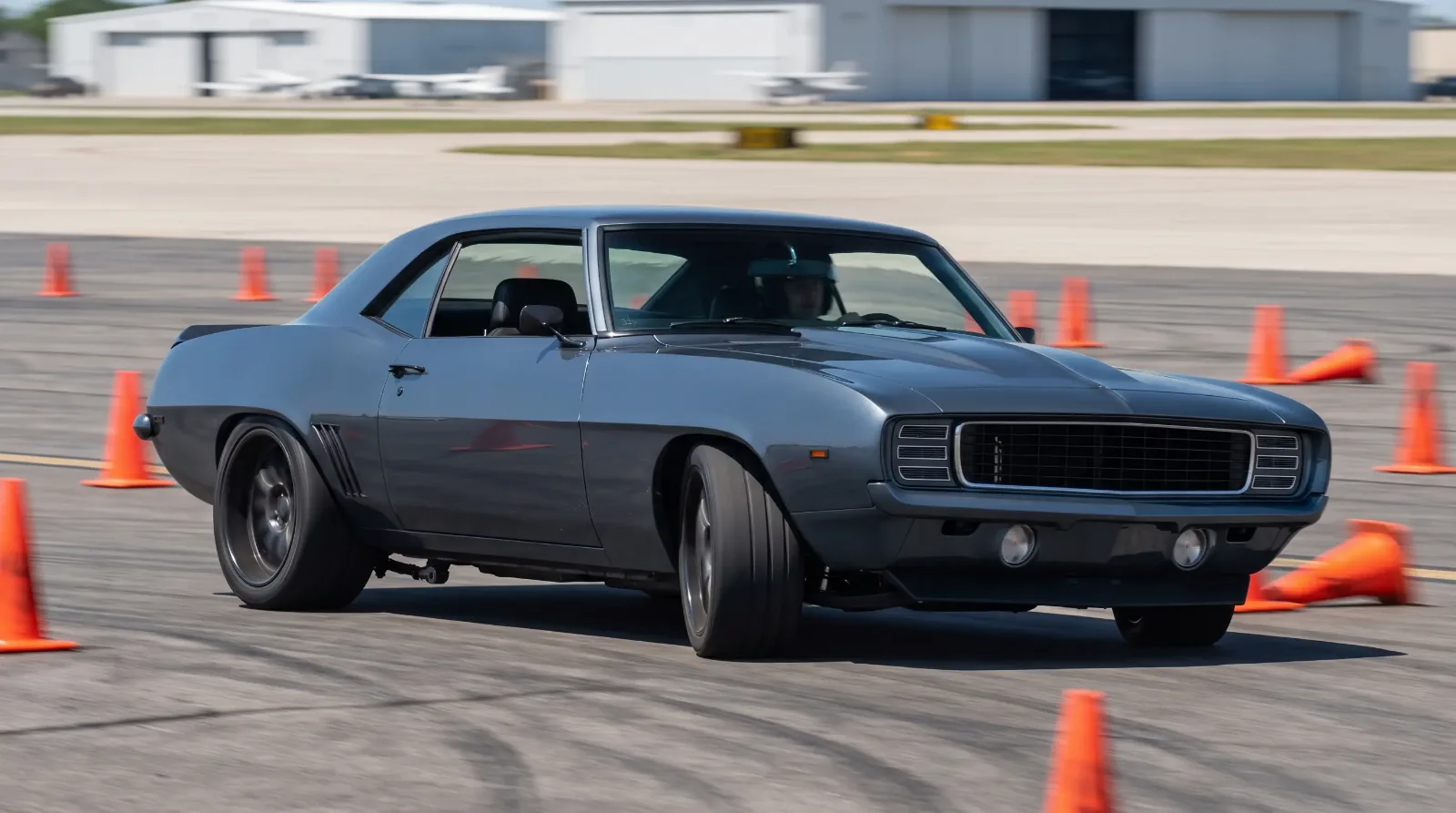
Everything the Tree teaches, the timing, the precision, the sense of a car right at the edge of traction, carries into other kinds of racing too. The straight line is where a lot of muscle car people start, but the same instincts show up on a road course and a cone track, where the clock is just as unforgiving in a different shape. If you want to see where those reflexes go once the quarter mile is not enough, read the full story of how classic muscle learned to turn.
The Christmas Tree looks simple. A few bulbs, a couple of beams, a green light. But it is the honest referee of the whole sport, and once you can read it, you never watch a race the same way again.
Related Reading
Have a
Classic Car
for Sale?
Reach thousands of serious classic car collectors across the US.
Sell It Here →
Are You a Classic Car Dealer?
List your full inventory and connect with targeted classic car buyers.
Join as a Dealer →

About the author
Jim Vasquez
Southern California hot rod and custom car builder with roots in the traditional kustom kulture scene.




Comments
Be the first to comment on this article.