
Sit a modern driver behind the wheel of a Model T and watch the face. Three pedals, none of them a gas pedal. A lever on the floor that is part brake and part gearshift. Two little levers under the steering wheel that look like they belong on a steam engine. Learning how to drive a Model T means forgetting about half of what you know and trusting a system that millions of farmers, salesmen and grandmothers figured out without a single driving school. They managed. You will too, though probably not on the first try.
Car Features
7 min read
Three Pedals and a Lever: How You Drive a Model T
Three pedals, a floor lever and a throttle on the column: how to start, drive, stop and reverse a Ford Model T.
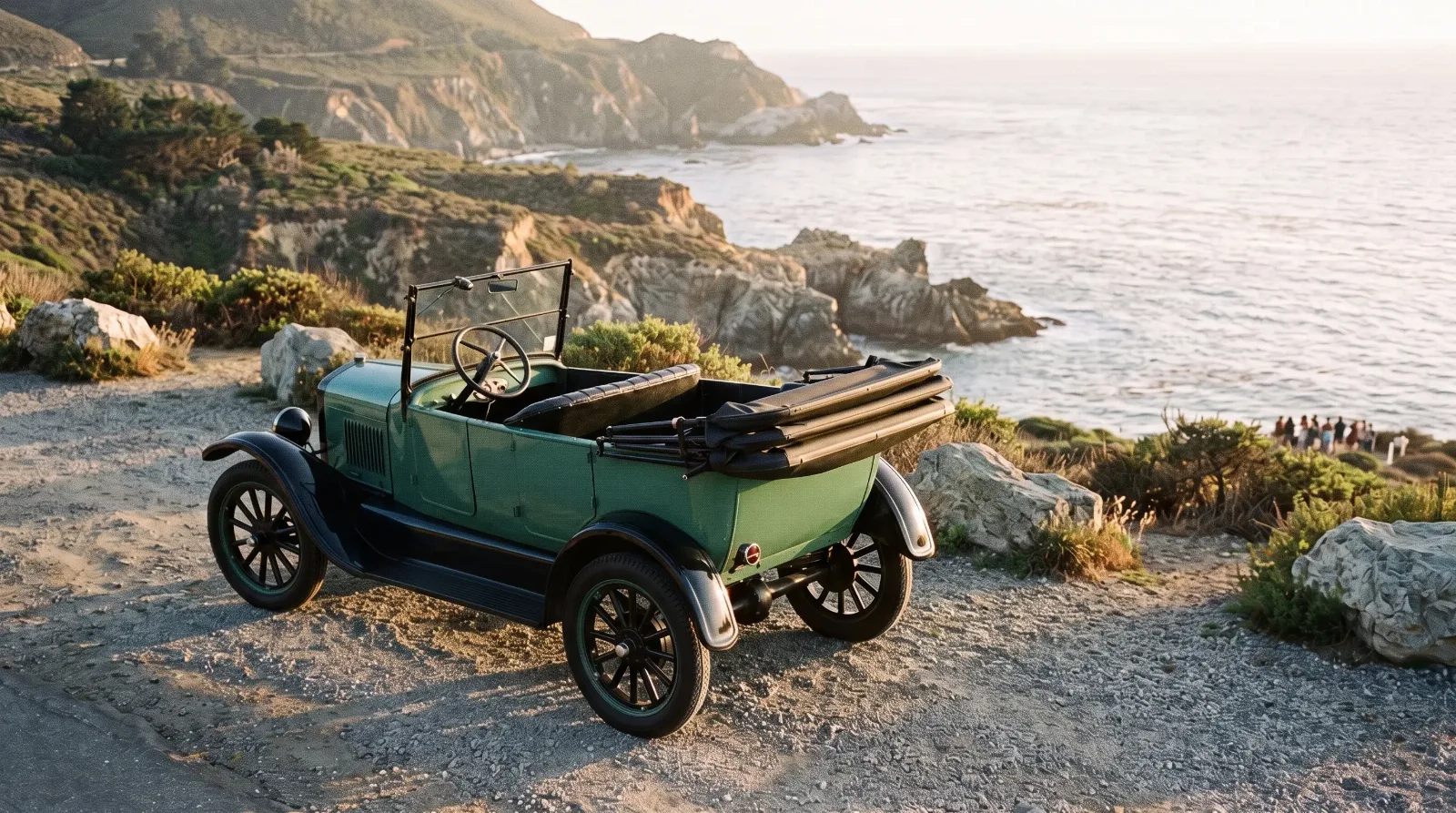
The old-timers who taught this stuff in the 1910s and 1920s had one advantage over us: they had no habits to unlearn. So start the way they did, with the controls, one at a time.
Three pedals, one lever, two levers you forgot about
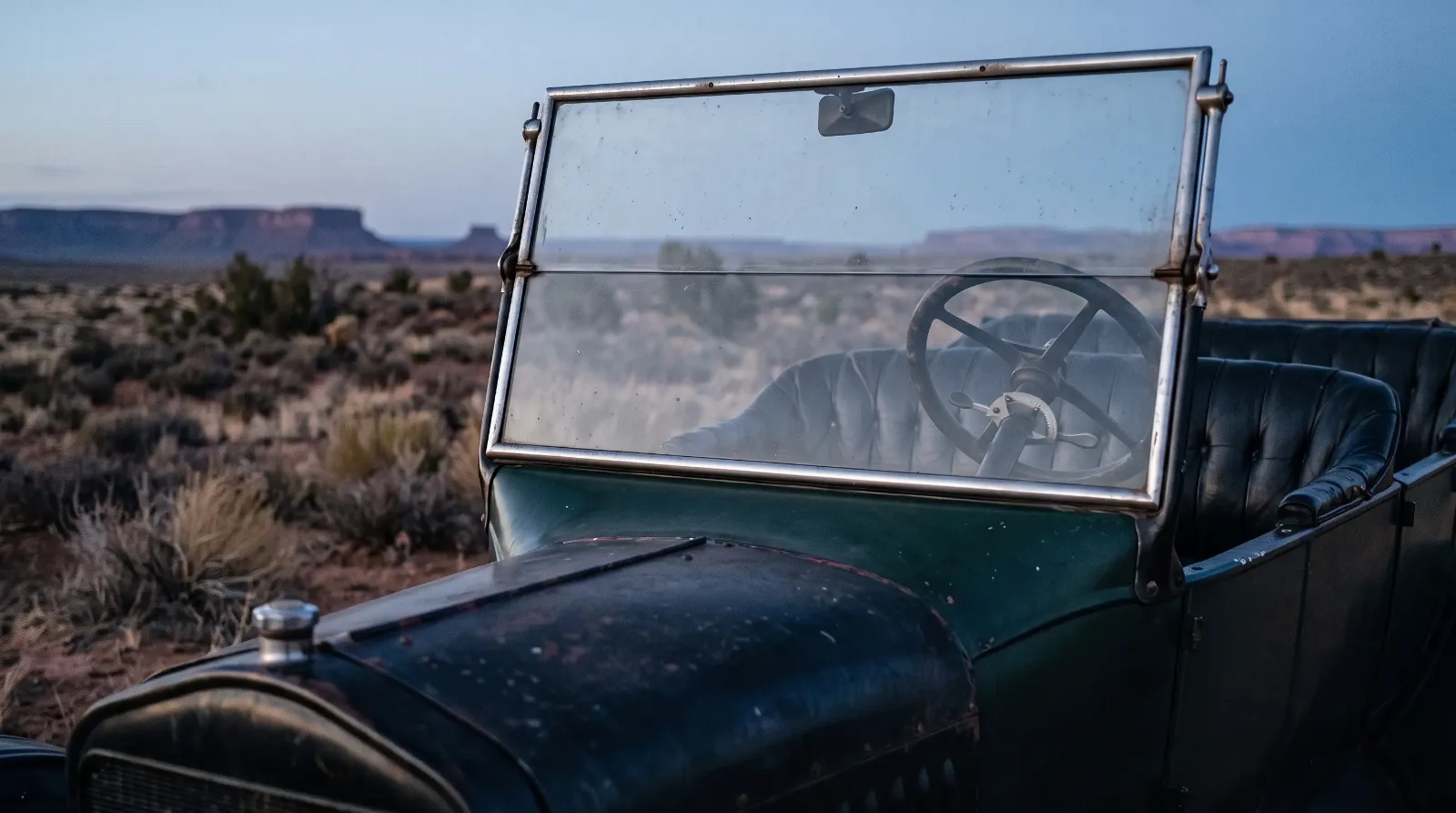
On the floor, left to right: the low pedal, the reverse pedal and the brake pedal. That layout came in early in 1909. The first 800 or so cars used a second hand lever for reverse, which tells you Ford was still working it out.
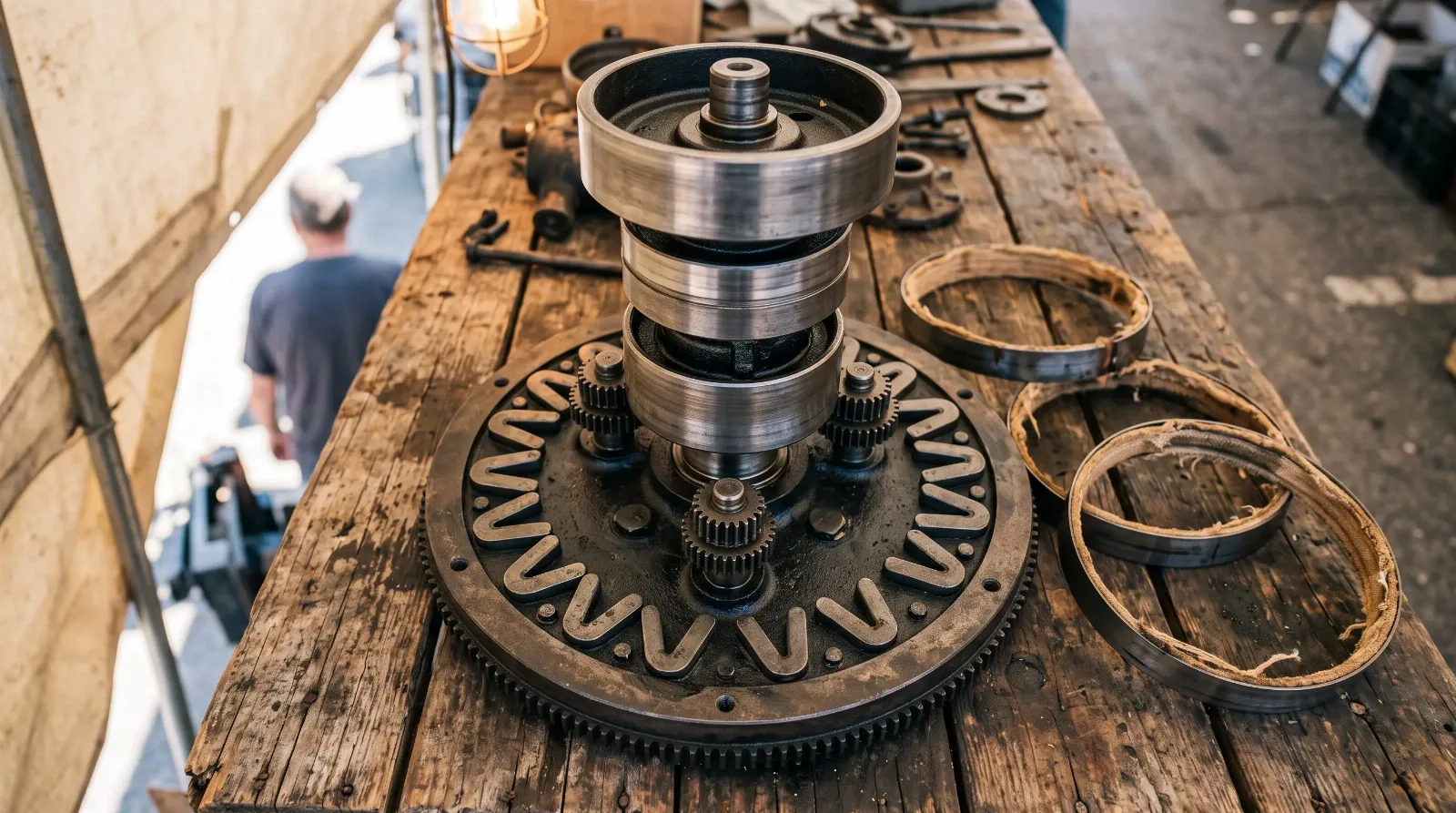
The left pedal does three jobs depending on where your foot puts it. Pushed all the way down, it is low gear. Held halfway, it is neutral. Let all the way up, with the hand lever forward, it is high gear. The center pedal is reverse. The right pedal is the brake, and it works on a band inside the transmission, not on the wheels.
The hand lever on the floor, to your left, is the one people misjudge. Pulled all the way back, it sets the rear-wheel brakes and holds the car in neutral. Pushed all the way forward, it lets the car go into high. Stood upright, halfway, it holds neutral without setting the brake, which is where Ford's own manual told you to leave it when backing up. Get that lever wrong and the car will tell you about it.
Up on the steering column are two levers. The right one is the throttle. That is your gas pedal, operated by hand. The left one is the spark advance, which sets when the cylinders fire. Ford gave it a 28-notch quadrant, so you have more choices than you will ever need.
| Control | Where it is | What it does |
|---|---|---|
| Left pedal | Floor, left | Down = low, halfway = neutral, up = high |
| Center pedal | Floor, middle | Reverse |
| Right pedal | Floor, right | Transmission brake |
| Hand lever | Floor, driver's left | Back = parking brake and neutral; forward = allows high |
| Right column lever | Under the wheel | Throttle |
| Left column lever | Under the wheel | Spark advance |
Waking it up: spark, throttle and the crank
Every Model T came with a hand crank. Electric starting arrived for the 1919 model year, first on the closed cars and as a $75 option on the open ones, and by 1926 a starter was standard across the line. Before that, you started the car the way your great-grandfather did: standing in front of it, hoping it liked you.
The ignition does not need a battery to run. It runs off the magneto, which is built into the flywheel and makes its own current once the engine turns. That is a gift when the battery is dead and a curse when you are cranking a cold engine, because the magneto makes very little at cranking speed.
Before you crank, pull the hand lever all the way back so the car is braked and in neutral. Set the spark lever toward retard, so the engine fires late. A late spark keeps the engine from kicking the crank backward, Ford's 1919 manual warned that a sudden backfire with the spark advanced "may injure the arm of the operator," and plenty of owners have the stories to prove it. Crack the throttle a little. Then crank. When it catches, move the spark down toward advance until the engine smooths out, and set the throttle where it idles happily.
Cars with a starter used a floor push button and a priming rod on the instrument board. Easier on the shoulder. Less romantic. Nobody ever complained.
How to drive a Model T from a standstill
Engine running, spark set, you are ready to move. Here is the sequence the old instructors taught, more or less.
Press the left pedal halfway and hold it there. That is neutral. Now push the hand lever forward. With your foot holding neutral, the car stays put. Open the throttle a little with your right hand. Push the left pedal all the way to the floor. The car moves off in low.
Let it gather some speed, still in low. Then ease the throttle back a touch, and let the left pedal come all the way up. You are in high. That is the only shift you make on a Model T, and most of your driving will be done right there. The car has two forward speeds, and on level ground high does nearly everything.
The surprises come in the details. Your feet do almost no accelerating. Your right hand does that, on the column. Your left foot spends most of the trip resting, unless you are in traffic, where it does a lot of holding halfway. And the car does not stop rolling just because you took your foot off something. It stops because you pressed the right pedal.
"The fellows who taught this in 1915 never called it hard. They called it different. Then they handed you the crank and walked off to get a coffee."
Gary Nowak
Slowing down, backing up and the hill problem
The right pedal tightens a band around a drum in the transmission. That slows the driveshaft and, with it, the rear wheels. It is the only service brake you have. The hand lever works separate brakes on the rear drums, and those are for parking and for emergencies.
To stop: throttle back, press the left pedal to halfway for neutral, and press the brake pedal with your right foot. Hold neutral until the car is stopped, then pull the hand lever back.
Reverse is the center pedal. From a stop, hold neutral with the left pedal, press the center pedal, and the car backs up. Owners have long said reverse is geared lower than low, which is one reason drivers sometimes backed up steep hills. The other reason is fuel: on cars with the tank under the seat, a steep climb could leave the carburetor above the fuel, and backing up put gravity on your side.
Learning to drive one today
The good news is that Model Ts are still out there, still running and still teaching new drivers. The engine is the 177 cubic inch four rated at 20 horsepower, and with the standard axle the car will run at about 40 to 45 mph on good pavement. You will not want to, at first. Somewhere in the 20s feels plenty fast with that braking.
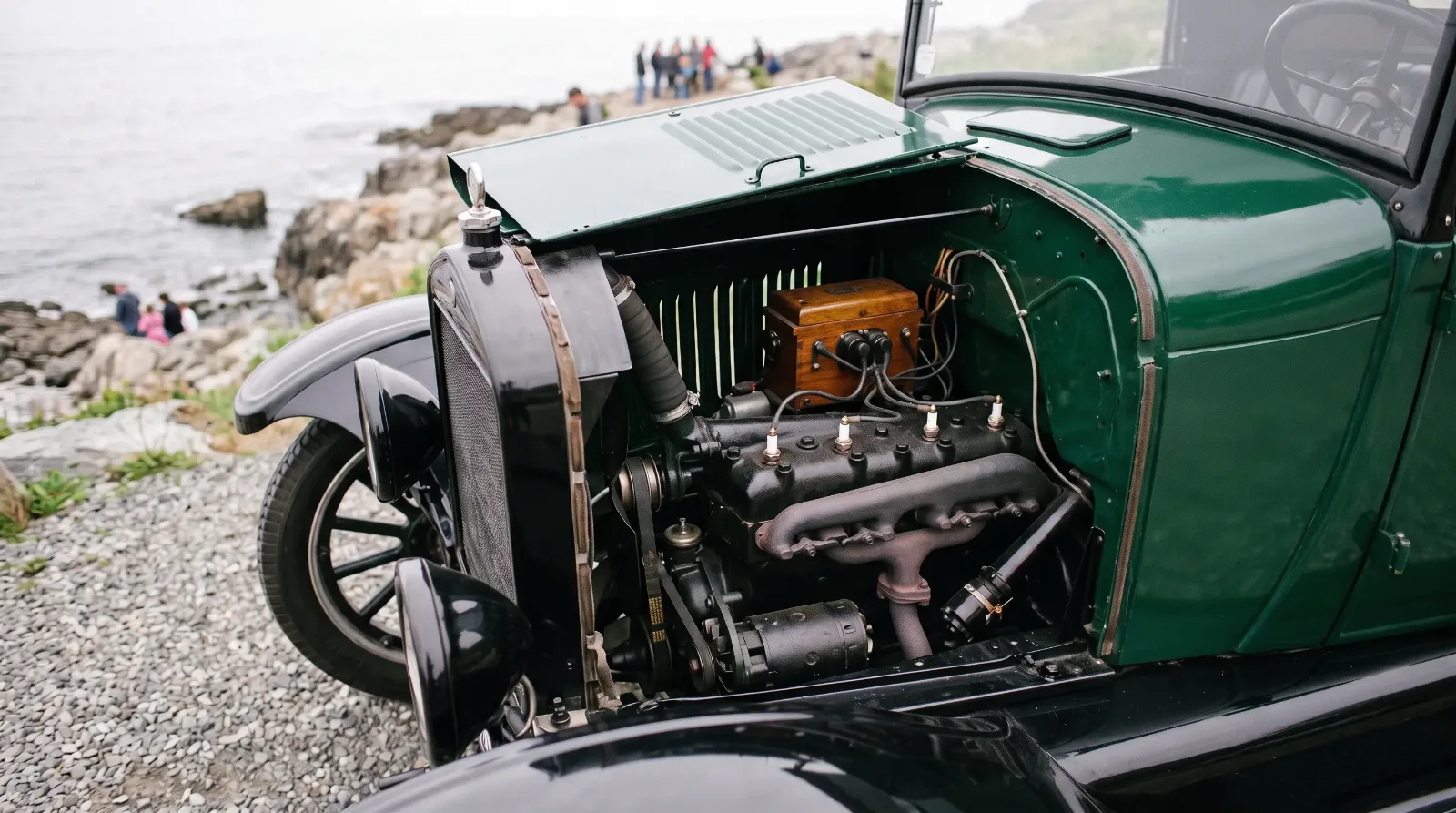
If you want to understand what is happening under the hood while your feet are busy, read up on the Ford Model T engine first. The best teachers, though, are other owners. The Model T Ford Club of America and the local chapters around the country are where people who already know how to drive these cars will put you in the seat, stand beside you and let you stall it a few times without laughing. Much.
And if, after an afternoon with three pedals and a lever, you are ready for your own, start looking for a Model T to learn on. Pick a running, sorted car over a pretty one. A car that starts every time teaches you a lot faster than one that only looks good parked.
Sources and notes
Related Reading
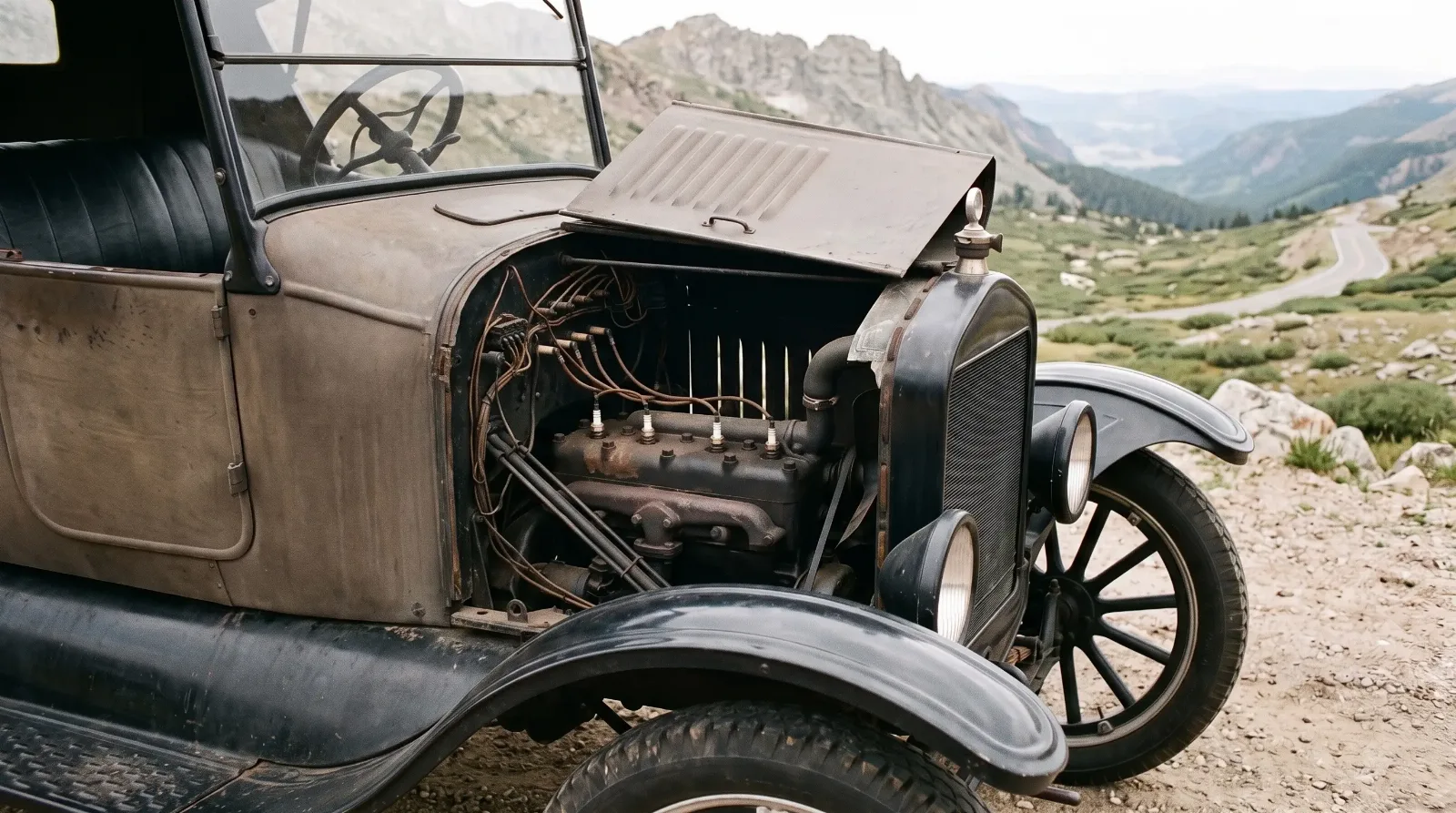
Have a
Ford Model T
for Sale?
Reach thousands of serious classic car collectors across the US.
Sell It Here →
Selling a classic? Here's how: compare the places to sell classic cars
Are You a Classic Car Dealer?
List your full inventory and connect with targeted classic car buyers.
Join as a Dealer →
#brass era cars
#ford model t
#Model T pedals
#how to drive a Model T
#vintage driving
#Model T starting

About the author
Gary Nowak
Lifelong Midwest rodder who has been building and driving traditional pre-war hot rods since the 1970s.
Related Listings - Ford Model T
Comments
Be the first to comment on this article.