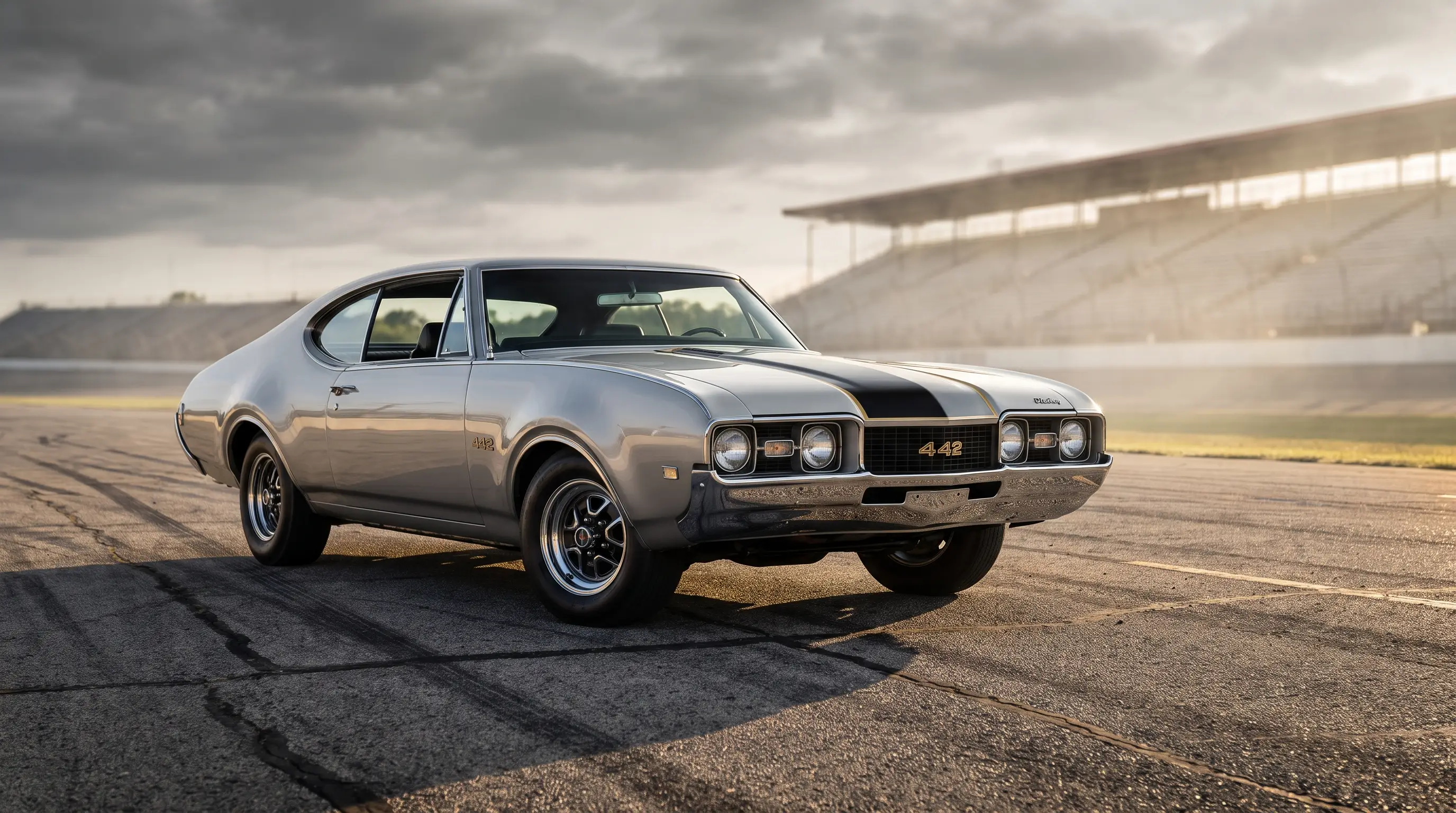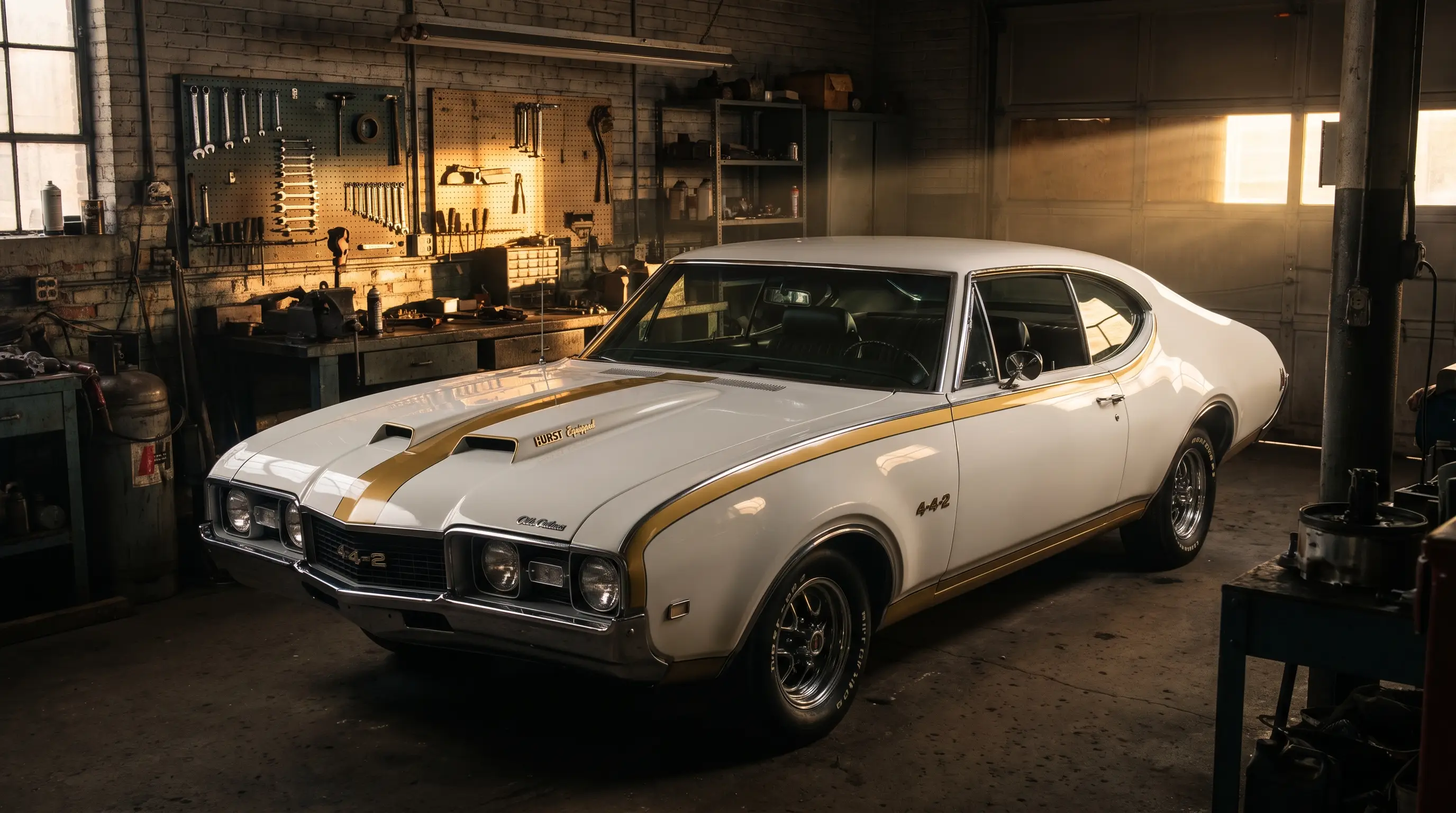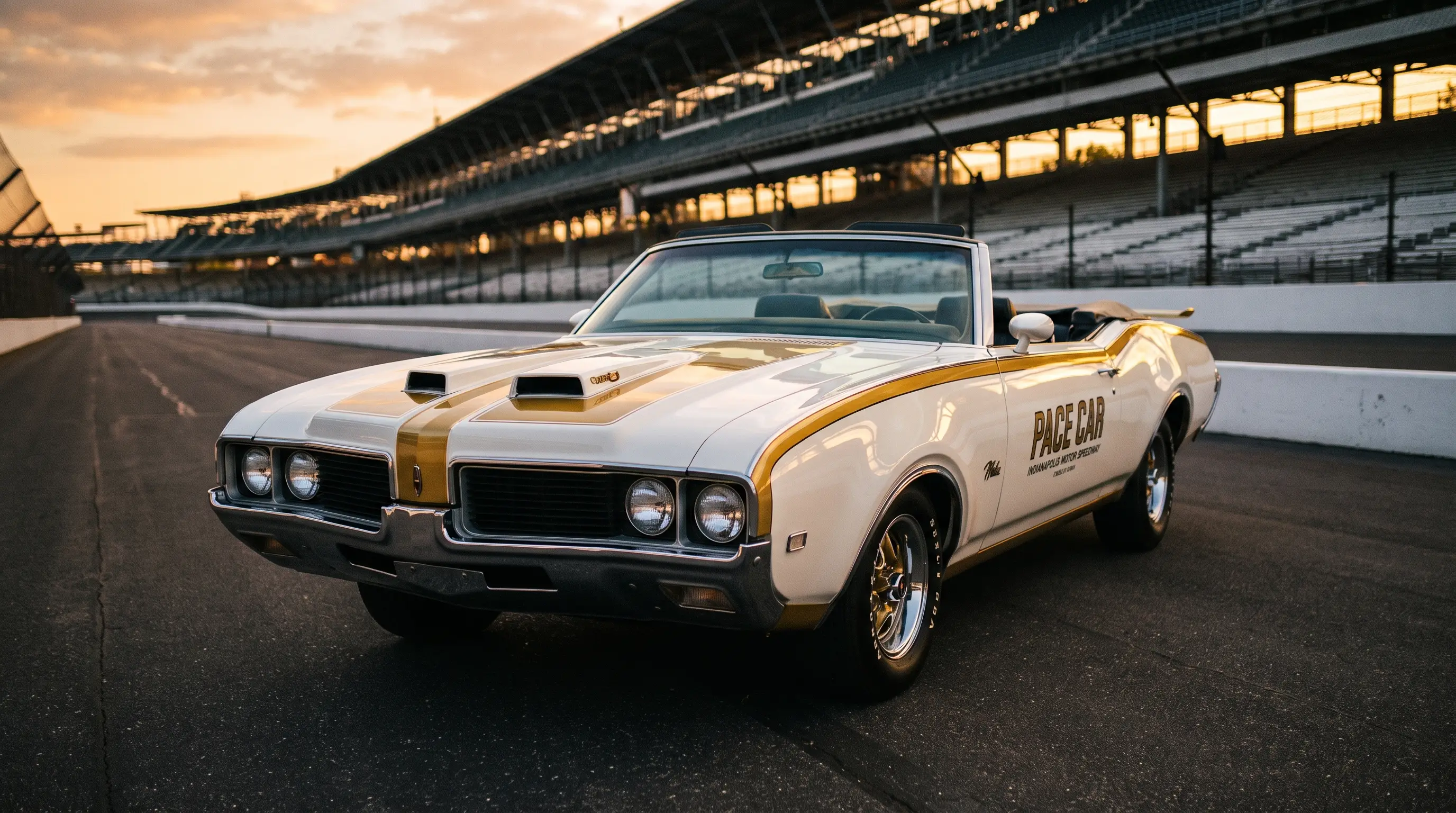
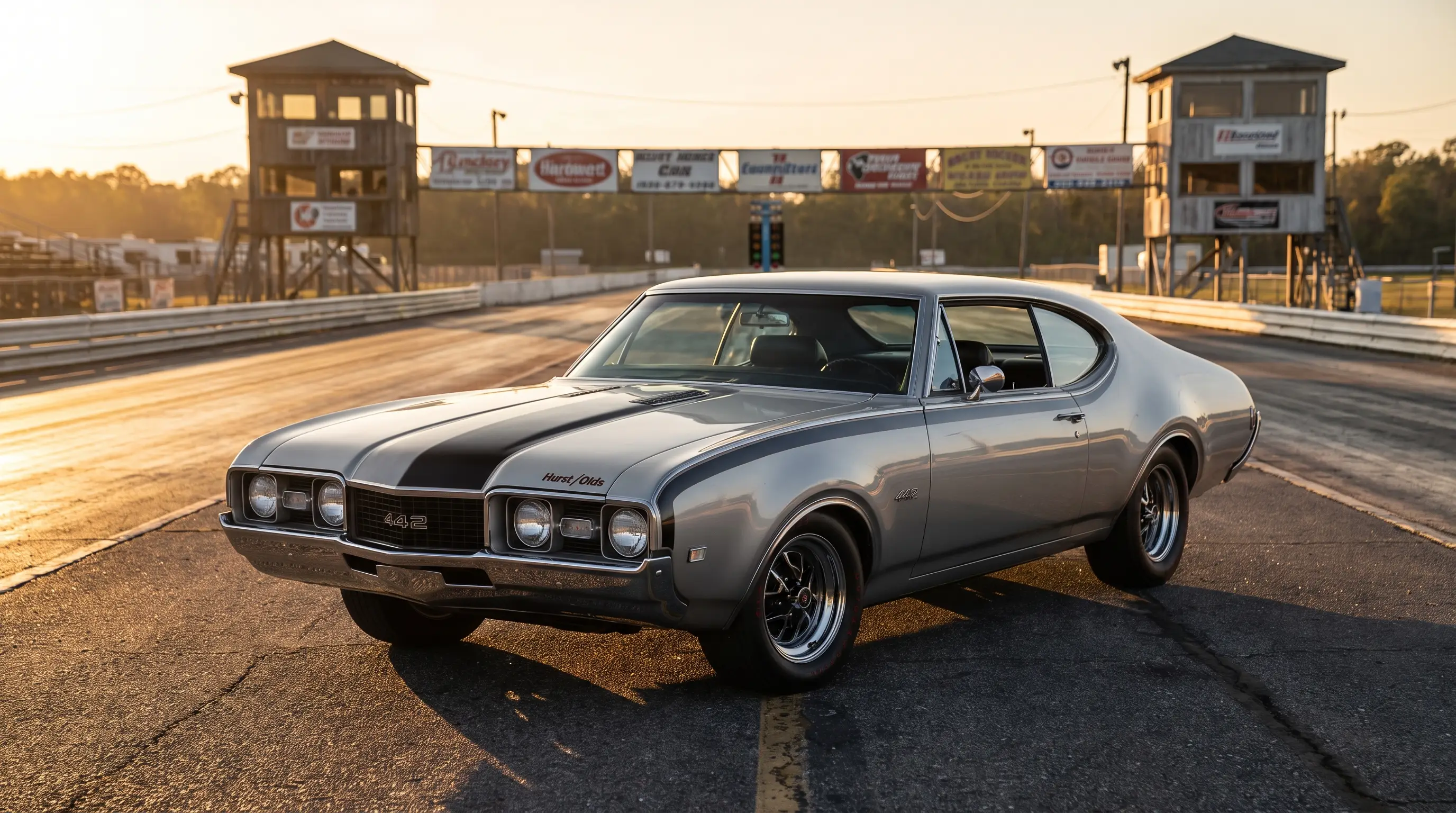
The 1968 Hurst Olds is the car that exists because of a loophole, and understanding that loophole is the only way to understand what you are actually buying today. General Motors had a corporate rule in the mid 1960s: no intermediate, including the Cutlass, could carry an engine larger than 400 cubic inches. Oldsmobile wanted its 455. Hurst Performance had the shop capacity and the relationship with Lansing to make the swap happen outside the assembly line. The result was a run of black and Peruvian Silver Cutlass hardtops that Oldsmobile could not build itself but was more than happy to let someone else finish.
Numbers first, because that is where any honest conversation about this car has to start. Hurst built 515 units for the 1968 model year, the great majority Cutlass Supreme Holiday hardtop coupes with a smaller run of Sport coupes, all painted in the same two-tone silver over black. There was no options list to speak of. You got the 455, a Turbo 400 automatic, and the livery. That narrowness is exactly why the car reads as coherent fifty-plus years later: there is no "loaded" 1968 H/O and no stripped one, just one specification, built by one shop, in one color combination.
The engine that GM would not build itself
The 455 under the hood was drawn from Oldsmobile's full-size and Toronado applications and dropped into the Cutlass chassis with reinforced engine mounts and a stouter frame section to handle the torque. Factory literature quoted 390 horsepower at 5,000 rpm, with 500 lb-ft of torque at 3,200 rpm. What matters more than the peak number is the delivery: this is a big-inch, low-revving engine built for a torque curve rather than a redline, and it drives nothing like a small-block Chevelle or a Ram Air Firebird. Buyers expecting a screamer are buying the wrong car.
The Turbo 400 was the only transmission offered, which tells you something about the car's intended use. This was not built as a strip special first. It was built as a fast, comfortable, torque-rich street car that happened to embarrass quicker-looking machinery at a stoplight. Auction buyers who show up expecting four-speed documentation on a 1968 H/O are working from a misunderstanding of the car, not a red flag on the title.
Why production numbers this low still trade in a narrow band
A production run under 600 cars sounds like it should command outsized money, and buyers new to the Hurst Olds space are often surprised it does not, at least not compared to numbers-matching Ram Air or L78 cars from the same year. The reason is liquidity, not desirability. This is a niche within a niche: Oldsmobile muscle collectors are a smaller, older, more research-driven pool than Chevrolet or Pontiac buyers, and the car's identity depends on a dealer-installed conversion rather than a factory build sheet, which makes some mainstream muscle car money nervous even when the documentation is clean.
What actually moves a 1968 H/O in today's market is paperwork proving the car left Hurst's Lansing operation as delivered, not reconstructed later from a donor Cutlass and a reproduction decal kit. A well-documented, numbers-correct example with Hurst shipping records or period dealer invoices will outsell a cosmetically identical car with no paper trail by a wide margin, sometimes double. Buy the paperwork, not just the paint scheme.
| Item | 1968 Hurst Olds detail |
|---|---|
| Base platform | Cutlass Supreme Holiday hardtop coupe |
| Engine | Oldsmobile 455 cubic inch V8 |
| Rated output | 390 hp at 5,000 rpm |
| Transmission | Turbo 400 automatic, sole offering |
| Estimated production | 515 units (464 Holiday hardtops, 51 Sport coupes) |
| Exterior scheme | Peruvian Silver over black |
What a real buyer should be checking before wiring money
Start with the cowl tag and the trim codes, then ask for anything Hurst-specific: shipping paperwork, dealer invoice language referencing the conversion, or prior appraisal documentation that traces the car's history. Because the 455 swap happened outside Oldsmobile's own assembly line, VIN decoding alone will not confirm authenticity the way it does on a factory-built 4-4-2. A car missing that secondary paper trail is not automatically a fake, but it is priced like one until proven otherwise, and that discount is often 20 to 30 percent against a fully documented twin.
Rust and prior collision repair matter here just as they do on any 1968 GM A-body, but the deeper concern specific to this car is drivetrain substitution. A 455 out of a full-size Delta 88 dropped into a Cutlass shell will look correct to a casual inspection and will not carry the same value as a car with its original, Hurst-installed engine still in place. Have a marque specialist verify block casting numbers and date codes against the car's build sheet before you finalize a deal, not after.
"People want to talk about the horsepower number, but the number that actually sets the price on one of these is whether Hurst's own paperwork agrees with what is sitting in the engine bay. Everything else is negotiable."
— David Mercer
Where this car sits in the bigger Hurst/Olds story
The 1968 car is the starting point for a partnership that Oldsmobile and Hurst would revisit repeatedly over the next decade, and it is worth reading in context rather than in isolation. For the full arc of that relationship, from the corporate displacement rule that created this car through its later revivals, the Hurst/Olds chapter lays out how the badge evolved car to car. The 1969 model sharpened the formula considerably and is worth cross-referencing directly, since a companion piece covers what changed and why those changes matter to today's buyers.
Treat the 1968 Hurst Olds as a collector purchase built on scarcity and provenance rather than raw performance bragging rights. The car is not going to out-accelerate a well-sorted 400 cubic inch competitor from the same year on paper, and it does not need to. Its value case rests on being an unrepeatable factory workaround, built in a specific place, in a specific color, in numbers small enough that every surviving example is individually traceable. Buy accordingly, verify the paper before the paint, and the car holds its ground in any serious Oldsmobile collection.