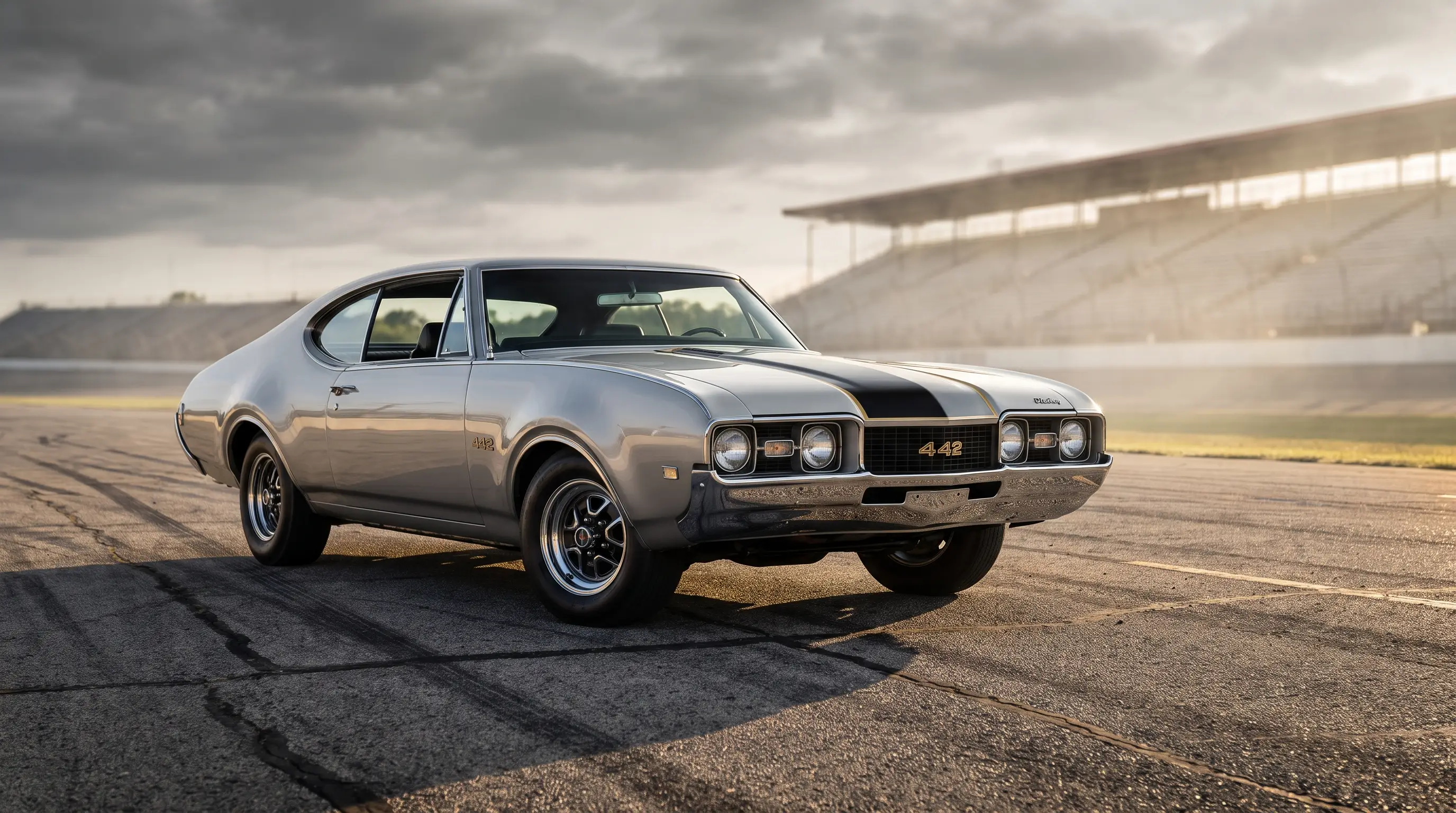
The 1969 Hurst Olds, badged H/O, is the version of this Cutlass-based special that collectors actually argue about, and the argument is worth having. Where the 1968 car was a single-year proof of concept built to route around GM's displacement cap, the 1969 update sharpened the formula, changed the color story, and added a genuine rarity within a rarity: a small handful of convertibles George Hurst built for his own promotional tours. If you are shopping this year, you are shopping two very different cars wearing the same badge.
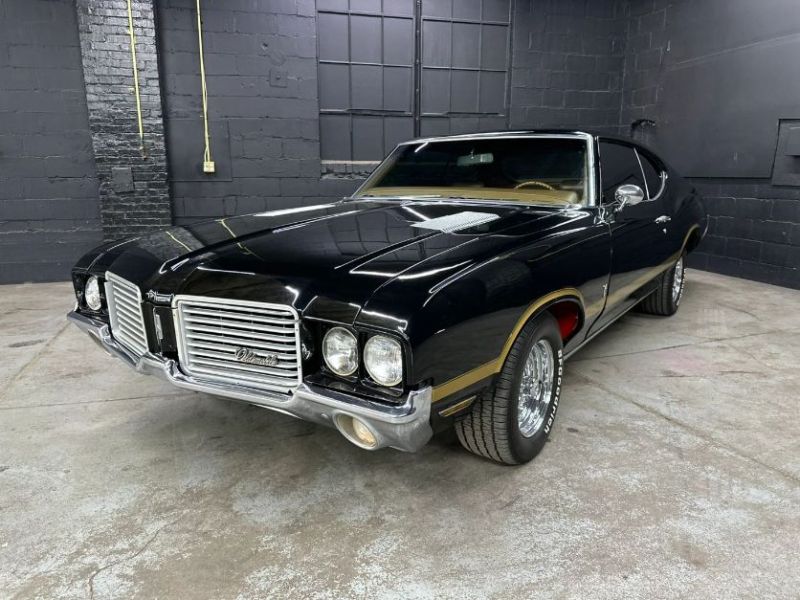
Total production landed around 906 hardtop units (sources put the full run, including convertibles, in the low 900s), the overwhelming majority of them Cutlass Supreme Holiday hardtop coupes finished in the black and Firefrost Gold scheme that has become the visual signature of the 1969 H/O. That hardtop count is the baseline the whole market is priced against. The convertibles are a separate conversation entirely.
What actually changed from the 1968 car
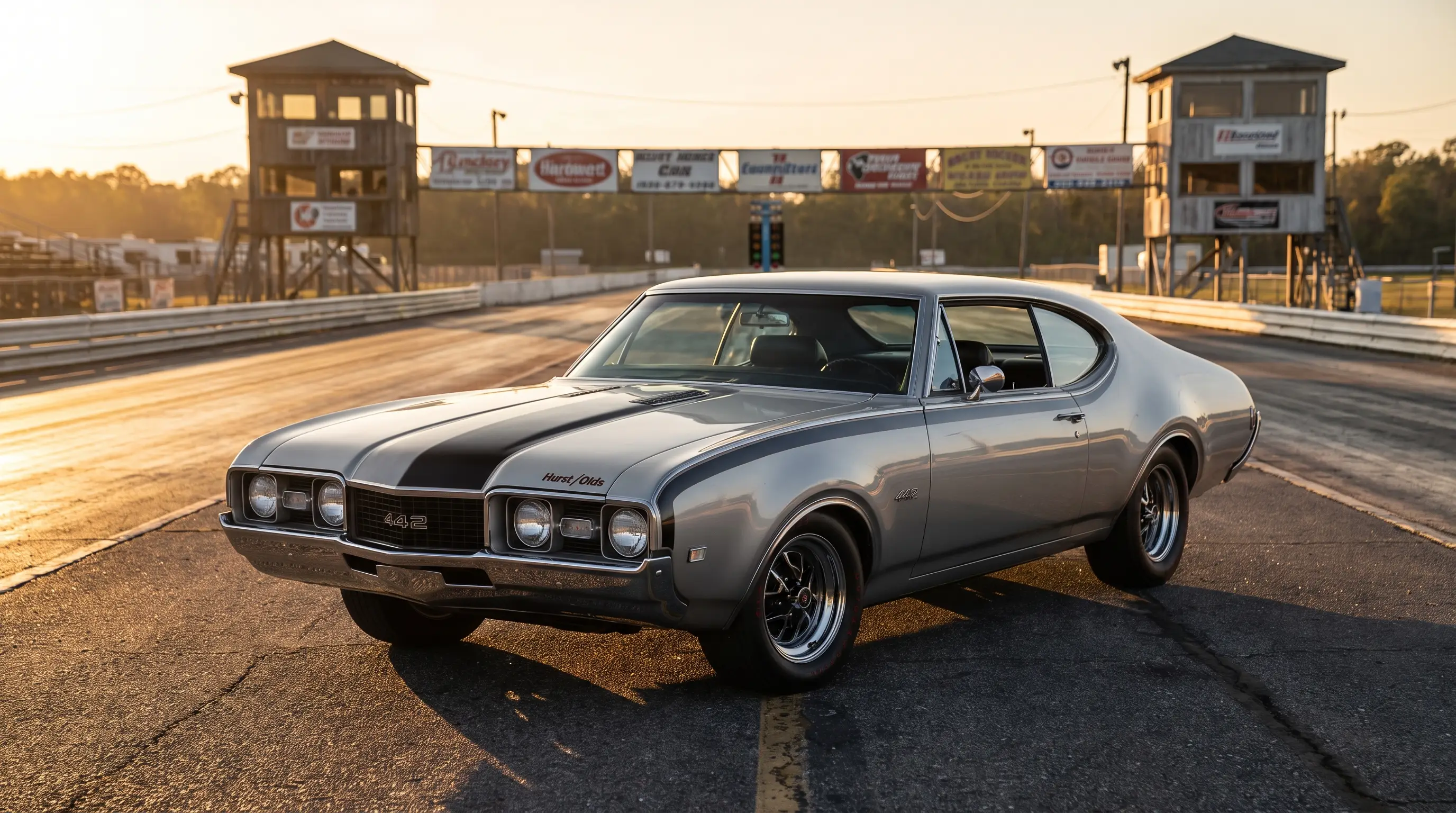
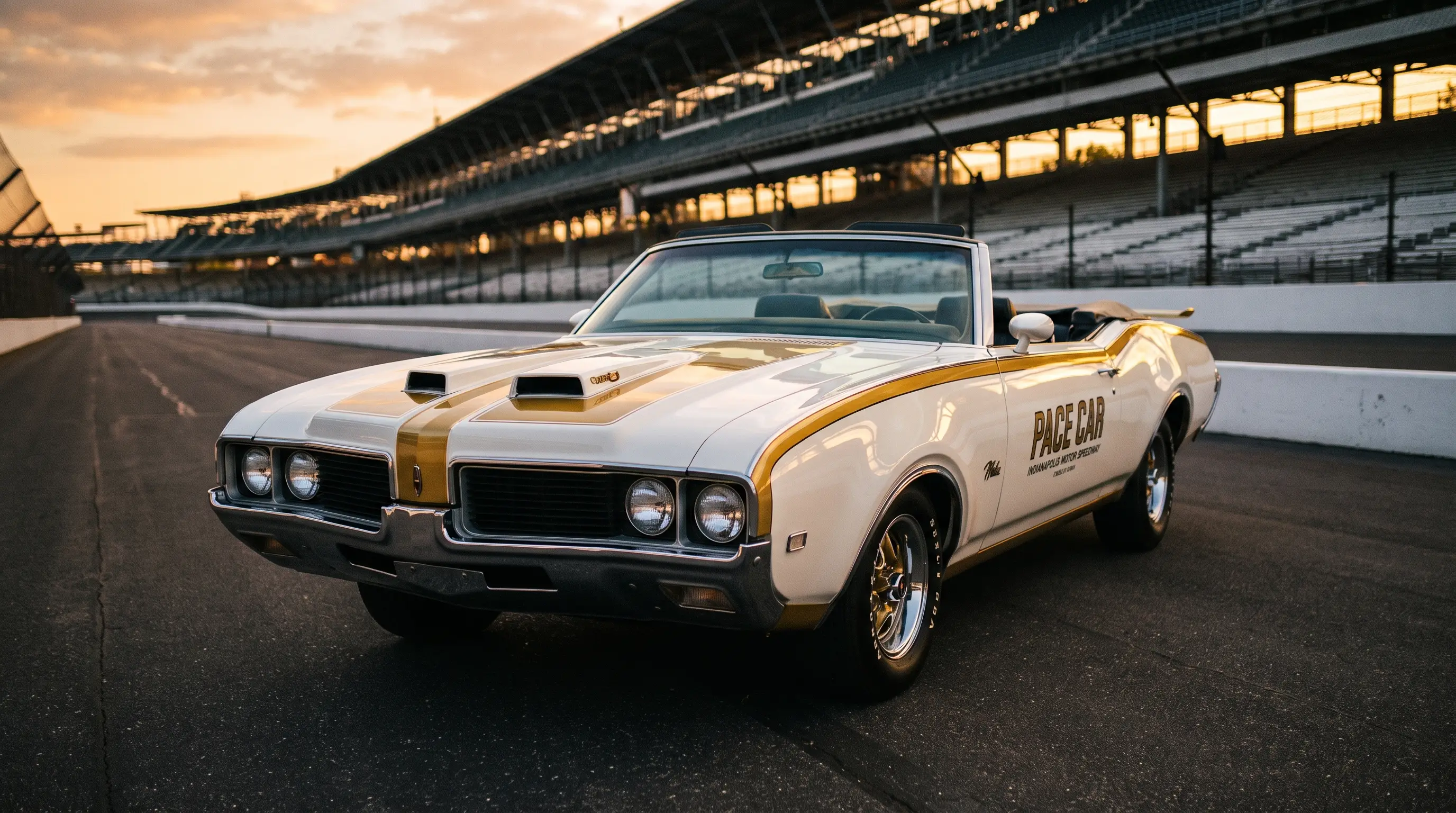
The 455 carried over as the only engine, still rated at 380 hp on factory literature, but the induction and cooling package was reworked. The most visible change sits on the hood: dual functional scoops, oriented to draw air rearward into the cowl rather than forward into the carburetor, a detail that trips up buyers who assume every hood scoop on a muscle car feeds the engine. On the 1969 H/O it did not. It fed cabin ventilation, not the intake.
Cosmetically, the black and gold combination replaced the silver of 1968, and it is this scheme, more than any single spec change, that gives the 1969 car its identity in collector circles today. Buyers looking at a repainted example should treat the color and stripe execution as a documentation issue in its own right. Getting the gold shade wrong, or the stripe width slightly off, is one of the fastest ways to flag a car that has been through an amateur restoration rather than a careful one.
The convertibles, and why they are their own market
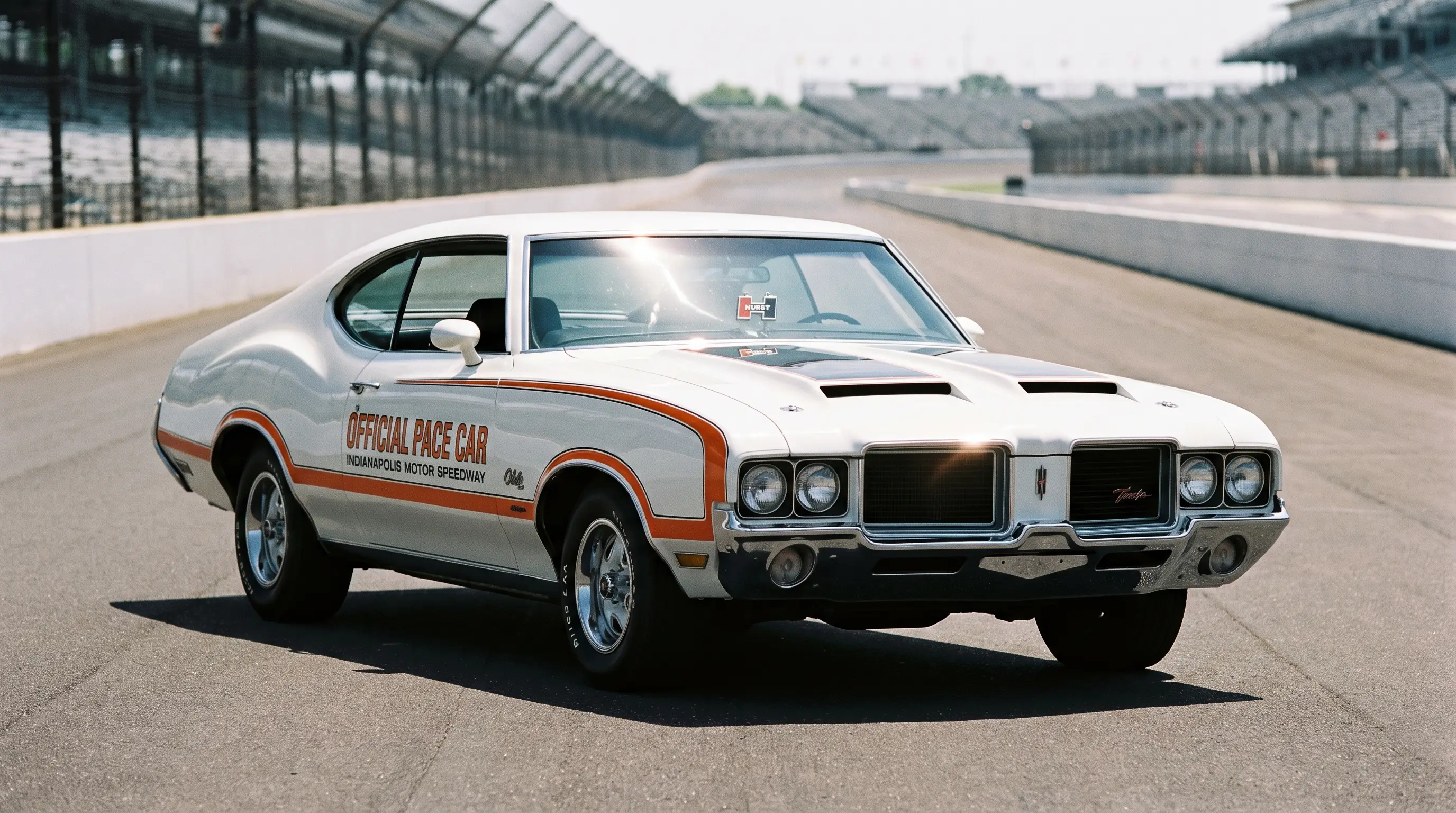
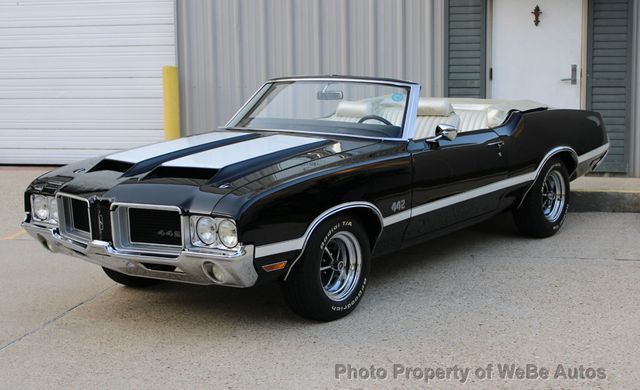
A tiny number of Hurst Olds convertibles were built for 1969, and this small subset trades in a completely different tier than the hardtop production run. These were not Indianapolis 500 pace cars; that distinction belongs to the 1972 Hurst Olds. The 1969 convertibles were built for George Hurst's own promotional use, with one car making East Coast appearances, including a showing at that year's Daytona 500, and a second built for West Coast duty. A third was constructed later. Every serious appraiser treats these three cars as a distinct sub-market rather than a variant of the standard car. If a seller is representing a car as one of these promotional convertibles, the documentation burden is significantly higher than for a standard hardtop, and buyers should expect to pay for independent verification before closing, not after.
For most buyers building a collection around the standard hardtop, the convertible story is interesting history rather than a shopping target. The hardtop is the car that actually exists in the market in numbers you can realistically pursue, and it is the car this article is mainly concerned with.
Interior trim carried over largely unchanged from 1968, with the notable addition of Hurst's own dual-gate shifter as an available piece for the console, a detail worth checking on any car presented as fully optioned. The shifter itself has become a small collector item in its own right, and cars missing it, or fitted with a reproduction, should be priced with that gap in mind rather than glossed over as a minor trim omission.
| Item | 1969 Hurst Olds detail |
|---|---|
| Base platform | Cutlass Supreme Holiday hardtop coupe |
| Engine | Oldsmobile 455 cubic inch V8 |
| Rated output | 380 hp (gross) |
| Estimated hardtop production | Approximately 906 units |
| Exterior scheme | Black and Firefrost Gold |
| Special variant | Three promotional convertibles built for George Hurst; not Indy 500 pace cars |
Reading the market on a 1969 hardtop today
Against the 1968 car, the 1969 Hurst Olds tends to command a modest premium in the hardtop market, driven by the more distinctive color scheme and a production run that, while larger, still reads as tight by muscle car standards. The gap is not enormous, and it should not be, because both cars share the same core engineering story: a 455 that GM's own Cutlass Supreme 4-4-2 could not officially carry that year, installed by an outside partner rather than on Oldsmobile's own line.
Buyers should discount heavily for any car with a repainted scheme that does not match documented factory colors precisely, and should treat casual claims of promotional-convertible provenance with real skepticism until an appraiser has looked at the paperwork directly. A solid, honestly represented hardtop with matching numbers and a clean color execution is the safer buy for most collectors, and it is usually the better long-term hold too, since it is not exposed to the same authentication risk that follows the convertible cars around.
"The promotional convertibles get all the attention at auction, but the hardtop is where the actual market lives. If you want a 1969 H/O you can drive, insure, and resell without a fight, that is the car to chase."
— David Mercer
Placing 1969 in the wider Hurst/Olds timeline
None of this makes sense outside the arc that starts the year before. For the full account of why Oldsmobile needed an outside partner to build its own biggest engine into the Cutlass, the Hurst/Olds chapter covers the corporate rule that created the whole partnership. The formula did not stop evolving here either, and readers who want to see where the badge went next should keep reading the series to follow the car to its actual Indianapolis 500 pace car debut in 1972.
The 1969 Hurst Olds rewards buyers who do their homework on color accuracy and production documentation before chasing the number on the window sticker. Its 455 is the same story as 1968, wrapped in a more distinctive package, with a genuine rarity sitting quietly off to the side for buyers willing to take on the extra verification work. Most collectors are better served by a clean, correct hardtop than by chasing the convertible mystique, and that preference shows up clearly in how these cars actually change hands year over year.