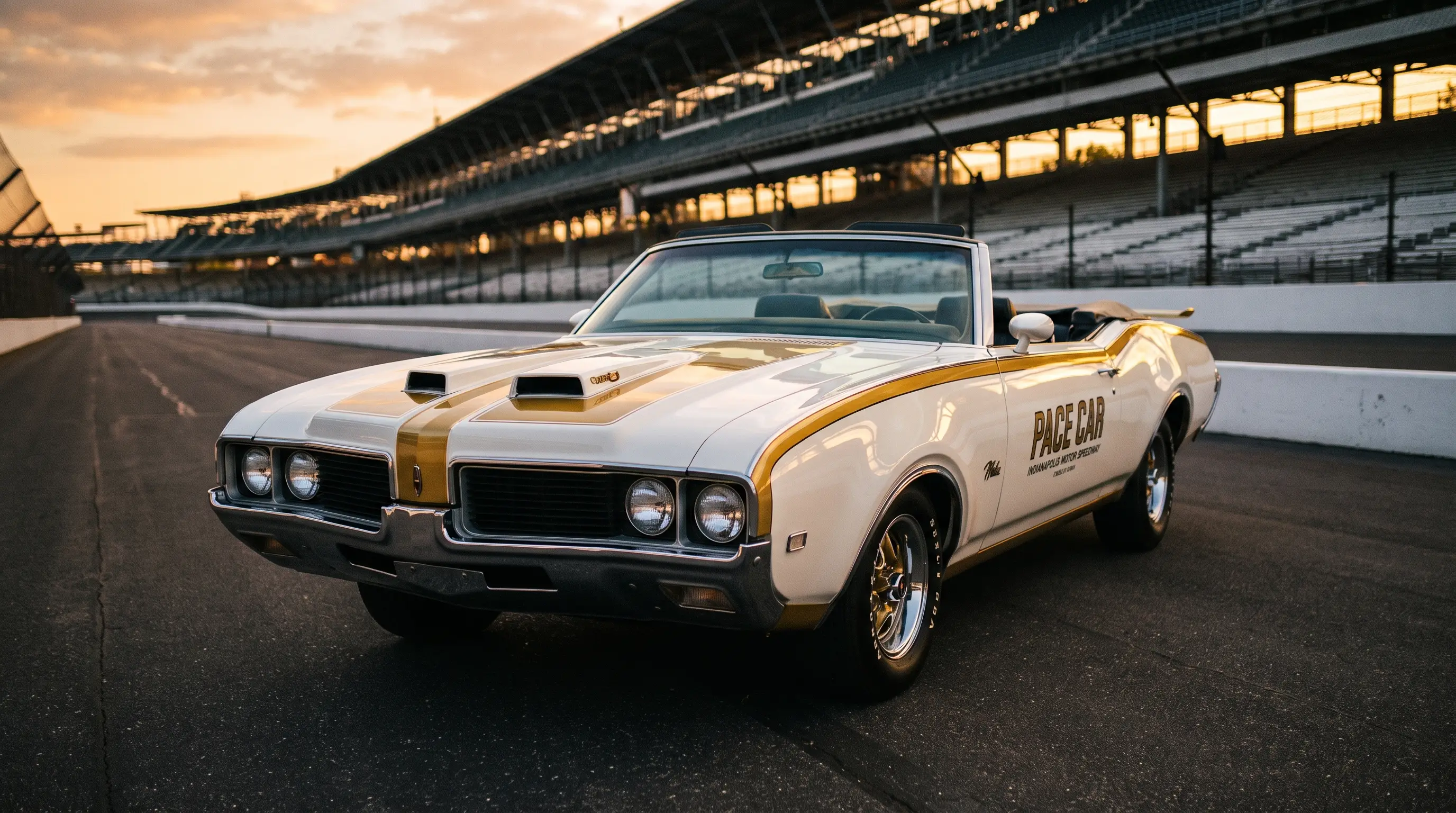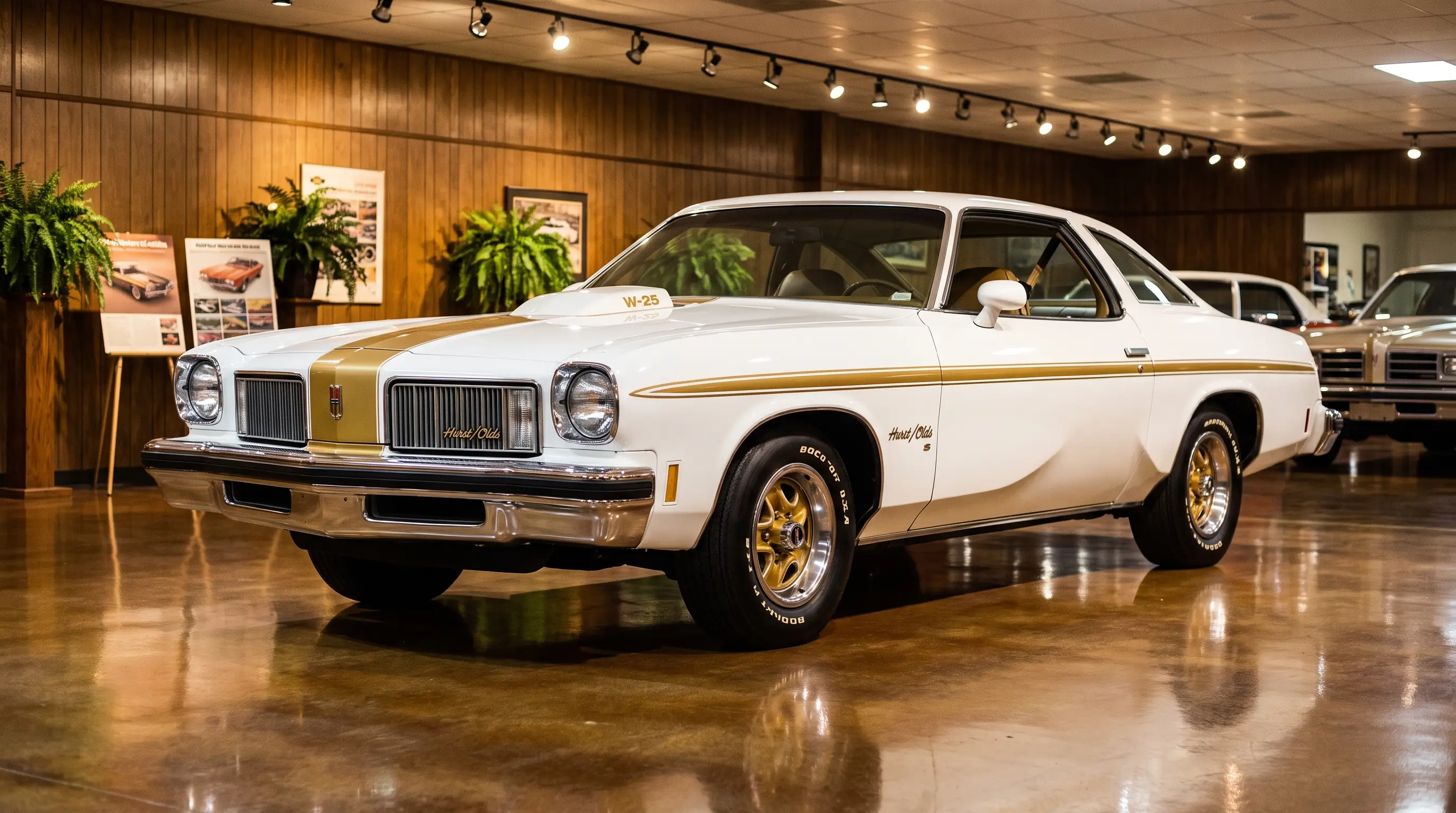
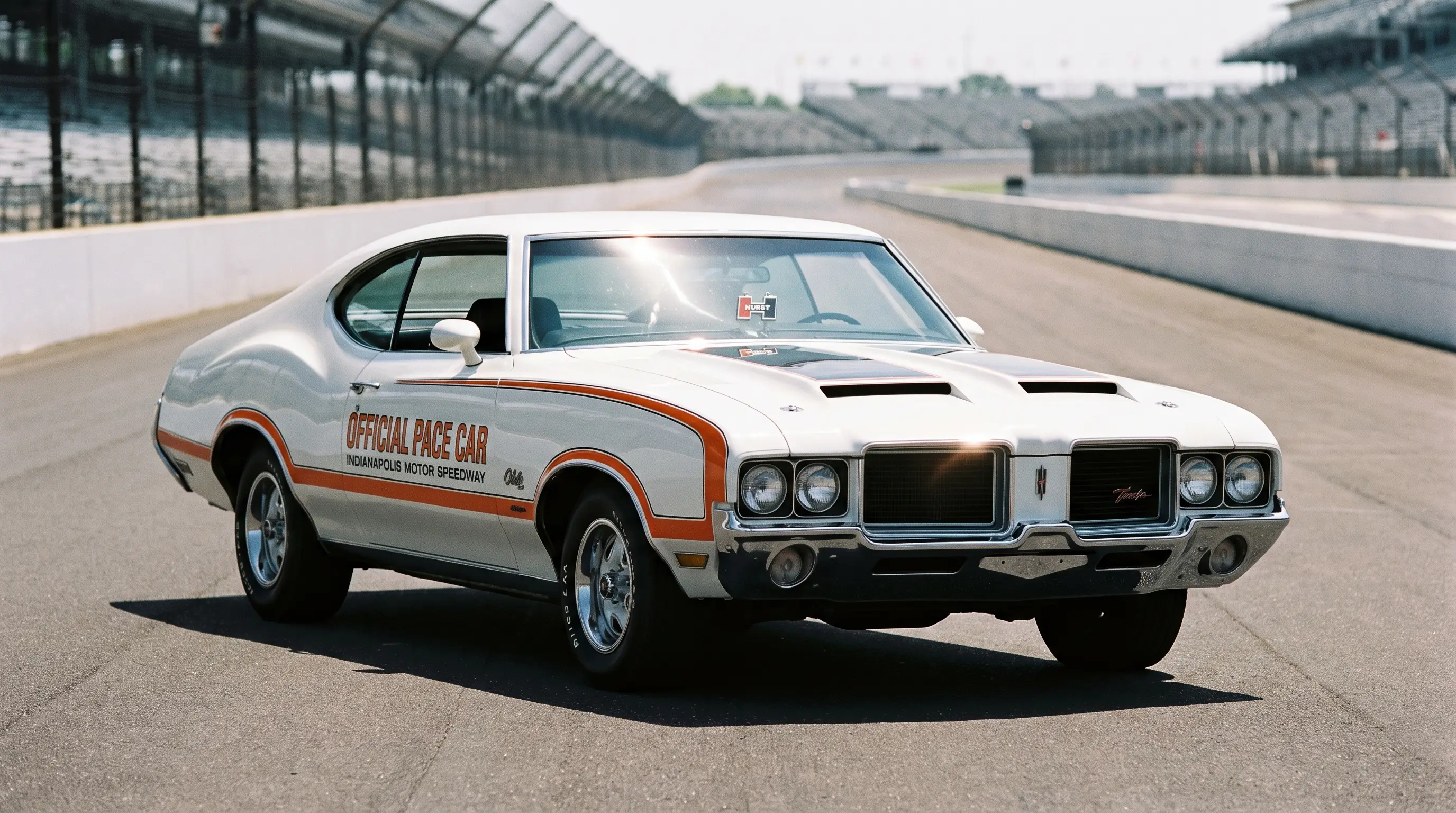
The 1972 Hurst Olds is the comeback car, and understanding why it needed to come back is half the story. After the 1969 model, Oldsmobile and Hurst stepped away from the Cutlass-based special for two years, largely because GM's own corporate rules and the tightening insurance and emissions climate made another run harder to justify. When the badge returned for 1972, it came back with a job to do: pace the Indianapolis 500, wearing white paint and orange and black striping that read as unmistakably Hurst from a hundred yards away.
This is also the year the numbers themselves changed meaning. 1972 was the first full model year GM quoted output in net rather than gross horsepower, a measurement taken with accessories and exhaust installed rather than on a stripped test stand. A 1972 Hurst Olds carrying a lower-sounding horsepower figure than a 1969 car is not necessarily a weaker engine. It is very often the same engine, measured honestly for the first time.
The W-30 455 under a different measuring stick
The standard 1972 Hurst Olds carried Oldsmobile's L75 455, rated at 250 hp net on factory documentation. The W-30 version of the same 455, a blueprinted L77 build, was the extra-cost option and stepped output up to 300 hp net. Buyers coming from earlier Hurst Olds research and comparing either figure directly against the 1968 car's 390 hp gross rating are comparing two different measurement standards, not two different levels of performance. This is one of the most common mistakes in muscle car shopping generally, and the Hurst Olds line is a textbook case of it because the net rating switch happened right in the middle of the model run.
Production sat at 629 units for the year, a figure that breaks down to 279 standard hardtops, 220 hardtops with sunroof, 130 convertibles, and 6 station wagons built for press and ambulance duty. That combined total matters when you are assessing rarity claims: a seller pitching a car as one of a tiny, exclusive handful should be able to show where their specific car sits within that documented total, not just gesture at overall scarcity.
Indy 500 pace car duty and what it does to value
Indianapolis 500 pace car association is one of the strongest value multipliers in the American muscle car hobby, and the 1972 Hurst Olds carries that association legitimately, not as a marketing afterthought bolted on later. The white, orange, and black scheme was the actual pace car livery, and cars built to that specification with correct documentation trade at a real premium over standard production Cutlass-based Hurst Olds cars from the same year.
That premium is also exactly where buyers get burned. Because the pace car look is just a paint and decal scheme rather than a unique mechanical package, a standard 1972 Hurst Olds can be, and has been, cosmetically converted to pace car appearance without any factory basis for the claim. Treat any pace car representation the same way you would treat a numbers-matching claim on a rarer car: verify it against build documentation before it factors into the price you are willing to pay.
| Item | 1972 Hurst Olds detail |
|---|---|
| Base platform | Cutlass Supreme, coupe and convertible |
| Engine | Oldsmobile 455 cubic inch V8, L75 standard, W-30 (L77) optional |
| Rated output | 250 hp net (L75), 300 hp net (W-30) |
| Total production | 629 units (279 hardtops, 220 hardtops with sunroof, 130 convertibles, 6 station wagons) |
| Exterior scheme | White with orange and black striping, Indy 500 pace car livery |
| Notable role | 1972 Indianapolis 500 official pace car |
Buying into the net horsepower era with clear eyes
The practical lesson for anyone shopping a 1972 Hurst Olds is to stop anchoring on the horsepower figure printed in period brochures and start anchoring on documented production numbers, matching numbers verification, and pace car paperwork where it is claimed. The net rating change makes cross-year horsepower comparisons close to useless without adjusting for the measurement method, and sellers who lean hard on the raw number, in either direction, are usually hoping you will not ask the follow-up question.
The convertible variant, where present, tends to draw stronger interest than the coupe in current market conditions, consistent with general muscle car convertible premiums across the era. That said, a well-documented coupe with clean W-30 verification and honest paint history is not a compromise purchase. It is simply a different, more attainable entry point into the same car.
Interior appointments held to the same formula as prior Hurst Olds years, with the console-mounted Hurst shifter still the signature touch buyers look for, and the white houndstooth or vinyl trim options tying the cabin visually to the pace car theme outside. A car with a mismatched or aftermarket shifter is not disqualified from a purchase, but it is a detail worth negotiating on, since Hurst's own hardware is part of what the badge is actually selling.
"Everyone wants to talk about 300 horsepower like it's a step down from the sixties cars. It isn't. It's the same engine family, measured honestly for the first time. Compare documentation, not brochure numbers."
— David Mercer
Where 1972 sits in the larger Hurst/Olds arc
The comeback year only makes sense against the run that preceded it. For the fuller account of why the partnership paused and what it was built to solve in the first place, the Hurst/Olds story lays out the full arc from the original displacement workaround forward. The badge continued evolving through the mid-1970s as insurance and emissions pressure reshaped the whole muscle car category, and readers tracking that decline should keep reading the series to see how the formula adapted next.
A 1972 Hurst Olds bought with clear eyes about the net horsepower transition, and with real diligence on pace car claims, is a strong entry into a car that genuinely earned its Indianapolis 500 role rather than borrowing it. Chase the documentation first. The paint scheme photographs well regardless of whether it is telling the truth, and only one of those two things holds up under an appraiser's flashlight.