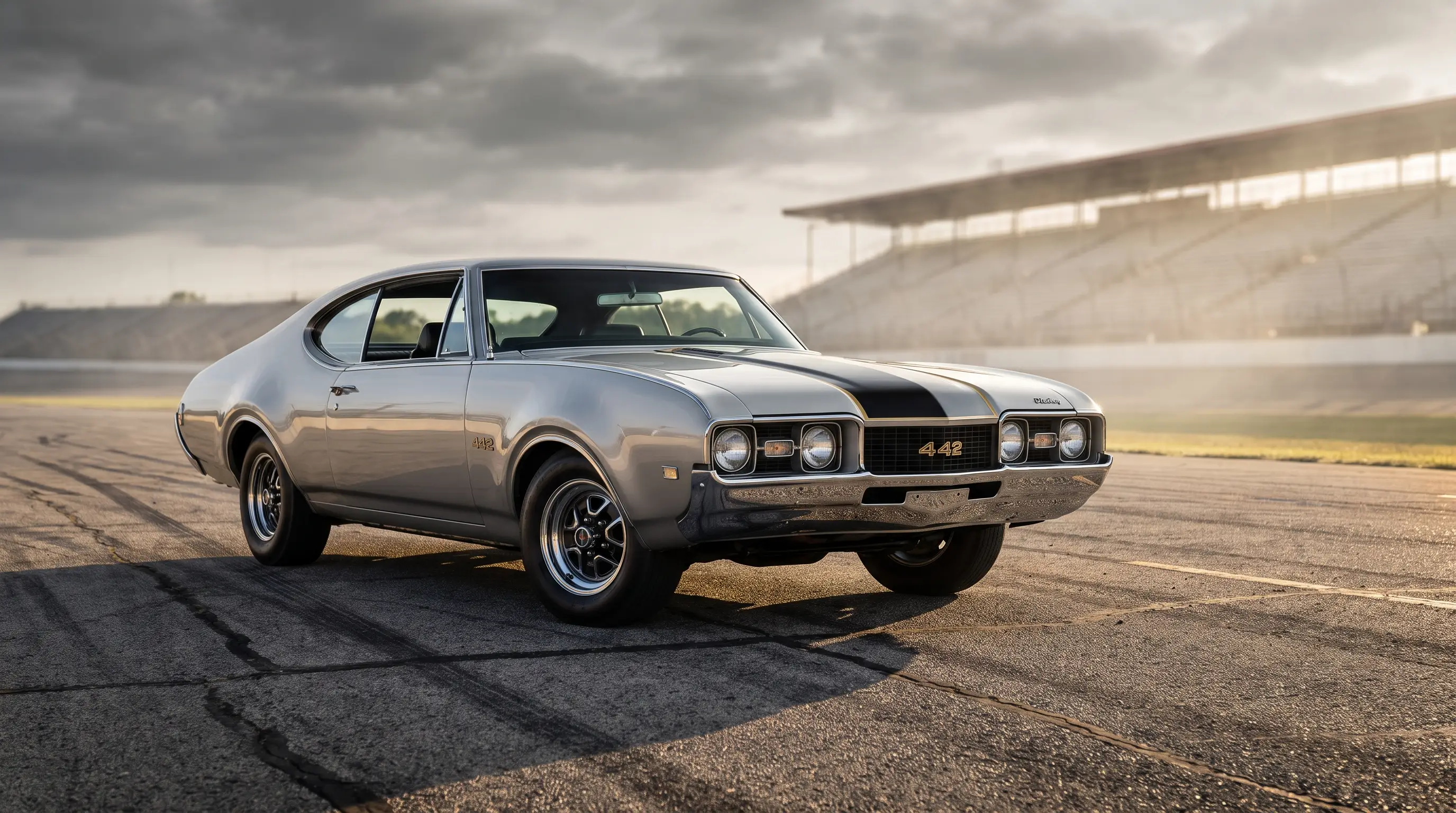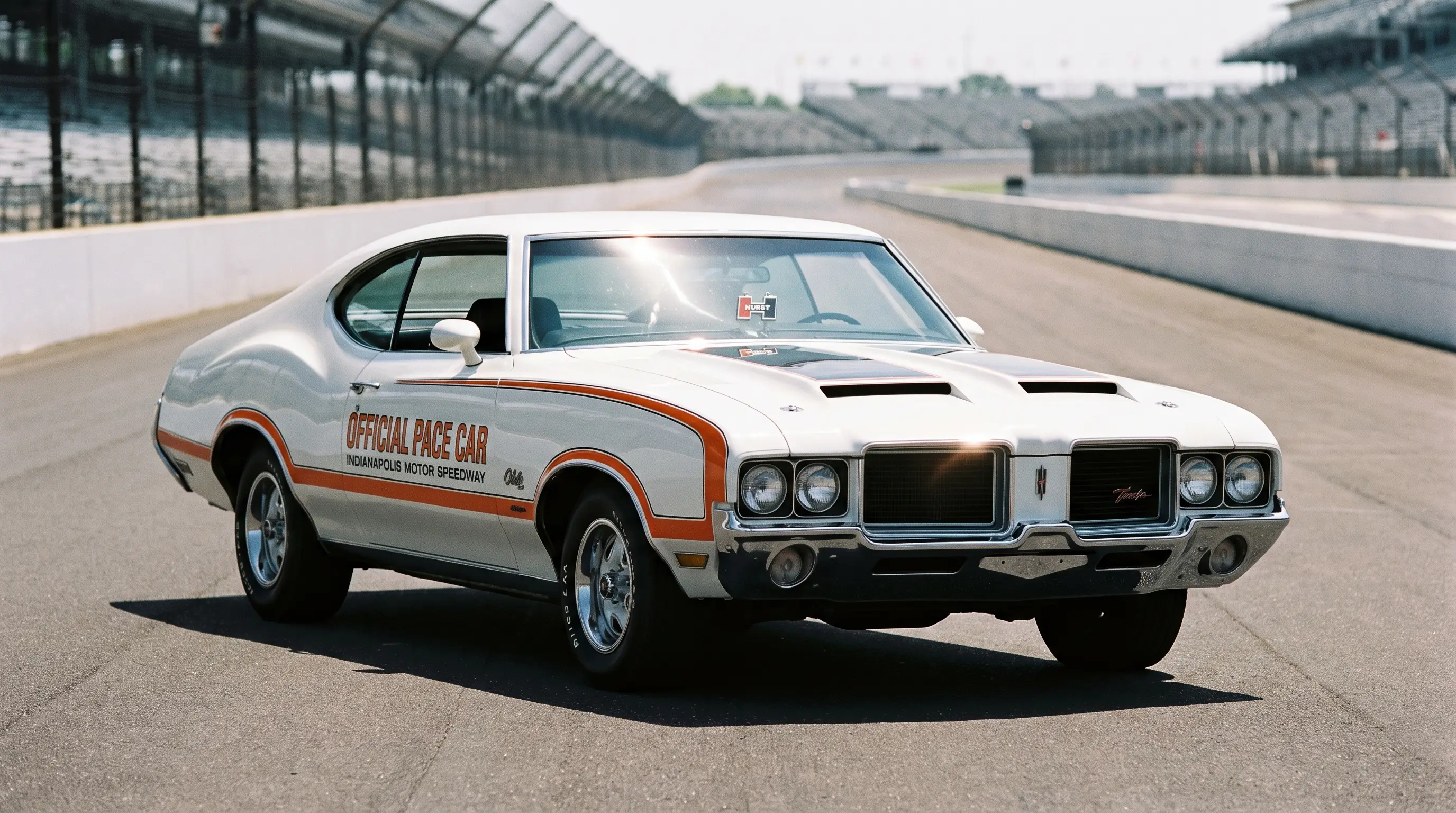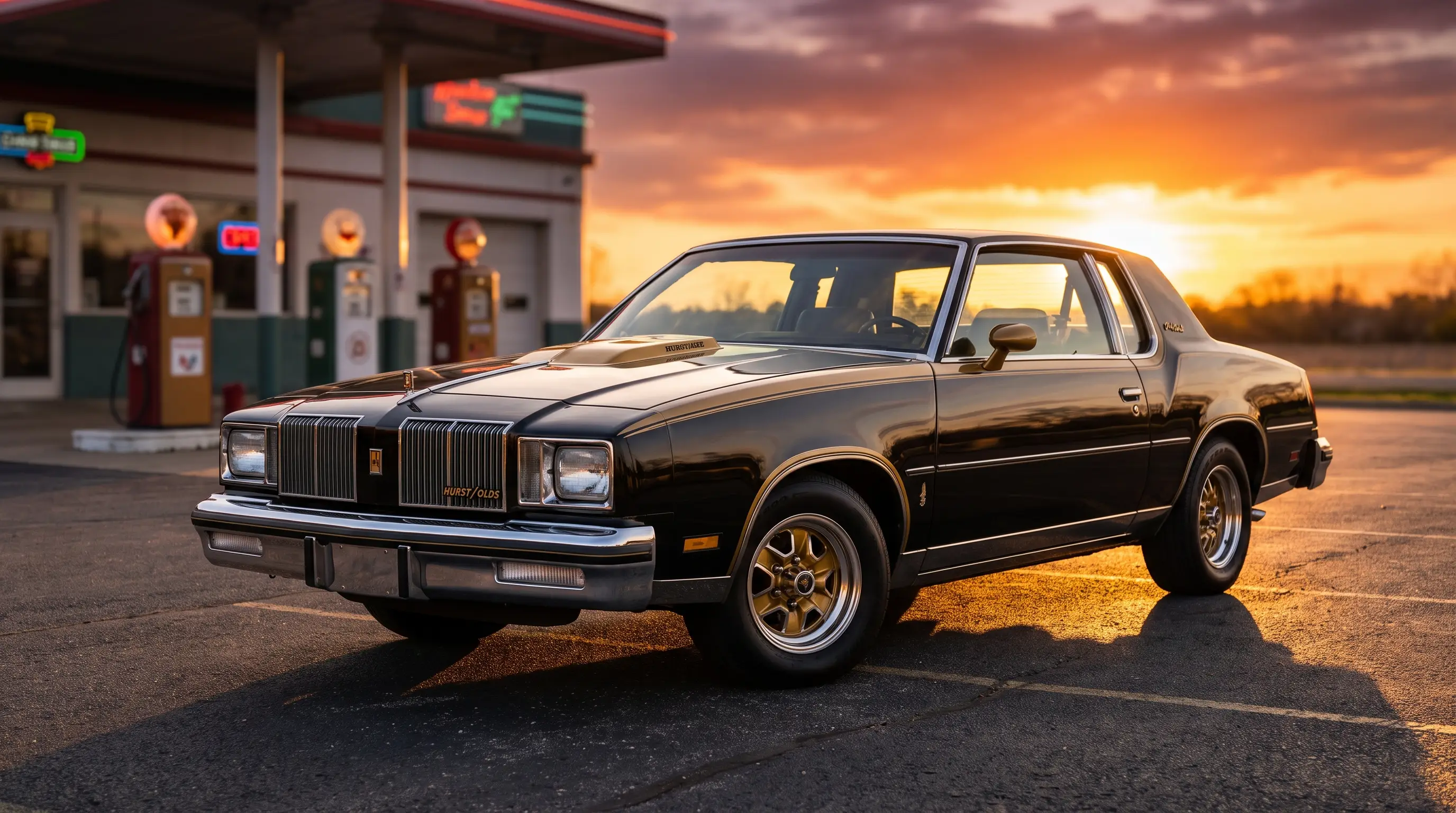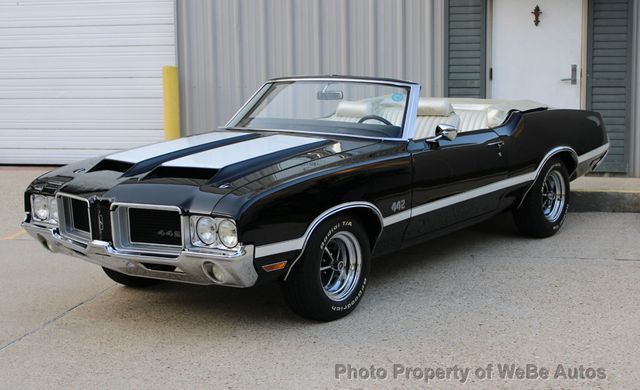
The 1974 and 1975 Hurst Olds are the cars that get skipped over when people talk about this Cutlass-based lineage, and skipping them is a mistake if you are actually appraising one rather than just admiring photographs of the earlier models. This generation moved onto GM's Colonnade-bodied Cutlass Supreme, added a distinctive dual hood scoop with an integrated tachometer, and did all of it while the muscle car category around it was being squeezed from every direction: insurance surcharges, tightening emissions rules, and a 1973 oil embargo that killed buyer appetite for anything thirsty. Value claims on these cars have to be made with that context attached, not against.
What the W-25 and W-30 packages actually were
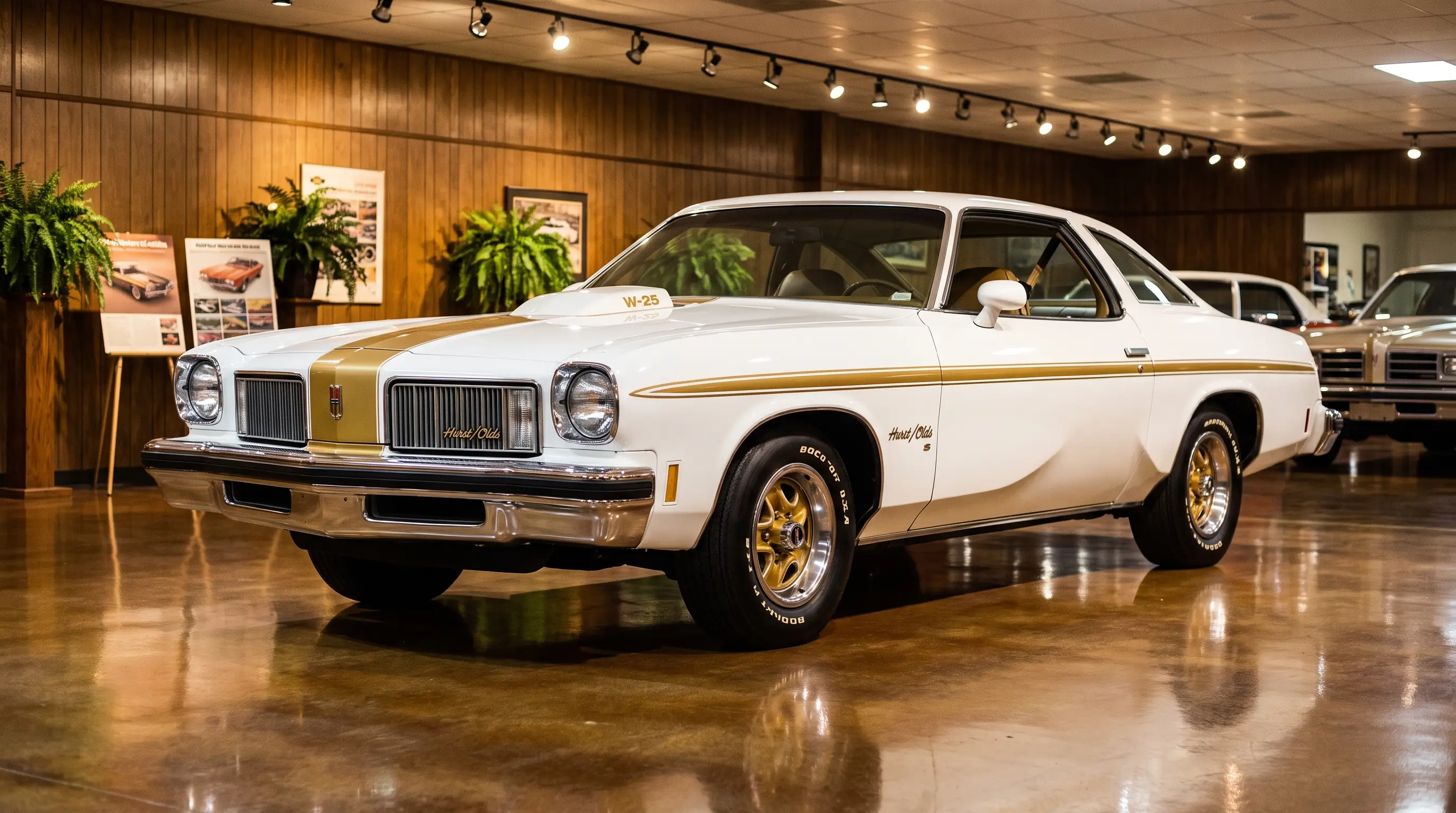
The 1974 to 1975 cars are commonly referenced by their W-25 (350-powered) and W-30 (455-powered) option package designations, both built on the Colonnade Cutlass Supreme body with a functional dual-scoop hood and a hood-mounted tachometer, an unusual and genuinely memorable piece of industrial design that most buyers remember before they remember anything about the drivetrain underneath it. The exterior scheme carried the black and silver, or white and gold, striping that visually ties this generation back to the earlier Hurst Olds cars despite the completely different body underneath.
The W-30 455 remained available in 1974 alongside a 350 cubic inch W-25 package, with the 455 rated at 230 hp net and the 350 rated at 180 hp net on factory documentation, a gap that reflects both the net rating standard and the real compression and emissions detuning of the era rather than any change in Hurst's involvement. In California, the 350 was the only legal engine that year. By 1975, buyers could still choose between the 350 W-25 (down to 170 hp net) and the 455 W-30 (190 hp net), but the big-block again ran into state-level emissions restrictions that kept it off California and some high-altitude markets. An appraisal on either year has to start by confirming which engine the specific car was built with and whether that engine matches its state of original sale, because the two configurations were not interchangeable options everywhere.
Production numbers and what they mean for liquidity
Total production came to 1,800 units for 1974 (1,420 with the 350 W-25 package, 380 with the 455 W-30) and 2,535 for 1975, both years comfortably higher than the tight 1968 through 1972 runs. That higher volume is not a knock against the car. It is a straightforward liquidity fact: more surviving examples means more comparable sales, which means an appraiser has better data to lean on and a seller has a harder time inflating a value claim without comparable transactions contradicting it.
The downside risk on this generation is concentrated less in outright fakery, since there is less financial incentive to fabricate a car built in these numbers, and more in condition and originality erosion. These were driven hard through the late seventies and eighties as unfashionable used muscle cars before values recovered, and survivors carrying original 455s, original W-25 hardware, and unmolested trim are meaningfully scarcer than the raw production figures suggest.
| Item | 1974-75 Hurst Olds detail |
|---|---|
| Base platform | Colonnade-body Cutlass Supreme |
| Package designation | W-25 (350 V8) or W-30 (455 V8) |
| 1974 engine | 350 W-25 (180 hp net) or 455 W-30 (230 hp net); 350 only in California |
| 1975 engine | 350 W-25 (170 hp net) or 455 W-30 (190 hp net); 455 restricted in California and some high-altitude states |
| 1974 production | 1,800 units total (1,420 W-25, 380 W-30) |
| 1975 production | 2,535 units total (1,342 W-25, 1,193 W-30) |
What did not sell, and why
The pattern worth noting at auction is not what commands strong money on this generation, it is what fails to meet reserve. Cars presented with a 455 badge and W-25 trim but no supporting documentation tying the engine to the car's original build sheet routinely stall below estimate, because buyers in this segment have learned that engine swaps and badge additions are common on a car built in these volumes with a less rigid factory-installation story than the 1968 or 1969 cars. A cosmetically excellent example with a thin paper trail is a real risk, not a bargain, and it should be priced as one.
Convertible-adjacent trim and rare color combinations move the needle less on this generation than they do on earlier Hurst Olds years, largely because the Colonnade body did not offer a convertible at all. Value here is driven almost entirely by documented originality of the drivetrain and W-25 hardware, condition of the hood-mounted tachometer assembly specifically, since it is a failure-prone and frequently missing component, and a clean ownership history through the lean years when these cars had little collector value to protect them.
"On this generation I care less about the paint and more about whether the tach pod in the hood is original and working. Everything about these cars can be reproduced except a clean paper trail, and that is what separates a real value from a hopeful one."
— Marcus Feld
Positioning the car within the Hurst/Olds lineage
This generation represents the tail end of a partnership that started with a corporate loophole and closed out under an entirely different set of industry pressures. For the origin story that explains why Oldsmobile needed an outside builder in the first place, the factory super Cutlass lays out the full arc from 1968 forward. Hurst and Oldsmobile were not finished after 1975 either, and buyers assessing where this generation sits relative to what followed should look at a related deep-dive covering the later revival. For the broader model story the whole lineage sits inside, our Cutlass retrospective is the place to start.
Appraise a 1974 or 1975 Hurst Olds on documentation and originality, not on the strength of the badge alone, and treat production volume as a reason for confidence rather than suspicion. Buyers actively shopping this generation right now can find classic Hurst Olds for sale across a range of condition and price points, and the diligence described here applies whether the car in front of you is a $20,000 driver or a top-tier survivor.