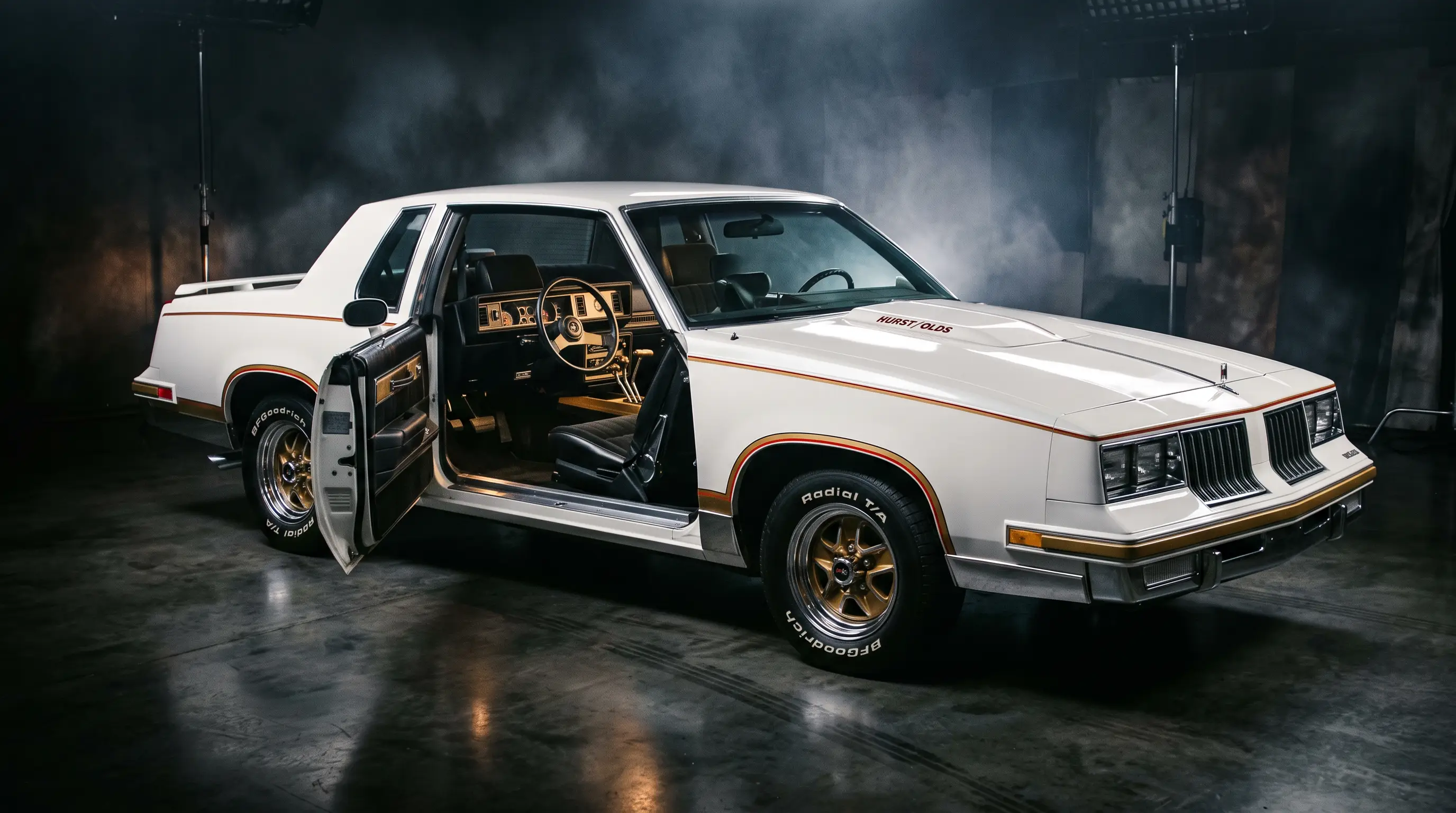
The 1983 Hurst/Olds arrived as a 15th anniversary tribute, and the number that made it interesting to me was not on the window sticker. It was on the console. Hurst put a three-lever Lightning Rod shifter into a Cutlass Calais and gave buyers direct manual control over a four-speed automatic transmission, which is not something you saw on many showroom floors in 1983. The car sold, the concept worked, and Oldsmobile brought it back with a color-swapped edition in 1984.
This is a two-year run that gets discussed as one car, and that flattens some real differences worth knowing before you shop one.
Setting the stage
By the early 1980s, the Cutlass Calais itself was a strong seller for Oldsmobile on its own merits, which is part of why it made sense as the base for a Hurst/Olds revival. Reviving a performance-adjacent nameplate on a car that was already moving in decent volume gave the anniversary program a healthier production platform to work from than a niche or low-volume body would have. That context matters when you look at how the 1983 and 1984 cars were marketed. This was not a desperate attempt to prop up a struggling model. It was a promotional program layered onto a car that was already doing fine in the showroom.
The 1983 anniversary car
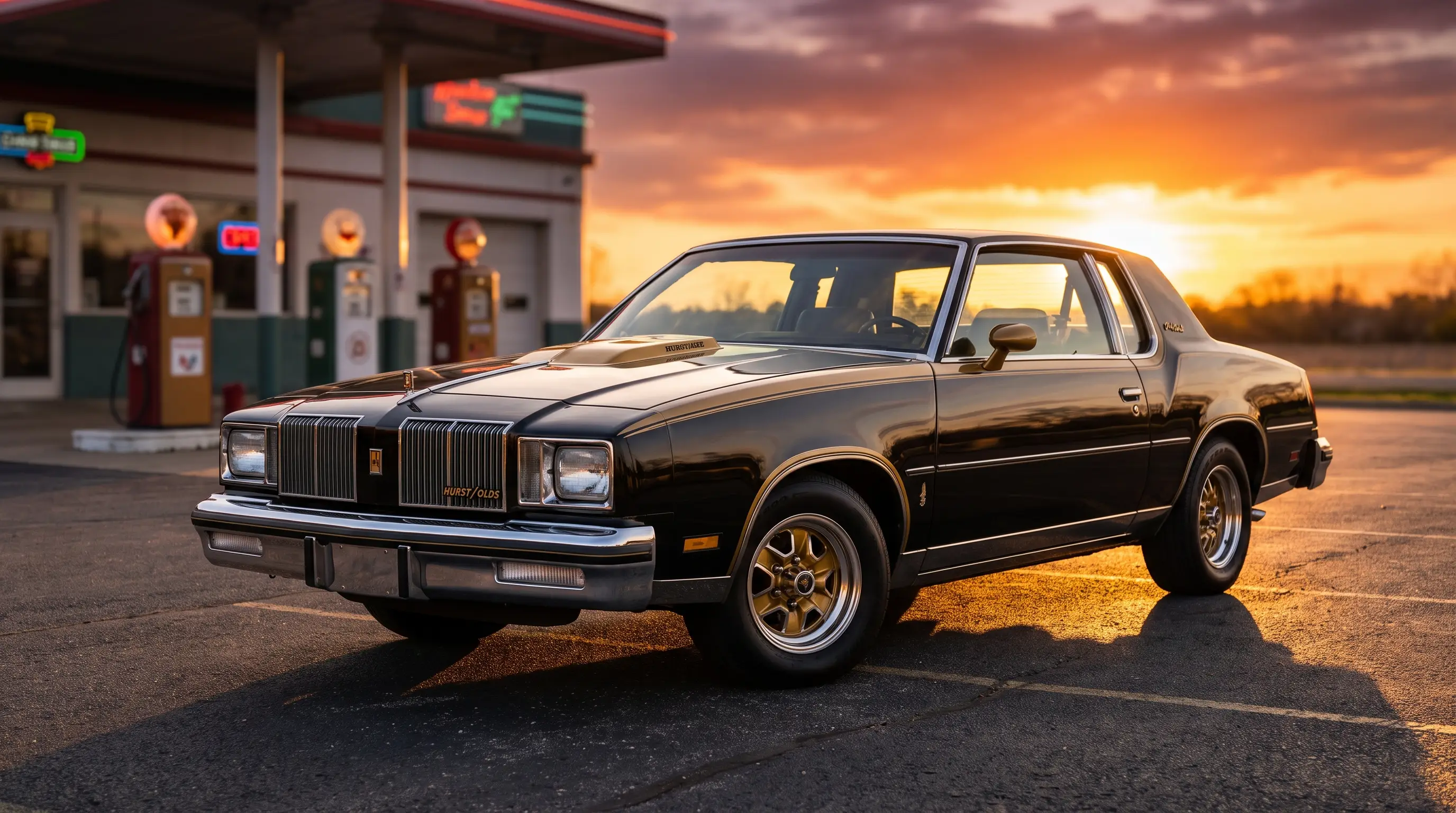
Oldsmobile marked fifteen years of the Hurst/Olds partnership by reviving the name on the Cutlass Calais, finished in black with a wide silver lower body band and a red accent stripe, a single-color offering that year rather than a buyer's choice. Under the hood was the Oldsmobile 307 cubic inch V8, rated at 180 hp and 245 lb-ft of torque, paired with the GM 200-4R four-speed automatic with overdrive.
Production for 1983 landed at 3,001 units. The original plan reportedly called for a run closer to 2,500, but demand pushed the final count higher. This was a limited, documented build, and that documentation matters a great deal to value today.
The Lightning Rod shifter, briefly
The headline feature of both years was the Lightning Rods setup: a main shift lever flanked by two smaller chrome rods that let the driver manually hold or force individual gears in the 200-4R automatic, including locking out overdrive, without touching a column shifter or a traditional floor shifter pattern. It turned a mainstream automatic into something that behaved, and looked, like a competition shifter. I go into how the mechanism actually worked in a dedicated piece, because it deserves more than a paragraph here.
What changed for 1984
The 1984 Hurst/Olds kept the Lightning Rod shifter and the Cutlass Calais platform but flipped the color scheme to silver with black accents, the inverse of the 1983 car's black-with-silver-band treatment. Mechanically the two years are close cousins. Buyers shopping this generation usually pick a year based on color preference and available documentation rather than any meaningful performance gap between them.
| Spec | 1983 | 1984 |
|---|---|---|
| Platform | Cutlass Calais | Cutlass Calais |
| Engine | Oldsmobile 307 V8 | Oldsmobile 307 V8 |
| Horsepower | 180 hp | 180 hp |
| Transmission | 200-4R automatic, Lightning Rod shifter | 200-4R automatic, Lightning Rod shifter |
| Paint scheme | Black with silver band, red stripe | Silver with black accents |
| Production | 3,001 | 3,500 |
Production numbers and why they get argued about
The 1983 figure of 3,001 gets repeated often enough that it has taken on the feel of settled fact, and it is well documented. What surprises people is that 1984 actually outproduced the anniversary year, with roughly 3,500 built, split between about 1,500 T-top cars and 2,000 fixed-roof coupes, bringing the two-year total to around 6,501 cars. That runs counter to the usual pattern of anniversary programs winding down after their headline year, and it is worth knowing before you assume the 1983 car is automatically the rarer of the two.
What is not in dispute is that both years were genuinely limited relative to the regular Cutlass Calais production run they were built alongside. That scarcity, combined with the Lightning Rod hardware, is what keeps this generation relevant to collectors who otherwise have little interest in early 1980s Detroit iron.
Reading the market on these two years
I treat the 1983 and 1984 Hurst/Olds as a single collector segment with two sub-markets inside it. Documented 1983 anniversary cars, especially ones with matching build sheets and original Lightning Rod hardware, tend to command a modest premium over 1984 examples simply because of the anniversary story attached to that first year. Clean, driver-quality cars from either year generally land in the mid-to-upper teens, with the best documented, low-mile survivors reaching into the twenties at specialty sales. Cars missing their original Lightning Rod console, which happens more often than buyers expect since the mechanism saw real use and real abuse, sell at a discount even when everything else checks out.
That console is the single biggest value driver on this generation. Confirm it is present, original, and functional before you negotiate on anything else.
"Most buyers walk up to a 1983 or 1984 car and look at the paint first. I look at the console first, because a Hurst/Olds without a working Lightning Rod shifter is basically a well-optioned Cutlass Calais wearing a famous name."
— David Mercer
Where these fit in the bigger story
For context on where 1983-84 sits inside the Hurst/Olds story as a whole, the anniversary framing only makes sense once you have seen the years that came before it. I also cover the full run from a different angle in another angle on this same badge, tracking how the specification and paint language evolved across every model year Hurst and Oldsmobile partnered on this car.
If you are actively shopping this generation, current inventory of classic Hurst Olds for sale is worth checking regularly, since documented, console-complete examples do not sit on the market long once a serious buyer identifies one.
Sources and notes
- Oldsmobile Hurst/Olds - Wikipedia
- Classics on Autotrader - Future Collectible: 1983-84 Hurst/Olds
- GM Authority - Rare 1983 Oldsmobile Hurst/Olds For Sale
- Barn Finds - Lightning Rods: 1983 Hurst/Olds 15th Anniversary
- Moto Gallery - 1983-1984 Oldsmobile Hurst/Olds G-Body Guide
- GBodyForum - 1984 Hurst/Olds Production Numbers