Every Hurst/Olds year has its own market personality, and treating this badge as one continuous product line is the single biggest mistake I see buyers make. The partnership between Hurst Performance and Oldsmobile ran across three distinct eras, separated by real gaps in production, and the values, drivetrains, and collector expectations shift meaningfully between them. This is the year-by-year breakdown I use when someone asks me where a given Hurst/Olds actually sits.
1968 to 1969: the founding years
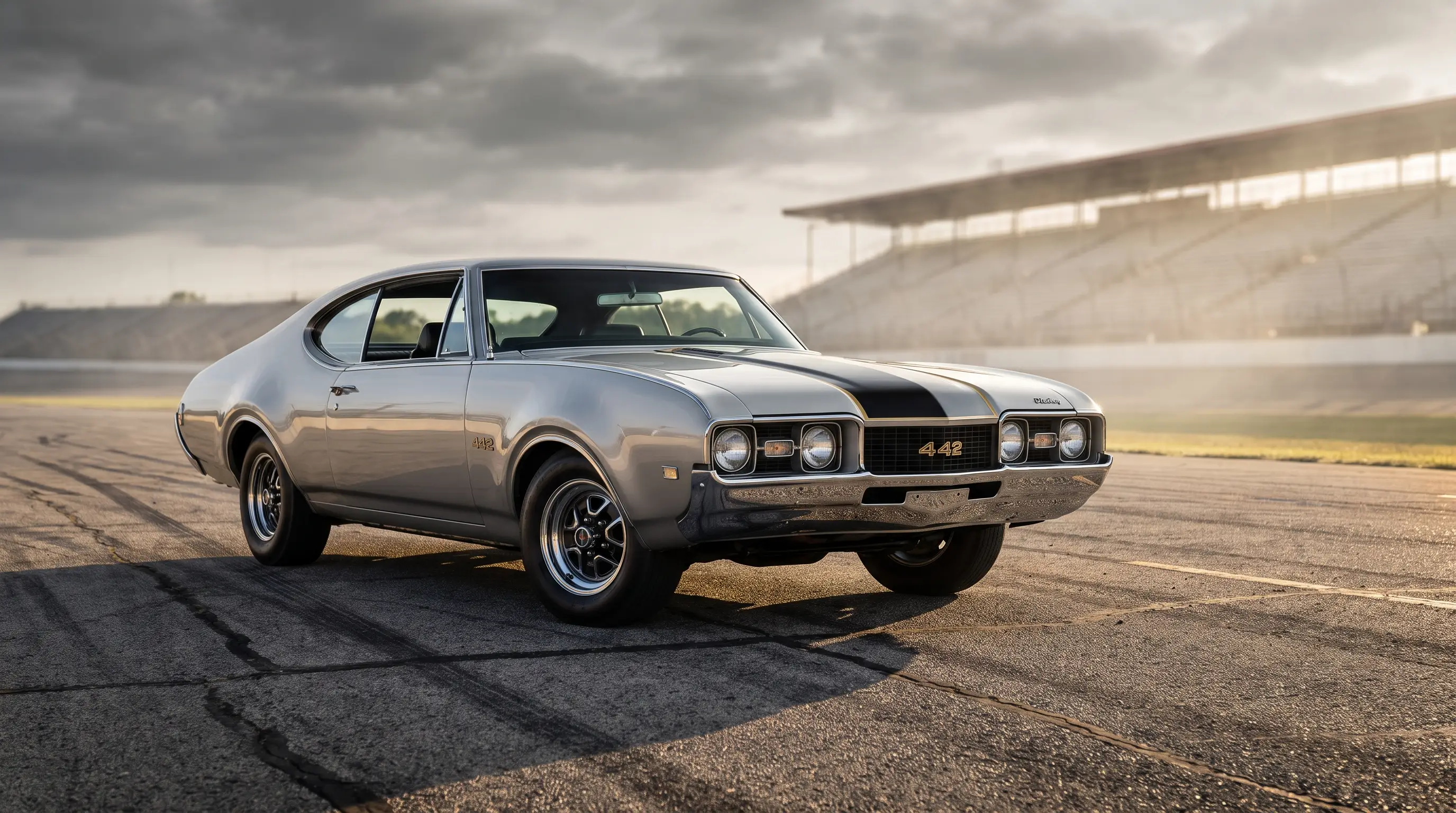
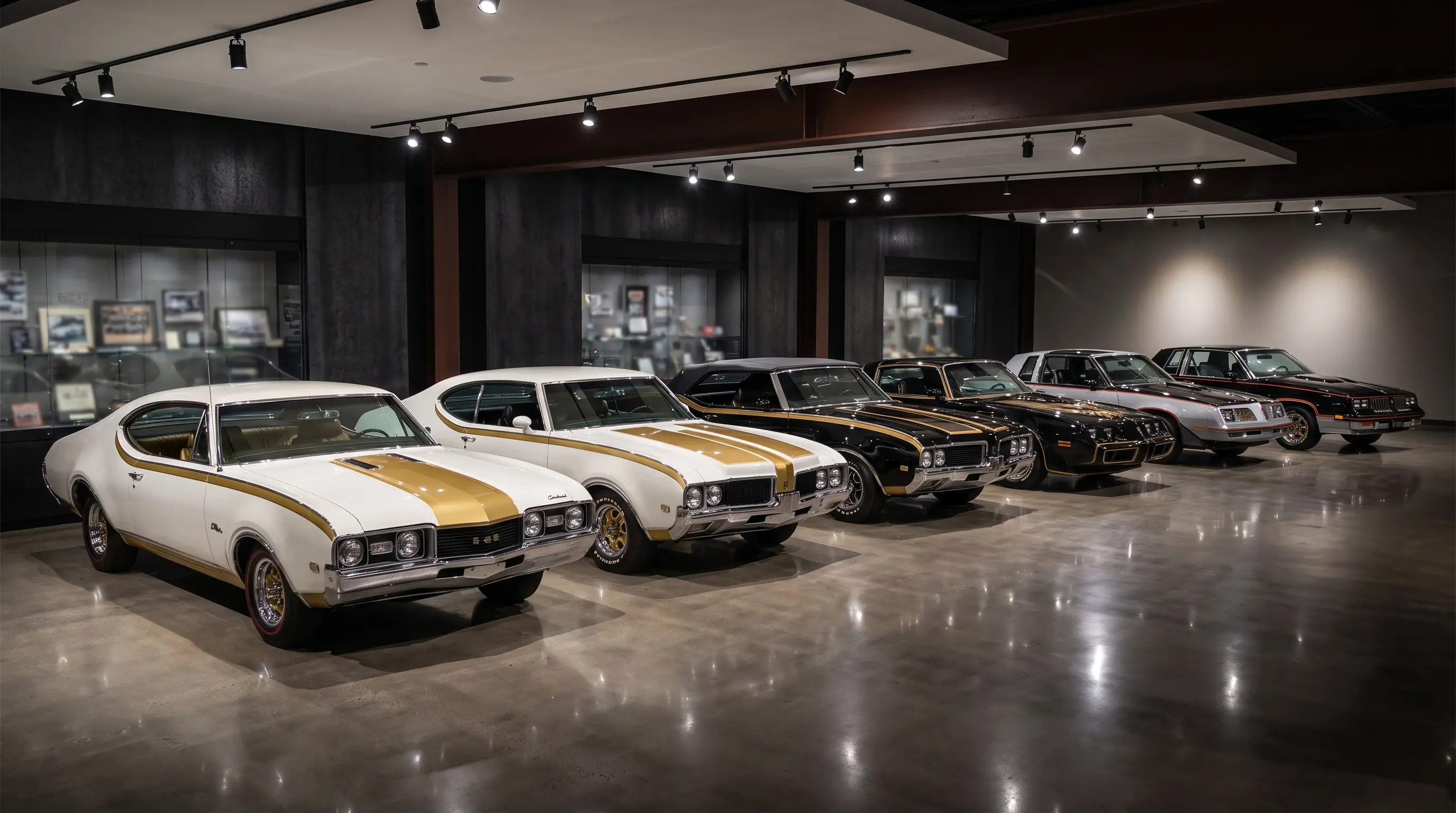
The original Hurst/Olds launched in 1968 as a way around Oldsmobile's internal displacement limits on the intermediate Cutlass line. Hurst installed the Toronado's 455 cubic inch V8 into the Cutlass Supreme body, a combination Oldsmobile's own regulations would not otherwise have permitted on that platform. The 1968 car came in a Peruvian Silver and black scheme with production reported at 515 units. The 1969 follow-up switched to a Cameo White body with Firefrost Gold striping outlined in black, and expanded production to 906 units. Both years are foundational to the badge and command the strongest prices in the entire lineup, since they represent the actual reason the Hurst/Olds name exists.
1972 to 1975: the Colonnade era
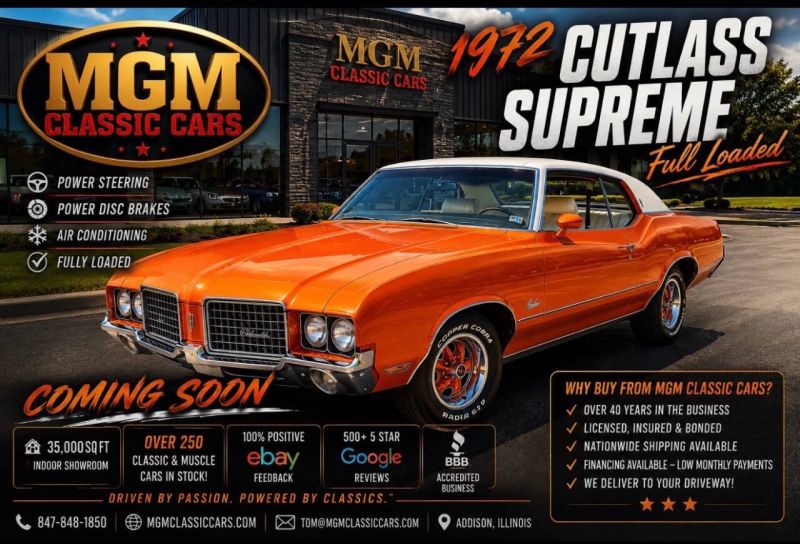
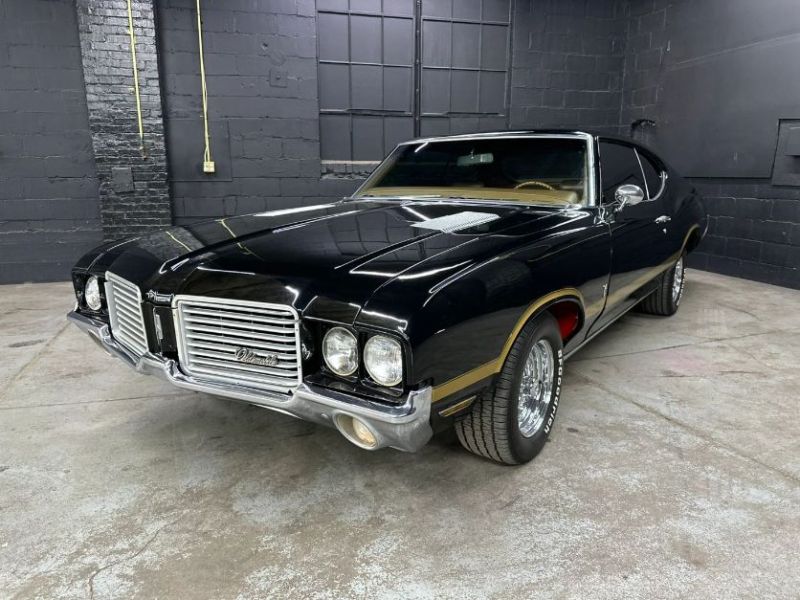
After a two-year pause, Hurst/Olds returned in 1972 on the redesigned Colonnade-body Cutlass Supreme, built to serve as the actual Indianapolis 500 Pace Car that year after the major manufacturers declined the role following the 1971 pace car crash. The 1972 car came in a single scheme, Cameo White with reflective gold striping, in a run of a little over 600 cars. Starting in 1973 the badge added a second exterior option, black with gold striping, alongside the white and gold car, and that black/white-and-gold pairing carried through 1974 and 1975 as the W-30 455 continued to anchor the top of the range. This era is where the badge settled into the black-or-white-with-gold identity most casual collectors associate with Hurst/Olds, even though it only covers four of the badge's model years. After 1975, the program went dark for the rest of the decade.
| Years | Platform | Signature engine | Signature look |
|---|---|---|---|
| 1968-1969 | Cutlass Supreme | Oldsmobile 455 V8 | Silver/black, then yellow/black |
| 1972-1975 | Cutlass Supreme (Colonnade) | Oldsmobile W-30 455 V8 | Black and gold |
| 1979 | Cutlass Calais | Oldsmobile 350 V8 | Black/silver, T-tops |
| 1983-1984 | Cutlass Calais | Oldsmobile 307 V8 | Lightning Rod shifter |
| 1988 | Cutlass Supreme (G-body) | Oldsmobile 307 V8 | Silver/black, Indy Pace Car tie-in |
1979: the smaller-body comeback
The badge resurfaced in 1979 on the Cutlass Calais, a smaller and lighter platform than the earlier Colonnade cars. The 350 cubic inch V8 replaced the 455 as the largest available engine, a reflection of the emissions and fuel economy pressure the entire industry was under by the end of the decade. Black over silver paint with gold pinstriping and an available T-top roof became the visual signature of this year, and it is generally considered the weakest performer of any Hurst/Olds on paper, though far from a bad car for its era.
1983 to 1984: the Lightning Rod years
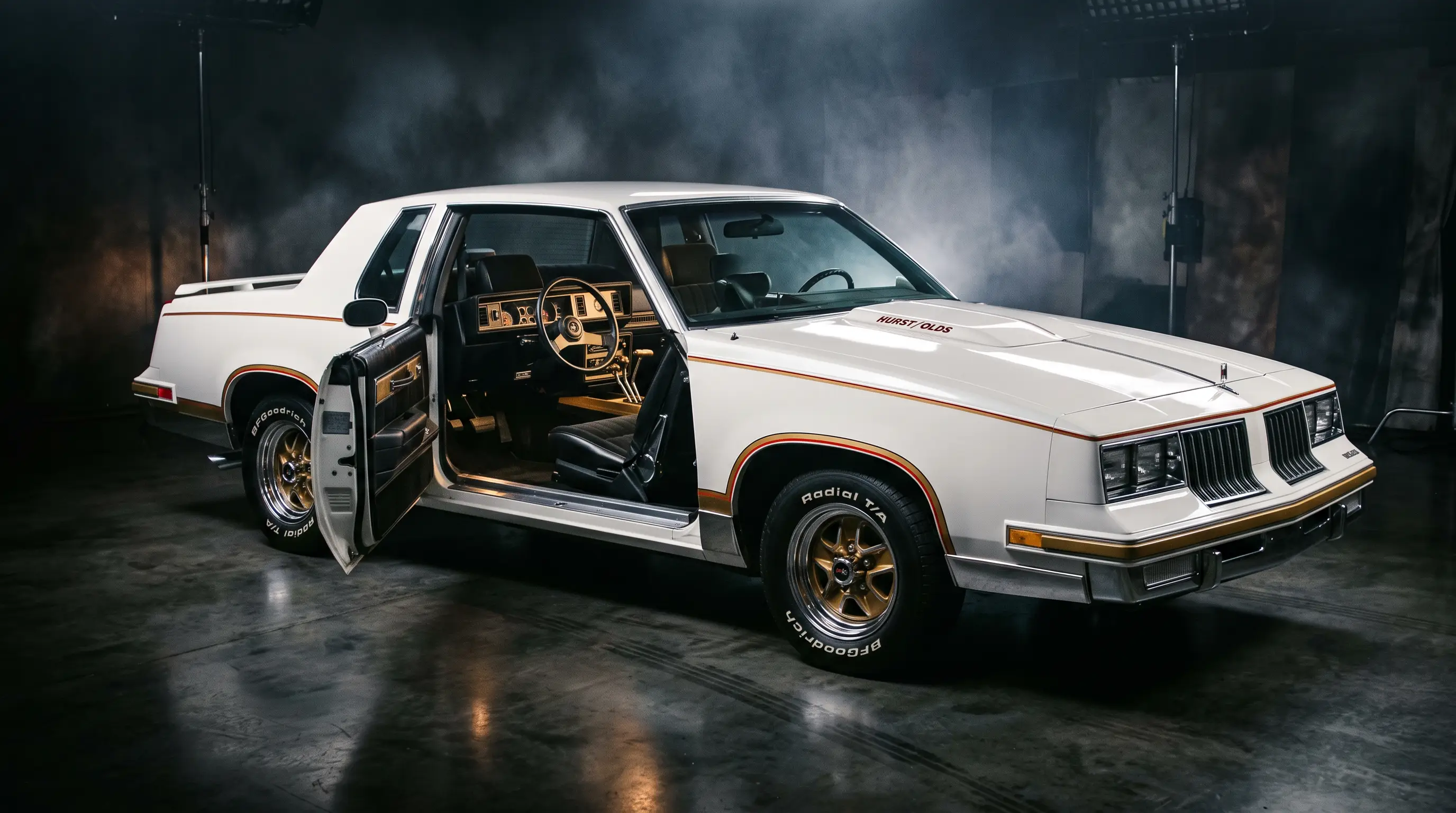
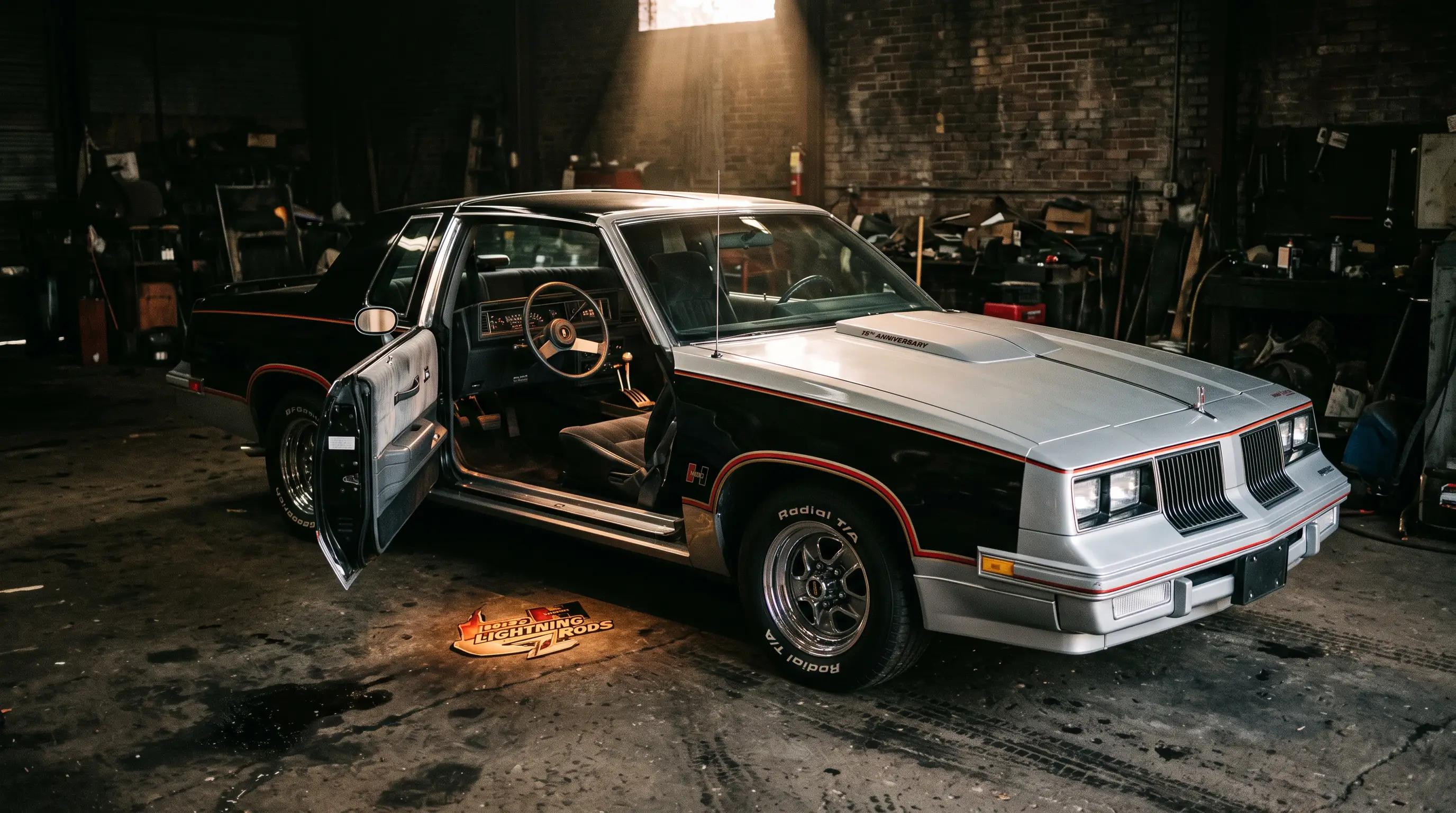
Fifteen years after the original, Hurst brought the name back with its most mechanically distinctive feature yet: the three-lever Lightning Rod shifter, which gave the driver manual control over a four-speed automatic transmission. The 1983 anniversary car wore black over silver with gold accents, while 1984 shifted to a white scheme. Both years ran the Oldsmobile 307 V8. This generation carries genuine engineering novelty that the 1979 car lacks, which is part of why collector interest in the Lightning Rod years has held up well.
1988: the last of the breed
Oldsmobile revived the name one final time in 1988, tied to that year's Indianapolis 500, on the G-body Cutlass Supreme before the platform was phased out in favor of the front-wheel-drive Cutlass Supreme that followed. The 1988 car returned to a silver and black scheme reminiscent of the original 1968 car and used the 307 V8. Production was again limited, and this year effectively closed out the rear-wheel-drive Hurst/Olds story, since the badge never returned to a Cutlass-based platform after the G-body's retirement.
"People ask me which Hurst/Olds year is 'the real one,' and the honest answer is that there are three real ones, not one. 1968 to 1969 built the reputation, 1972 to 1975 built the look everyone recognizes, and 1983 to 1984 built the mechanical story that still gets people talking at shows. Pick the era that matches what you actually want to own."
— David Mercer
The gaps matter as much as the runs
It is worth sitting with just how many years this badge did not exist. Between the 1969 car and the 1972 revival, Oldsmobile and Hurst walked away for two full model years. After 1975, the gap ran even longer, spanning 1976 through 1978. Then, after the 1979 comeback, the badge disappeared again from 1980 through 1982 before the Lightning Rod cars arrived. That pattern tells you something about how Hurst and Oldsmobile actually used this partnership: not as a continuous product line, but as an occasional promotional tool, pulled out when the timing, the platform, or an anniversary made it worth the effort.
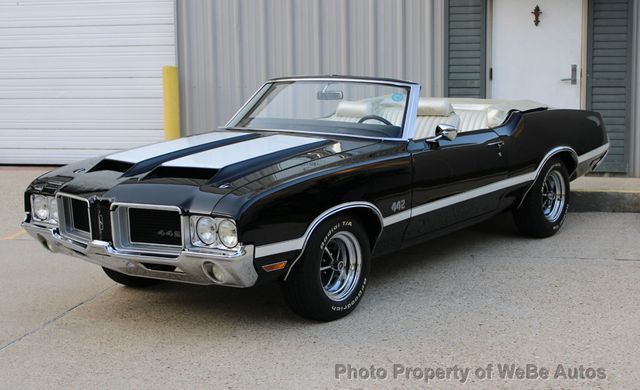
For a buyer, this means the badge itself is not a reliable shorthand for a single spec sheet the way, say, a 442 designation loosely was across its own run. Every Hurst/Olds year needs to be evaluated on its own terms, with its own engine, its own production count, and its own market history. Lumping them together, which happens constantly in casual conversation and in some listings, is exactly how buyers end up overpaying for a 1979 car expecting 1969 performance, or underpaying for a well-documented 1983 anniversary edition because they assumed it was just a dressed-up Cutlass.
How this affects what you should pay
The founding 1968 to 1969 cars sit well above every later year in collector value, both for scarcity and for historical weight. The Colonnade black and gold cars from 1972 to 1975 form the broad middle of the market, priced on documentation and condition more than rarity. The Cutlass Calais generation, covering 1979 and 1983 to 1984, remains the most accessible entry point into the badge, with the Lightning Rod cars generally outpacing the plainer 1979 W-30 once buyers understand what the shifter setup actually does. For a full breakdown of that mechanism, a related deep-dive covers exactly how Hurst engineered manual control into a factory automatic, and why it matters to value today. Context on the badge's overall arc is also covered in the Hurst/Olds chapter of this site's broader Cutlass coverage.