I've had guys bring me a Charger they just bought, proud as anything, and the first question out of my mouth isn't about the engine. It's "why'd you pick that color." Half the time the answer has nothing to do with what Dodge offered from the factory in 1969 and everything to do with a movie or a TV show they watched as a kid. That's fine. It's their car. But it tells you something real about how paint, more than almost any mechanical spec, is what actually cemented this car's screen reputation.
Paint is cheap to talk about and expensive to get right, and on a Charger built for the camera, the color choice did more heavy lifting than most people realize.
Matte black and the menace it sells
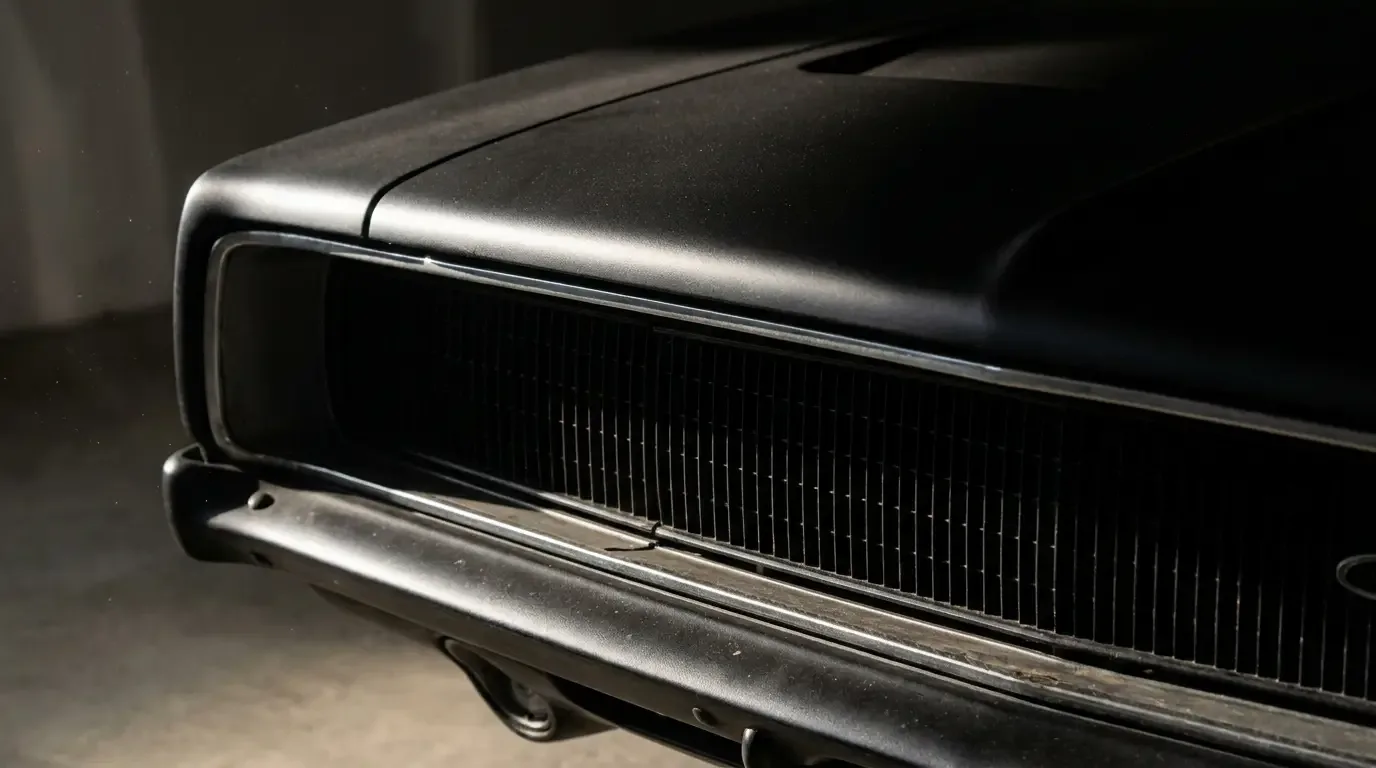
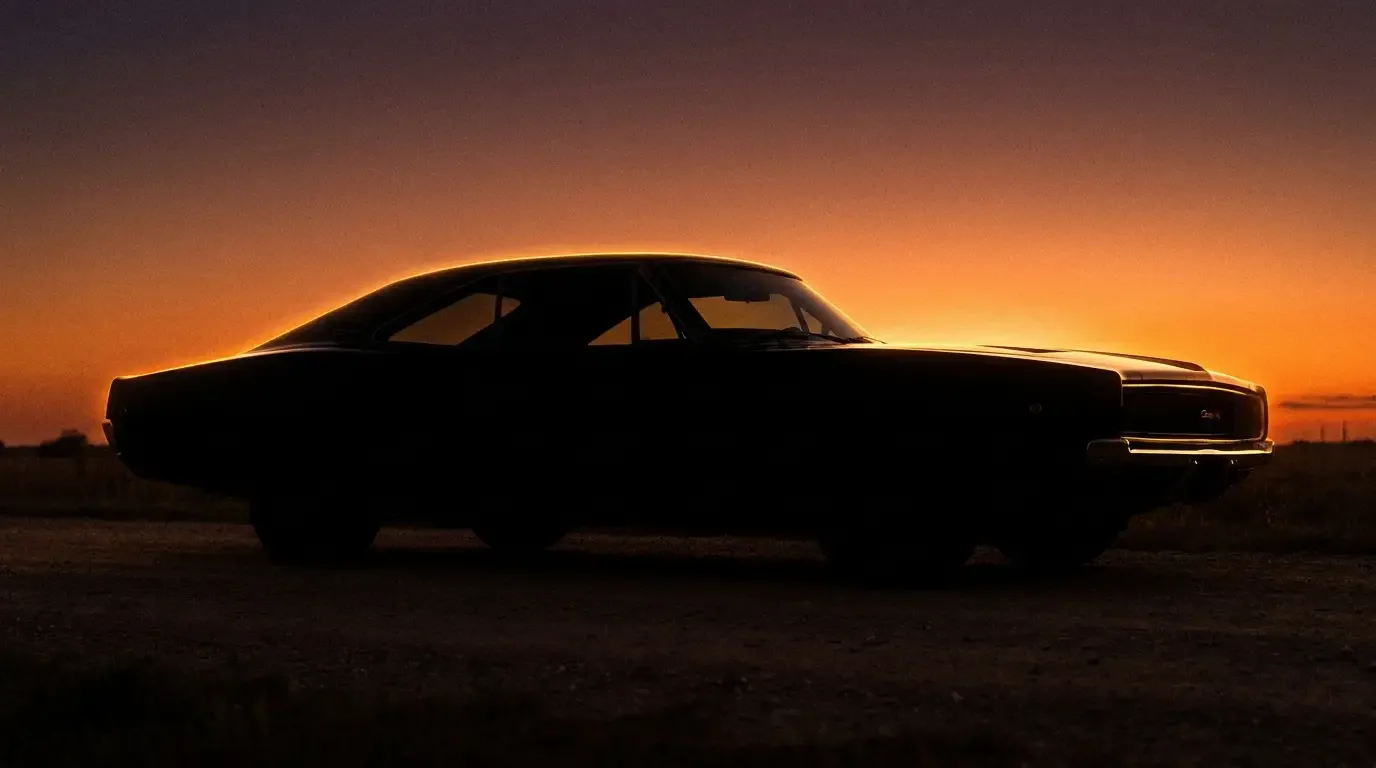
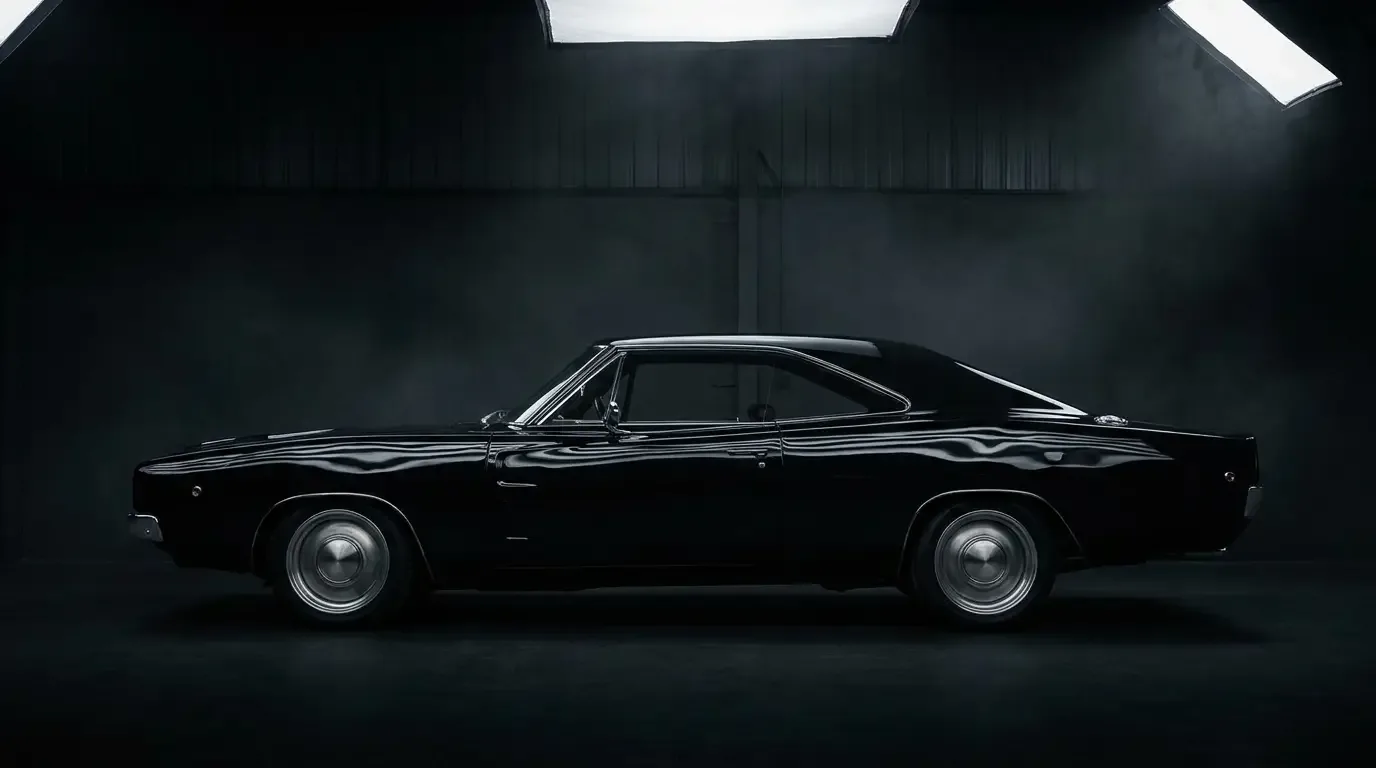
A dark, blacked-out finish on a Charger reads as trouble the second it appears in frame, and film productions figured that out early. The most famous example proves the point: the 1968 Charger that hunts Steve McQueen through San Francisco in Bullitt wasn't even sold in black. Bill Hickman bought a yellow R/T and a blue non-R/T off a Glendale lot, and director Peter Yates had both repainted black specifically to look sinister on camera. Whether the finish is deep gloss like the Bullitt car or a flatter satin, the effect is the same: black strips away the bright reflections that soften a car's edges under daylight or studio lighting, leaving the silhouette harder and more aggressive than the same body in almost any factory color would look.
Underneath that finish is usually a straightforward B-body structure, but the paint alone did enough work that audiences rarely questioned whether the car underneath had anything special mechanically. It didn't need to. The color sold the menace before the engine ever turned over.
Bright orange and the opposite effect entirely
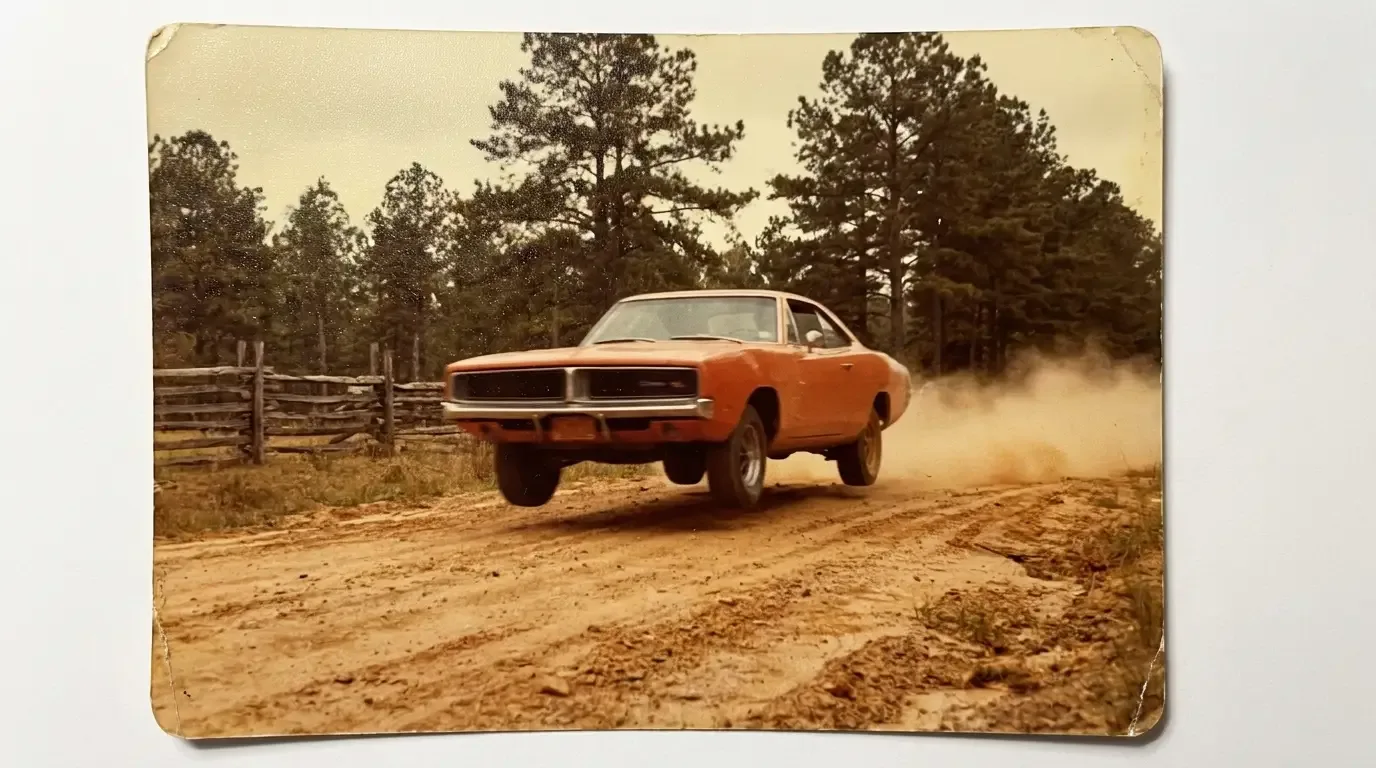
Take the same body shape and paint it a bright, saturated orange with bold numerals on the doors, and you get the complete opposite read: friendly, loud, almost cartoonish in the best sense. That's precisely the effect a certain second-generation Charger achieved on television, and it worked because the color choice was so far from anything menacing that audiences, including kids, could root for a car being driven recklessly through a fictional Georgia county without feeling like they were cheering for something dangerous.
What the factory actually offered versus what screen paint jobs claim
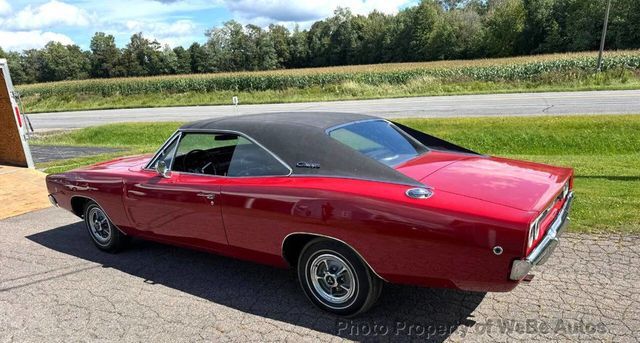
Here's where I get particular, because it matters to anyone chasing a genuine period-correct car rather than a tribute build. Dodge's actual factory color charts across 1966 through 1978 included a wide range of legitimate high-impact hues, but very few factory colors match exactly what shows up in film and television paint jobs, which were often custom-mixed for camera rather than pulled straight from a dealer color chip. A buyer chasing "screen accurate" paint on a real car needs to understand that screen accuracy and factory accuracy are two different, sometimes conflicting, goals. Painting a car to match a movie exactly can mean deviating from anything Dodge actually built in that specific shade.
| On-screen finish | Effect it creates | Factory-correct concern for buyers |
|---|---|---|
| Matte/flat black | Menacing, hard-edged silhouette | Rarely a genuine factory finish; usually custom for production |
| Bright saturated orange | Friendly, high visibility, cartoonish energy | Close to some factory high-impact colors but custom-mixed for cameras |
| Deep metallic tones | Prestige, seriousness, adult drama tone | Often closer to genuine factory options than the extremes above |
"I've had guys practically beg me to skip the rust check because the paint was that good. That's exactly backwards. Good paint should make you more suspicious about what's underneath, not less, because somebody spent real money making sure you'd stop looking there."
— Mike Sullivan
Inspecting a car sold on its screen paint reputation
If you're looking at a Charger painted to resemble a famous screen car, don't let the paint distract you from the fundamentals. I've pulled apart enough of these to tell you the color is the last thing that should decide your offer.
🔧 Inspection Priorities
- Check under the paint for rust repair quality. A dramatic repaint job, especially matte black or bright single-stage colors, hides bodywork flaws easily. Have a magnet and a paint thickness gauge ready before you get excited about the color.
- Confirm the VIN and trim tag match the car's actual factory configuration. A tribute paint job tells you nothing about whether the drivetrain or trim underneath is original or correct, and sellers sometimes let the paint do the talking to avoid questions about the rest.
- Ask directly whether the paint is a factory-code match or a custom screen-inspired mix. Custom-mixed colors, even well done, typically cost more to properly maintain and touch up down the road since there's no factory code to reorder from.
The bottom line on movie paint versus real value
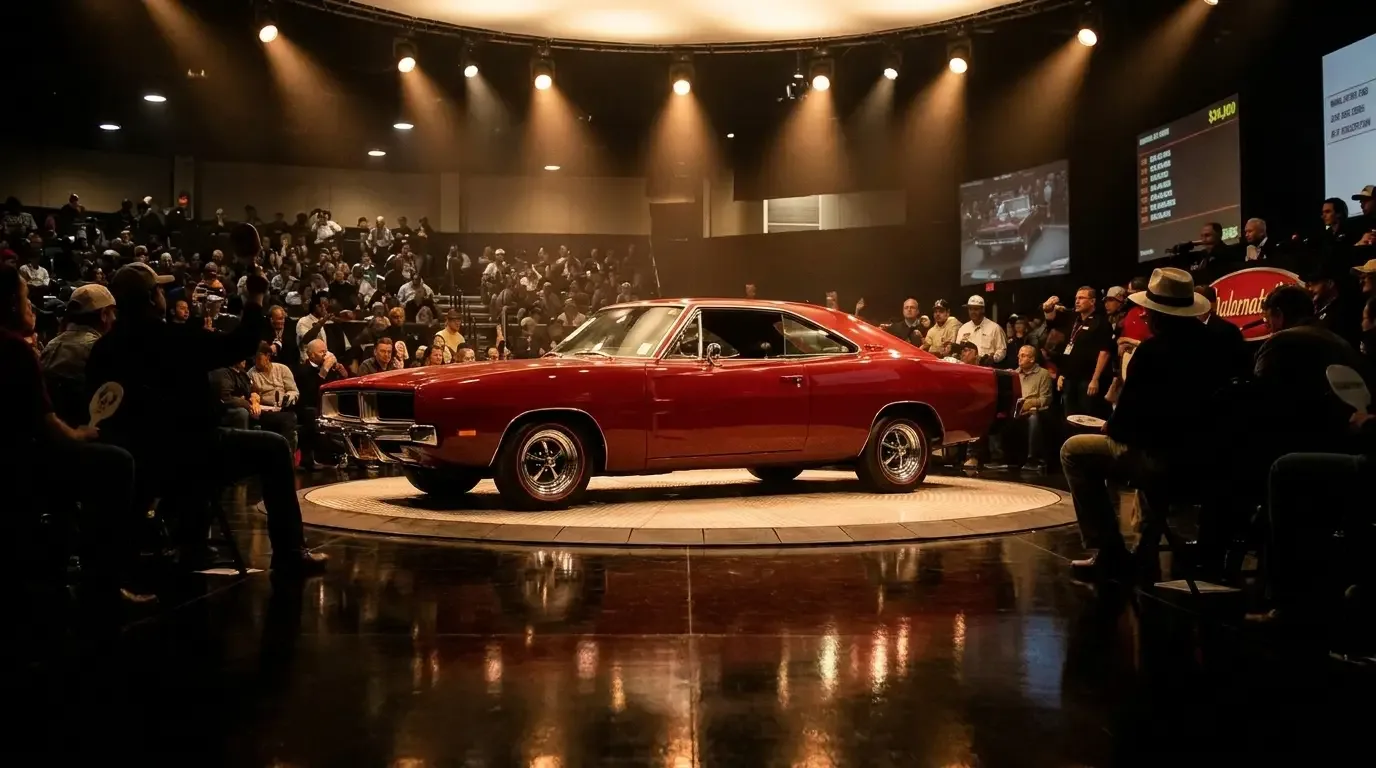
A great paint job inspired by a famous screen Charger can be a fun, head-turning car to own and drive. It's not automatically a more valuable one, and it's definitely not a substitute for verifying what's actually underneath the finish. The paint gets people to stop and look. The mechanicals and documentation are what determine whether stopping and looking translates into real collector value down the road. For the full story on which specific screen cars this paint mythology traces back to, dodge charger general lee covers the on-screen history in detail, and the Charger Movie Cars Auction story shows exactly what genuine screen-used cars, not tributes, have actually brought at auction.
Maintaining a screen-inspired finish over the long haul
One thing I don't think gets said enough to guys who commission a custom-mixed screen color: plan for the upkeep before you fall in love with the look. A factory color code means any body shop within driving distance can mix a matching touch-up in an afternoon. A custom blend chased down from old film stock or a magazine photo usually means keeping your own paint code on file, in writing, with the exact formula, because the shop that mixed it originally may not be in business by the time you need a quarter panel redone. I've seen guys show up to three different shops with nothing but a phone picture of the fender and get three different answers on what shade they were even looking at.
It's a small thing until it isn't. A car that looks perfect for ten years and then needs one repaired panel is where a lack of documentation on the paint itself turns into a real, expensive problem, the same way a lack of documentation on the drivetrain does. Treat the color the way you'd treat any other spec worth writing down, because eventually you or the next owner will need it written down somewhere more permanent than memory.
Sources and notes
- Bullitt, Wikipedia - confirmed the 1968 Charger R/T villain car was a black-finished 440 Magnum shot as the antagonist.
- Street Muscle, "The Baddies' 1968 Charger from Bullitt" - confirmed the cars were bought yellow and blue and repainted black to look sinister.
- General Lee (car), Wikipedia - confirmed the bright-orange television Charger's markings and its friendly, high-visibility read.
- Dodge Charger (B-body), Wikipedia - confirmed the factory color and trim context buyers weigh against screen-inspired paint.
- Mental Floss, "What Happened to All Those Chargers?" - confirmed the prevalence of repainted tribute cars versus original examples.