
The Iron Duke Camaro is the one nobody puts on a poster. For 1982 Chevrolet sold a Camaro with a 2.5-liter four-cylinder rated at 90 horsepower, and about one buyer in eight took it. It stayed on the order sheet through 1985, then it was gone. People joke about it. Most of the jokes are fair. But the car is part of the third generation Camaro story, and if you are looking at one today, you should know exactly what you are getting. Here is the engine, the numbers, and what living with one actually means.
Car Features
6 min read
The Iron Duke Camaro: The 90-Horsepower Four of 1982 to 1985
The Iron Duke Camaro made 88 to 92 hp from a Pontiac 2.5 four. What it was, who bought it, why it died after 1985 and how to spot one.
What the Iron Duke Camaro actually was
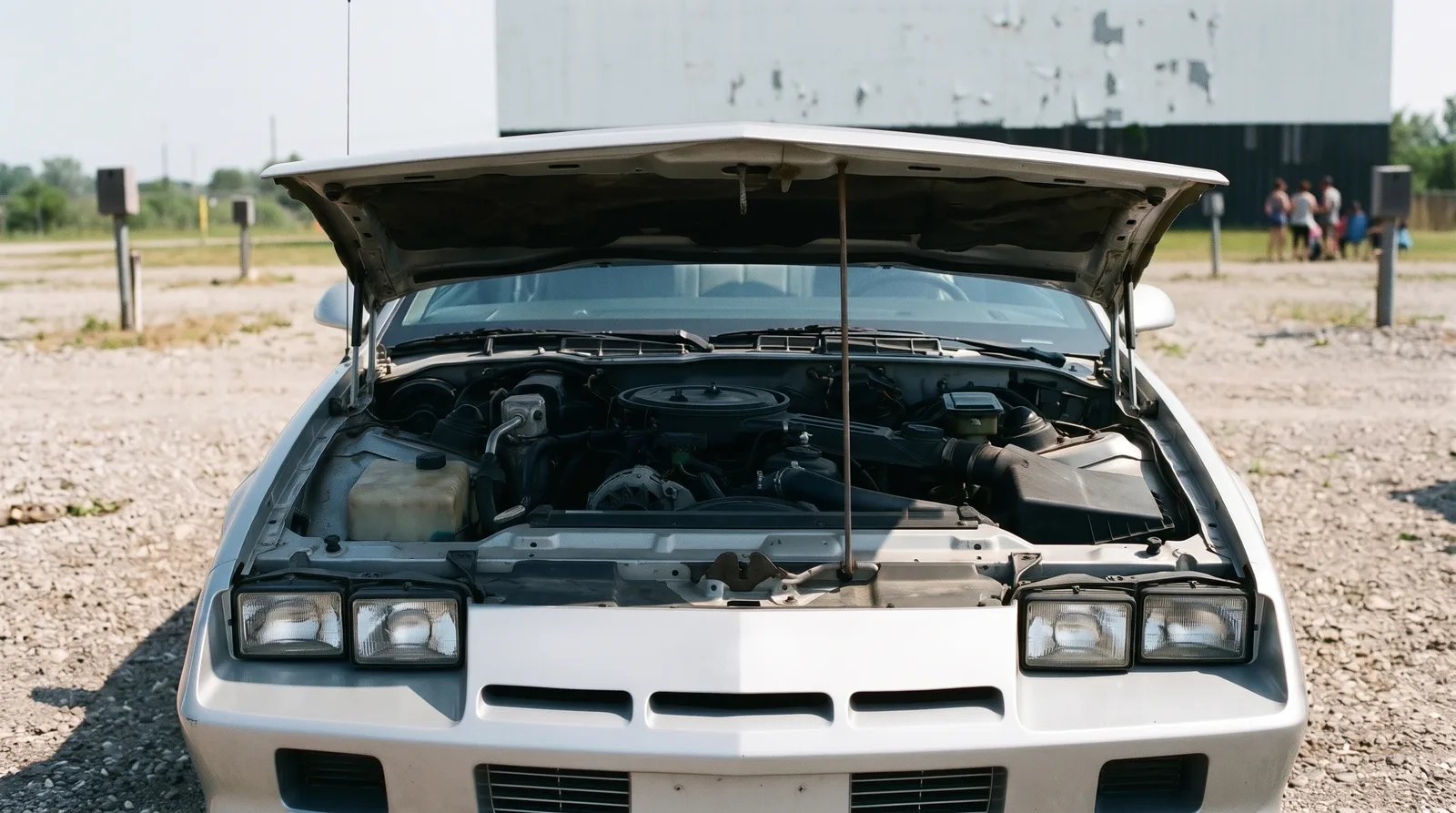
The Iron Duke was a 2.5-liter, 151-cubic-inch inline-four built by Pontiac, not Chevrolet. In the Camaro it carried RPO LQ9 and used throttle-body injection. It was the base engine when the third generation launched for 1982, sitting under a lineup that also had a 2.8 V6, a carbureted 305 V8 and the Cross-Fire 305 in the Z28.
That 1982 car collected a few firsts: the first Camaro hatchback, the first Camaro with factory fuel injection, and the first Camaro with four cylinders. Here is the dry part. The fuel injection honor belongs to the Iron Duke as much as to the Z28. Both used throttle bodies that year. Nobody remembers the four-cylinder that way.
Some sources claim a carbureted four, an LQ8, was offered for 1982 alongside the injected one. Two sources against one list only the LQ9 with throttle-body injection, and that is the version to expect. If a seller shows you a carbureted 1982 four, ask how it got that way.
The numbers, year by year
The rating moved a little over four years. It never moved much.
| Model year | Engine | Horsepower (net) | Torque (net) |
|---|---|---|---|
| 1982 | LQ9 2.5 four, TBI | 90 hp at 4,000 rpm | 132 lb-ft at 2,800 rpm |
| 1983 | LQ9 2.5 four, TBI | 92 hp | 134 lb-ft |
| 1984 | LQ9 2.5 four, TBI | 92 hp | 134 lb-ft |
| 1985 | LQ9 2.5 four, TBI | 88 hp | 132 lb-ft |
So the "90-horsepower four" is the 1982 car. The 1983 and 1984 engines were rated 92 hp, and the 1985 figure of 88 hp comes from one source. Call it 90, give or take a cup of coffee.
Now put that next to the rest of the 1982 lineup. The LC1 2.8 V6 made 102 hp at 5,100 rpm and 142 lb-ft. The LG4 305 V8 made 145 hp and 240 lb-ft. The Cross-Fire LU5 in the Z28 made 165 hp and 240 lb-ft. The top engine had 83 percent more horsepower than the bottom one, in the same body. The V6 was the closer neighbor, with 12 more horsepower. That is not much of a step either, and you can feel why most buyers skipped both.
Thirty-two pounds for every horsepower
An Iron Duke Camaro weighed about 2,864 lb. Divide that by 90 hp and each horsepower is hauling about 31.8 lb. That is not a lot of car. A small, light Camaro is a good idea. It just needed more than 90 horses to pull it.
The engine also did not like to rev. It was not designed to go much past about 4,500 rpm, which is only 500 rpm past its power peak. There is no hidden top end. Wind it out and it simply runs out of breath. That is a low-speed engine doing the job it was designed for, and that job was not chasing Z28s.
The period press did not pretend otherwise. MotorWeek's 1982 test advised against the four-cylinder. You will see 0-60 times quoted online, including one of over 20 seconds, but that one traces to a GM parts website, not to a magazine with a stopwatch. No trustworthy period test number for the Iron Duke Camaro has turned up, so be skeptical of anyone who quotes one with a straight face.
"The Iron Duke never broke anybody's heart, because nobody bought it with high hopes. It was cheap to own, and it ran. That was the whole deal."
Mike Sullivan
Who bought one, and why it went away
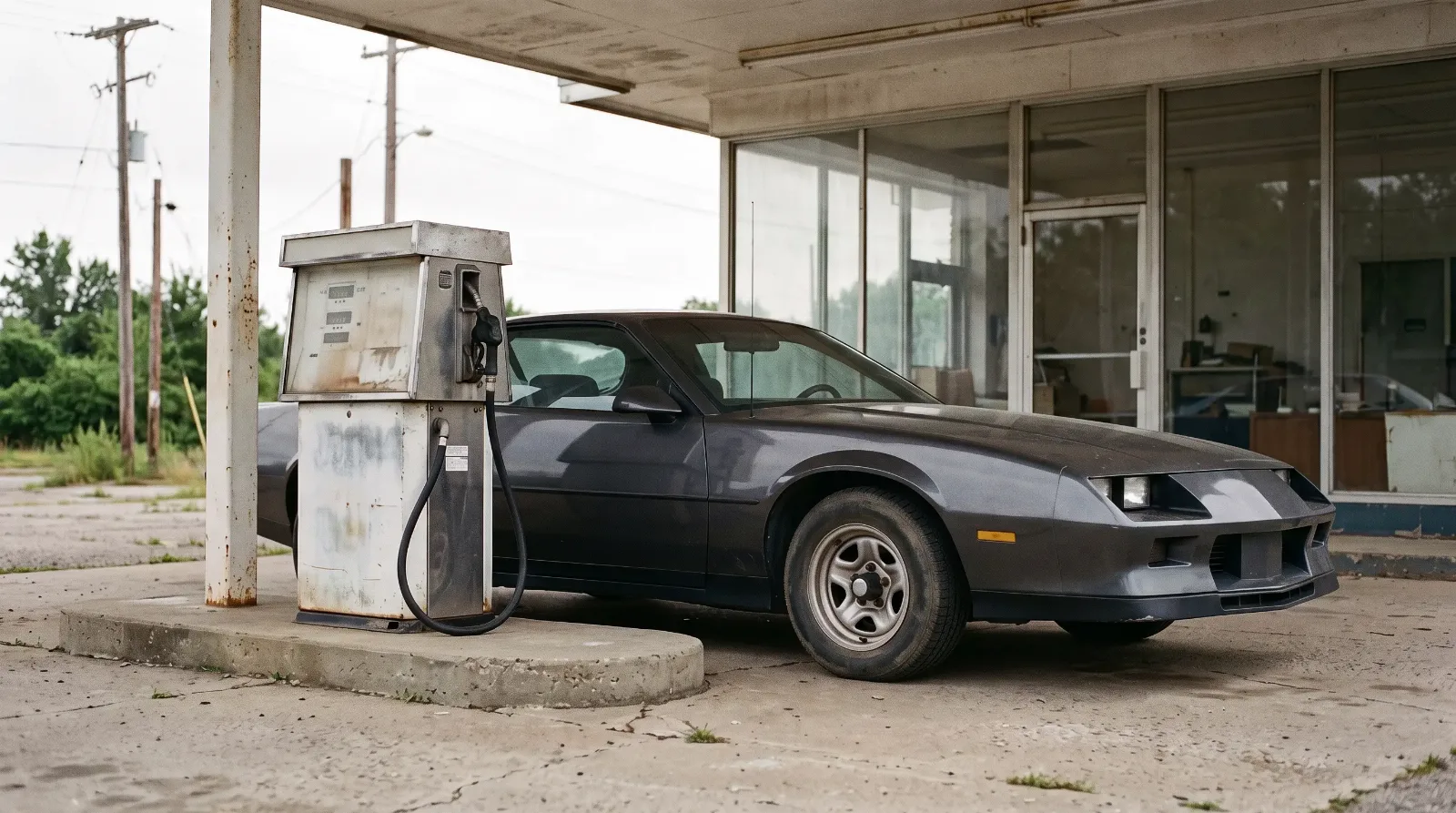
About 12 percent of 1982 Camaro buyers chose the four-cylinder. Another 37 percent took the V6 and 51 percent took a V8. With 1982 Sport Coupe production at 78,759 and a base price of $8,029.50, the Iron Duke was the number that let a dealer advertise a new Camaro for the least money. Nobody has published a reliable Camaro-only count of four-cylinder cars by year. The best total is a shared one: more than 80,000 Camaro and Firebird buyers took the Iron Duke between 1982 and 1985.
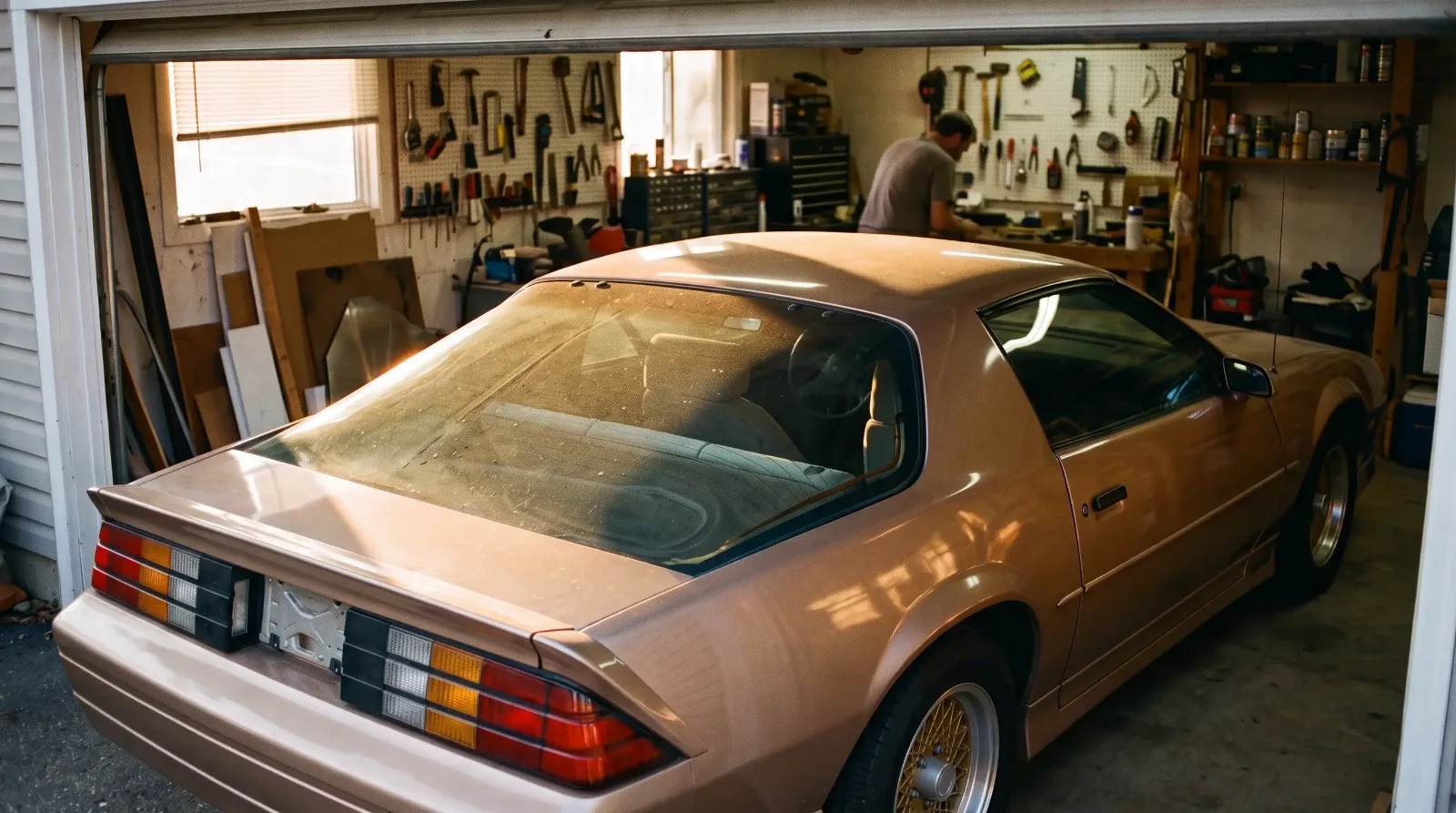
The buyer who wanted the shape, not the speed, got the same long hood and the same big rear glass as the Z28. Chevrolet's stylists did the heavy lifting there, and the glass-hatch design is why a base Sport Coupe still looks right parked next to a Z28. From the curb, nobody can hear the engine.
The end came quietly. After 1985 the Iron Duke was dropped, and for 1986 the base engine became the LB8 2.8 V6 with multiport fuel injection, rated 135 hp. That was 46 percent more horsepower than the four. One table online lists a 1986 torque figure for the Iron Duke, and one early 1986 document may have shown it, but the better sources agree on 1985 as the last Camaro year.
Buying an Iron Duke Camaro today
Start with the VIN. On 1982 cars, and again on 1985, the engine digit for the 151 four is a 2. If the VIN says 2 and there is a V8 under the hood, you are looking at a swap. That is not a crime. It does mean the car is a modified base Sport Coupe, not anything rarer, and the price should say so.
Go the other way, too. A car that still has its original four does not become valuable just for surviving. Rarity only counts when somebody wants the thing that is rare. What you get is an honest, simple, cheap third-gen Camaro, with one fewer reason to worry about a big V8's appetite.
Check the body before you think about the engine. On a cheap car, rust and tired glass seals cost more to fix than anything under the hood. Expect the seller to price it like a Camaro. Pay for it like a four-cylinder.
Sources and notes
- The Autopian: You could once buy a Chevrolet Camaro with a 90-horsepower engine
- GM EFI: guide to the third-gen Chevrolet Camaro, engines and take rates
- Muscle Car Facts: 1982 Camaro engines, prices and production
- CamaroTech: 1982 Camaro VIN engine codes
- Curbside Classic: the 1982 Iron Duke F-body and its sales mix
- Wikipedia: Chevrolet Camaro (third generation) engine table
Related Reading
Have a
Chevrolet Camaro
for Sale?
Reach thousands of serious classic car collectors across the US.
Sell It Here →
Selling a classic? Here's how: compare the places to sell classic cars
Are You a Classic Car Dealer?
List your full inventory and connect with targeted classic car buyers.
Join as a Dealer →

About the author
Mike Sullivan
Detroit-area muscle car enthusiast and restoration specialist with three decades of hands-on experience working on American iron.
Related Listings - Chevrolet Camaro
Comments
Be the first to comment on this article.