
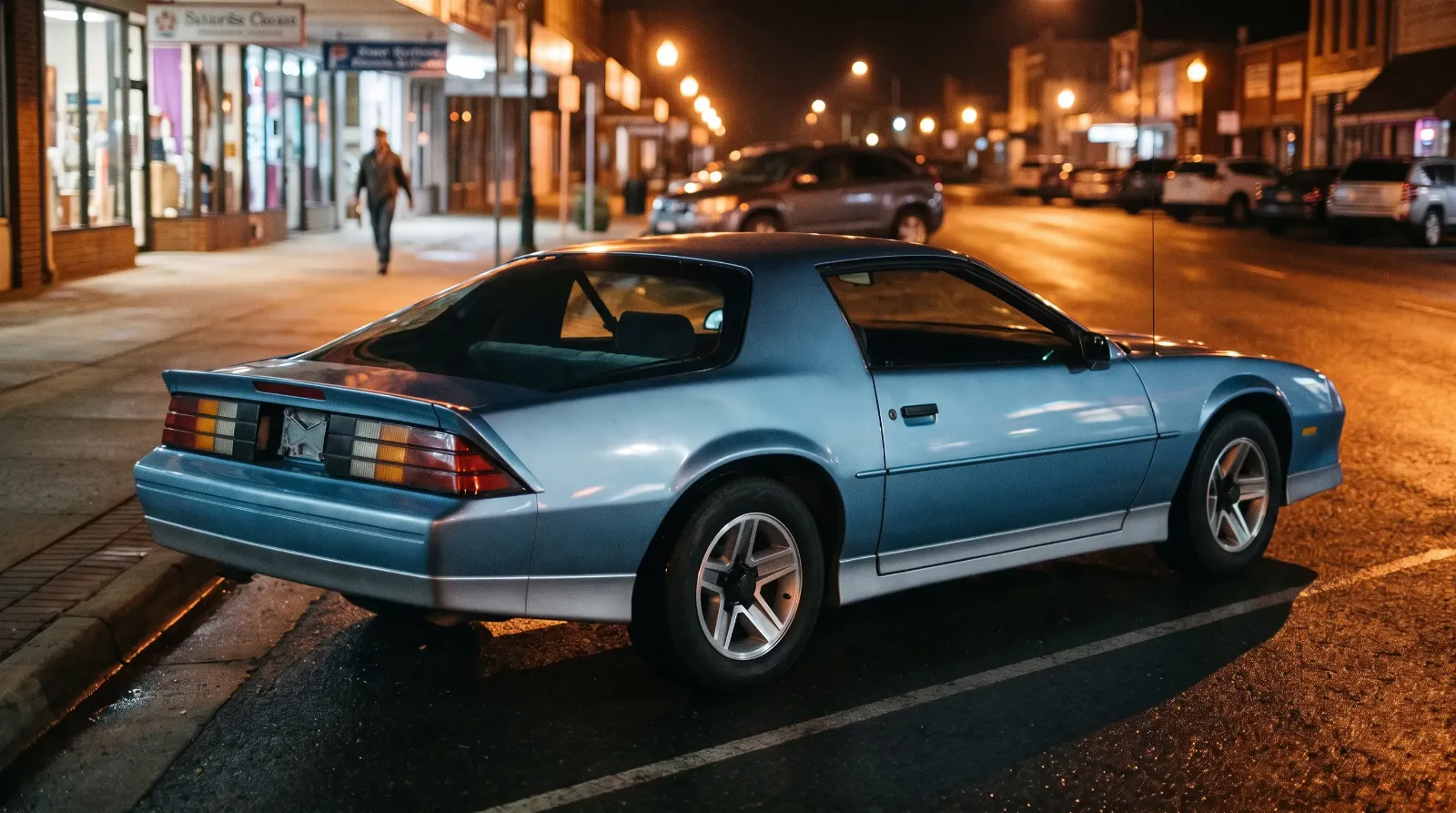
Open the hatch on a 1982 Camaro and look at what you are holding. There is no steel frame around that glass, no box section, no trim ring doing structural work. It is one big curved sheet, and the rest of the body was drawn to meet it. That single choice is the heart of the third gen Camaro design, and it still explains why these cars look the way they do from the rear three-quarter view. For the full run of trims, engines and model years, start with the third-gen years. This piece stays on the shape, the glass and what both mean to someone putting one of these cars back together.
Car Features
7 min read
Designing the Third-Gen Camaro: The Big Glass Hatch
How the 1982 Camaro was drawn around a frameless glass hatch and a 62-degree windshield, and what that means when you restore one.
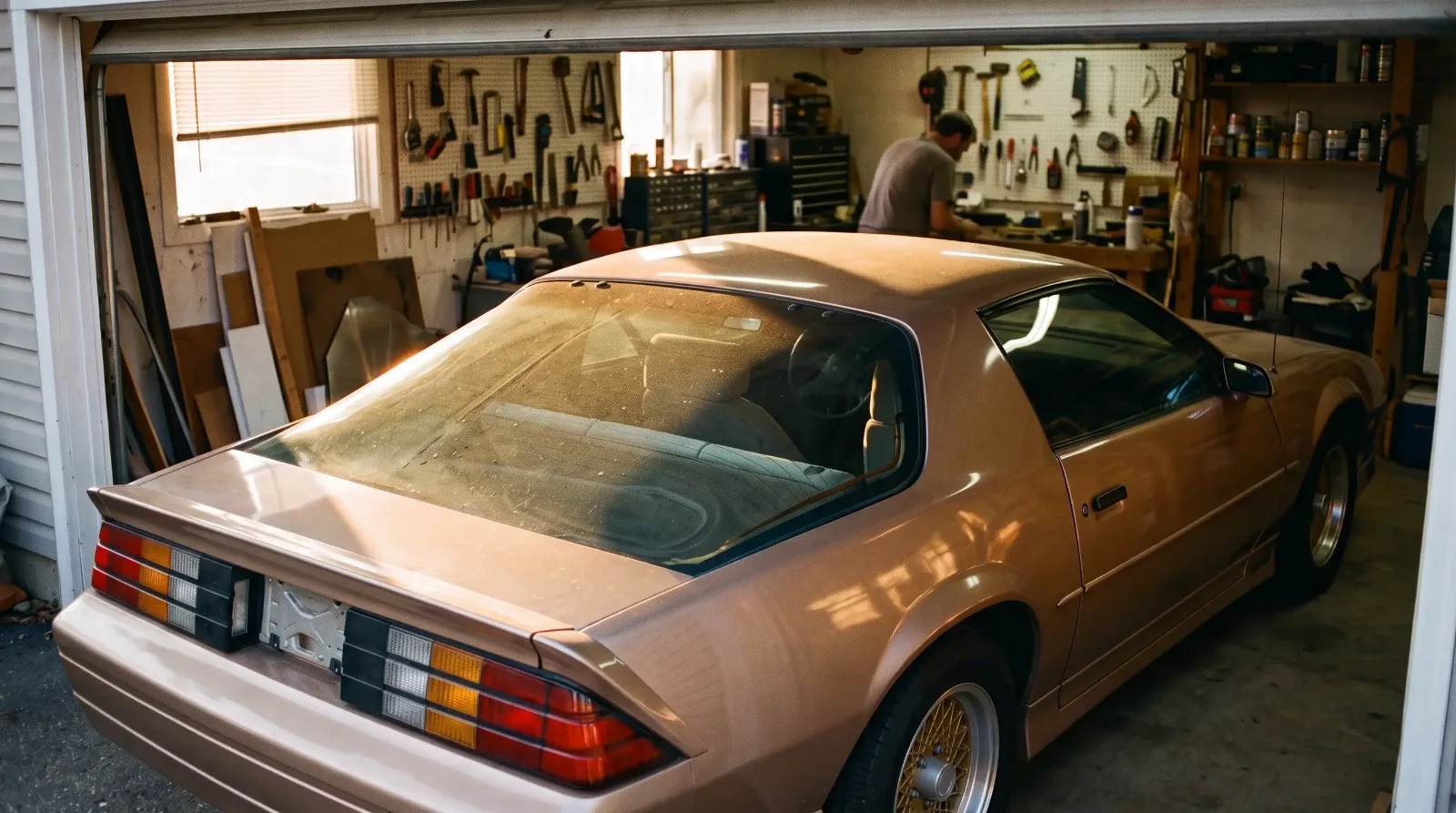
Third gen Camaro design started with the glass
The 1982 car was the first Camaro hatchback. Every Camaro before it had a trunk lid and a fixed rear window, and the second generation carried that layout from 1970 to 1981. The new F-body threw it out. In its place came a large, frameless, flush-mounted glass hatch with compound curves, opening onto a rear seat that folded down.
The records credit the shape to Jerry Palmer, with the design dated 1978. Pontiac's side of the story credits Palmer and Bill Porter together. The sources I trust do not say who drew which line, so I will not pretend to know. What the sheet metal does tell you is the priority. The roof does not stop at a trunk. It keeps falling, and the glass carries it nearly all the way down to a short tail panel. From the side, the rear pillar is a slim sail between the door glass and the hatch glass, and the body below the beltline is a clean wedge that stays out of the glass's way.
That is a stylist's decision, not an accountant's. A steel trunk lid is cheaper, lighter and easier to seal than glass that curves in two directions at once. Chevrolet built the glass anyway. On a car with a 101-inch wheelbase, seven inches shorter than the one it replaced, a notchback roof would have looked stubby. The long glass makes the car read longer than it is.
"The 1982 Camaro is a car designed around a window. Bolt a trunk on it in your head and the whole thing goes dumpy. That is how you know the designer won the argument in the studio."
Jim Vasquez
A 62-degree windshield and a long, low line
The front of the car follows the same logic. The windshield is laid back at 62 degrees, past the 60-degree limit GM used internally at the time. Every degree you lay a windshield back makes the pane bigger and puts more of the cabin under glass. Breaking the rule gave the third gen one long arc from the cowl over the roof and down the hatch. Stand at the side of a clean car and you can trace it with one finger without a break.
Aerodynamic numbers for the Camaro itself are thin. The figure that does exist belongs to its sister car: the 1982 Firebird was quoted at a drag coefficient of 0.33, with the Trans Am at 0.32 at launch. I have not found a published Camaro number in a source worth repeating, and I would be wary of anyone who quotes one without saying where it came from. The two cars share the body structure and the hatch, but the noses differ, so the Pontiac figures are a guide and nothing more. If you want the side-by-side on sheet metal and character, here is how its Firebird twin compared.
Living with a big glass hatch
Here is the part the brochure skipped. That glass is heavy. One enthusiast reference lists a stock rear glass with its molding at 58.4 lb, against 26.3 lb for a Lexan replacement with its moldings. Treat those as an enthusiast measurement, not a factory spec. Either way, you are lifting a sizable pane every time you load the back, and the hardware holding it open is working hard.
Two things follow on a restoration. First, the struts matter. Weak ones let the glass drift down, and a hatch with no frame has no handle to catch it by except the glass itself. Second, sealing a big curved opening with no frame to clamp against depends entirely on the weatherstrip and the molding. A tired seal lets water in, and that is where third-gen interiors start to smell old.
Then there is the Lexan question. Plastic glass belongs on a car that goes to the track and nowhere else. It is a weight-saving part, and on a race car it earns its place. On a street restoration it is a poseur move: it scratches, it hazes, and it throws away the one feature that defines the body. If the car is being restored to how it left Van Nuys or Norwood, the glass stays glass.
How the hatch area changed from 1982 to 1992
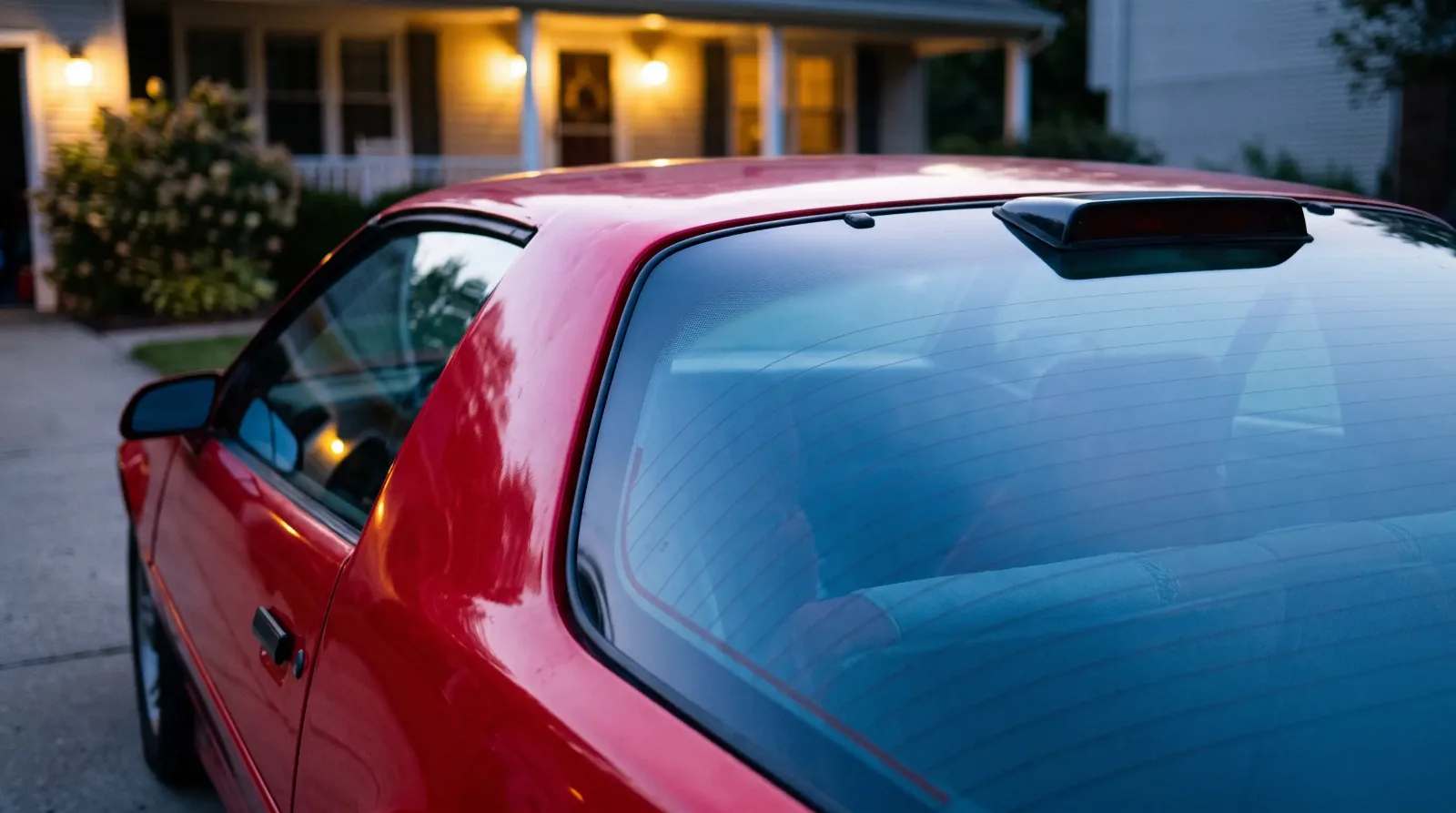
The basic shape ran for the whole generation with surprisingly little change. Power moved around far more than the glass did. Chevrolet went from the 1982 four-barrel and Cross-Fire 305s to the H.O. 305, rated at 190 hp from 1983 to 1986, and on to tuned port engines, all under the same roofline. The details around the hatch are what date a car, and they are what judges and sharp buyers look at.
| Model year | Change at the rear of the car |
|---|---|
| 1982 | First Camaro hatchback: frameless, flush-mounted, compound-curved glass over a folding rear seat |
| 1986 | Center high-mounted brake light sits on top of the hatch glass |
| 1987 | Brake light moves to the rear spoiler (Sport Coupes without a spoiler excepted); convertible joins the range, the only body with no glass hatch |
| 1988 | Overall length grows from 192.0 in to 192.5 in |
| 1991 | Facelift with new ground effects, restyled lower valances and rear bumper; middle lamp goes back inside the hatch glass; Z28 coupe gets a high-rise rear spoiler |
The 1986 brake light is the detail people get wrong most often. A 1986 car with the lamp on the spoiler, or a 1987 spoiler car with the lamp on the glass, has had its hatch swapped at some point. That is not fatal on a driver. On a car sold as original, it is a question worth asking.
The convertible is the odd one. When it arrived for 1987 it gave up the very feature this whole design was built around. It is a fine car, but it is a different shape, and the coupe is the purer statement of what Palmer set out to do.
Getting the glass details right on a restoration
Most of the third gen Camaro's design story is in the rear half of the car, so that is where a restoration lives or dies visually. Paint, stripes and wheels get the attention at shows. The hatch is what tells a trained eye whether the builder sweated the details.
The design held up well enough that GM pushed the idea further for 1993, when the fourth generation laid its windshield back to 68 degrees. But the third gen was the car that made the big glass hatch the Camaro's signature, and it did it with a shape that still looks right parked next to anything from its decade. For where it sits in the longer run of the nameplate, see our classic Camaro guide.
Sources and notes
Related Reading
Have a
Chevrolet Camaro
for Sale?
Reach thousands of serious classic car collectors across the US.
Sell It Here →
Selling a classic? Here's how: compare the places to sell classic cars
Are You a Classic Car Dealer?
List your full inventory and connect with targeted classic car buyers.
Join as a Dealer →

About the author
Jim Vasquez
Southern California hot rod and custom car builder with roots in the traditional kustom kulture scene.
Related Listings - Chevrolet Camaro
Comments
Be the first to comment on this article.