
There is a particular shade of green that shows up again and again in old farm photographs from the late 1940s, faded now in most of the surviving prints, but still recognizable to anyone who has spent time around early Jeeps. It sits somewhere between the color of a summer pasture and the color of an old tractor, and Willys called it exactly what it looked like. The jeep cj cj2a colors were never chosen the way a modern automaker picks a palette, chasing trend and showroom appeal. They were chosen to make sense on a working farm, and that quiet practicality is its own kind of story.
Car Features
7 min read
Pasture Green and Harvest Tan: The CJ-2A Color Story
Pasture Green and Harvest Tan were named for the fields the CJ-2A worked in, a quiet reminder of who Willys was really selling to.
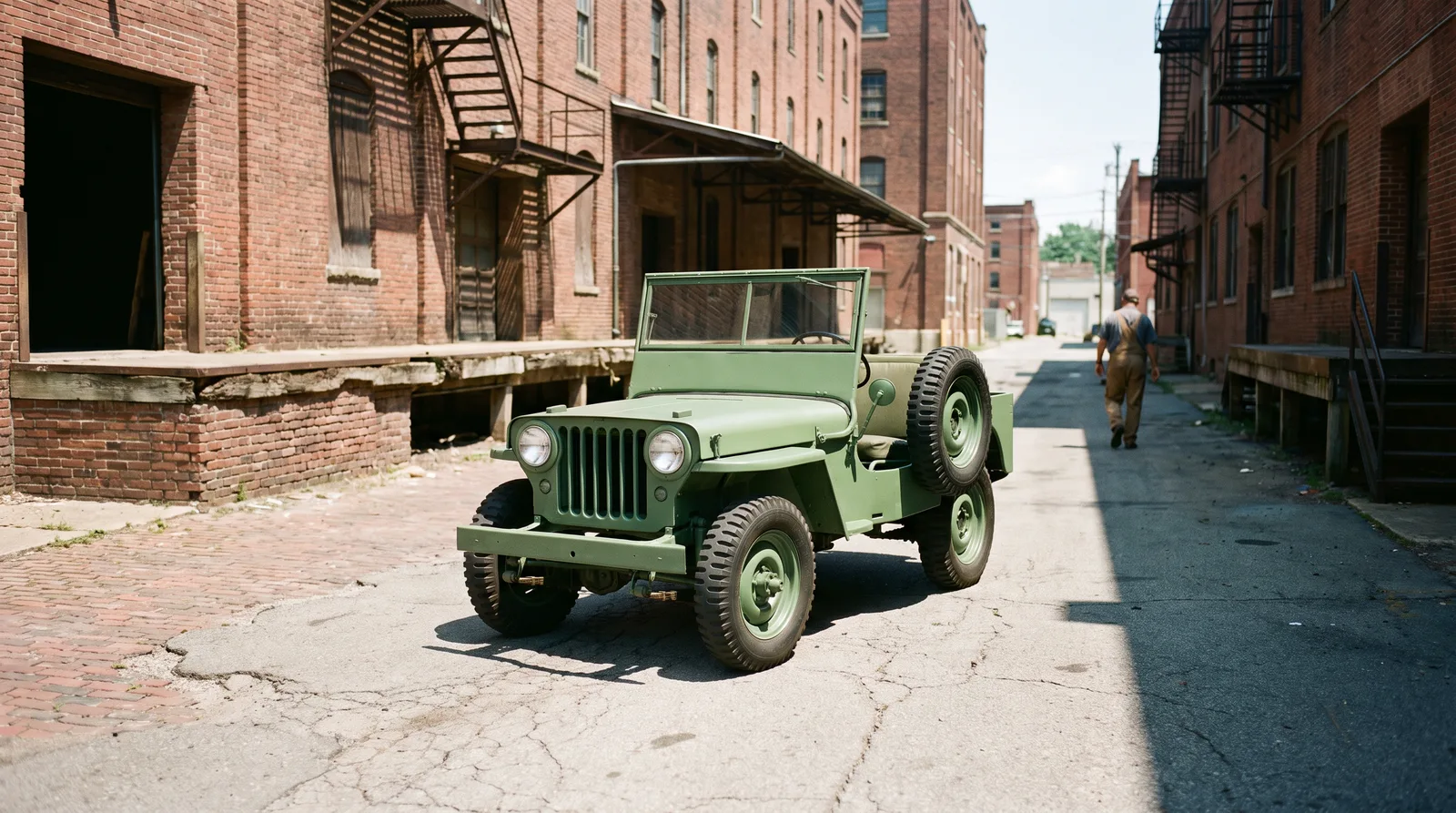
Colors named for the land they worked
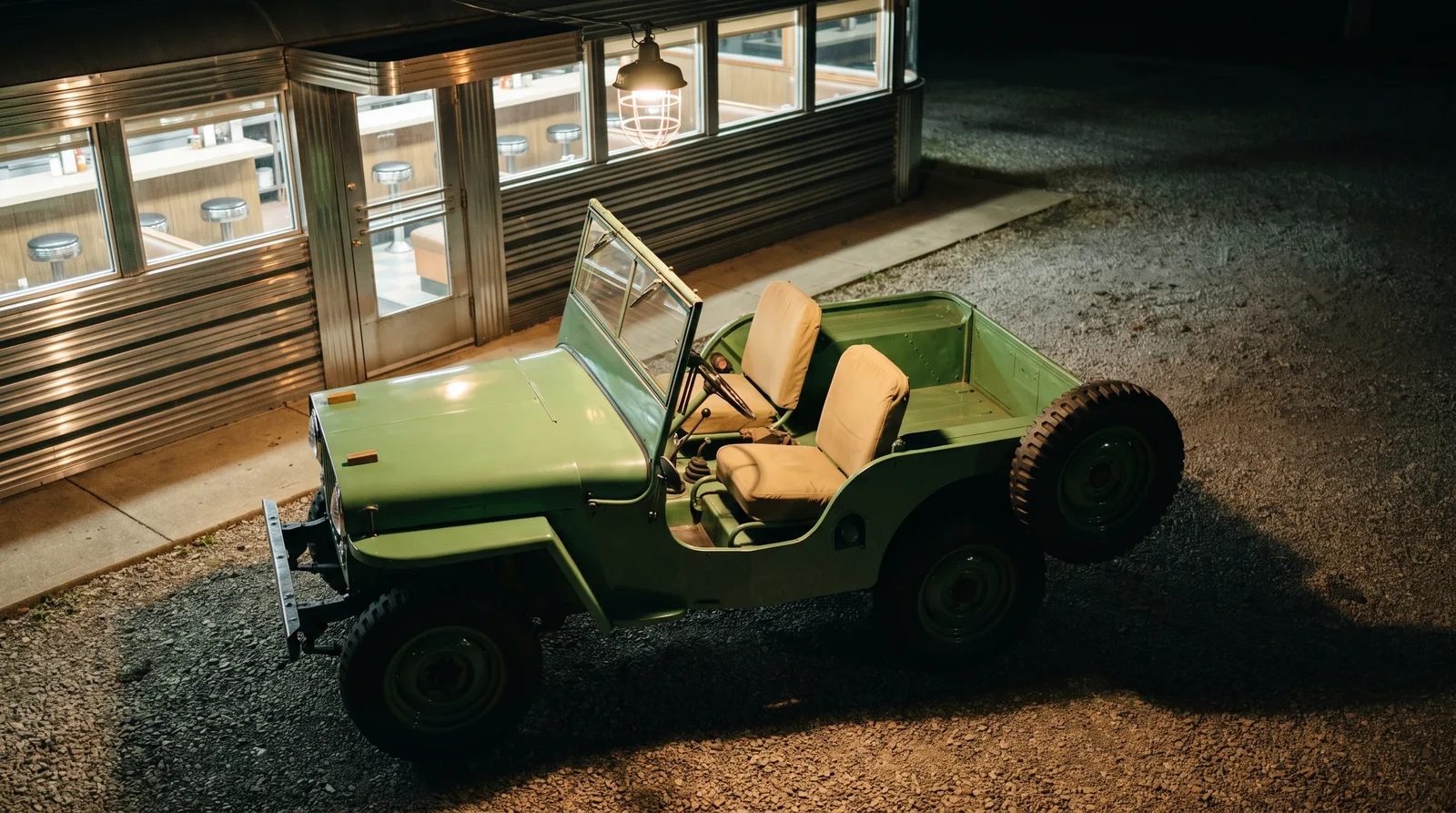
Willys offered the CJ-2A in a handful of colors across its production run, and the names themselves tell you almost everything about the intended customer. Pasture Green. Harvest Tan. These were not aspirational or glamorous names pulled from some marketing department fantasy, they were descriptive, grounded, agricultural. A farmer looking at a color chart with names like these understood immediately that this vehicle was being sold to people like him, not to city buyers looking for something flashy in a dealership showroom. That naming choice was itself a kind of quiet marketing genius. It told a rural customer, before he had even opened the door or looked at the engine, that Willys understood exactly who he was and what he needed this vehicle to be.
Why the palette stayed muted
Beyond the names, the actual colors themselves reflected practical concerns as much as branding. Muted earth tones hid dirt and mud better than bright colors would have, a genuinely useful quality on a vehicle expected to spend most of its life working fields, hauling loads, and getting parked in barns rather than showroom garages. There was also a manufacturing logic at work, a limited color palette simplified paint supply and production for a company that needed to move quickly from wartime output into civilian manufacturing without the luxury of an elaborate color program. Compare this to the passenger car industry of the same era, where manufacturers were beginning to expand color offerings as a competitive differentiator, chasing customers who wanted their new sedan to stand out on the street. Willys was doing something close to the opposite with the CJ-2A, offering colors that helped the vehicle blend into its working environment rather than stand apart from it.
"You look at these old color names and you can almost smell the hay. Willys wasn't trying to sell a fashion statement. They were trying to sell something a farmer would trust, and the colors were part of that trust."
- Nora Beckett
What the colors meant to the people who bought them
For the family that bought a new CJ-2A in 1947, the color on the lot was rarely the point of the purchase decision, but it mattered in a quieter way. A Pasture Green Jeep parked next to a barn did not look out of place, did not draw unwanted attention, did not signal wealth or extravagance to neighbors who might judge a farm family for spending money on something flashy during years when frugality still carried real social weight after the sacrifices of wartime rationing. There is something worth sitting with in that idea, a color chosen specifically so a working vehicle would not stand out. It runs against almost every instinct of modern automotive marketing, and it says a great deal about the values Willys was appealing to in its original customer base.
Finding accurate colors today
Restoring a CJ-2A to a historically accurate finish requires more research than simply picking a modern paint chip that looks close. Original formulations, application methods, and even the specific chemistry of period paint have shifted enough over eighty years that a careful restorer cross-references archival Willys documentation, surviving unrestored panels, and knowledgeable club members before committing to a color and finish for a serious restoration project. This is exactly the kind of detail where the broader Jeep CJ collector community earns its reputation for generosity with knowledge. Ask the right questions at a regional show and somebody will walk you through exactly what a correct 1947 Pasture Green should look like compared to a well-meaning but inaccurate modern reproduction.
Colors as a quiet form of storytelling
There is a version of this history that treats paint as trivia, a footnote next to engine specifications and production figures. I would push back on that framing. A color name is one of the few pieces of a vehicle's original identity that survives almost entirely intact, untouched by mechanical wear or mileage, and reading these old Willys color charts is a little like reading a short piece of period writing, a small window into how a company imagined its customer and spoke directly to that imagined person through something as simple as a paint name. Harvest Tan tells you Willys was thinking about the fall harvest season, about grain and dust and the particular light of a rural autumn. Pasture Green tells you the company was picturing cattle country, fence lines, and the specific green of grazing land rather than a manicured lawn. Neither name required much imagination from the customer reading it, and that is precisely the point, the vocabulary was already familiar to the people Willys was trying to reach. Read enough of these old color charts together and a pattern emerges, a company speaking directly to a working audience in the plainest, most recognizable language it could find.
The colors as part of a larger identity
These paint choices were never separate from everything else Willys was doing with the CJ-2A in this era, the farm-focused marketing, the tailgate and practical design changes, the pricing aimed squarely at rural buyers rather than urban car shoppers. the jeep cj2a story covers how all of these decisions worked together to define the vehicle's original identity, and that identity traces back further still to the full story of how the whole CJ line began. If you want to see how well these original colors have survived on real examples, classic CJs on the market is a genuinely good place to look, since sellers of well-preserved originals often photograph exactly the kind of weathered, authentic finish that no modern reproduction paint quite manages to replicate.
Sources and notes
Related Reading
Have a
Jeep CJ
for Sale?
Reach thousands of serious classic car collectors across the US.
Sell It Here →
Selling a classic? Here's how: the best sites to sell a classic car
Are You a Classic Car Dealer?
List your full inventory and connect with targeted classic car buyers.
Join as a Dealer →
#jeep cj-2a
#willys-overland
#Jeep restoration
#Willys Jeep colors
#Pasture Green
#classic Jeep paint

About the author
Nora Beckett
Automotive features writer and photographer who tells the human stories behind the cars, from show fields to cross-country road trips.
Related Listings - Jeep CJ




Comments
Be the first to comment on this article.