
Provenance research on the CJ-5 always runs into the same fork in the road at 1970, the year American Motors Corporation completed its purchase of Kaiser Jeep and became the third company in fifteen years to build the model. The jeep cj cj5 amc takeover is the single most consequential ownership change in the vehicle's production history, because unlike the earlier Willys to Kaiser transition, AMC brought genuine engineering investment, a different corporate culture, and a set of federal regulations that reshaped the CJ-5 from the frame up.
Car Features
7 min read
When AMC Took the Wheel: The CJ-5 Under New Ownership
American Motors bought Kaiser Jeep in 1970, replacing the Dauntless V6 with AMC sixes and adding federal emissions compliance while preserving the CJ-5's core body and frame.
A struggling automaker buys a working platform
American Motors was not, in 1970, a company with money to burn. It had spent the 1960s fighting for survival against the Big Three, and its passenger car lineup was losing ground steadily. Kaiser Industries, meanwhile, wanted out of the automotive business entirely and was ready to sell its Jeep division for the right price. AMC's acquisition, finalized in February 1970, gave the company something its own product line badly needed: a profitable, established brand with genuine market leadership in four-wheel-drive vehicles, a category AMC had no presence in at all before the purchase.
What AMC inherited was not a struggling product. The CJ-5 in 1970 was already fifteen years into a successful run, with the Dauntless V6 giving it real performance credibility since 1966 and a loyal customer base built up across the Willys and Kaiser eras. AMC's task was less about rescuing the CJ-5 and more about integrating it into a corporate structure with different engineering resources, different supplier relationships, and different regulatory pressures than Kaiser had faced.
Engineering changes that followed the sale
The most immediate documented change under AMC ownership was the replacement of the Kaiser-era Dauntless V6 with AMC's own inline-six engines beginning in the 1972 model year, after AMC sold the Dauntless tooling rights back to General Motors and needed a replacement powerplant. The 232 and later 258 cubic inch AMC sixes became the CJ-5's mainstream engine options through the rest of the decade, offering different torque characteristics than the V6 and requiring updated engine mounts and exhaust routing to fit the existing CJ-5 chassis.
AMC also began complying with the federal emissions and safety standards that tightened considerably through the early 1970s, adding equipment like catalytic converters later in the decade and reworking fuel systems to meet evolving requirements. These were not cosmetic changes. They altered how the engines breathed, how they were tuned, and in some cases how much power they produced compared to their pre-regulation equivalents, a tradeoff that AMC managed with mixed success as regulations tightened year over year through the mid-1970s.
| Detail | Kaiser era (pre-1970) | Early AMC era (1970-1975) |
|---|---|---|
| Standard six-cylinder option | Dauntless V6 (from 1965) | AMC 232 ci inline six (from 1972) |
| Emissions equipment | Minimal | Growing federal requirements |
| Corporate structure | Kaiser Jeep Corporation | American Motors Corporation, Jeep Corporation subsidiary |
"An ownership change on paper means nothing to a collector until you can show it in the metal. The 1970 sale is where I tell people to slow down and read the build sheet before they read the badge."
- Sarah Whitfield
What stayed the same through the ownership change
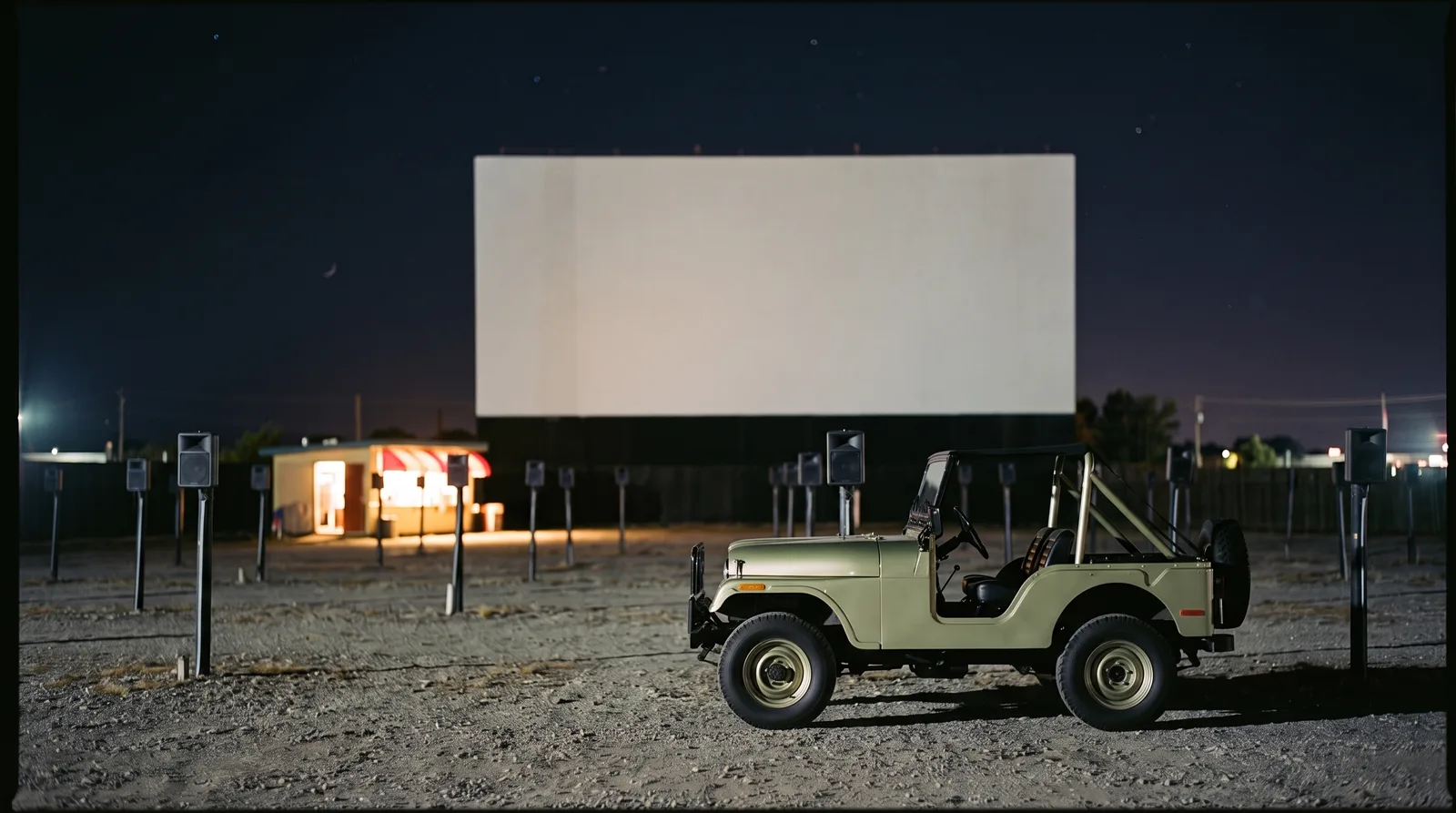
For all the engineering shifts, AMC made a deliberate choice to preserve the CJ-5's basic body, frame, and general layout rather than redesigning it wholesale. This was partly a financial decision, since AMC did not have the capital for a ground-up redesign in the early 1970s, and partly a recognition that the CJ-5's core proportions and mechanical simplicity were exactly what its buyers valued. That continuity is documented clearly when you compare frame stampings and body dimensions across the ownership transition, which change little even as engines, emissions equipment, and trim options evolved considerably. Readers tracing the full production arc across all three owners can find more on the jeep cj5 covering the entire generation, and the earliest chapter of that story, where this started, sets the CJ-5 within the wider CJ lineage back to the original 1945 CJ-2A.
Dealers on the ground felt the AMC takeover less as a sudden shock and more as a gradual shift in parts catalogs, warranty paperwork, and marketing materials over the course of 1970 and 1971. Jeep dealerships that had operated under Kaiser Jeep Corporation branding transitioned to AMC's dealer network structure, which brought both advantages and friction. On the positive side, AMC's existing passenger car dealer relationships gave the Jeep brand access to a wider retail footprint than Kaiser had maintained on its own. On the friction side, some longtime Jeep dealers who had built relationships specifically around Kaiser's ownership found themselves navigating new corporate policies, new financing arrangements, and in some cases new expectations about showroom presentation that did not always sit comfortably with a brand whose core buyers cared far more about towing capacity than showroom polish.
For buyers browsing dealer lots in 1970 and 1971, the CJ-5 itself looked almost identical to the Kaiser trucks sold the year before. AMC made a point of not disrupting the visual identity that had built customer loyalty over fifteen years, reserving its engineering investment for the drivetrain and regulatory compliance work happening under the sheet metal rather than a styling refresh buyers had not asked for. That restraint, whether it came from genuine respect for the product or simply a lack of spare capital for a redesign, is part of why the CJ-5's silhouette reads as a continuous story rather than three distinct eras when you look at surviving examples parked side by side today.
Documentation challenges researchers face today
One consequence of the AMC takeover that researchers and appraisers deal with regularly is a documentation gap around the exact transition point. Vehicles built in the final months of Kaiser production and the opening months of AMC production sometimes carry mixed paperwork or parts sourced from both corporate eras, since the corporate sale date does not line up cleanly with a single VIN break in the way a model-year changeover usually does. Establishing precise ownership attribution for a CJ-5 built in early 1970 requires cross-referencing build sheets, dealer invoices, and factory records rather than relying on the model year alone, a level of diligence that matters considerably to concours judging and to serious collectors chasing documented originality.
That diligence pays off in market terms. A CJ-5 with a clean, single-era paper trail, whether purely Kaiser or purely AMC, commands more confidence from serious buyers than one with an ambiguous transitional history. The AMC takeover did not just change what came out of the factory. It changed what researchers need to verify before they can speak with authority about a given vehicle's true production era.
Why this ownership shift still shapes the collector market
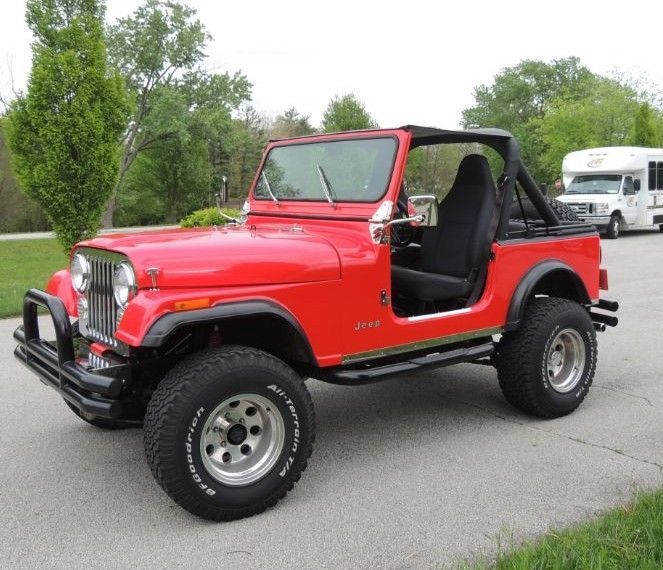
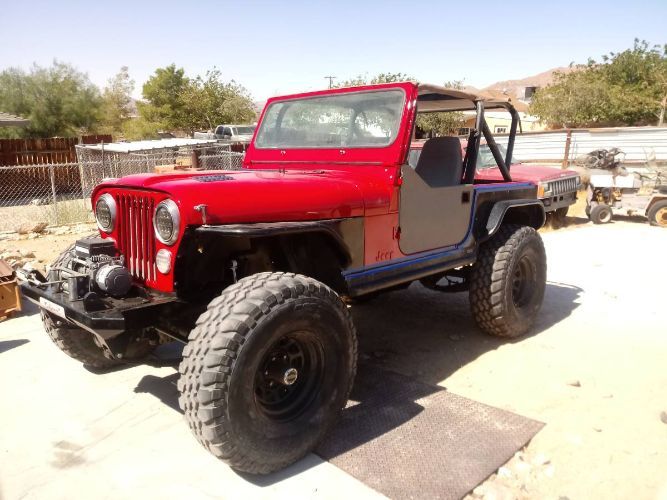
AMC would go on to own and develop the Jeep brand for another two decades, eventually launching the Wrangler YJ that replaced the CJ-5 outright in 1987, but the early years of that ownership, roughly 1970 through 1975, occupy a distinct place in the collector hierarchy. These Jeeps carry more power and more standardized parts availability than the earlier Kaiser trucks while still predating the heaviest emissions equipment that arrived later in the decade. Buyers researching this specific window can browse current inventory of classic CJs on the market to compare early AMC-era examples against the Kaiser trucks that came before them, a comparison that only makes sense once you understand exactly what changed hands, and when, in that 1970 sale.
Sources and notes
Related Reading

About the author
Sarah Whitfield
Third-generation classic car collector specializing in pre-war American and European coachbuilt automobiles. Researcher and concours enthusiast.
Related Listings - Jeep CJ
Comments
Be the first to comment on this article.