
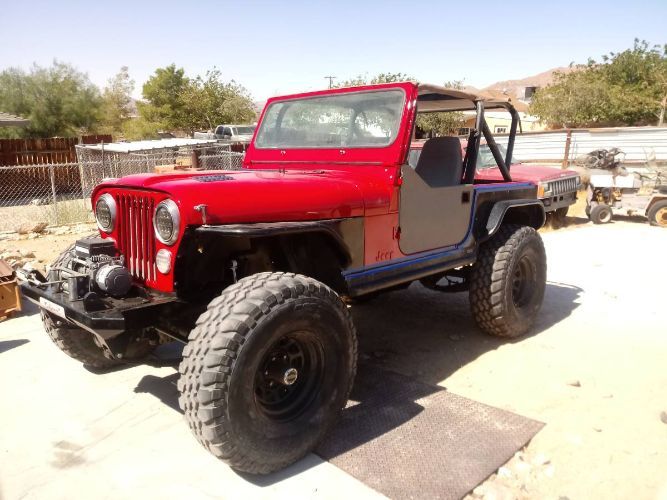
There's a jeep cj cj7 trail legend reputation that built itself trailhead by trailhead, not through advertising, and every longtime club member I know has a version of the story. Somebody's dad had one. Somebody learned to drive stick on one in a field. Somebody watched a CJ-7 climb something a newer, more capable truck on paper had just backed away from. That's how a reputation like this actually gets made.
Car Features
7 min read
Why the CJ-7 Became the Trail World's Favorite
The Jeep CJ-7 built its trail reputation through owner communities and grassroots proving grounds as much as through factory engineering.
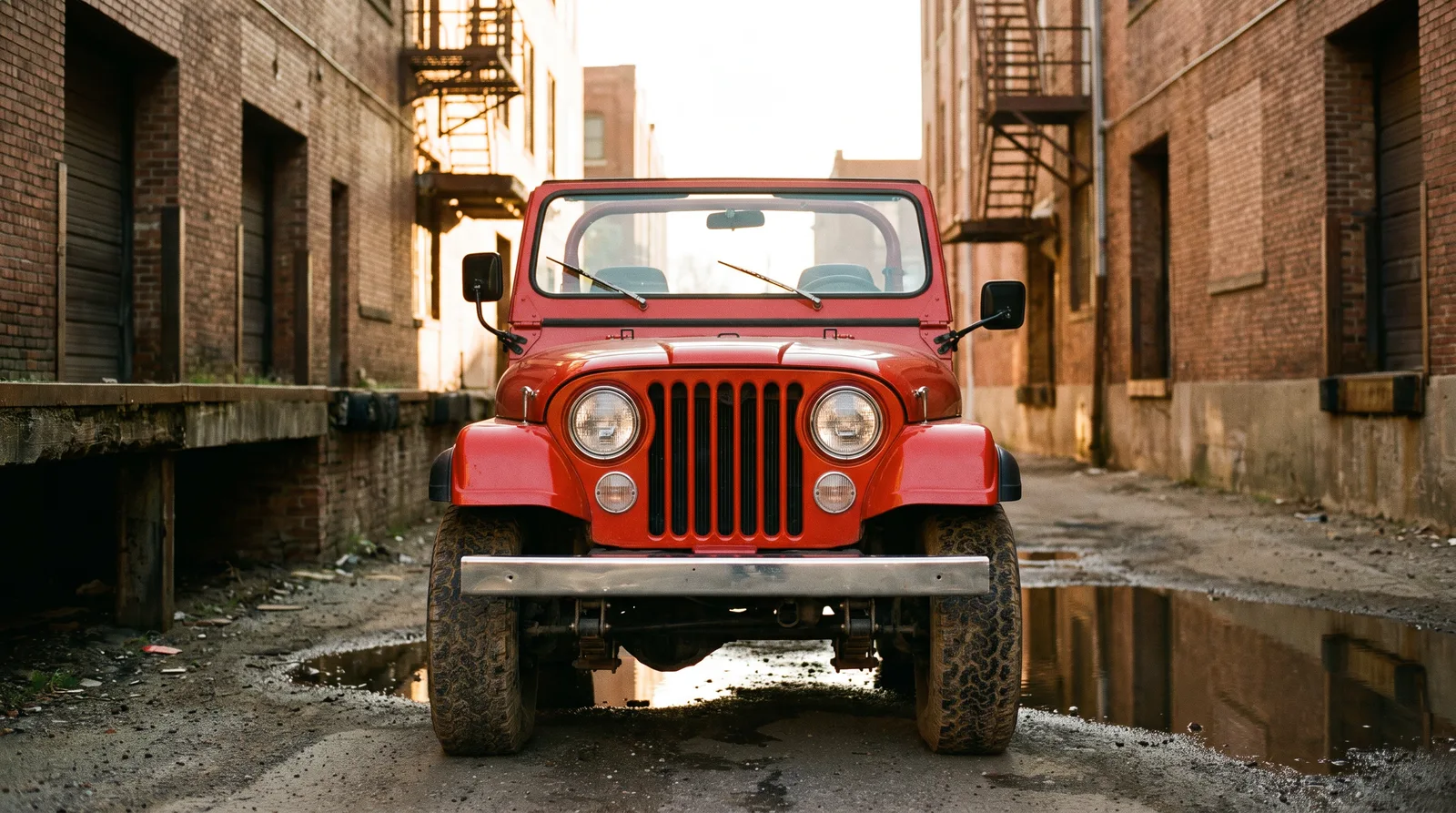
The wheelbase that made the difference
When the CJ-7 replaced the CJ-5 as Jeep's mainstream short wheelbase off-roader starting in 1976, it stretched the platform to 93.5 inches of wheelbase, about ten inches longer than the CJ-5. That doesn't sound like much on paper. On a trail, it changed everything about how the truck rode and handled. The extra length smoothed out the pitching, bucking ride that made the CJ-5 a genuine handful at speed, without stretching the truck so far that it lost the short-wheelbase advantages that make a Jeep good at climbing over obstacles instead of around them.
Solid axles front and rear, generous approach and departure angles, and a low range transfer case gave the CJ-7 the fundamentals every serious trail rig needs. None of that was new to the CJ-7 specifically. What was new was a package that balanced those fundamentals with just enough civility, an available automatic transmission, a slightly roomier cabin, options like air conditioning, that let owners actually live with the truck day to day instead of treating it as a dedicated trail-only tool.
Built by a community, not just a factory
The CJ-7's trail reputation was cemented as much by owners as by engineers. Aftermarket suspension lifts, larger tire fitment, and locking differentials all found an eager audience in CJ-7 owners who wanted to push the factory package further, and companies built entire product lines specifically around the platform's popularity. Jeep clubs organized runs specifically to put CJ-7s through their paces, and event organizers at places like the Rubicon Trail in California saw CJ-7s show up in numbers year after year, building a track record that word of mouth spread faster than any factory marketing campaign could have.
That grassroots credibility matters more than most people realize. A truck can be engineered to be capable. It becomes a legend when a community decides, independently and repeatedly, that it actually is. The CJ-7 earned that verdict from owners who had no reason to be generous with their praise if the truck hadn't backed it up on terrain that punished anything less than genuinely good.
Why the reputation still holds today
Modern off-roaders have more power, more suspension travel, and more electronic aids than any CJ-7 ever offered. What they usually don't have is the CJ-7's simplicity, and simplicity is its own kind of trail advantage. A CJ-7 stranded deep in the backcountry can often be fixed with basic tools and parts a driver already has in the truck. There's no computer to diagnose, no sensor array to troubleshoot. That reliability under duress, more than any single spec, is why the CJ-7 kept its reputation even as newer trucks arrived with better numbers on paper.
There's also the matter of scale. Jeep built a lot of CJ-7s, which means there's a large enough population of experienced owners, club chapters, and specialty shops built around the platform that a new owner is rarely more than a phone call away from someone who has solved whatever problem they're facing. That accumulated knowledge base is part of what makes the truck a legend rather than just an old vehicle with decent approach angles.
"Nobody handed the CJ-7 that reputation. It earned it one trail run at a time, one broken-down newer truck it drove past, one owner at a time deciding this was the rig they trusted to bring them back out."
- Wayne Coburn
What separated it from its own predecessor
It's worth being specific about why the CJ-7 outshone the CJ-5 it replaced on this exact point, because the two trucks are often lumped together as if they were nearly identical. The CJ-5's shorter 84 inch wheelbase made it genuinely twitchy at highway speed and prone to a pitching, porpoising motion over washboard terrain that wore drivers out on longer trail approaches before the technical section even began. The CJ-7's extra wheelbase tamed that motion substantially, which meant drivers arrived at the trailhead less fatigued and more capable of the technical driving that actually demanded their full attention. That's not a small thing over a full day of wheeling.
The CJ-7's longer body also allowed a slightly wider stance and a lower relative center of gravity in certain configurations compared to the CJ-5, incremental gains that added up to a truck that felt more planted without sacrificing the maneuverability that made short wheelbase Jeeps desirable in the first place. Engineers didn't reinvent anything. They refined a formula that already worked and removed some of its rougher edges.
Events and organizations that built the legend
Organized trail events did as much for the CJ-7's reputation as any single engineering spec. Jeep clubs across the country ran regular technical trail days specifically built around what a mostly-stock CJ-7 could handle, creating a shared body of knowledge about line choice, tire selection, and gearing that spread through newsletters and, later, early internet forums long before social media made this kind of enthusiast knowledge-sharing effortless. That collective expertise turned individual owners into a genuine community with institutional memory, and institutional memory is exactly what keeps a reputation alive across generations of owners who never overlapped with each other in age or geography.
National off-road organizations that formed and grew through the late 1970s and 1980s frequently used CJ-7s as reference vehicles for rating trail difficulty, simply because there were enough of them out there running enough different trails that they became a practical common denominator. A trail rated for a stock CJ-7 told an entire community something specific and useful, a shorthand that a more obscure or rarer vehicle could never have provided at the same scale.
The bigger picture
The CJ-7's trail legend status doesn't exist in isolation. It sits inside a much longer story that starts with the original Willys jeeps of the 1940s and runs through every CJ variant that followed. For more on the jeep cj7 itself and how the model developed year over year, and for our complete history of the entire CJ lineage that led up to it, there's a lot more context behind why this particular truck earned the following it did.
If that reputation has you thinking about putting one in your own garage, there are plenty of classic CJs on the market right now, ranging from restored trail-ready builds to honest, unmodified survivors waiting for their first real trip up a fire road.
Sources and notes
Related Reading
Have a
Jeep CJ
for Sale?
Reach thousands of serious classic car collectors across the US.
Sell It Here →
Selling a classic? Here's how: compare the places to sell classic cars
Are You a Classic Car Dealer?
List your full inventory and connect with targeted classic car buyers.
Join as a Dealer →

About the author
Wayne Coburn
Longtime Corvette owner, judge and club figure who knows the cars, the records and the people behind them.
Related Listings - Jeep CJ

Comments
Be the first to comment on this article.