
I've had both a jeep cj cj7 vs cj8 argument at my own shop counter more times than I can count. Guys come in wanting to know which one is the "real" Jeep, the wagon-bodied CJ-7 or the pickup-bed CJ-8 Scrambler, like there's a right answer. There isn't. There's a right answer for what you're actually going to do with the truck, and that's a different question entirely.
Car Features
7 min read
CJ-7 Versus CJ-8: Wagon Versus Pickup Thinking
The CJ-7 and CJ-8 Scrambler share nearly identical mechanicals, but wheelbase and body style push them toward very different jobs and buyers.
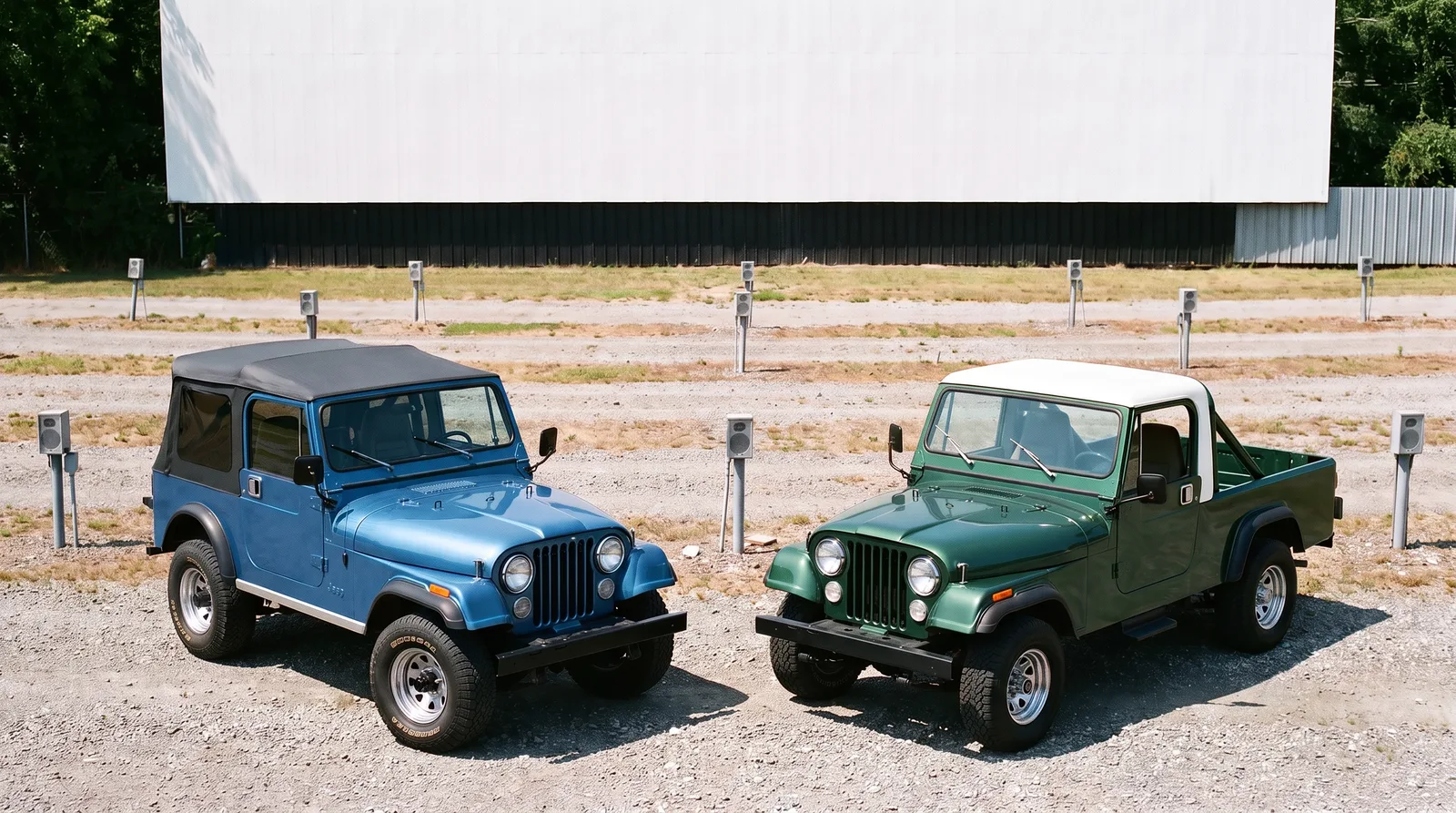
Same bones, different job
The CJ-8 Scrambler didn't come out of nowhere. It's a stretched CJ-7, built on a wheelbase that grew from the CJ-7's 93.5 inches out to 103.5 inches, with a pickup bed grafted on behind the cab. Jeep built it from 1981 to 1985, mostly for markets outside the mainland US at first before it found its footing stateside, and it never sold in anywhere near CJ-7 numbers. That's not because it was a bad truck. It's because it asked a buyer to commit to a specific use case that the CJ-7's wagon body never demanded.
Under the skin, the two trucks share engines, axles, transfer cases, and most of the suspension. If you know how to work on a CJ-7 you already know how to work on a CJ-8, full stop. The differences are all in the frame length and the body behind the doors, and those differences change how each truck actually behaves on the road and on the trail.
| Spec | CJ-7 | CJ-8 Scrambler |
|---|---|---|
| Wheelbase | 93.5 in | 103.5 in |
| Body style | Two-door wagon / soft top | Pickup with cargo bed |
| Production years | 1976 to 1986 | 1981 to 1985 |
| Turning radius | Tighter | Wider, longer overall length |
| Rock crawling geometry | Better breakover angle | Reduced breakover due to length |
Where the CJ-7 has the edge
The CJ-7's shorter wheelbase means a tighter turning circle and a better breakover angle, which matters the second you're crawling over a ledge or picking a line through boulders. A shorter frame flexes and articulates in tighter spaces without the belly of the truck catching on terrain a CJ-8 would have to work around. If your idea of using the Jeep is trail work, technical terrain, and situations where you need to point the nose somewhere and have the rest of the truck follow quickly, the CJ-7 does that job with less compromise.
The CJ-7 also had the bigger production run by a wide margin, which shapes today's parts availability and resale liquidity in the CJ-7's favor. Parts are easier to source, more shops know the platform, and the used market has more examples to choose from at more price points. None of that makes it a better truck on paper. It makes it a more practical one to actually own.
Where the CJ-8 earns its keep
The Scrambler's whole reason for existing is that bed. If you actually need to haul something, camping gear, firewood, a motorcycle, tools for a job site, the CJ-8 does that without a trailer and without tying anything to a roof rack. The longer wheelbase that hurts it on tight trail sections helps it on the highway, where it rides a little steadier and tows a little more confidently than the shorter CJ-7.
Rarity cuts the other way for the CJ-8 too. Jeep built far fewer of them than CJ-7s, and that scarcity has made surviving, unmodified Scramblers genuinely sought after by collectors who want something less common than the CJ-7 that's parked in every fourth garage at a Jeep show. A clean CJ-8 turns heads at a show in a way that a clean CJ-7, as good as it might be, generally does not, simply because there are so many fewer of them left.
What I tell people at the counter
If you want the Jeep to be a daily trail rig, a weekend wheeler, or your first project truck, buy the CJ-7. It's more forgiving on tight terrain, cheaper to source parts for, and there are simply more good examples out there to choose from. If you know you need bed space, if you're the kind of owner who's actually going to haul things with it instead of just looking at it, the CJ-8 does that one job better and comes with a rarity premium that makes it a smarter long-term hold if you can find a solid one.
"People treat this like a loyalty question. It isn't. It's a work question. Ask what you're actually going to do with the truck before you ask which nameplate sounds cooler."
- Mike Sullivan
Buying either one today
Whichever way you lean, both trucks share enough parts and mechanical DNA that a mechanic comfortable with one will be comfortable with the other inside an afternoon. The buying advice is the same too: check the frame for rust at the same spots, check axle and transfer case condition the same way, and expect the same basic maintenance intervals. For where this started, the CJ-7's own story explains a lot of why the platform underneath both trucks turned out the way it did. When you're ready to compare what's actually available, you can shop classic CJ listings and weigh a wagon against a pickup side by side.
Rust and frame issues to check on both
Because the CJ-7 and CJ-8 share the same basic frame construction, they share the same rust-prone spots too, and knowing where to look saves a lot of grief. Check the frame rails behind the front axle, the rear crossmember, and the body mounts where road salt and trail mud collect and never fully dry out. On the CJ-8 specifically, the longer frame section behind the cab, where the bed is mounted, is worth extra attention, since that section sees more flex over rough terrain than the shorter CJ-7 frame does, and cracked or rusted mounting points there are a common and expensive repair if left too long.
Floor pans deserve the same scrutiny on both trucks. Soft tops and half doors mean water finds its way inside more easily than it would on a fully enclosed vehicle, and years of that moisture sitting against thin sheet metal is the single most common source of structural rust complaints from owners of either model. A thorough inspection with a magnet and a flashlight, checking under any carpet or bed liner, tells you more about a truck's real condition than the paint ever will.
Resale and long-term ownership costs
Because CJ-7 parts are more plentiful and more shops know the platform, ownership costs tend to run lower over time for the CJ-7 simply due to competition among suppliers and easier sourcing for common wear items. CJ-8 owners sometimes pay a premium for bed-specific parts, tailgate hardware, and the longer frame sections that a CJ-7 owner never has to think about, and that scarcity works in the opposite direction from resale value: harder to source when something breaks, but worth more when it's time to sell a well-kept example. Buyers should weigh that tradeoff honestly rather than assuming rarity is a pure advantage in every direction.
Sources and notes
Related Reading
Have a
Jeep CJ
for Sale?
Reach thousands of serious classic car collectors across the US.
Sell It Here →
Selling a classic? Here's how: sell my classic car
Are You a Classic Car Dealer?
List your full inventory and connect with targeted classic car buyers.
Join as a Dealer →
#cj-8 scrambler
#jeep cj-7
#AMC Jeep
#Jeep CJ buying guide
#classic Jeep comparison
#off-road Jeep history

About the author
Mike Sullivan
Detroit-area muscle car enthusiast and restoration specialist with three decades of hands-on experience working on American iron.
Related Listings - Jeep CJ

Comments
Be the first to comment on this article.