
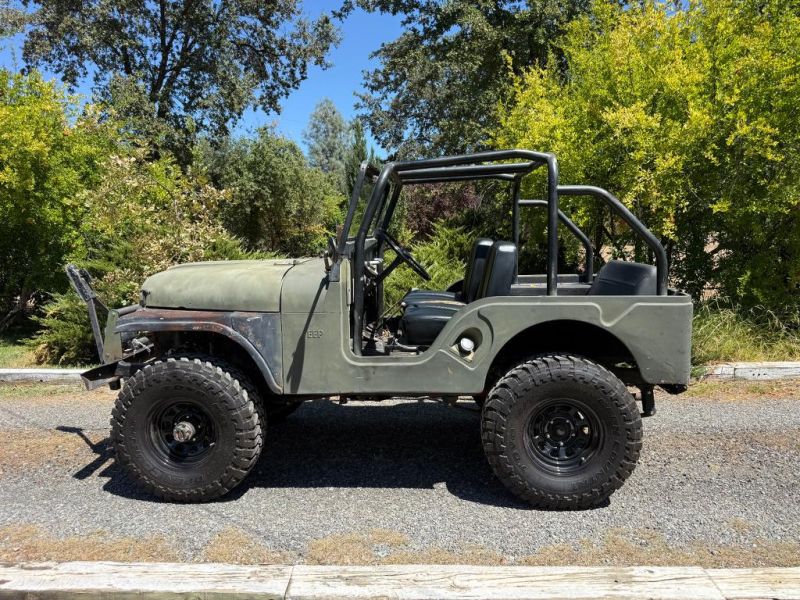
Long before the classic Jeep CJ became an off road racer's tool or a collector's centerpiece, it was the vehicle parked at the end of a fire road with a shotgun case and a cooler in the back. The Jeep CJ culture hunting fishing image is one of the least glamorous parts of the vehicle's history and one of the most important, because it is the use case that actually sold most CJs to most owners for most of the model's four decade production run.
Car Features
7 min read
The Outdoorsman's Jeep: Hunting, Fishing and the CJ Image
Before it was a trail racer or a collector's prize, the classic Jeep CJ was the vehicle hunters and anglers trusted to reach the backcountry and get them home again.
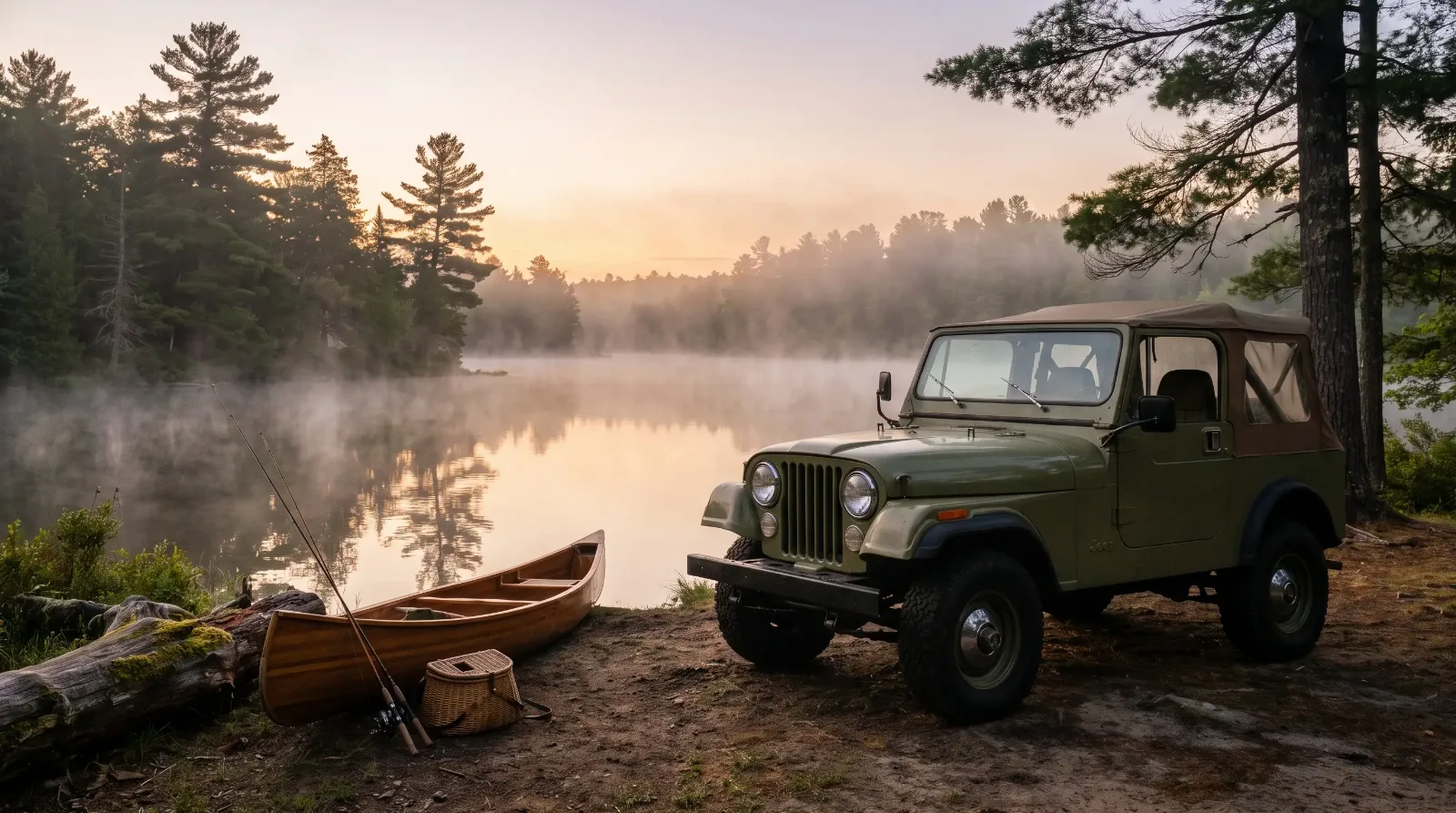
A vehicle built for the outdoorsman before he had a name for it
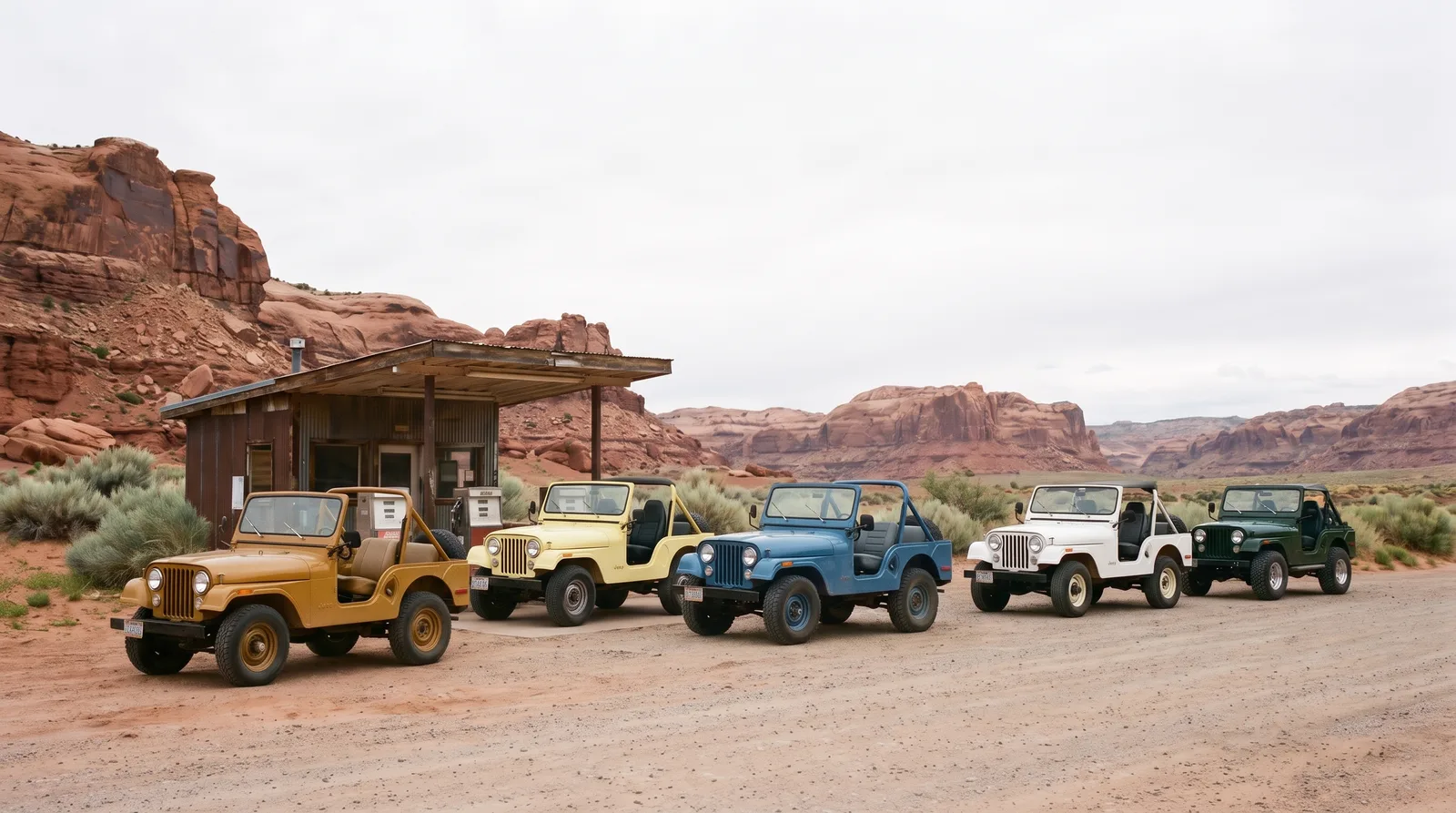
When Willys-Overland launched the CJ-2A in 1945, the pitch to civilian buyers leaned heavily on utility, farm work, ranch chores, light hauling. But dealers and advertising copy quickly discovered a second audience that needed almost exactly the same capability: hunters and anglers who wanted to reach terrain a passenger car could not touch. A CJ could ford a stream, climb a rutted logging road, and still carry enough gear in the back to make a weekend trip practical. That combination, go anywhere and haul something once you got there, made it a natural fit for sportsmen well before "sport utility" existed as a marketing category.
By the early 1950s, magazine advertisements for the CJ-3A and CJ-3B regularly featured hunters loading deer or elk into the back, or anglers parked beside a remote lake with rods leaning against the windshield. This was not incidental imagery. Willys and later Kaiser understood that the CJ's appeal to outdoorsmen was a distinct, reliable market, separate from farmers and separate from the small but growing recreational trail driving crowd that would later produce events like the Jeepers Jamboree.
The gear that came with the lifestyle
Owners adapted their CJs to hunting and fishing use in ways that became recognizable across the culture: roof racks for gun cases and gear, aftermarket tailgate tables for cleaning fish, canvas tops that could be rolled back for spotting game from an elevated seat, and simple wood or metal storage boxes bolted behind the front seats. None of this came from the factory. It came from owners solving their own problems, and from a small but steady aftermarket that grew up specifically to serve sportsmen who drove CJs into the backcountry every fall and every trout season.
The vehicle's simplicity mattered here as much as its capability. A hunter parked at a remote trailhead for a week did not want a vehicle with complex electronics or a finicky drivetrain. The CJ's mechanical straightforwardness, points ignition, simple carburetion, parts interchangeability across model years, meant a breakdown far from a dealer was rarely a trip ending event. Owners carried basic tools and a spare belt, and that was often enough.
An image that shaped the brand for decades
The hunting and fishing association did more than sell individual vehicles. It shaped how an entire generation understood what a Jeep was for. Print advertisements throughout the 1950s and 1960s consistently paired the CJ with wilderness access, framing the vehicle as the tool that separated a serious outdoorsman from someone confined to established roads. That positioning outlasted the specific ad campaigns that built it, becoming a durable part of the brand's identity that Jeep would continue to draw on long after the CJ itself went out of production in 1986.
The imagery also reinforced a particular kind of American self reliance that resonated well beyond hunters and anglers specifically. A CJ loaded with camping gear, headed toward a trailhead at dawn, communicated independence and competence in a way that automotive advertising of the era rarely achieved with sedans or standard pickups. That message is part of a broader cultural arc explored in the whole picture of how the CJ built its reputation across multiple, overlapping owner communities.
"You'd see the same truck at the trailhead every October, mud to the door handles, gun case strapped to the rack, and it was never the newest one in the lot. It did not need to be. It just needed to start, and get you back out with whatever you'd come for."
- Patrick Walsh
A quieter legacy than the trail runs, but a bigger one
The Rubicon Trail and Moab's Easter Safari get more attention in CJ history because they produced dramatic photographs and organized events with documented attendance. The hunting and fishing use case produced neither. It happened in ones and twos, at unnamed trailheads and unmarked boat launches across the country, and it left behind far less documentation than the trail runs did. But in sheer volume, it likely accounted for more CJ ownership over the model's production life than any single recreational trail event ever did.
That quieter legacy is worth remembering because it explains something about the CJ's broad appeal that pure off road capability does not. The vehicle did not need to be spectacular to be valuable. It needed to start on a cold morning, cross a rutted two track without complaint, and carry a week's worth of gear without requiring special preparation. For a huge share of American owners, that was the entire point, and it is a large part of why so many CJs from this era survive today with genuine, if unglamorous, working histories.
Finding that history today
Collectors looking specifically for a CJ with outdoor recreation provenance, rather than trail competition or show car history, are often looking at a different kind of survivor: honest wear, practical modifications, and a story that involves a lot more lake mornings than granite ledges. Those interested in that end of CJ history can find a classic CJ and look past the polish for the kind of vehicle that actually did the job it was bought for, year after year, for decades.
Regional variations on the same theme
The hunting and fishing relationship with the CJ took slightly different shapes depending on the region. In the upper Midwest and the Northeast, owners favored the vehicle for deer season access to state forest logging roads that regular passenger cars could not manage once the ground softened in late fall. In the Rocky Mountain states, elk and mule deer hunters used CJs to reach high elevation trailheads that would otherwise require a long approach on foot. Coastal owners in the Pacific Northwest and parts of the South adapted their CJs for boat launch access, often rigging simple trailer hitches to tow small aluminum fishing boats to lakes and rivers a standard sedan could not reach on unimproved roads.
These regional habits rarely made it into national advertising campaigns with any specificity, but they shaped dealer inventory and aftermarket accessory offerings in ways that varied noticeably by geography. A dealer in rural Wisconsin stocked different winter preparation parts than one in Arizona, and both differed from a dealer serving coastal fishing communities in Oregon. That regional adaptability, built by owners and dealers responding to local outdoor recreation needs rather than dictated from a national marketing office, is part of why the CJ's hunting and fishing identity feels so consistent across the country while still carrying distinctly local flavors depending on where a given vehicle spent its working life.
Sources and notes
Related Reading
Have a
Jeep CJ
for Sale?
Reach thousands of serious classic car collectors across the US.
Sell It Here →
Selling a classic? Here's how: compare the places to sell classic cars
Are You a Classic Car Dealer?
List your full inventory and connect with targeted classic car buyers.
Join as a Dealer →

About the author
Patrick Walsh
Automotive journalist covering classic car shows, events, and the enthusiast community across North America.
Related Listings - Jeep CJ

Comments
Be the first to comment on this article.