
Most people picture a Willys CJ in green because that is what the wartime MB looked like, and nobody bothers correcting them. But the Jeep CJ Willys color and style story starts the moment the war ended, when Willys-Overland dropped the military palette and gave the CJ-2A a real civilian color chart. I have stripped enough of these down to bare metal to tell you the paint history matters as much as the mechanical history when you are deciding what "correct" actually looks like on one of these.
Car Features
7 min read
Harvest Tan and Michigan Yellow: The Early Jeep Look
Willys-Overland's early civilian colors were working decisions dressed up as style, and getting the finish right matters as much as matching the shade.
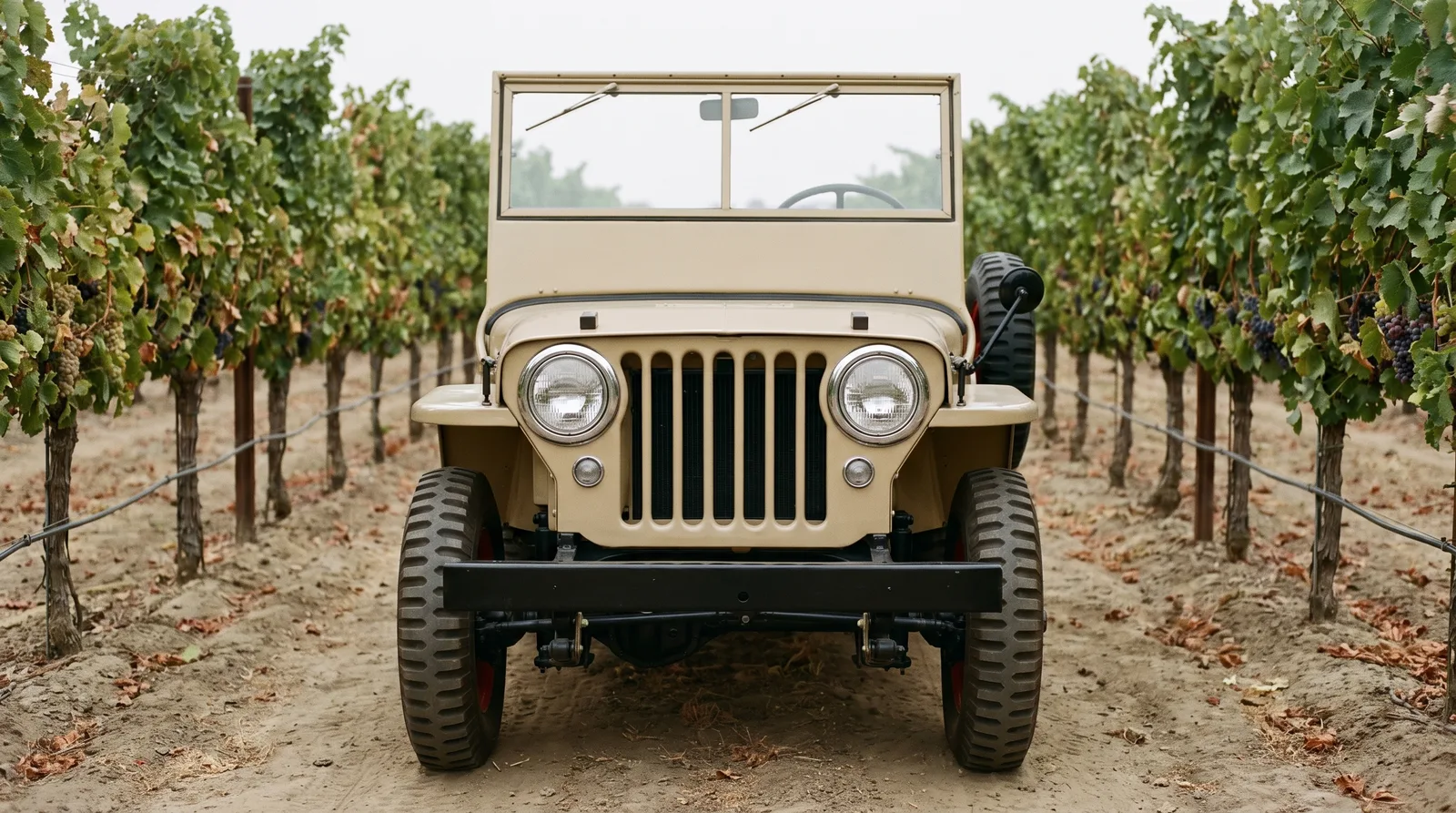
Harvest Tan changes the whole conversation
Harvest Tan was one of the first civilian colors Willys-Overland offered on the CJ-2A, and it is the color that tells you the company was serious about selling to farmers, not just repainting a leftover military vehicle. Tan hides dust and dirt better than any color you could pick for a working farm vehicle, and it reads as agricultural equipment sitting next to a barn instead of army surplus sitting in a driveway. That is not an accident. Willys picked colors that matched the buyer they were chasing.
When I am evaluating a CJ-2A for a repaint or a restoration, Harvest Tan tells me something specific about how the vehicle was probably marketed and used originally, even before I look at anything else. It is a working color, chosen for a working machine, and that context matters if you care about getting the presentation right rather than just picking a shade you like off a modern chip chart. If you want the background on why Willys built this vehicle to begin with, where this started covers the wartime and early postwar origin story.
Michigan Yellow and the shift toward personality
Michigan Yellow came later in the civilian color rollout, and it is a completely different statement than Harvest Tan. Yellow is not hiding dirt. Yellow is standing out. By the time Willys-Overland offered brighter colors like this, the company was acknowledging that not every CJ buyer was a farmer running the vehicle into the ground. Some buyers wanted a Jeep that looked good parked in front of the house, and Willys built a color chart flexible enough to serve both crowds without changing a single body panel.
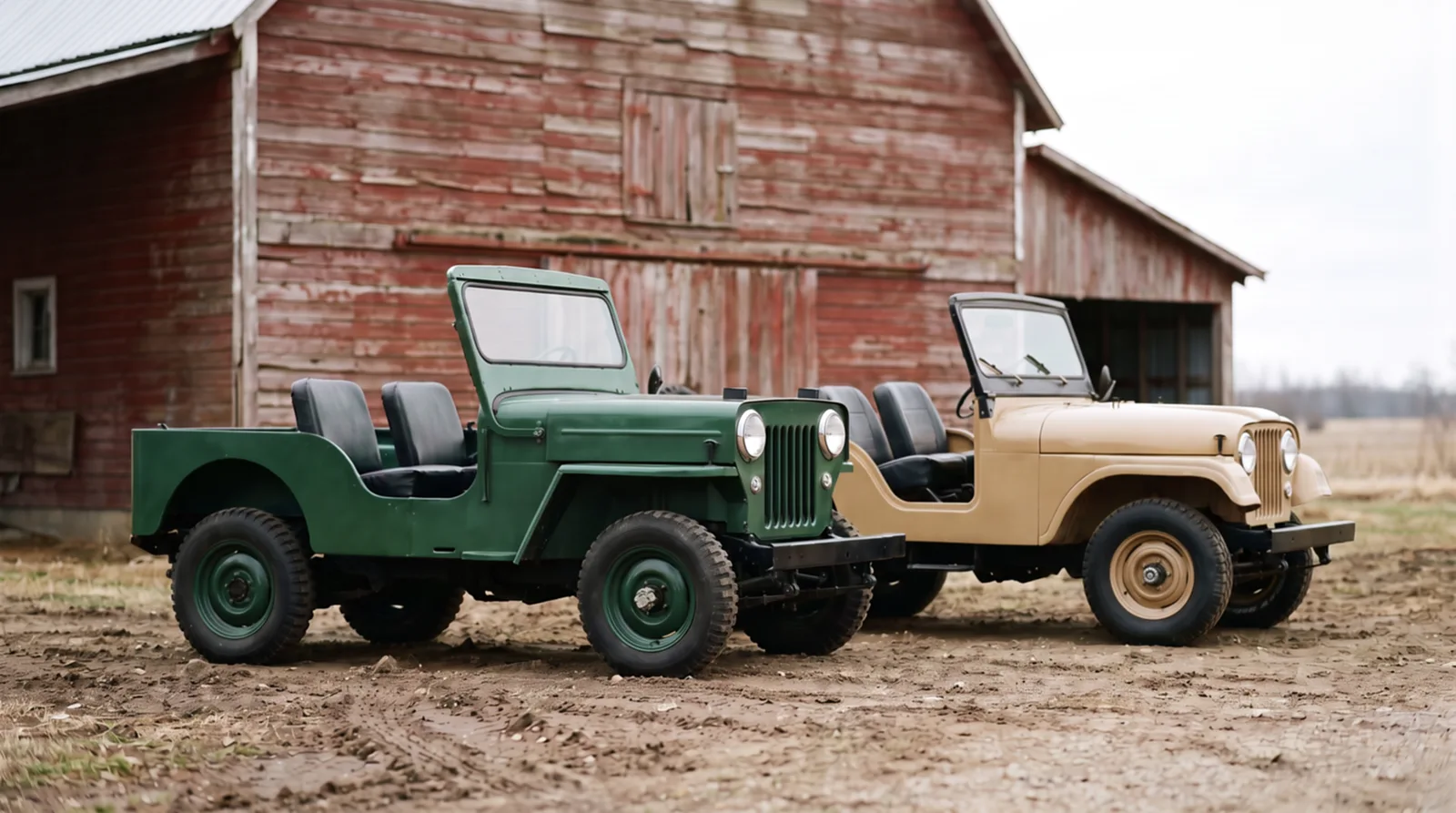
What I appreciate about this period, working on these vehicles now, is that the color choices were genuinely functional decisions dressed up as style. Tan for the field, brighter colors for buyers who wanted the CJ as a second vehicle or a personal runabout rather than strictly a work tool. That split shows up in the surviving population today. A tan CJ-2A pulled out of a barn tells a different story than a yellow one that spent its life parked in town, even if the mechanicals underneath are nearly identical.
What original paint actually tells you
Here is where I get particular. A lot of restorations I see get the color roughly right and completely miss the finish. Factory paint on a 1940s CJ was not a glossy show finish. It was a durable, somewhat flat working paint meant to hold up under field use, not to win a concours class. When someone brings me a CJ-2A repainted with a modern high-build clearcoat in a period-correct color, I will tell them straight: the color chip might be right, but the finish is wrong, and anyone who knows these vehicles will spot it in about five seconds.
Getting the sheen level and the application texture right matters more than most people think when you are talking about authenticity, not just color matching. A period-correct Harvest Tan with a modern glossy clearcoat is not a restoration, it is a reinterpretation, and there is a real difference between those two things if originality is what you are actually after.
"Color matching gets you halfway there. Finish and application get you the rest of the way, and that is where most repaints fall apart under any real scrutiny."
- Jim Vasquez
Reading a paint job like a shop, not a showroom
When I walk around a candidate CJ before touching it, I am looking at edges first, not the broad panels. Factory-applied Harvest Tan or Michigan Yellow shows specific brush and spray patterns around door jambs, under the hood lip, and inside the tailgate that a modern repaint almost never replicates correctly, because most shops today spray with equipment and technique the original line workers never had. Those small, unglamorous areas tell you more about a repaint's honesty than the hood or the fenders ever will, because nobody bothers faking the parts nobody is supposed to look at closely.
Overspray patterns matter too. Willys-Overland's production line was fast and functional, not fussy, and factory paint jobs from this era show a certain amount of overspray onto adjacent trim and hardware that a careful modern restorer, chasing a show-quality finish, tends to mask off and eliminate entirely. Ironically, that means a slightly imperfect repaint sometimes reads as more period-correct than a flawless one, since the flawless finish is often evidence of a level of masking care the original factory line never applied.
Style choices beyond the paint chip
Color is only part of the early civilian style story. Willys-Overland also varied trim details, canvas top colors, and seat material across this period in ways that either matched or deliberately contrasted with the body color, giving buyers a limited but real degree of personalization within an otherwise utilitarian vehicle. A tan CJ-2A with a contrasting canvas top tells a slightly different story than one built with matching materials throughout, and both combinations show up in period documentation as legitimate factory options rather than later modifications.
None of this is complicated engineering, but it is exactly the kind of detail that separates a genuinely researched restoration from a good-enough repaint. If you are going to put in the work, put it into the details that actually get checked by someone who knows what they are looking at.
Why the color story still matters to buyers
Color and style choices from this early civilian period tell you something real about how a specific vehicle was originally marketed and who it was likely built for, farmer or family runabout. That context is worth knowing before you commit to a repaint or judge someone else's restoration. Get the color right, get the finish right, and you are presenting the vehicle honestly instead of guessing. Buyers who want to see how different original and restored color combinations show up in the current market can shop classic CJ listings and compare presentation across available examples for themselves.
Sources and notes
Related Reading
Have a
Jeep CJ
for Sale?
Reach thousands of serious classic car collectors across the US.
Sell It Here →
Selling a classic? Here's how: sell my classic car
Are You a Classic Car Dealer?
List your full inventory and connect with targeted classic car buyers.
Join as a Dealer →

About the author
Jim Vasquez
Southern California hot rod and custom car builder with roots in the traditional kustom kulture scene.
Related Listings - Jeep CJ

Comments
Be the first to comment on this article.