
Jeep cj willys origins collecting is a narrower niche than the general classic Jeep market, and the numbers make that clear fast. Buyers chasing an early CJ-2A or CJ-3A are not shopping the same pool as someone looking for any driveable flat-fender jeep. They are shopping for roots, for the earliest civilian expression of a wartime design, and that specificity changes what a dollar actually buys.
Car Features
7 min read
Collecting the Willys-Era CJ: The Roots-Hunter's Market
Early CJ-2A and CJ-3A prices split hard between documented and undocumented trucks, and the paperwork gap is where most of the real value sits.
The price spread, plainly stated
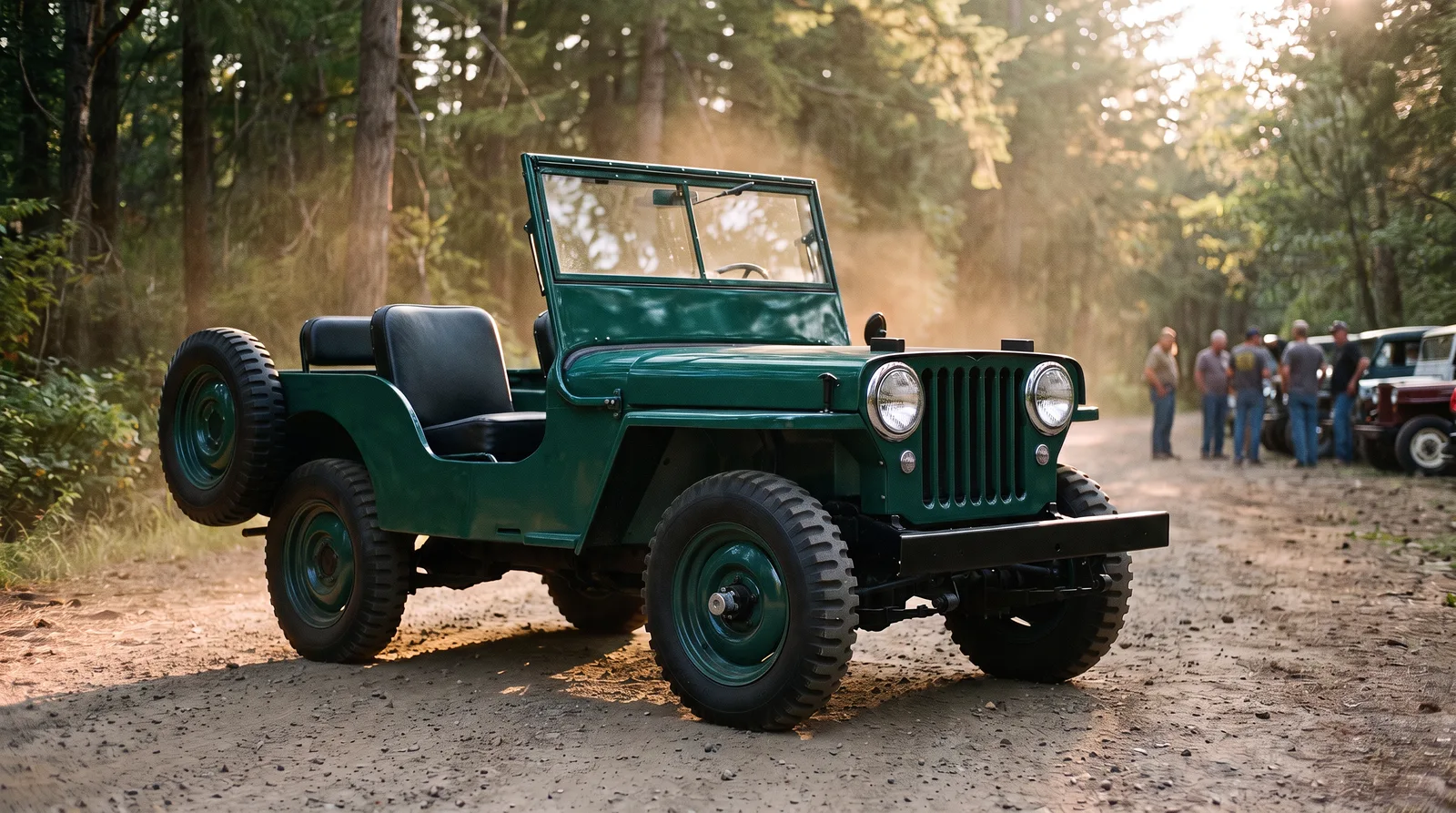
A rough, unrestored CJ-2A with a clear title and a running engine typically lands in the low five figures at public auction, while a documented, correctly restored example with matching numbers and a verifiable ownership chain can more than double that number. The gap between those two outcomes is not really about paint quality. It is about paperwork. A buyer paying top dollar for a Willys-era CJ is paying for certainty: certainty that the frame is original, that the data plate matches the serial number stamped into the metal, and that the vehicle has not been assembled from three different donor trucks over the decades. Strip that certainty away and even a beautiful truck reverts to driver-grade pricing. Recent public sale results bear this out: rough or driver-grade CJ-2A and CJ-3A trucks have traded as low as two or three thousand dollars, average-condition examples cluster in the mid five figures on classic-vehicle price trackers, and exceptional documented trucks have reached into the mid five figures and beyond, with at least one custom CJ-2A selling near ninety thousand dollars at auction.
What actually moves the price
Four things separate a strong sale from a mediocre one in this corner of the market: condition, documentation, liquidity, and downside risk. Condition is the easiest to judge and the least important once a truck clears a basic mechanical bar, because buyers in this niche are not chasing show-car finish. Documentation is where real value gets made or lost, since a verified early serial number with a traceable delivery record can add tens of percent over an identical-looking truck with no paper trail. Liquidity matters because this is a thin market. A handful of serious collectors and a wider ring of enthusiasts compete for a small annual supply of genuinely early trucks, which means a well-marketed example can sell fast while a poorly presented one sits for a year. Downside risk is the quiet factor most new buyers ignore: an undocumented "CJ-2A" assembled from mixed parts can lose half its perceived value the moment a knowledgeable buyer inspects the frame stamps in person.
| Factor | Why it matters | Buyer takeaway |
|---|---|---|
| Condition | Baseline expectation, not a premium driver | Mechanically sound beats cosmetically perfect |
| Documentation | Confirms authenticity and originality | Pay for paperwork before you pay for paint |
| Liquidity | Thin buyer pool, seasonal demand | Presentation and timing affect final price |
| Downside risk | Mixed-parts trucks can be exposed on inspection | Verify serial and frame stamps before committing |
The buy case
For a buyer with patience and a willingness to do the paperwork legwork, this is still a reasonable entry point into serious prewar-adjacent Americana, because the CJ-2A and CJ-3A remain genuinely undervalued relative to their historical significance as the first civilian jeeps. The trucks are mechanically simple, parts support is strong across the flat-fender community, and demand has trended upward steadily rather than spiking and correcting the way some collector segments have. My opinion is a qualified buy: qualified because the documentation requirement is not optional, and any purchase made without verifying serial numbers against known production records is a bet on hope rather than history. Readers who want the fuller background on how this platform came to exist should read the background before shopping, since knowing the model's real production story is the fastest way to spot a misrepresented truck.
"I don't tell clients to chase the shiniest CJ-2A at the sale. I tell them to chase the one with a folder of paper thicker than the seller wants to talk about."
- David Mercer
How this niche compares to the broader CJ market
Buyers new to this corner of the hobby sometimes assume the whole classic Jeep market moves together, rising and falling as one. It does not. The CJ-5 and CJ-7 markets are broader, deeper, and more liquid, supported by a much larger pool of casual buyers who want a fun weekend vehicle rather than a documented historical artifact. The Willys-era CJ-2A and CJ-3A market is smaller, slower, and considerably more sensitive to paperwork quality, which means price swings in the broader CJ market do not always translate directly into this niche. A strong year for CJ-7 sales does not automatically mean documented CJ-2As are moving faster too, and collectors who treat the two markets as interchangeable often misjudge both timing and pricing when they finally decide to sell.
A realistic timeline for entering this market
Nobody should expect to find a fully documented, correctly priced CJ-2A or CJ-3A within a few weeks of starting to look. This is a patience market. Serious buyers typically spend six months to a year watching listings, auction results, and club classifieds before a genuinely well-documented example crosses their path at a price that makes sense. Rushing that process, buying the first "matching numbers" claim that comes along without independent verification, is how buyers end up overpaying for driver-grade trucks dressed up as something more significant. The upside of that patience is that this market rewards it. A buyer who waits for the right documented example, rather than settling for the first plausible one, consistently does better on both price and long-term value retention.
What no-buy looks like
The no-buy case is just as clear. Any CJ-2A or CJ-3A advertised as "numbers matching" without a seller willing to produce the frame stamp, engine stamp, and data plate for side-by-side comparison should be treated as a driver-grade truck regardless of asking price. The same goes for trucks with recent frame repairs in the areas where serial numbers are typically stamped, since that is one of the more common ways a compromised truck gets represented as something it is not. This is a market where trust is earned through documents, not through a confident seller pitch.
How this segment behaves compared to other prewar-adjacent collectibles
It helps to benchmark this niche against other small, documentation-driven collector segments rather than against the broader classic car market as a whole. Early American motorcycles, prewar farm tractors, and other low-production utilitarian vehicles all show the same basic pattern the Willys-era CJ market shows: modest absolute prices compared to glamour collector categories, but steady long-term appreciation for documented pieces, and a persistent, sometimes brutal gap between documented and undocumented examples of the same nominal vehicle. That pattern suggests the CJ-2A and CJ-3A market is not an anomaly. It is a fairly typical example of how thin, history-driven collector segments behave once enough buyers start caring about paperwork as much as they care about presentation.
Where to look now
Supply in this niche is genuinely limited, so timing and access matter as much as budget. Buyers serious about entering this end of the hobby should watch listings consistently rather than waiting for a single perfect truck to appear, since strong documented examples tend to move quickly once they surface. Current inventory across the broader CJ market, some of it early enough to fit this specific collecting focus, is worth checking regularly if you want to browse classic CJ listings before deciding where your budget actually lands.
Sources and notes
Related Reading
Have a
Jeep CJ
for Sale?
Reach thousands of serious classic car collectors across the US.
Sell It Here →
Selling a classic? Here's how: the best sites to sell a classic car
Are You a Classic Car Dealer?
List your full inventory and connect with targeted classic car buyers.
Join as a Dealer →

About the author
David Mercer
Classic car market analyst with two decades of experience tracking collector car valuations, auction results, and investment trends.
Related Listings - Jeep CJ


Comments (1)
L
leadsled_lenny
1 week ago
Gotta disagree that a mixed-parts flatfender is a lesser truck by definition, because back when I was hanging around the shows in the sixties guys built some beautiful Willys customs out of three trucks, shaved and lowered and shot in lacquer, and that custom CJ-2A that went near ninety thousand tells you the market pays for real craftsmanship too, folder or no folder.
That sale is real, and it is an outlier for the reason you describe: buyers paid for the build, not the history. Custom trucks trade on the quality of the work and the name behind it. What I would not do is pay a documented-original price for a mixed-parts truck presented as original. Those are two different markets.
F
fordgirl_kate
1 week ago
Craftsmanship sells. Three-truck VINs don't.