
Chevrolet's marketing team had a specific problem to solve in 1969, and the k5 blazer 1969 ad campaign that resulted shows exactly how they solved it. Ford's Bronco had already spent three years establishing what a compact off-road utility vehicle was supposed to be. Chevrolet's job was not to introduce a new category to the American public. It was to convince buyers already sold on the concept that GM's version was the smarter purchase, and the period advertising reflects that narrower, more tactical goal rather than a from-scratch education campaign.
Car Features
6 min read
How Chevrolet Introduced the K5 Blazer to America
Chevrolet's k5 blazer 1969 ad campaign had a narrow job: convince buyers already sold on the Bronco's segment that GM's newcomer was the smarter pick.
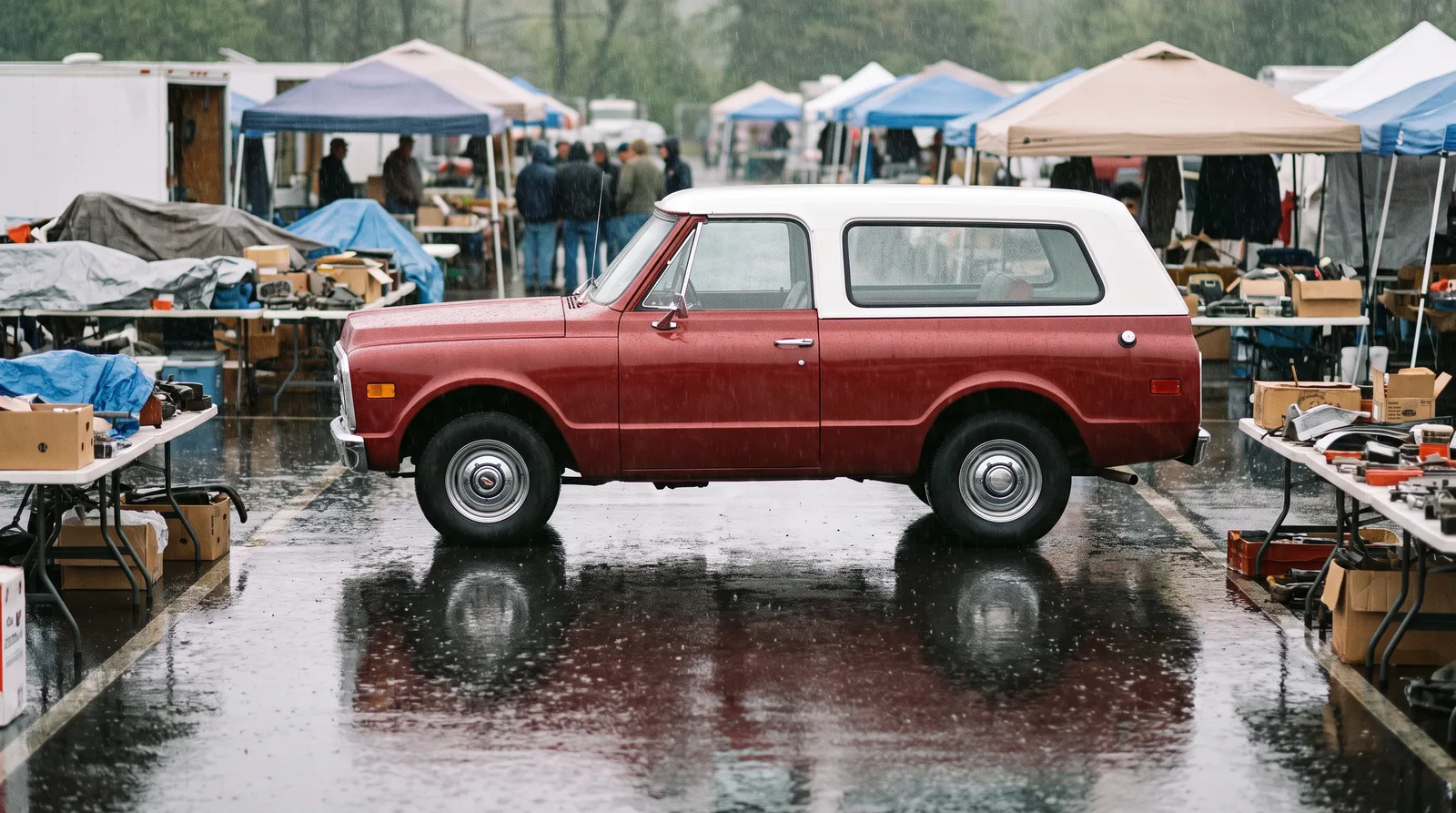
Selling capability the buyer already understood
Because the market segment already existed, Chevrolet's early Blazer advertising did not spend much space explaining what an off-road utility vehicle was for. Instead it leaned hard on specific claims tied to the pickup platform underneath the Blazer, towing capacity, engine options up to V8 displacement, and interior room that a smaller competitor could not match. This was a deliberate contrast strategy. Rather than compete on the Bronco's own terms of compactness and trail agility, Chevrolet's messaging pointed buyers toward a different set of priorities where the Blazer had a genuine structural advantage.
Dealer materials and print advertising from the period consistently framed the removable top as a lifestyle feature rather than purely a functional one, tying it to hunting, camping, and general outdoor recreation rather than technical off-road capability alone. That framing matched how Chevrolet had positioned trucks generally through the 1960s, as tools that doubled as recreation vehicles for a growing suburban and rural customer base with more leisure time and disposable income than earlier generations of truck buyers.
The competitive subtext nobody said out loud
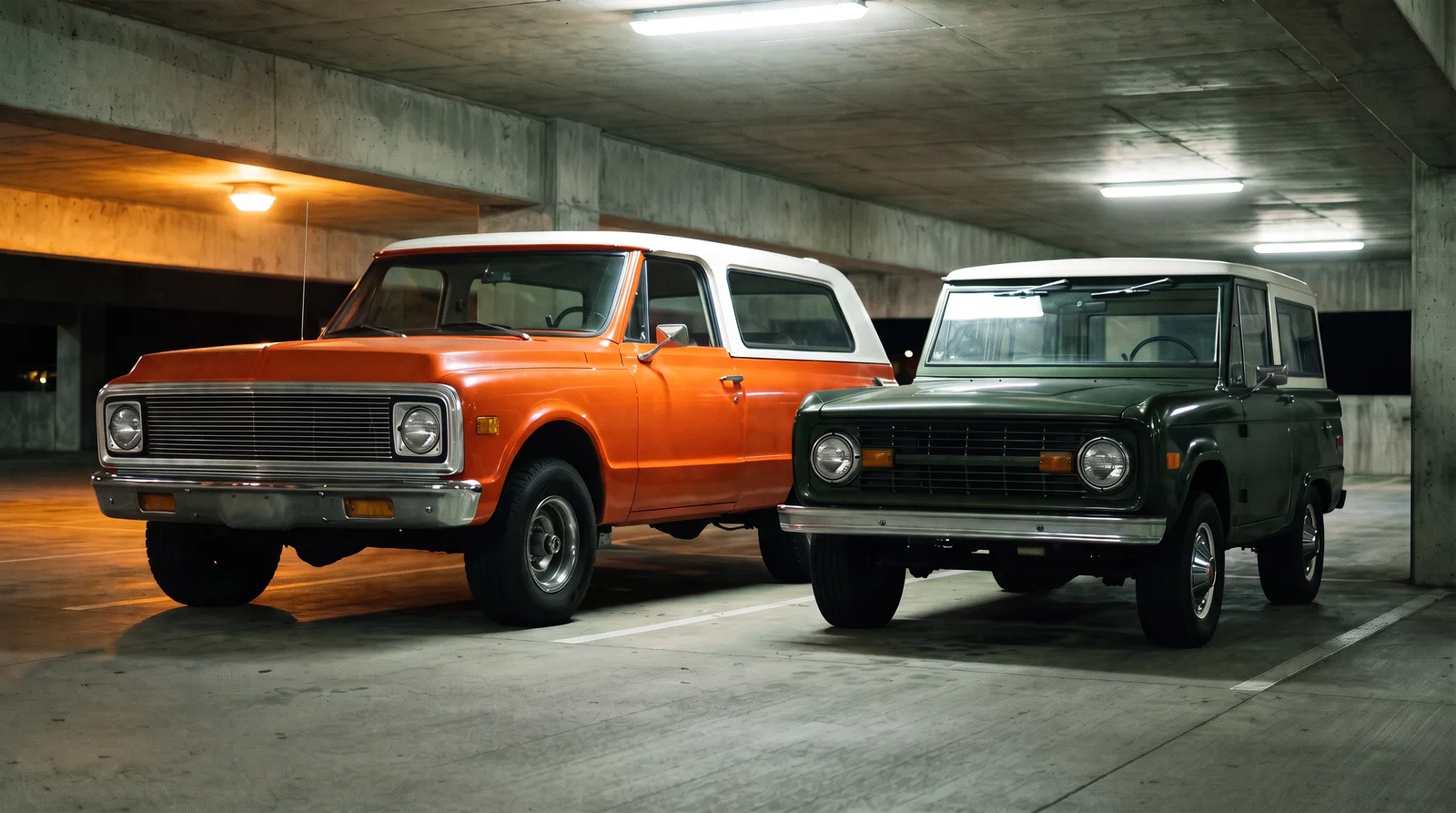
Period Blazer advertising rarely mentioned the Bronco by name, which was standard practice for the era rather than anything unusual to this launch specifically. But the comparative subtext was hard to miss for anyone shopping the segment. Ads emphasizing V8 power, full-size pickup toughness, and passenger room were implicitly speaking to buyers who had already cross-shopped the smaller Ford and wanted reassurance that the newcomer offered something the established option did not.
The exact headlines and publication placements Chevrolet used for this launch are not reliably documented in any single accessible source today. Original tear sheets and dealer brochure copies from this launch window are worth tracking down directly for anyone doing serious research, since a lot of what circulates online today is secondhand description rather than the actual period text, and the exact language Chevrolet's copywriters chose tells you more about the intended buyer than any modern summary can.
How dealers actually presented the truck on the lot
National print advertising set the broad message, but a meaningful share of how buyers actually encountered the 1969 Blazer came through dealer-level presentation, showroom placement, local newspaper ads, and salesperson pitches that varied more than a corporate campaign ever fully controlled. Some dealers leaned into the recreational, outdoor-lifestyle framing that matched Chevrolet's national materials. Others, particularly in rural and agricultural markets, pitched the Blazer more plainly as a capable work truck with the bonus of a removable top, closer in spirit to how the pickup line itself was sold.
That regional variation matters for anyone piecing together the full story today, because it means no single advertisement or campaign fully captures how the 1969 Blazer was actually introduced to the American buying public. The national message and the local sales pitch were related but not identical, and original dealer materials, where they survive, often tell a more grounded story than the polished national print campaign alone.
"The paperwork from a single dealership in 1969 can tell you more about how this truck actually reached buyers than a national ad campaign ever will. Corporate messaging sets the frame. The showroom floor is where the sale actually happened."
- Tom Ramirez
| Marketing element | How it was positioned |
|---|---|
| Engine and towing capability | Framed as a direct advantage over smaller competitors |
| Removable top | Sold as a recreation and lifestyle feature, not purely functional |
| Interior room | Emphasized as a family and passenger benefit over compact rivals |
| Bronco comparison | Never named directly, present only as competitive subtext |
| Regional dealer variation | Ranged from lifestyle framing to plain work-truck pitches |
What the mid-year timing meant for early buyers
A truck introduced partway through the model year lands differently in a dealership than one launched at the traditional fall changeover. Salespeople had less lead time to build familiarity with the product before customers started asking about it, and dealer training materials for a mid-cycle introduction were often thinner than what accompanied a full lineup refresh. That gap sometimes shows up in how period recollections describe early showroom encounters with the Blazer, a genuinely new product that some sales staff were still learning to present confidently even as the first units reached lots.
It is a small detail, but it matters for anyone trying to understand how word of the Blazer actually spread among 1969 buyers. Momentum built gradually through the back half of the model year rather than arriving all at once with a coordinated national push, and that slower build is consistent with the modest early production figures the model carries relative to its later, fuller sales years.
Why this launch history still matters to buyers today
Understanding how Chevrolet introduced the Blazer helps explain some of the confusion that persists around early production and configuration questions. A mid-year launch with regionally varied dealer presentation means original documentation, window stickers, dealer invoices, period brochures, is more valuable for research purposes than it might be for a vehicle introduced through a single unified national push at the traditional model-year start.
For readers who want the full story of the model itself rather than just its introduction to the market, the broader 1969 Blazer history fills in the details this advertising overview only sketches. And for anyone whose interest in this history has turned into genuine shopping intent, classic K5 Blazer for sale listings today still carry echoes of that original 1969 pitch, a truck built on proven pickup toughness with a lifestyle feature the competition could not quite match at launch.
The lesson from this launch, viewed more than five decades later, is that Chevrolet won this argument slowly rather than immediately. There was no single ad or slogan that flipped the segment overnight. It was a steady accumulation of dealer floor conversations, regional print placements, and word of mouth from early owners who found the extra room and towing capacity genuinely useful, that eventually built the Blazer into a credible rival to the truck that had defined the category three years earlier. That is a less dramatic story than a single iconic campaign, but it is the more accurate one, and it is the story the surviving dealer records and period materials actually support.
Sources and notes
Related Reading
Have a
Chevrolet Blazer
for Sale?
Reach thousands of serious classic car collectors across the US.
Sell It Here →
Selling a classic? Here's how: sell my classic car
Are You a Classic Car Dealer?
List your full inventory and connect with targeted classic car buyers.
Join as a Dealer →
#classic truck advertising
#K5 Blazer
#chevrolet blazer
#1969 Blazer
#Blazer launch history
#dealer marketing

About the author
Tom Ramirez
Corvette researcher and historian based in Bowling Green, Kentucky. Two decades documenting Corvette production history from original factory records.
Related Listings - Chevrolet Blazer

Comments
Be the first to comment on this article.