
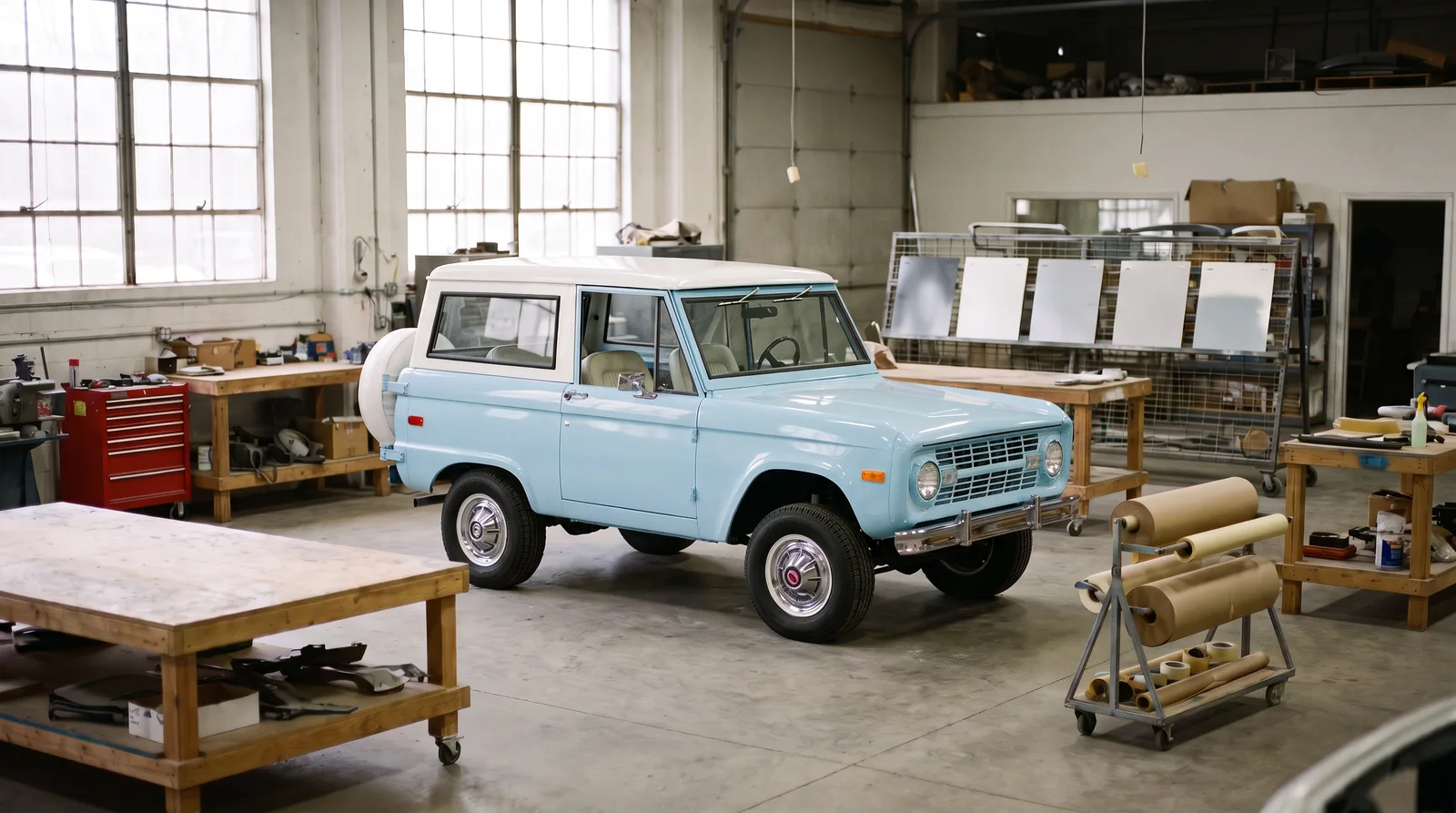
Any serious discussion of the k5 blazer 1969 vs early bronco question has to start with a timing fact that gets glossed over more often than it should: Ford was there first. The Bronco launched for 1966, three full model years before Chevrolet answered with the K5 Blazer. That head start shaped the entire rivalry, and understanding it as a chase rather than a simultaneous arms race changes how you should read every comparison between the two trucks that followed.
Car Features
7 min read
The 1969 K5 Blazer Against the Early Bronco
Ford had a three-year head start on Chevrolet in the off-road utility segment. Here is how the 1969 K5 Blazer answered the early Bronco, and why neither truck made the other obsolete.
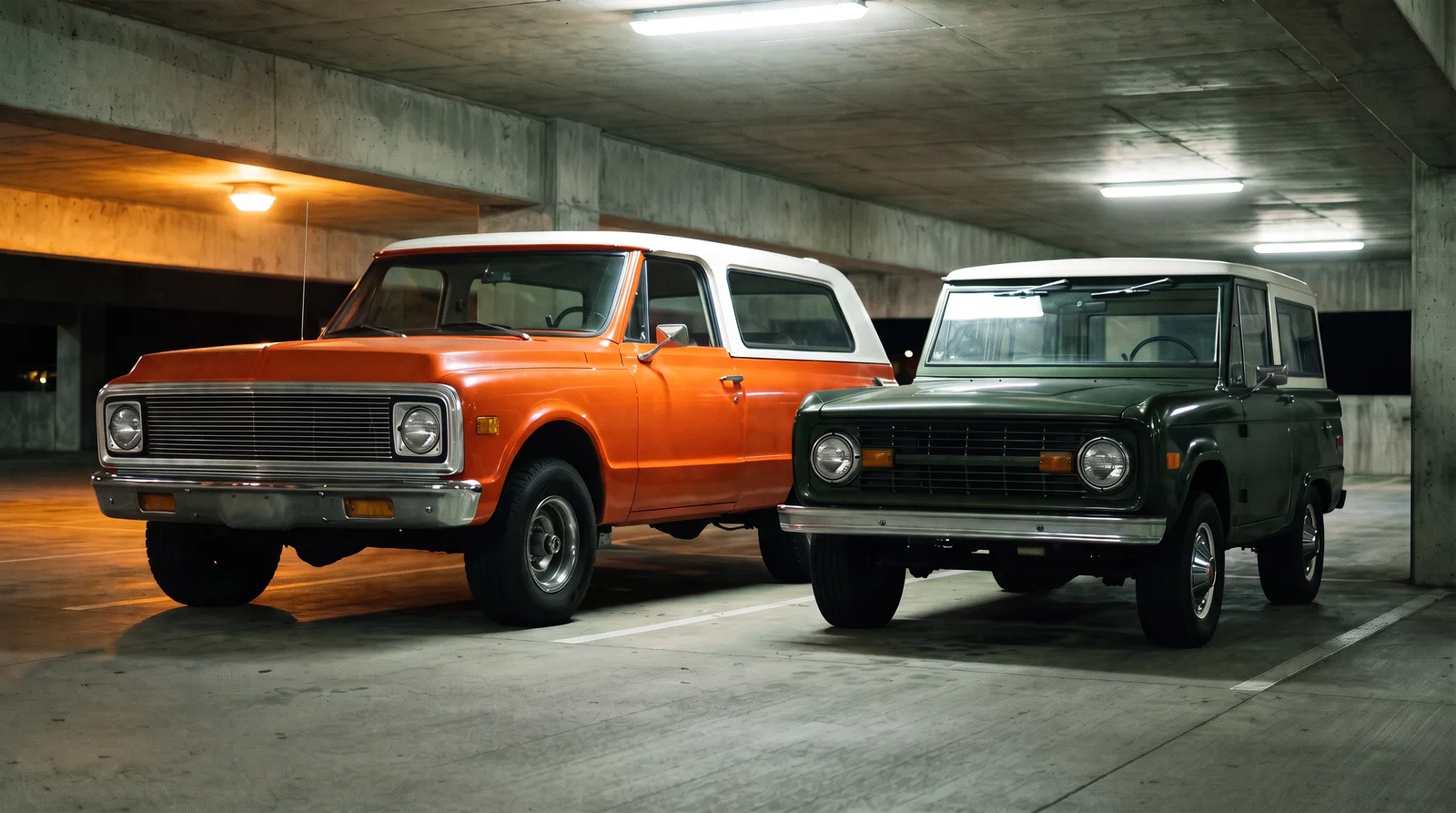
A three-year head start, and what Chevrolet did with the gap
Ford spent those three years establishing the compact off-road utility segment more or less alone, refining the Bronco's reputation with buyers who wanted genuine trail capability in a package smaller than a full pickup. When Chevrolet finally responded with the 1969 Blazer, the company did not try to out-compact the Bronco. It went the other direction, building the new model on the existing C/K pickup platform rather than a dedicated smaller chassis. That decision gave the Blazer a wider stance, a bigger available engine range, and considerably more interior room than the Bronco offered, at the cost of some of the tighter trail agility the smaller Ford was known for.
It is a genuinely different engineering philosophy, not just a copycat product arriving late. The Bronco was purpose-built as its own platform from the ground up. The Blazer leaned on pickup architecture Chevrolet already had in production, which let the company move faster and cheaper into the segment, and also meant the Blazer inherited some of the pickup's size and road manners rather than chasing the Bronco's more compact footprint directly.
The removable top, shared by both but executed differently
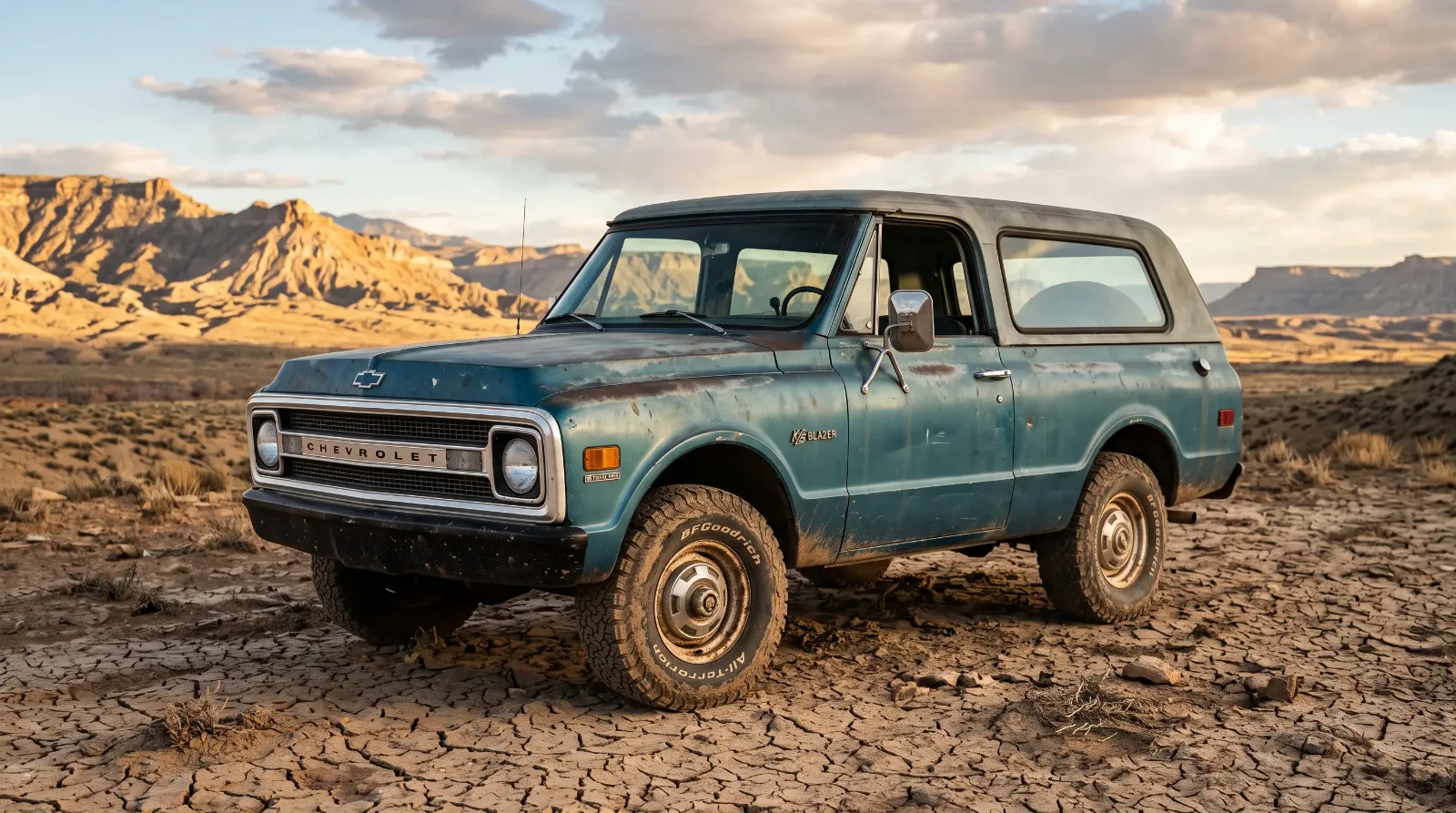
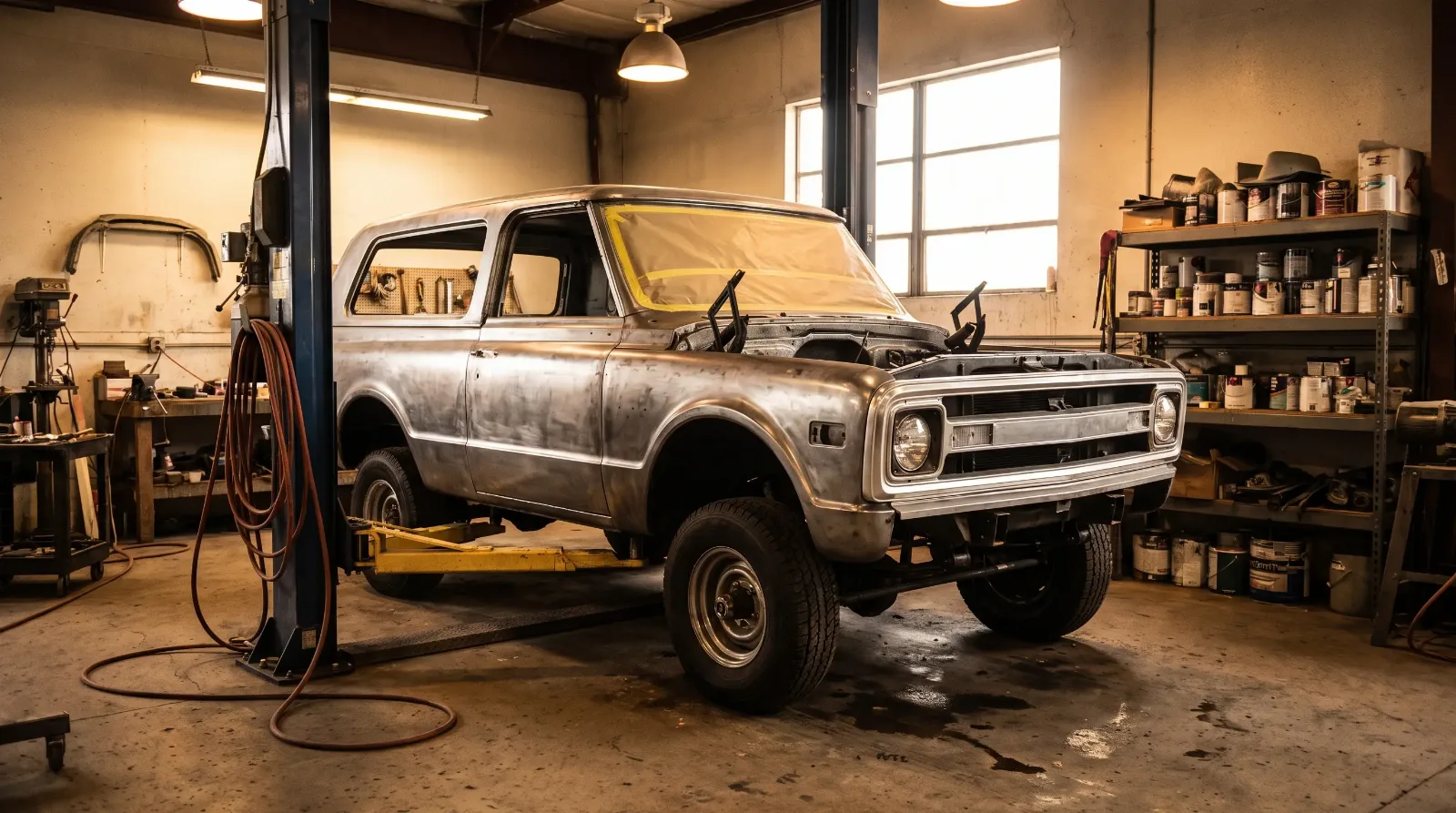
Both trucks offered a removable hardtop in this era, and that shared feature is one of the clearest points of direct comparison. The 1969 Blazer's top was a large fiberglass piece covering the full cab and cargo area, generally requiring more than one person to remove or install safely given its size and weight. The Bronco's roof was similarly removable but sat over a smaller overall body, and depending on configuration, buyers could choose from more partial-top and open configurations than Chevrolet offered on the early Blazer.
Neither approach was objectively better. The Blazer's larger single-piece top matched its larger body and gave occupants more covered space when installed. The Bronco's smaller, lighter body made its open-air configurations feel more like a genuine off-road buggy when the top came off. Buyers choosing between the two in 1969 were making a real trade-off between size and capability, not just picking a badge.
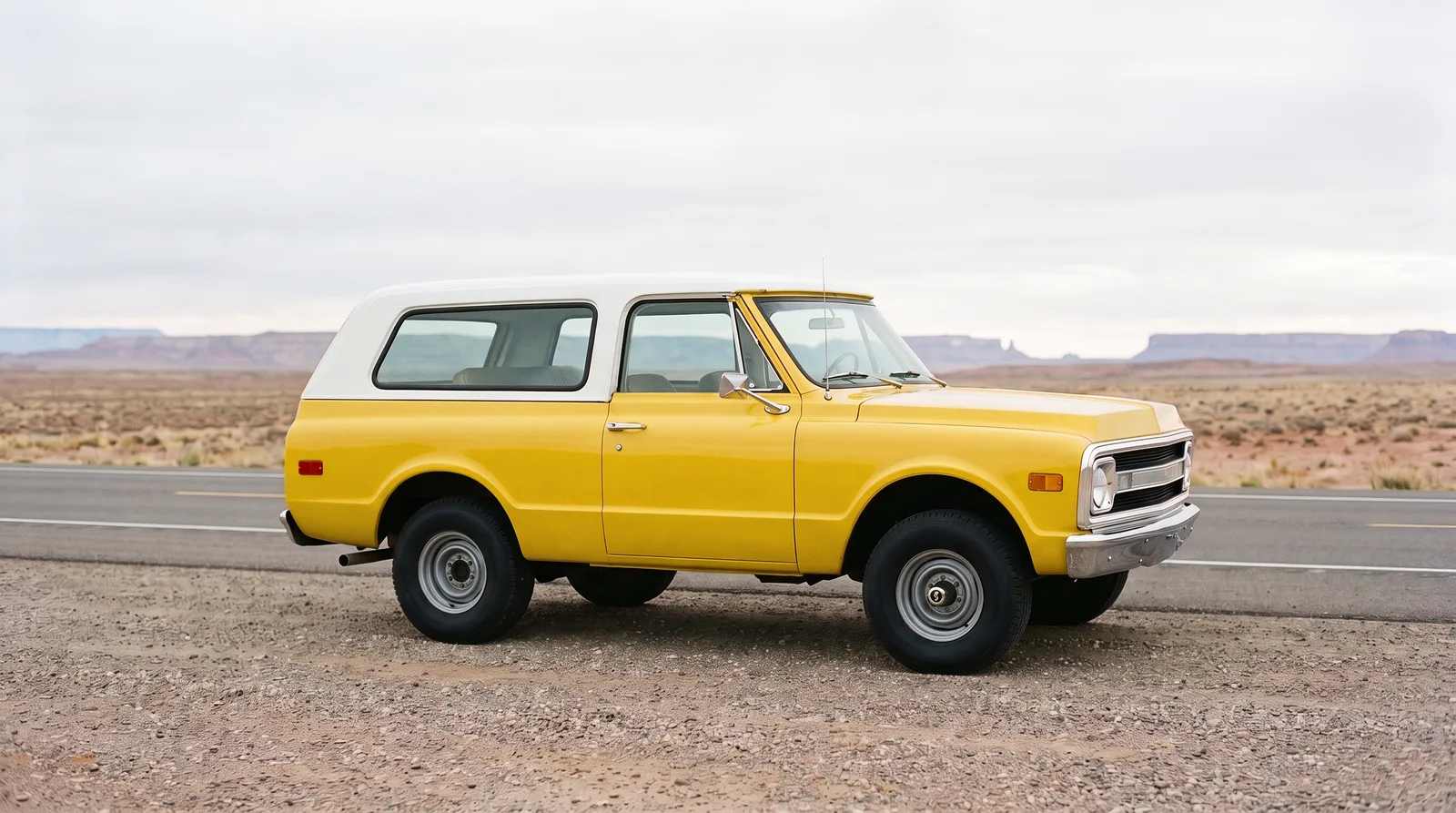
That framing shows up clearly if you read the 1969 k5 blazer story on its own terms, away from the Bronco comparison entirely. Chevrolet's own marketing in period leaned on the pickup platform's proven toughness rather than trying to out-compact Ford's smaller rig, a strategy that only makes sense once you understand the three-year gap it was answering.
Engine choices reflect the size difference
The 1969 Blazer's pickup-based platform allowed Chevrolet to offer a straight-six as the base engine alongside V8 options that gave buyers real towing and power capability the smaller Bronco could not match at the top end of its own engine range in this period. That extra displacement headroom came from the same platform decision that made the Blazer larger and heavier overall, so it is not a free advantage. It is the direct consequence of the size trade-off both companies were making from opposite directions, Ford building small and adding capability over the years, Chevrolet building on an existing larger platform and scaling it down slightly to fit the segment.
"People want a simple winner between these two, and the historical record does not hand you one. Ford built the segment. Chevrolet built a bigger answer to it. Both decisions were correct for the company that made them."
- Sarah Whitfield
| Detail | 1969 K5 Blazer | Early Bronco |
|---|---|---|
| Segment entry | 1969 | 1966 |
| Platform origin | Shared with C/K pickup line | Dedicated standalone platform |
| Base engine option | Straight-six, V8 available | Straight-six, smaller displacement range |
| Roof configuration | Single-piece full-cab removable fiberglass top | Removable and partial-top options over a smaller body |
| General footprint | Larger, pickup-derived dimensions | Compact, purpose-built for tight trails |
Where each truck actually won in period road tests
Contemporary reviews from the era, where they survive in usable form, tended to favor the Bronco for tight trail maneuvering and the Blazer for open-road comfort and towing capacity. That split is exactly what the platform decisions would predict. A smaller, purpose-built chassis turns tighter and feels more nimble picking through rocks and narrow forest roads. A pickup-derived chassis rides better at highway speed, carries more weight without strain, and gives buyers a wider range of factory engine choices to match the way they actually planned to use the truck day to day.
Neither publication crowned a clear overall winner in most cases, and that ambiguity has aged well. It means the rivalry was never really settled on paper, only sorted out truck by truck based on what a specific buyer needed most, trail agility or road-going capability, and that same calculus still applies to anyone cross-shopping surviving examples of both trucks today.
Why the rivalry still shapes collector opinion today
Modern collectors inherit this rivalry whether they intend to or not, and it shows up constantly in how the two trucks get discussed and valued. Bronco enthusiasts tend to emphasize the model's first-mover status and its tighter, purpose-built dimensions. Blazer enthusiasts point to the platform-sharing with the pickup line as a practical strength rather than a compromise, arguing it gave buyers more engine and interior options from day one. Both arguments have real merit, and neither erases the other, which is exactly what you would expect from two trucks built with genuinely different priorities rather than one simply imitating the other.
For anyone researching the 1969 model specifically, the full story of how Chevrolet approached this launch against an established competitor adds real context that a spec sheet alone cannot provide. And if the comparison has you leaning toward the Chevrolet side of this rivalry, classic K5 Blazers on the market today span the same range of condition and originality that any fifty-plus-year-old truck does, which makes understanding this early competitive history useful groundwork before you start seriously shopping either badge.
What the rivalry ultimately proves is that 1969 was not a year of one company copying another so much as two different answers to the same basic question, how to sell buyers a truck that could leave the pavement behind on the weekend and still function as everyday transportation the rest of the week. Ford answered with a smaller, purpose-built rig that got there first. Chevrolet answered three years later with a larger, pickup-derived truck that traded some agility for room and power. Collectors today inherit both answers, and the fact that neither one made the other obsolete is the clearest evidence that both companies got something genuinely right.
Sources and notes
Related Reading

Have a
Chevrolet Blazer
for Sale?
Reach thousands of serious classic car collectors across the US.
Sell It Here →
Selling a classic? Here's how: compare the places to sell classic cars
Are You a Classic Car Dealer?
List your full inventory and connect with targeted classic car buyers.
Join as a Dealer →
#Ford Bronco
#classic 4x4 comparison
#K5 Blazer
#Chevrolet Blazer history
#1969 Blazer
#off-road utility trucks

About the author
Sarah Whitfield
Third-generation classic car collector specializing in pre-war American and European coachbuilt automobiles. Researcher and concours enthusiast.
Related Listings - Chevrolet Blazer
Comments
Be the first to comment on this article.