
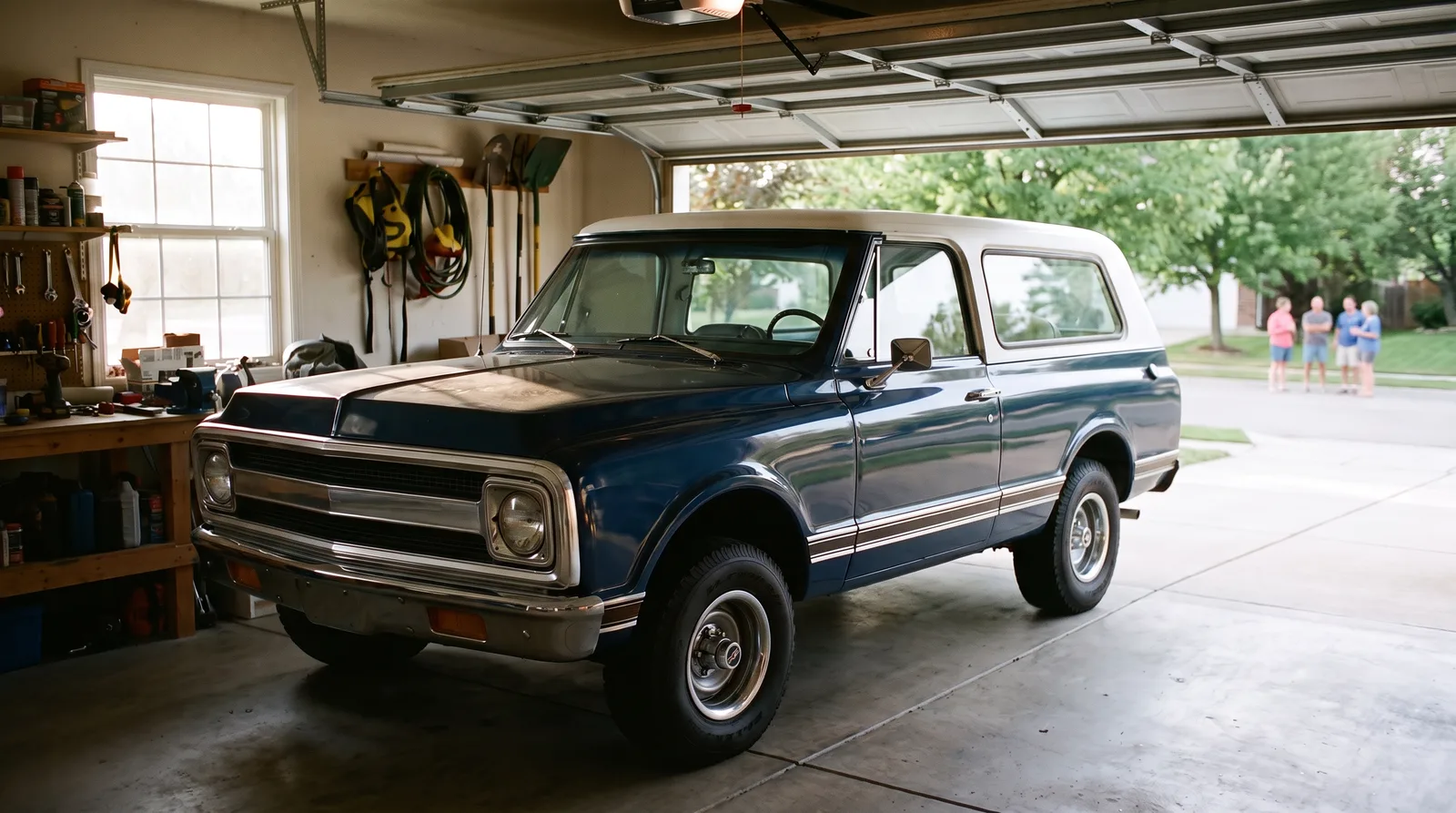
Every genuine 1969 K5 Blazer that survives today shares one trait that has nothing to do with color, engine, or options. It has four-wheel drive. Chevrolet did not offer a two-wheel-drive version of the Blazer during its debut model year, which means the K5 Blazer 1969 4x4 only status is not a footnote in the truck's history. It is a defining fact about the launch, and understanding why Chevrolet made that choice explains a great deal about how the company saw its new truck fitting into the market.
Car Features
7 min read
The 1969 K5 Blazer Was 4x4 Only, and Why
The K5 Blazer 1969 4x4 only launch was a deliberate strategy, not a limitation, and it remains one of the clearest ways to verify a genuine first-year truck.
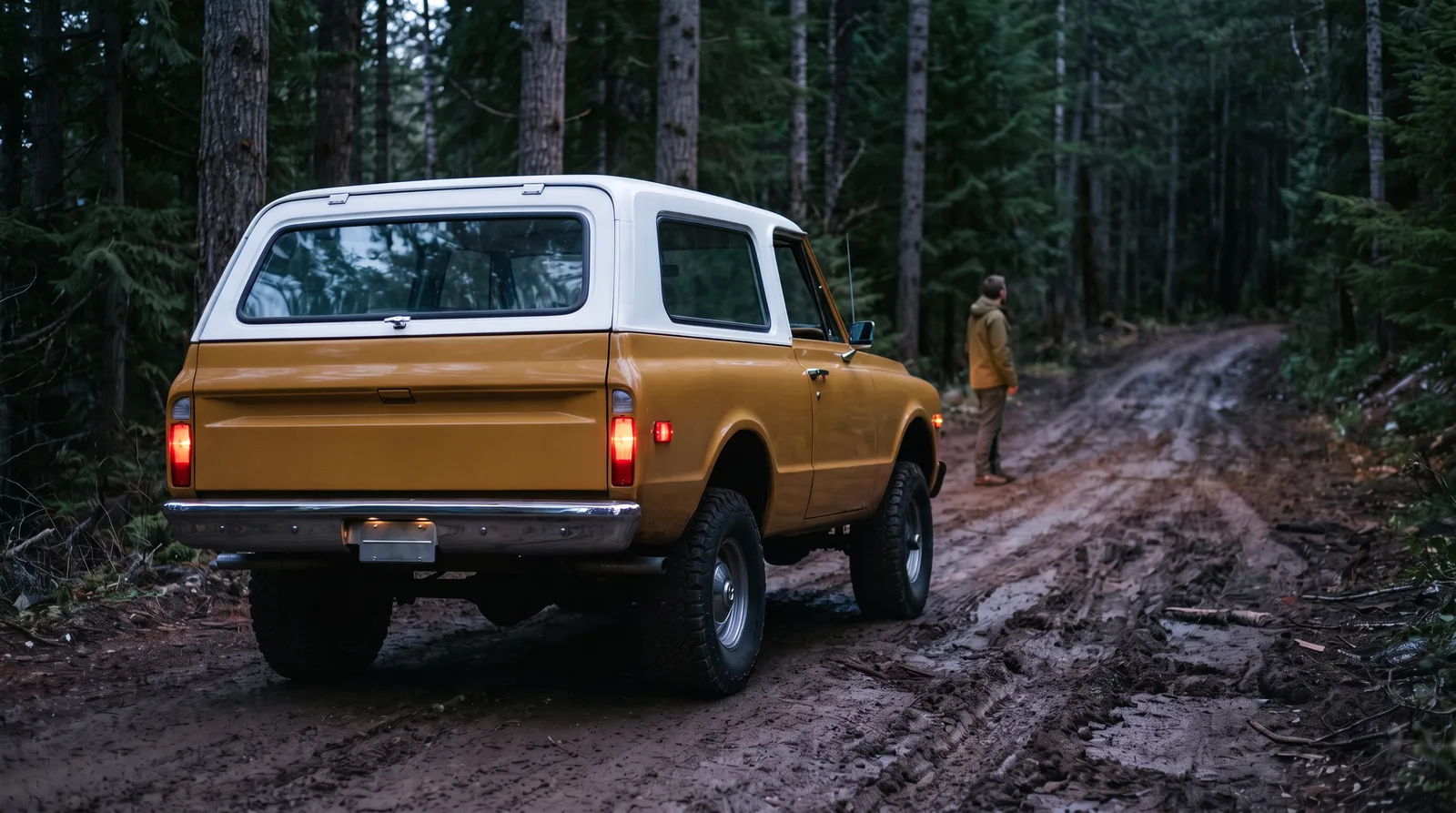
A launch built around a specific buyer
When Chevrolet designed the K5 Blazer to compete with the International Harvester Scout and the Ford Bronco, the target buyer was clear. These were customers who wanted genuine off-road capability, not just the visual styling that off-road vehicles carried. Ranchers, hunters, contractors working remote sites, and rural families who dealt with unpaved roads and difficult terrain made up the core of that market, and for those buyers, two-wheel drive simply was not a serious option. Building the Blazer exclusively as a four-wheel-drive vehicle for its first model year let Chevrolet speak directly to that audience without diluting the message with a lower-capability trim aimed at buyers who were not the primary target.
There was also a practical manufacturing logic at work. Launching a brand-new model with a single drivetrain configuration simplified the initial production run considerably. Chevrolet could focus its early build process on one core specification rather than managing the added complexity of two distinct drivetrain layouts from day one, at exactly the moment when getting the new model onto dealer lots quickly mattered most competitively.
What this meant for the truck's early reputation
Launching as a four-wheel-drive-only model reinforced the K5 Blazer's positioning from the very first day it reached dealers. This was not a truck trying to be all things to all buyers. It was a truck built specifically for people who needed serious capability, and that focus helped the Blazer establish credibility quickly among exactly the customers Chevrolet needed to win over to compete with the Scout and Bronco. A watered-down two-wheel-drive option in that first year could have muddied that message before the truck had a chance to prove itself against its more established rivals.
That reputation mattered because both the Scout and the Bronco already had loyal followings by 1969. Chevrolet needed the Blazer's debut to make an unambiguous statement about capability, and restricting the launch to four-wheel drive was part of how the company made that statement land.
"People sometimes assume Chevrolet just had not gotten around to building a two-wheel-drive version yet in 1969. That is backwards. The 4x4-only launch was deliberate. It told buyers exactly what this truck was for, and it kept the Blazer from looking like a diluted answer to the Scout and Bronco."
- Sarah Whitfield
How the two-wheel-drive expansion changed the lineup
When Chevrolet introduced a two-wheel-drive K5 Blazer for the 1970 model year, it was not simply adding a cheaper option to an existing truck. It represented a broadening of who Chevrolet believed the Blazer could appeal to. The four-wheel-drive-only launch had proven the core concept worked with the off-road-focused buyers Chevrolet targeted first, and the two-wheel-drive option that followed opened the door to buyers who wanted the Blazer's styling, versatility, and open-top format without necessarily needing serious off-road capability. That expansion helped grow overall Blazer sales considerably through the early 1970s, but it also means the 1969 model stands apart from every K5 Blazer that came after it as the only model year built exclusively for the hardcore end of that buyer base.
Collectors and enthusiasts sometimes debate whether the 4x4-only launch year or the broader, better-equipped early 1970s trucks represent the more desirable version of the first-generation Blazer. There is no single correct answer. A 1969 model offers unmatched historical significance as the truck that started it all, while a 1971 or 1972 example often comes with a richer factory options list and, in many cases, better parts availability today given the slightly longer production run those model years benefited from.
Why the distinction still matters to buyers today
For anyone researching or shopping a 1969 K5 Blazer today, the four-wheel-drive-only fact carries practical weight beyond trivia. It is a quick authenticity check. A vehicle titled or advertised as a 1969 K5 Blazer with two-wheel drive is either misidentified, has had drivetrain components swapped at some point in its history, or the paperwork is simply wrong about the model year. Buyers who know this detail can spot a listing error or a misrepresented truck immediately, before spending time or money chasing a truck that does not match its claimed history.
This detail also connects to the broader story of the Blazer's debut. Readers who want more on the 1969 k5 blazer should look at the full account of the launch year, which covers how this drivetrain decision fit into Chevrolet's overall strategy for entering the segment. And for anyone tracing the model's history from the very beginning of the broader K5 Blazer story, it is worth reading where this started to see how the four-wheel-drive launch set the tone for everything that followed across more than two decades of production.
The bigger picture behind a one-year-only rule
The 4x4-only rule lasted exactly one model year before Chevrolet expanded the lineup, but its short duration does not diminish its significance. It was the decision that let Chevrolet introduce the K5 Blazer with maximum credibility against established competitors, and it remains one of the clearest, most easily verified facts separating a genuine 1969 model from a later K5 Blazer wearing similar styling. Once the two-wheel-drive option arrived for 1970, the Blazer lineup broadened considerably, but that first year stayed defined by a single, deliberate choice.
Buyers hunting for a truck from this specific era, whether a genuine 4x4-only 1969 original or a later model with a broader range of configurations, will find classic K5 Blazers on the market worth comparing directly against what that debut year actually offered.
What this means when comparing trucks side by side
Buyers weighing a genuine 1969 model against a slightly later K5 Blazer should factor the 4x4-only status into how they think about value, not just history. A documented 1969 truck carries a kind of significance that later, more heavily optioned trucks simply cannot replicate, regardless of how well equipped those later trucks might be. At the same time, a 1970 or 1971 model with the broader options list that followed the initial launch year can offer a more comfortable, more usable truck for buyers who care more about drivability than about owning the very first configuration Chevrolet built. Neither choice is wrong, but understanding what the 4x4-only detail actually represents helps a buyer make that decision with full information rather than guessing at why one truck costs more than an outwardly similar one.
A small fact with outsized importance
The K5 Blazer 1969 4x4 only detail might look like a minor footnote next to bigger stories about engines, body styles, and production numbers, but it is one of the clearest signals of what Chevrolet was trying to accomplish with the Blazer's launch. The company built a truck for a specific kind of buyer and refused to dilute that message in the first model year, and that discipline helped the K5 Blazer establish itself quickly against two competitors that already had a head start.
Sources and notes
Related Reading
Have a
Chevrolet Blazer
for Sale?
Reach thousands of serious classic car collectors across the US.
Sell It Here →
Selling a classic? Here's how: compare the places to sell classic cars
Are You a Classic Car Dealer?
List your full inventory and connect with targeted classic car buyers.
Join as a Dealer →

About the author
Sarah Whitfield
Third-generation classic car collector specializing in pre-war American and European coachbuilt automobiles. Researcher and concours enthusiast.
Related Listings - Chevrolet Blazer
Comments
Be the first to comment on this article.