
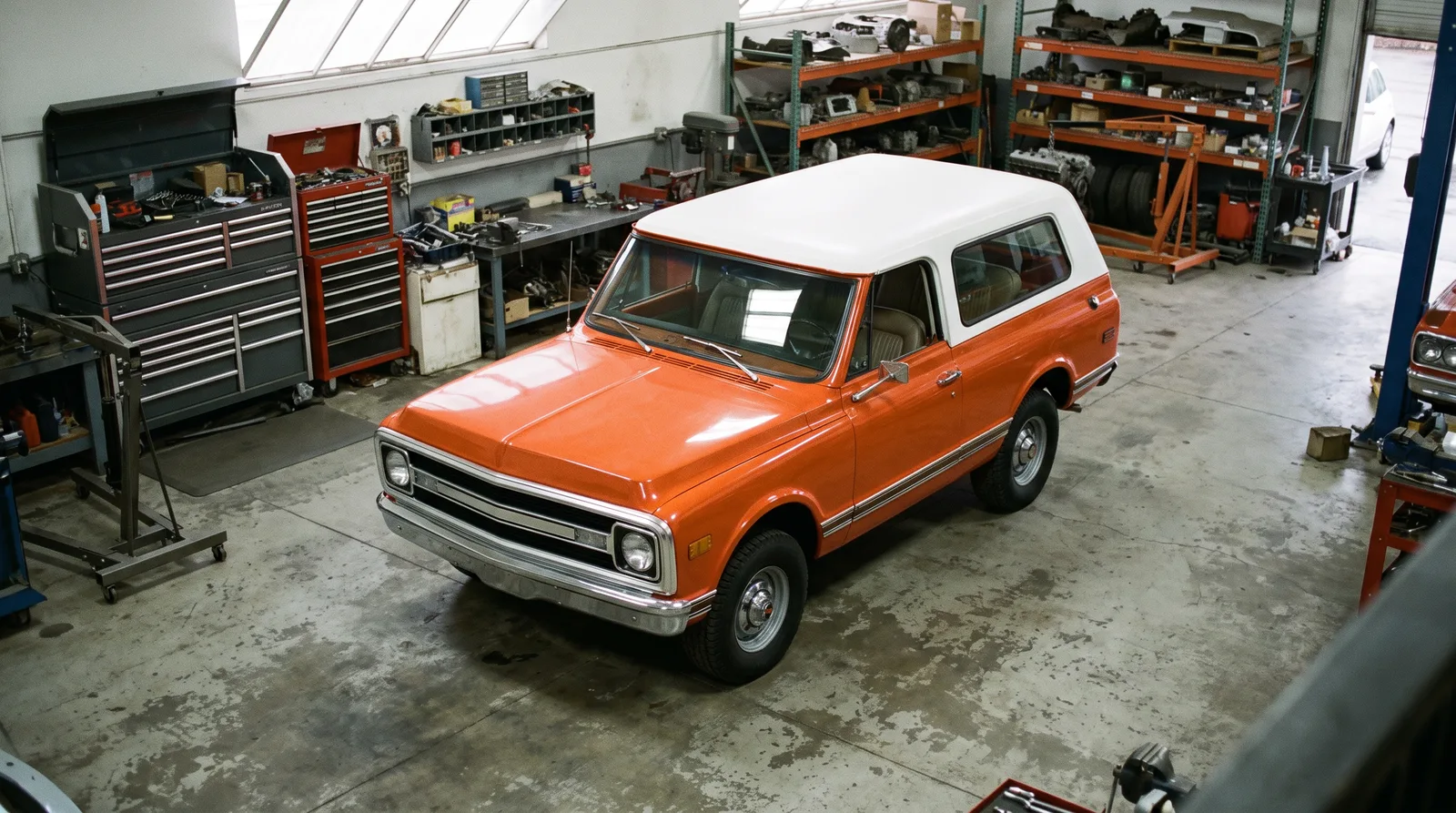
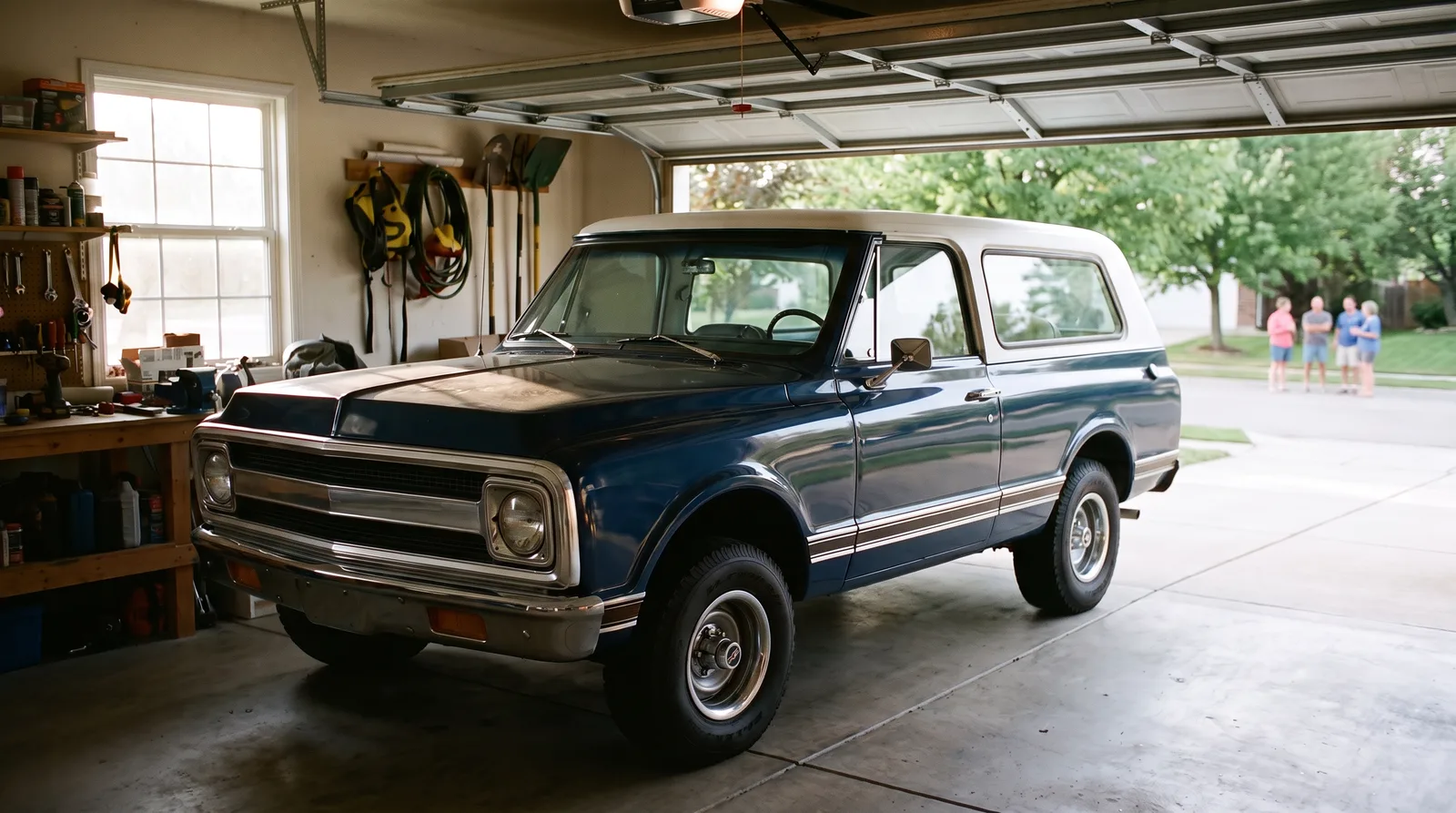
I have pulled a lot of tops off a lot of trucks over the years, and the 1969 K5 Blazer is still one of the ones that makes people stop and stare when it comes off clean. The K5 Blazer 1969 convertible top, that removable fiberglass roof running from the windshield header back over the cab and cargo area, is the single feature that turned a shortened pickup into something nobody else on the road was building. Take it off and you have a full-size open truck. Put it back on and it is a hard-top daily driver. That flexibility is not a gimmick. It is why this truck matters.
Car Features
6 min read
The 1969 K5 and Its Full Open-Air Top
The K5 Blazer 1969 convertible top turned a shortened pickup into an open-air truck, and getting the fit right today takes more than admiring the fiberglass.
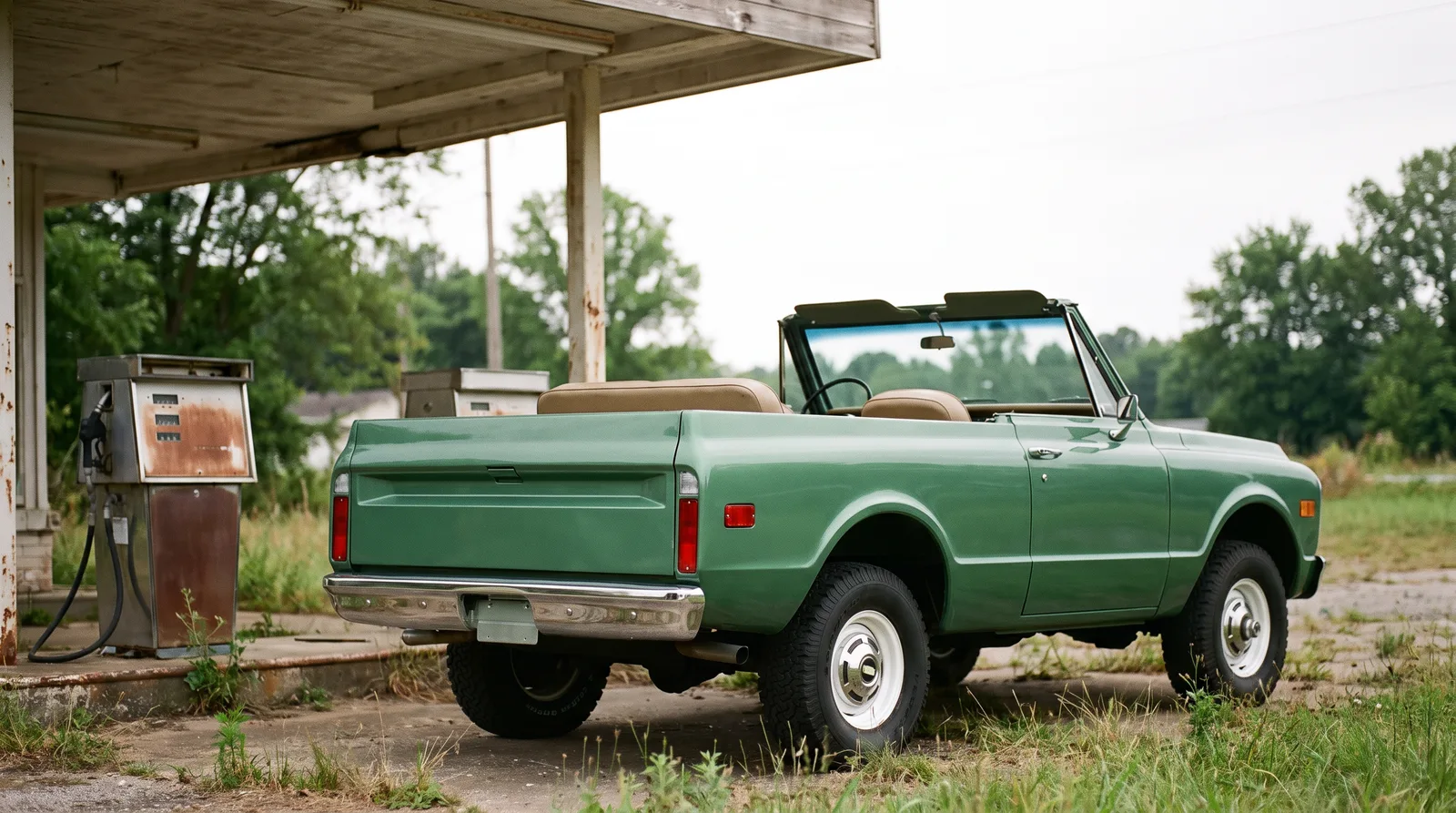
How the top actually worked
The 1969 Blazer's roof was designed to lift off as a single piece, unbolted from the cab structure and removed with help, since a fiberglass top of that size is not a one-person job on your own with factory hardware. Once it was off, the truck was open from the windshield frame all the way back, giving it a look and feel closer to a Jeep than a standard Chevrolet pickup. That was the whole point. Chevrolet wanted buyers cross-shopping the Scout and the Bronco to see something the standard truck lineup could not offer, and a full-size truck that could shed its roof entirely delivered that in a way nothing else on a Chevy lot could match.
From a builder's perspective, working on an original top today means dealing with fifty-plus-year-old fiberglass, latch hardware, and weatherstripping that has usually seen better decades. Fit and seal quality on these tops was never perfect even when new, and time has not been kind to the gaskets and mounting points. A top that goes on and off smoothly today, with good weather sealing and solid latch hardware, is the product of real attention, whether that means careful preservation of original parts or thoughtful correct-style replacement.
Why builders still chase these trucks specifically
Trucks from 1969 through 1972 all share this removable-top design, and the removable top actually carried over into the early squarebody generation before Chevrolet switched to a fixed half-cab roof for 1976. Among builders, the 1969 model carries a particular draw because it is the truck that started the whole format, and originality matters to a certain type of buyer who wants the first version of the idea, not a later refinement of it. That said, working on a genuine 1969 example means working with the earliest version of the top hardware, before Chevrolet made running changes in subsequent model years, which can complicate parts sourcing if a builder is trying to keep things period-correct rather than just functional.
Anyone doing bodywork on one of these trucks needs to pay close attention to how the top interfaces with the cab structure. Rust and stress cracking around the mounting points is common after decades of the top going on and off, or worse, sitting on a truck that spent years outdoors with a compromised seal letting water in where it should not have gotten. A top that looks good sitting on a shelf can still hide problems where it actually meets the cab, and that is exactly the kind of thing that only shows up once you have the truck stripped down and are looking at bare metal.
"The top is the easy part to romanticize. The hard part is what is underneath it after fifty years of that roof coming on and off, sometimes by people who were not careful about it. You fix the structure first. The top is just the thing everybody notices."
- Jim Vasquez
Storage and handling considerations most owners never think about
Removing the top on a 1969 K5 Blazer is not a casual afternoon task the way it might be on a smaller vehicle. The fiberglass roof is heavy and awkward, and factory documentation from the era generally assumed two people handling the removal and installation process together rather than one person working alone. Owners who plan to actually use their Blazer as an open-air truck on a regular basis need somewhere to store the top when it is off, ideally on a proper stand or rack that supports it evenly and keeps it from developing stress cracks from being set down unevenly on a garage floor or leaned against a wall at an awkward angle.
I have seen more cracked and warped tops caused by bad storage than by actual driving damage. A top that sits improperly supported for even a single season can develop issues that show up as fitment problems the next time someone tries to reinstall it, and by then it is not always obvious that storage, rather than the hardware itself, caused the trouble. Anyone taking on one of these trucks should plan for proper top storage from the start, not as an afterthought once the truck is already on the road.
What a correct top setup should look like
A properly fitted removable top on a 1969 K5 Blazer should seal evenly along the cab, latch without forcing anything, and show consistent gaps around the perimeter. Uneven gaps usually point to either cab structure that has shifted over the decades or a top that was repaired or replaced with parts that were not a precise match. Neither of those things is a dealbreaker on a truck being built rather than concours-restored, but they are things a builder needs to know about going in, because fixing top fitment after the fact is a lot more work than getting the structure right before final paint and reassembly.
For anyone digging into the broader history of why this feature existed in the first place, it is worth reading where this started, since the removable top was central to the whole reasoning behind the Blazer's launch and not just a styling flourish added after the fact.
Buyers hunting for a truck with a solid top and sound structure underneath it should expect to look at more than a few examples before finding one worth committing to, and there is usually a decent selection if you know where to look for a classic K5 Blazer for sale with the removable top still fitting the way it should.
The feature that made the whole truck
Take the top off a 1969 K5 Blazer and it is easy to see why this feature defined the entire first generation of the model. It is not just a styling choice. It is the thing that separated this truck from every other full-size Chevrolet on the lot, and it is why builders and restorers still put real effort into getting the fit and finish right decades later. Get the structure underneath correct, and the top itself is the reward for doing the harder work first.
Sources and notes
Related Reading
Have a
Chevrolet Blazer
for Sale?
Reach thousands of serious classic car collectors across the US.
Sell It Here →
Selling a classic? Here's how: where to sell your classic car online
Are You a Classic Car Dealer?
List your full inventory and connect with targeted classic car buyers.
Join as a Dealer →

About the author
Jim Vasquez
Southern California hot rod and custom car builder with roots in the traditional kustom kulture scene.
Related Listings - Chevrolet Blazer
Comments
Be the first to comment on this article.