
A man in Ohio still keeps the brochure his father brought home in the fall of 1980, the one advertising the reworked 1981 Chevrolet trucks with a grille that looked, to a ten-year-old, like the old truck had simply put on a new pair of glasses. That small memory is the k5 blazer squarebody 1981 facelift in miniature: not a redesign, not a new generation, just a truck the family already loved wearing a slightly different face into a new decade.
Car Features
6 min read
The 1981 Squarebody Facelift and Fresh Face
The 1981 model year brought a quiet grille update to the squarebody K5 Blazer, a small change that meant a lot to the families who already loved the truck.
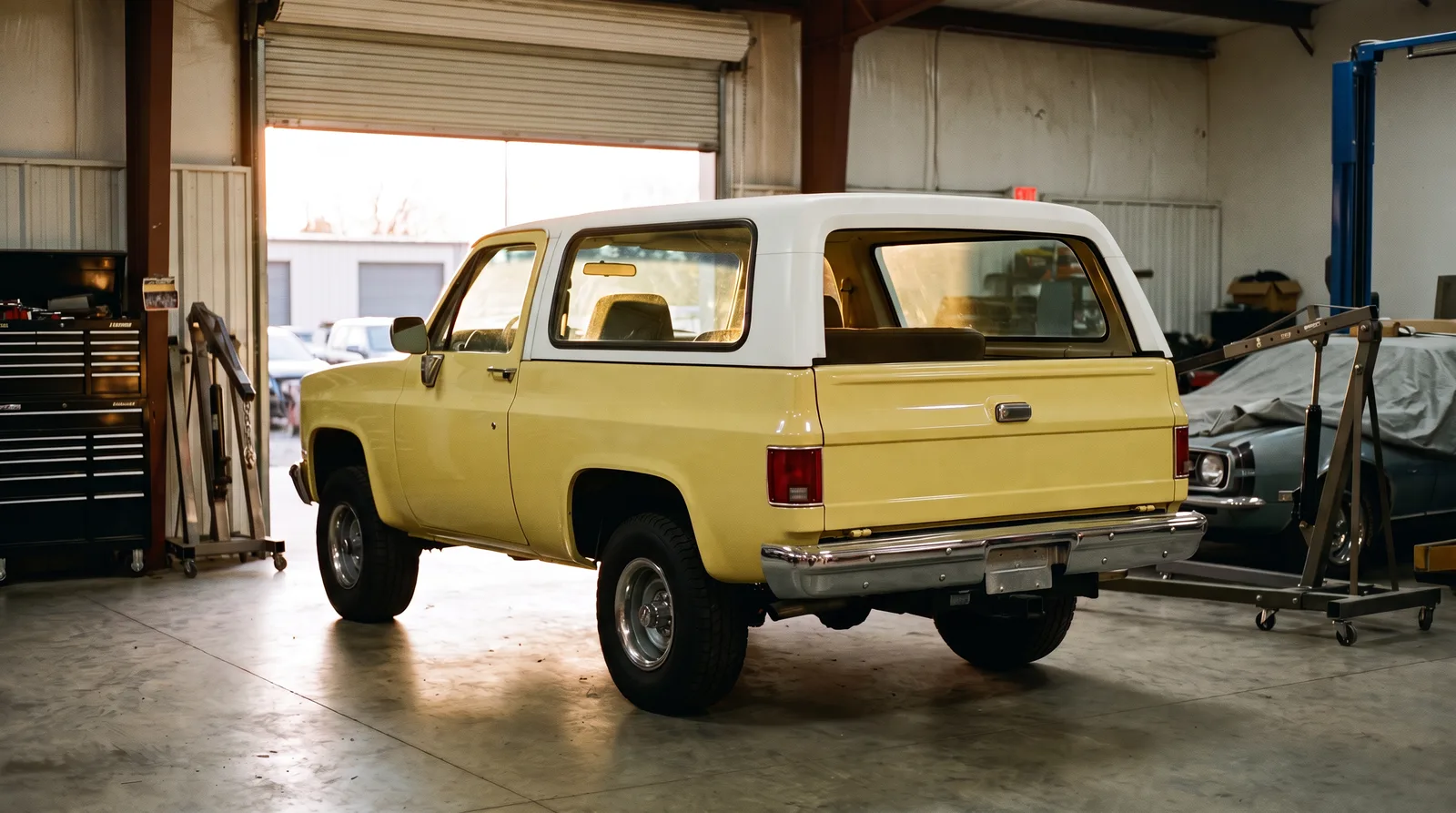
What actually changed for 1981
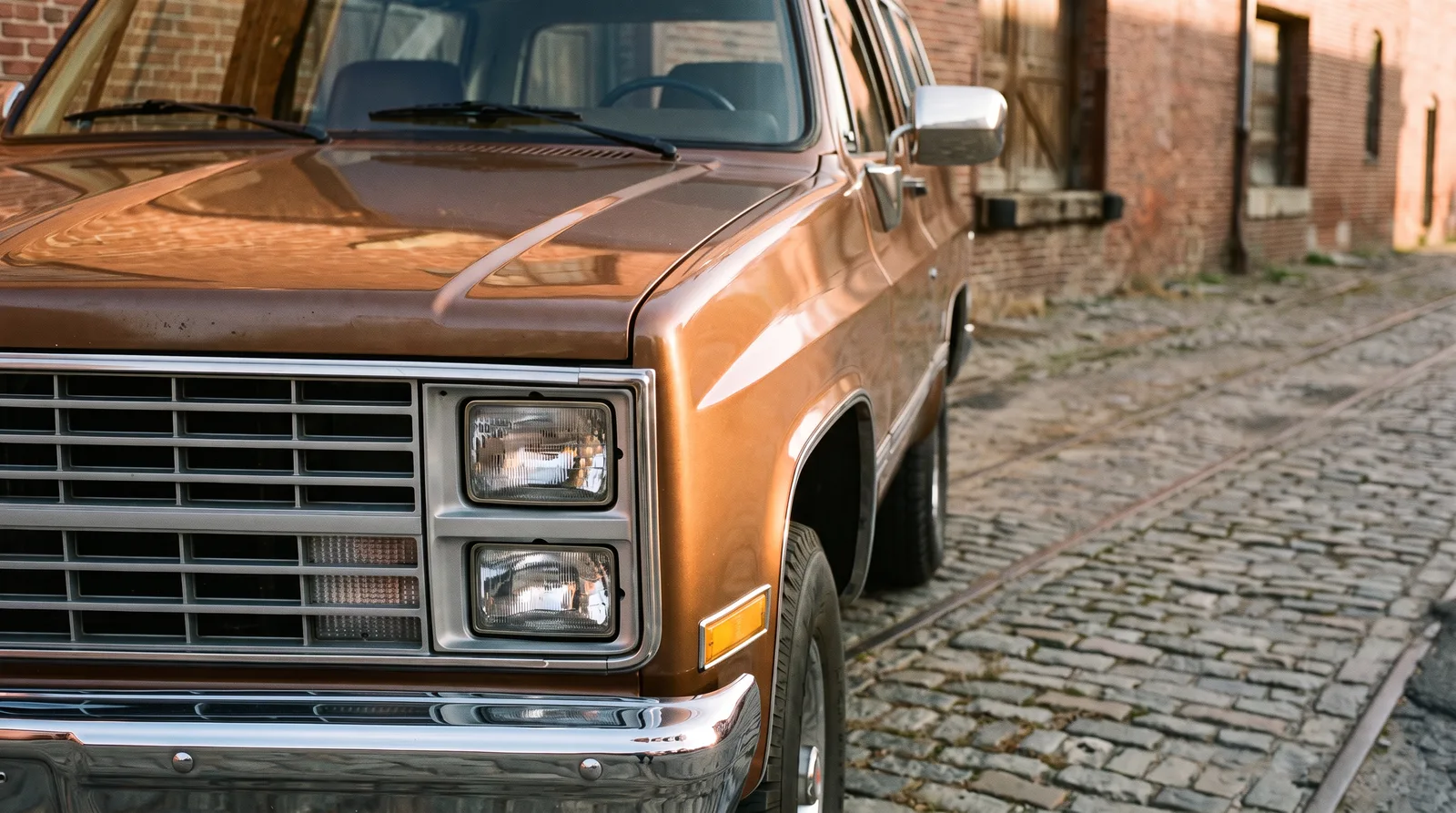
The 1981 model year brought a mild front-end update to Chevrolet's C/K trucks and the K5 Blazer that rode on the same platform. The grille texture and surrounding trim were revised, giving the truck a cleaner, more finished look up front than the earlier 1970s design. The 1981 model year also brought a mechanical update of real substance: GM introduced shift-on-the-fly four-wheel drive to the lineup, letting drivers engage 4WD without stopping to lock hubs. It was not the kind of change that stopped traffic at the time. It was the kind of change longtime GM truck buyers noticed instantly, because they had been staring at the previous grille for the better part of a decade and knew the difference in the width of a headlight bezel without needing to be told.
Underneath the new face, the mechanical story of 1981 was more about refinement than revolution. The engine lineup carried over largely intact from the late 1970s, though GM continued tightening emissions calibrations year over year, a quiet but constant background process that shaped every model year of this era regardless of what the sheet metal was doing.
Why a facelift year matters to people who were not car enthusiasts
Most of the households that bought a 1981 K5 Blazer were not chasing a model-year distinction. They wanted a truck that could pull a boat, handle a Midwest winter, and get a family of five to a lake house without complaint. The facelift mattered to them the way a new coat of paint on a familiar porch matters: it signaled the truck was still current, still being built with attention, without asking the owner to relearn anything about how it drove or where the controls sat.
That quiet continuity is part of what made the squarebody Blazer a fixture in so many driveways through the 1980s. Buyers were not choosing between wildly different trucks year to year. They were choosing a truck that stayed recognizably itself while GM sanded down its rough edges one model year at a time, and 1981 is one of the clearest examples of that steady, unglamorous process at work.
The broader context: what else was happening in the industry
1981 sat at an interesting crossroads for the American auto industry. Fuel prices from the tail end of the 1970s energy crisis were still fresh in buyers' minds, and automakers across the board were under pressure to improve efficiency without abandoning the trucks and SUVs that customers actually wanted to buy. GM's approach with the K5 Blazer during these years was incremental rather than dramatic: smaller compression changes, minor carburetor recalibrations, and styling refreshes like the 1981 grille, rather than any wholesale redesign. That incremental approach kept the truck familiar to existing owners while still allowing the lineup to feel current on dealer lots each fall.
It is worth remembering that a facelift year rarely exists in isolation from the broader product strategy around it. The 1981 update came one year ahead of GM's introduction of the 6.2 liter diesel V8, and alongside refined emissions equipment that had been added piecemeal through the previous several years. Viewed together, 1981 reads less like a single cosmetic change and more like a checkpoint in a long, steady process of keeping an aging platform commercially viable without the expense of a full redesign.
How the facelift shows up in family memory versus spec sheets
Spec sheets record the 1981 update as a grille and trim revision. Family memory records it differently, often as simply "the newer Blazer" compared to whatever the household had before, regardless of how minor the actual mechanical differences were. That gap between the documented change and the remembered change is common across automotive history, but it is especially pronounced in a truck like the K5 Blazer, which so often stayed in a single family for a decade or more, quietly becoming a fixture rather than a purchase decision anyone revisited.
For buyers and researchers trying to pin down an exact model year today, that gap between memory and documentation is exactly why paperwork matters more than recollection, however sincere the recollection might be.
Finding a 1981 today, and why it can be tricky
Identifying a genuine 1981 model year Blazer on the used market takes more than looking at the grille, since parts swapping over four decades means a later grille can end up on an earlier truck and vice versa. The reliable way to confirm the model year is the VIN and any surviving factory documentation, window sticker, or dealer paperwork, rather than trusting the front clip alone. For buyers who care specifically about the transition-year look, that verification step is worth the extra effort, because a facelift-year truck sold as such without proof is really just a truck of unknown year wearing a popular face.
A truck built for continuity, not headlines
There is a version of automotive history that only remembers the years with a new platform, a new nameplate, or a new engine that changed everything. The 1981 K5 Blazer belongs to the quieter version of that history, the one where a truck simply kept doing its job while its maker made small, sensible improvements around it. For the families who bought one, that continuity was the entire appeal. They were not buying a statement. They were buying the truck their neighbor already had, in a slightly newer shape.
"Nobody tells stories about the year their truck's grille changed. But ask them what year their family's Blazer was, and half the time the answer is tangled up with exactly that kind of small, forgettable detail that turned out to matter."
- Nora Beckett
Where the 1981 fits in the longer story
The 1981 facelift is a single chapter inside a much longer narrative, one that stretches from the K5's 1969 debut through the final squarebody trucks of 1991. Readers who want the fuller arc, including how the platform evolved through the 1970s and into its final decade, can find the square body blazer story covered in depth elsewhere on this site, and the broader history of the nameplate from its earliest removable-top days is told in the full story of the K5 Blazer overall.
And for anyone who has read this far and started wondering whether a squarebody Blazer, 1981 or otherwise, might belong in their own driveway, there are classic K5 Blazers on the market right now, still carrying that same steady, unbothered character forward, one small update at a time.
Sources and notes
Related Reading
Have a
Chevrolet Blazer
for Sale?
Reach thousands of serious classic car collectors across the US.
Sell It Here →
Selling a classic? Here's how: where to sell your classic car online
Are You a Classic Car Dealer?
List your full inventory and connect with targeted classic car buyers.
Join as a Dealer →

About the author
Nora Beckett
Automotive features writer and photographer who tells the human stories behind the cars, from show fields to cross-country road trips.
Related Listings - Chevrolet Blazer
Comments (1)
A
Al W.
3 days ago
Have to disagree some. We noticed that '81 grille right away in Flint and argued about it over beers for weeks.
B
Buddy
3 days ago
Swapped plenty of '81 grilles onto older trucks back then. Folks wanted the new face.