
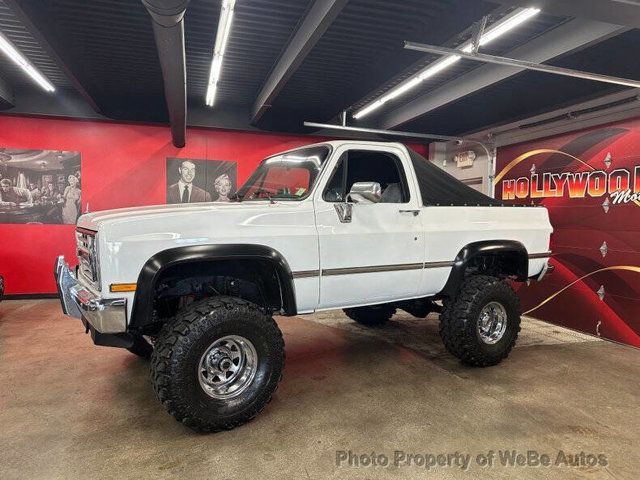
Ask ten squarebody guys what the Cheyenne badge actually means and you will get ten slightly different answers, and honestly, most of them will be at least partly right. The Cheyenne trim ran across the K5 Blazer squarebody era from 1973 through the end of production in 1991, and it did not stay still the whole time. It moved around the lineup, got a Super variant, lost the Super variant, and eventually settled into a role that was less about being the top-of-the-line truck and more about being the well-equipped middle option once trims like Silverado climbed above it. If you are trying to figure out what a "Cheyenne" badge on a specific K5 Blazer actually tells you about the truck, the answer depends entirely on which year you are looking at.
The Cheyenne Trim Across the Squarebody Years
How the Cheyenne badge moved from top trim to strong mid-level option across eighteen years of squarebody production, and how to verify one.
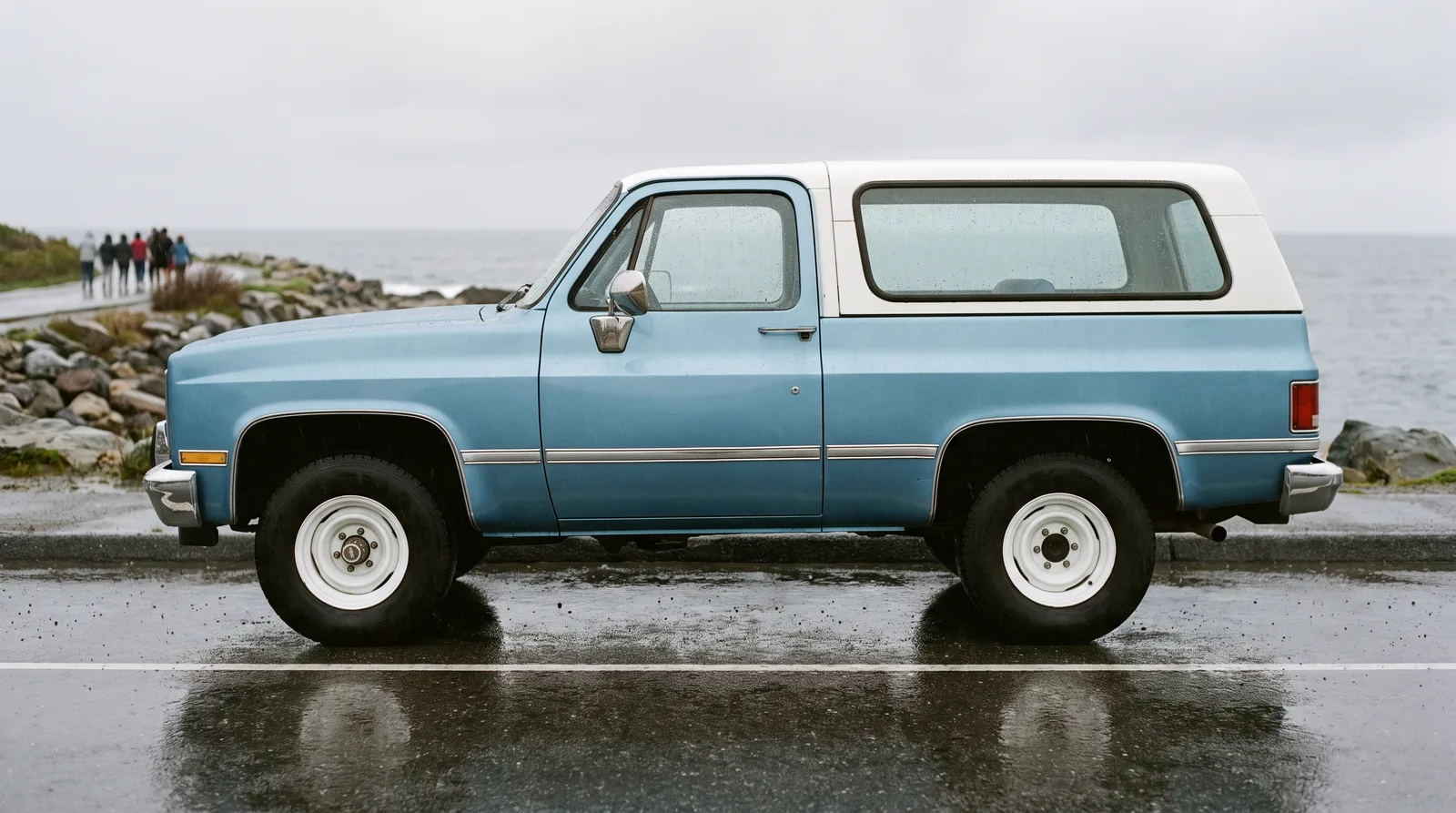
Where Cheyenne started in the trim lineup
When the squarebody generation launched in 1973, Cheyenne sat as an upper trim level above the base and Custom Deluxe designations, bringing better interior trim, extra chrome, and upgraded upholstery over a work-spec truck. For the first several years of the run, Cheyenne and Cheyenne Super were both available, with the Super version adding even more brightwork and interior comfort. I have pulled interiors out of both versions and the difference is not subtle once you are actually inside the cab. A base truck has rubber floor mats and a bench seat that means business. A Cheyenne Super from the same model year can have carpet, better door panels, and trim pieces that a work truck buyer would have considered an unnecessary expense in 1974.
That gap matters for anyone shopping today, because a Cheyenne Super interior is genuinely nicer to restore and live with than a stripped base truck, and the parts to do it right are not always easy to find fifty years later.
How the badge shifted through the late 1970s and into the 1980s
By the time Chevrolet introduced the Silverado trim as a new top-tier option, Cheyenne's position in the lineup moved down a notch, from flagship trim to a strong mid-level package. This is where I see the most confusion among buyers who assume Cheyenne always meant the same thing. A late-1970s or early-1980s Cheyenne is not necessarily less equipped than an earlier Cheyenne Super, it is just positioned differently within a lineup that had grown more layers above it. The badge kept getting used because it had brand recognition, even as its actual place in the hierarchy shifted underneath it.
Through the 1980s, Cheyenne remained a consistent, well-regarded option, generally splitting the difference between a stripped work truck and the top Silverado package on chrome, interior trim, and standard equipment. For a lot of buyers then and now, that middle position is exactly the sweet spot, enough comfort and trim to make the truck pleasant, without the premium price a top trim commanded new or commands today in the collector market.
Model-year quirks worth knowing
Small details shifted within the Cheyenne name from one model year to the next, and a lot of that came down to what Chevrolet bundled with the trim rather than the badge itself changing meaning overnight. Steering wheel styles, gauge cluster faces, and even some upholstery patterns moved around across the run, so a Cheyenne interior from an early squarebody year can look meaningfully different from a Cheyenne interior five or six years later, even though both trucks carry the same trim name. I always tell people restoring a specific truck to pin down the exact model year before ordering reproduction parts, because assuming Cheyenne trim looked identical across the whole run is a fast way to end up with the wrong steering wheel or the wrong seat pattern sitting in a otherwise correct truck.
What to actually check on a Cheyenne-badged truck
Here is the practical part, and it is the part I get asked about constantly. Badges get swapped. A "Cheyenne" emblem on a tailgate today does not guarantee the truck was built that way, because trim pieces move between trucks during decades of ownership changes and parts-bin restorations. If Cheyenne trim level actually matters to you, whether for authenticity or resale value, you need to look past the badge. Check the interior trim level against what the factory offered for that model year, look at the door panel style and seat upholstery pattern, and if possible cross-reference against a build sheet or dealer invoice. A correct Cheyenne interior has details that are genuinely difficult and expensive to fake convincingly, which is exactly why they are worth verifying rather than taking on faith.
I have seen plenty of trucks sold as Cheyenne Super that turned out to be a base interior with a swapped emblem and some added chrome. It is not usually dishonest, more often the seller genuinely does not know. But it changes what you should be willing to pay.
"A Cheyenne badge tells you what someone hoped the truck was. The seat pattern and door panels tell you what it actually was."
- Jim Vasquez
Cheyenne on the K5 Blazer versus the pickup line
One detail that trips people up is assuming Cheyenne trim worked identically across every Chevrolet truck wearing the badge, when the Blazer's version had its own quirks tied to the vehicle's shorter wheelbase and different interior layout. A Cheyenne-trim K5 Blazer shares plenty with a Cheyenne-trim pickup from the same model year, the general trim philosophy and much of the badging carried across the lineup, but the specific seat configuration, cargo area finish, and some interior trim pieces were unique to the Blazer body style. Anyone using pickup trim references to evaluate a Blazer's originality should be careful about assuming a direct match, because a detail that is correct on a pickup is not automatically correct on a Blazer from the same year.
This matters most for buyers doing serious restoration research rather than casual shoppers, but it is worth knowing even for someone who just wants a nice driver. A seller who confidently quotes pickup-specific trim details as though they apply directly to a Blazer may simply not know the difference, which is worth keeping in mind during any negotiation.
Cheyenne in the bigger squarebody picture
Understanding where Cheyenne sits requires understanding the trim structure around it, which shifted more than most casual buyers realize across eighteen years of production. Anyone new to this generation should read the background on the squarebody era as a whole before getting deep into individual trim levels, since the context changes how you should read a Cheyenne badge from any given year. Once you have that grounding, the article on the Silverado trim is worth a look too, since Silverado's arrival is what pushed Cheyenne into the middle of the lineup in the first place. For anyone ready to start comparing actual trucks, you can shop classic K5 Blazer listings and start checking those interior details for yourself.
Sources and notes
Related Reading


Southern California hot rod and custom car builder with roots in the traditional kustom kulture scene.
Related Listings - Chevrolet Blazer
Comments
Be the first to comment on this article.