
Eighteen years is a long time for one body style to stay in production, and the squarebody K5 Blazer era, running from 1973 through the final trucks built in 1991, is proof that Chevrolet got the basic shape right the first time and then spent nearly two decades refining it instead of replacing it. I have had my hands inside more squarebody Blazers than I can count at this point, cutting out rust, chasing wiring gremlins, and matching panels that were never meant to line up perfectly to begin with. The era gets talked about like it is one truck. It is not. It is at least three distinct trucks wearing the same basic silhouette, and knowing which one you are looking at changes everything about how you should approach it.
Car Features
7 min read
The Squarebody K5 Blazer Era 1973 to 1991
A builder's breakdown of the three distinct windows inside the eighteen-year squarebody K5 Blazer run, and what actually changed in each.

1973 to 1976: the removable top years
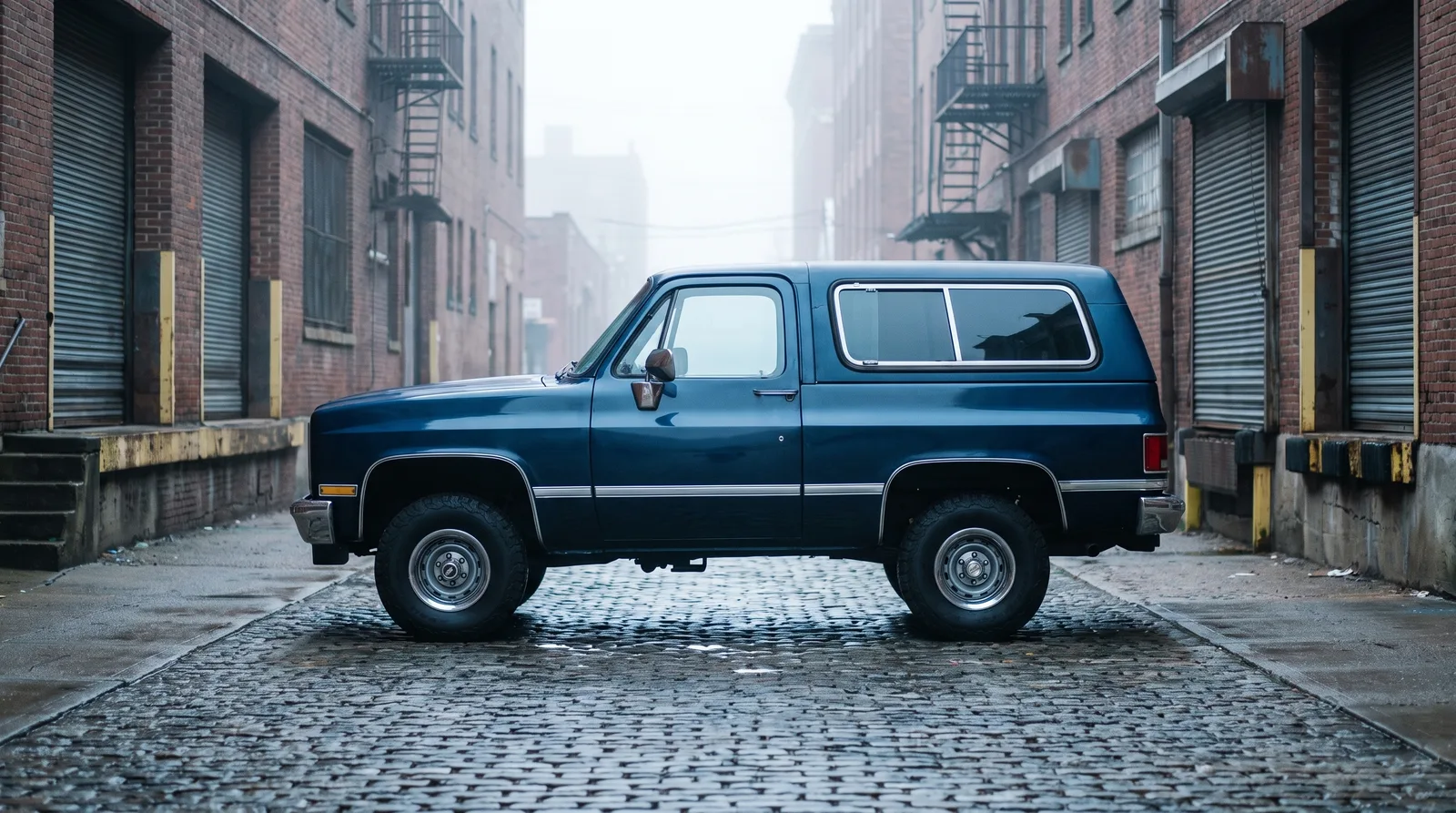
The squarebody K5 Blazer opened with the removable steel hardtop still in place, a holdover from the original 1969-72 Blazer, and it stayed that way through the 1975 model year before Chevrolet moved to a fixed roof for 1976 and beyond. Working on one of these early squarebodies is a different job than working on a later truck. The top seal system needs to actually seal, the bed and cab structure has to hold its shape without a permanently welded roof tying everything together, and any rust in that area is not cosmetic, it is structural. I tell people looking at an early squarebody to check the top seal channel and the cab corners before they fall in love with the paint. That is where the real cost lives.
These early trucks also carry the cleanest version of the original squarebody grille and lighting before Chevrolet started layering on trim changes. A lot of builders specifically hunt this window because the front end reads simpler and, in my opinion, better than what came after.
1976 to 1980: the fixed roof, pre-facelift trucks
Once the roof went fixed, the truck picked up a lot of body rigidity that the removable-top trucks never had, which matters if you plan to actually use the thing rather than trailer it to shows. This window also saw steady mechanical updates under the skin, front disc brakes becoming standard, engine options shifting, and trim packages multiplying as Chevrolet chased more of the market. From a bodywork standpoint, these trucks share enough sheet metal with the 1973-75 trucks that a builder can mix parts across the two windows without much trouble, which is a big reason this stretch of the era is the easiest to source parts for today.
I will say this plainly because I see it get glossed over constantly: a lot of what gets sold as a "correct" 1970s squarebody restoration is actually a parts-bin truck wearing the right badges. Fenders, doors, and tailgates moved around a lot in this hobby over the decades. If someone tells you a truck is fully original from this window, ask to see it before the current owner touched it, not after.
1981 to 1991: the facelift and the final decade
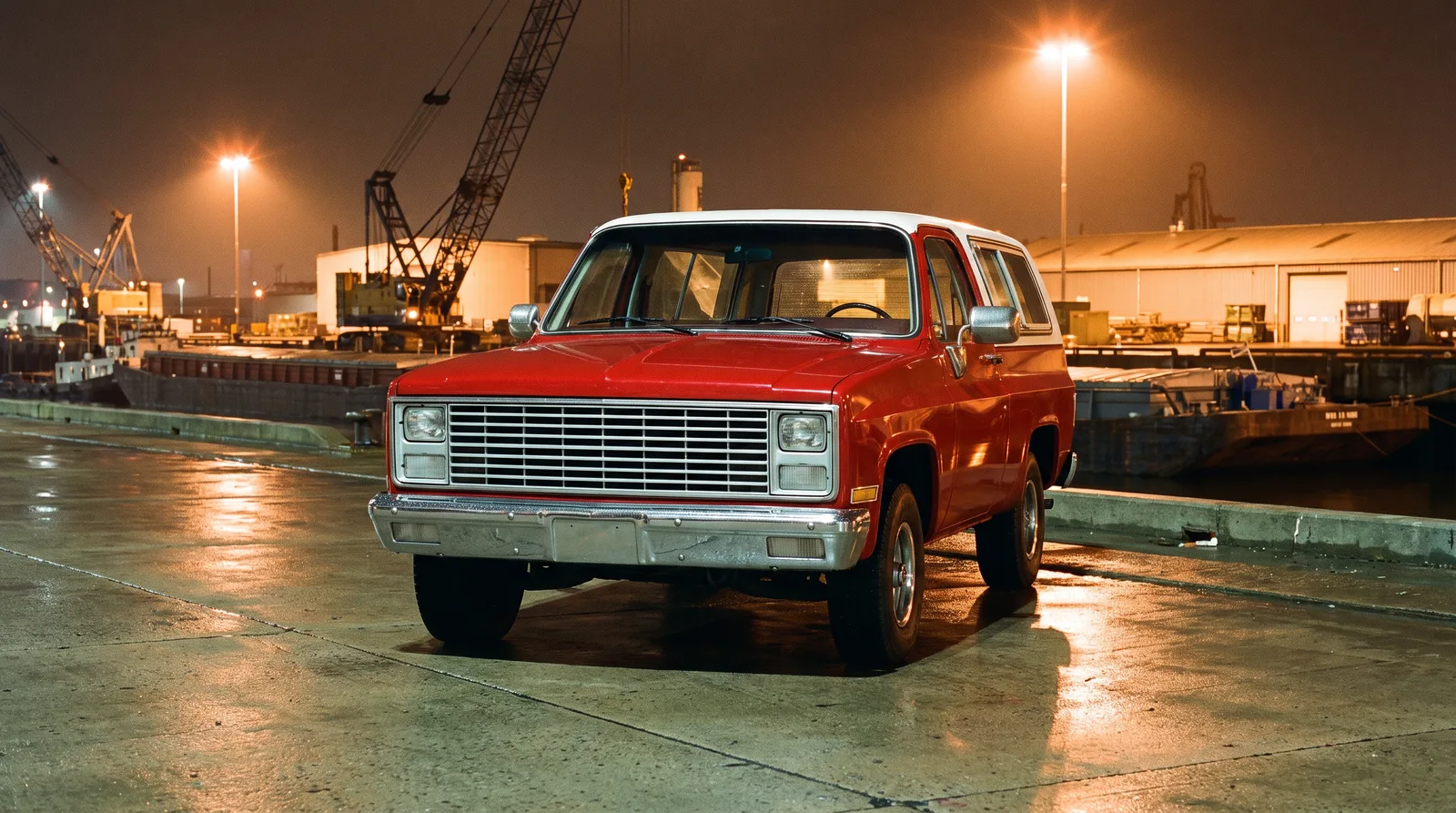
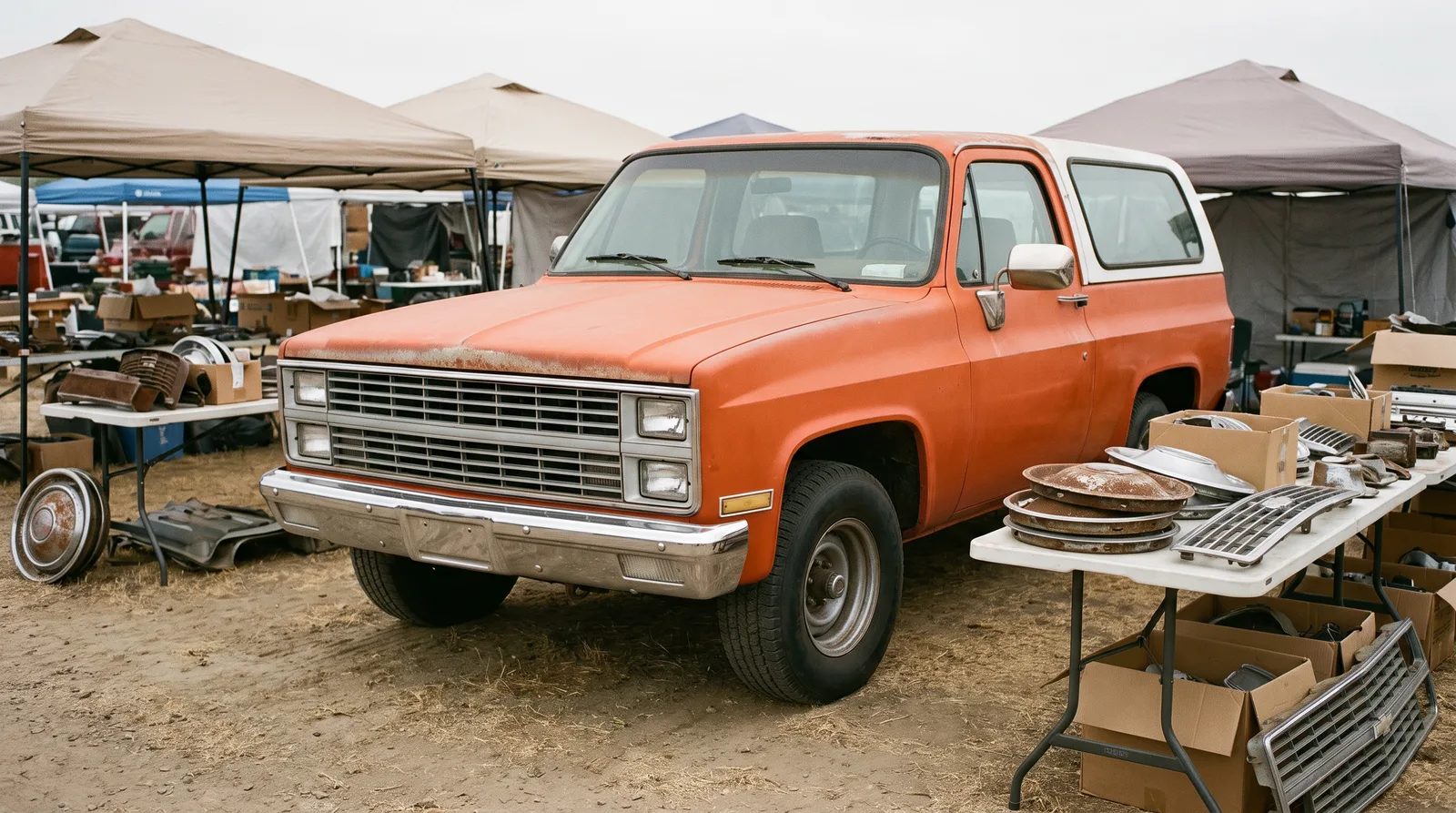
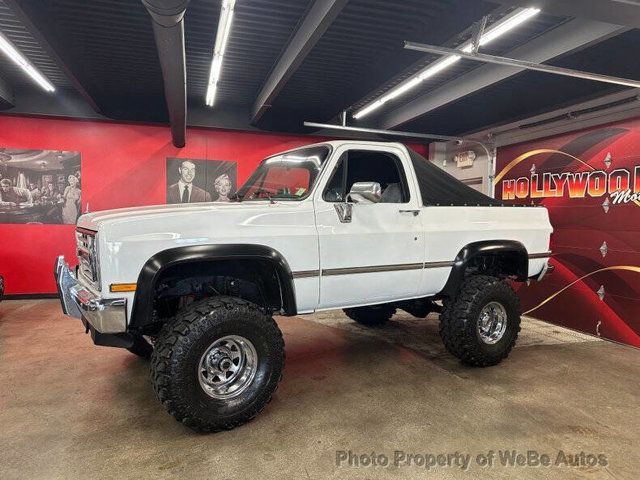
Chevrolet reworked the front end for 1981, squaring off the fenders and updating the grille, and that facelifted look carried the K5 Blazer through the rest of its production run to 1991. This is the longest single stretch of the squarebody era, and it saw the most dramatic mechanical changes, fuel injection eventually replacing carburetors, more refined interiors, and trim packages like Silverado that pushed the truck further upmarket than the early 1970s work-truck image ever suggested. A lot of serious off-road builders gravitate toward this window specifically because the later drivetrains are more capable and more parts-supported than the earlier trucks.
There is a real split in the hobby over which era looks better, and I am not going to pretend that is settled. What I will say is that the 1981-91 trucks get unfairly written off by people chasing the earlier removable-top look, when a clean facelifted Blazer with the right trim is a genuinely handsome truck in its own right.
Drivetrain changes that actually matter to a wrench
Beyond the sheet metal, the mechanical story of these eighteen years is just as important, and honestly it's the part that determines what a truck actually feels like to own day to day. Early squarebodies came with carburetors across the board and comparatively simple electrical systems, which is good news if you like working on your own truck without a computer telling you what's wrong. As the run progressed into the 1980s, Chevrolet introduced fuel injection on later engines, along with more sophisticated emissions equipment, better brakes, and improved axle and transfer case options that made the later trucks noticeably more capable off road out of the box. I generally point serious trail builders toward the later trucks for exactly this reason, the factory already did some of the work a builder would otherwise have to do themselves on an earlier truck.
That said, simplicity has its own value. A carbureted early squarebody is easier to diagnose on the side of the road with basic tools, and that matters to a lot of owners who use these trucks regularly rather than trailering them everywhere. Neither approach is objectively correct. It comes down to whether you value factory capability or mechanical simplicity more, and honest builders will tell you there are good arguments on both sides.
What eighteen years of one platform actually means for buyers
Parts interchangeability across most of the squarebody era is the single biggest reason this generation stayed affordable to build and repair for so long, and it is why the hobby around it is still growing rather than shrinking. But that same interchangeability makes it easy for a truck to end up as a mix of years that no factory order sheet ever produced. Whether that bothers you depends on what you are building. A trail rig does not care what year the door came from. A show truck chasing period accuracy absolutely does, and the buyer needs to know which category they are actually shopping in before they get attached to a specific example.
"People talk about the squarebody like it's one truck for eighteen years. It's not. Check the roof, check the front clip, and figure out which era you're actually standing in front of before you write a check."
- Jim Vasquez
For anyone tracing the full arc of this platform, the square body blazer history lays out the model-year details in more depth, and a related story digs specifically into how the styling choices across these three windows shaped the way the truck is remembered today. If you are actively shopping, there are K5 Blazers for sale now spanning all three eras of the squarebody run, which is as good a place as any to start comparing what each window actually offers.
Sources and notes
Related Reading
Have a
Chevrolet Blazer
for Sale?
Reach thousands of serious classic car collectors across the US.
Sell It Here →
Selling a classic? Here's how: compare the places to sell classic cars
Are You a Classic Car Dealer?
List your full inventory and connect with targeted classic car buyers.
Join as a Dealer →

About the author
Jim Vasquez
Southern California hot rod and custom car builder with roots in the traditional kustom kulture scene.
Related Listings - Chevrolet Blazer
Comments (1)
N
Norm Delgado
6 hours ago
Carnal, the '81 front end looks better than the early grille. Ask anybody at our Sunday cruise night in Albuquerque.