
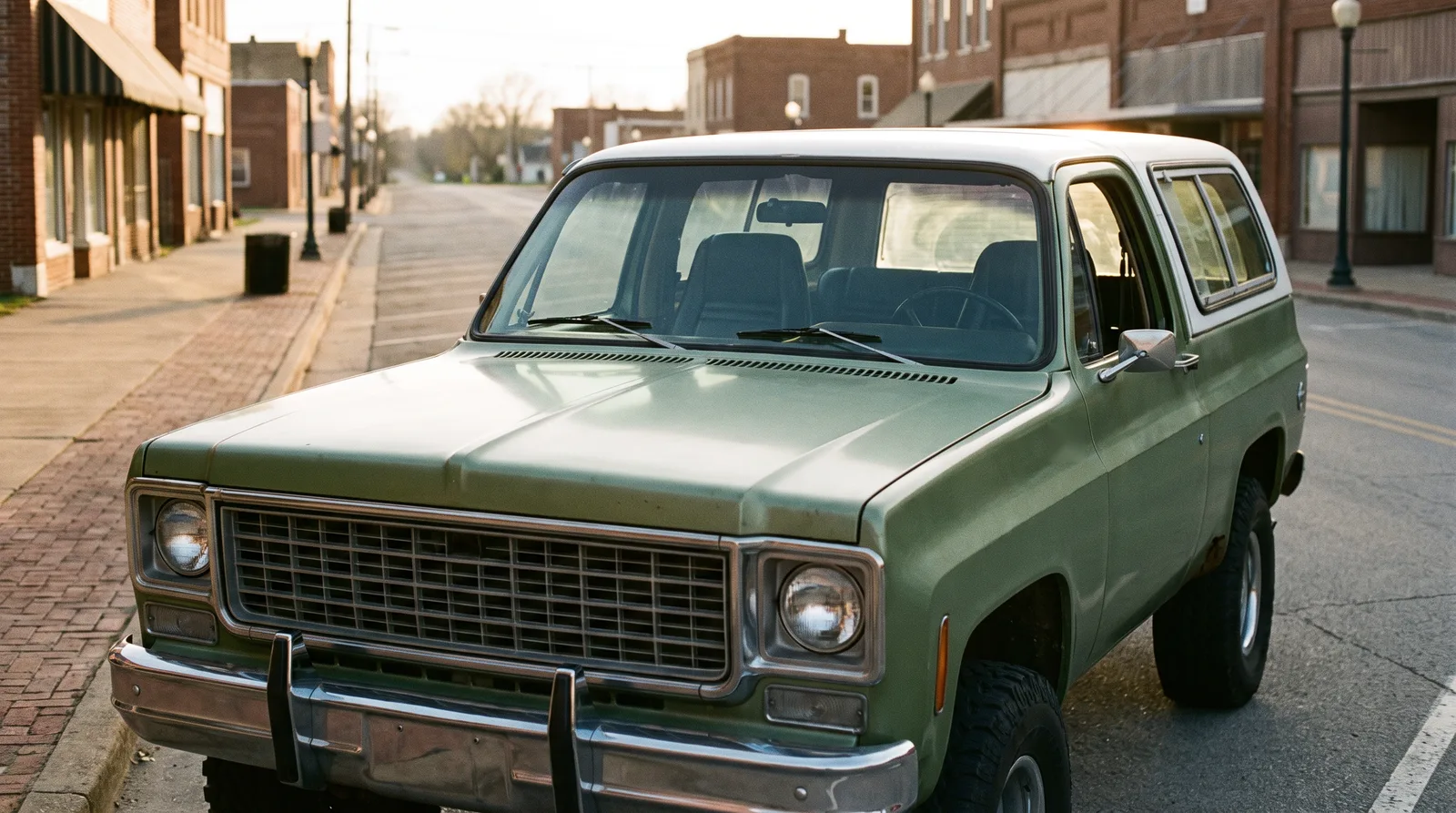
Pop the door on a 1973 squarebody K5 Blazer and then do the same on a 1991, and you are looking at two different philosophies of what a truck cabin is supposed to be. The k5 blazer squarebody interior evolution runs from a rubber-floored work box you hosed out after a hunting trip to something with cruise control, air conditioning, and cloth bucket seats that would not embarrass a passenger car. I have had both generations apart on my bench, and the changes tell you more about how GM saw its customer than any brochure ever did.
Car Features
7 min read
How the Squarebody K5 Interior Evolved
From rubber floors and painted metal dashes to cruise control and cloth buckets, the squarebody K5 Blazer cabin changed more than its outside ever let on.
1973 to 1975: bare bones and proud of it
The first squarebody interiors were built for people who worked. Base trucks came with a vinyl bench seat, a painted metal dash, and a floor that was rubber mat over sheet metal, no carpet standard. Door panels were thin vinyl over cardboard backing, and the door pulls were simple chrome or painted handles. Options existed, Custom and Cheyenne trims added carpet, cloth or vinyl upholstery choices, and a bit of brightwork on the dash, but the architecture underneath stayed utilitarian. Gauges were basic: speedometer, fuel, and idiot lights on most trucks, with a factory gauge package available for buyers who wanted oil pressure and amps instead of warning lamps.
What strikes me working on these early trucks now is how honest the design is. There is no pretending. The dash is flat, the switches are big enough to work with gloves on, and nothing about the cabin apologizes for being a truck.
1976 to 1980: the comfort creep begins
By the mid-1970s GM started chasing the growing recreational-truck buyer, the family that wanted a Blazer for camping and towing a boat, not just a ranch rig. Cheyenne and Silverado trims pushed woodgrain-look appliques onto the dash, added a bit more sound deadening, and offered thicker, more supportive seats. Silverado buyers could get a nicer cloth or vinyl split-bench, additional door panel padding, and a full gauge cluster as part of the package rather than a dealer-installed afterthought.
Air conditioning was still a real option here, not a given, and a lot of surviving trucks from this window were ordered without it because buyers in cooler climates did not see the point. Power windows and locks existed but were rare on a K5, most owners rolled their own glass down for another decade at least.
1981 to 1987: the squared-off redesign
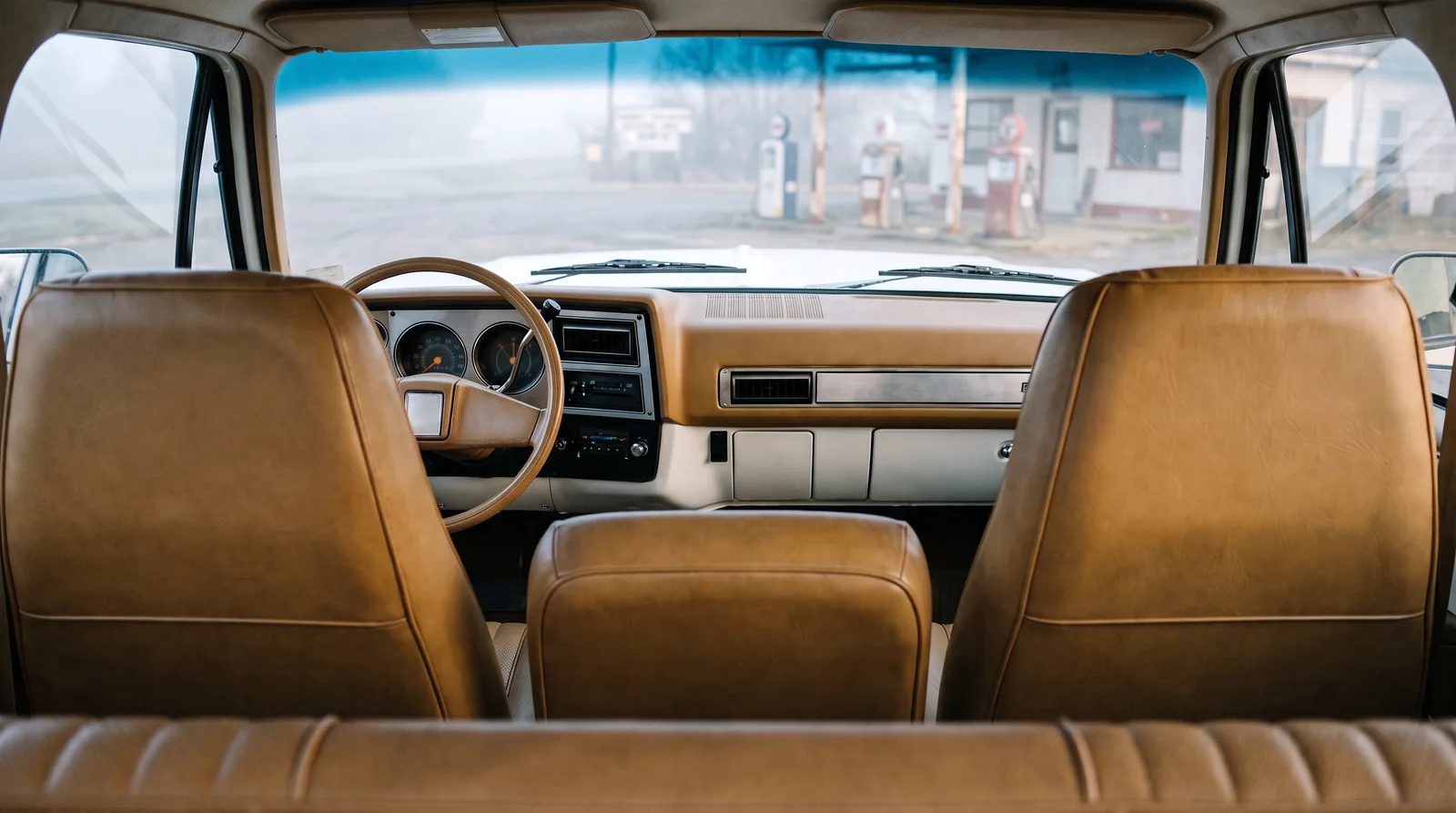
The 1981 model year brought a genuinely new dashboard, more angular, more integrated, with a wraparound cluster housing that put the secondary gauges closer to the driver's sightline. This is the dash most people picture when they think squarebody. Silverado interiors from this era could be ordered with woodgrain trim panels, additional door map pockets, tilt steering wheels, and cruise control, features that would have been unthinkable on a base 1974 truck. Cloth bench and 60/40 split seats became common, and by the mid-1980s a well-optioned K5 Blazer could be had with power windows, power locks, a rear defroster, and a genuinely comfortable highway ride.
Rear seating in the Blazer itself also evolved. Early trucks used a simple removable rear bench with minimal padding. Later trucks offered a nicer folding rear seat with better upholstery matching the front, part of GM's slow acknowledgment that families, not just work crews, were buying these.
"You can date a squarebody interior with your eyes closed just by running your hand across the dash. The early trucks are flat and cold, all business. The late ones have shape to them, they were designed by someone who wanted you to actually like sitting in the truck, not just tolerate it."
- Jim Vasquez
1988 to 1991: full-size holdover comfort
When the pickup line switched to the new GMT400 body for 1988, the K5 Blazer and its GMC Jimmy twin kept the older squarebody structure through the end of production in 1991, but the interior kept receiving detail updates. Later trucks got revised door panels, updated cloth patterns, and in many cases a nicer steering wheel and column shifter bezel than what left the factory a decade earlier. By this point a top-trim Silverado K5 could be ordered close to loaded, air conditioning, cruise, tilt wheel, power everything, cloth captain's chairs in some configurations. It was a very different animal from the rubber-floored 1973 truck, even though the basic cab structure had not changed.
What buyers should look for today
If you are chasing a squarebody today and comfort matters as much as looks, the trim level tells you almost everything before you even open the door. A Cheyenne or Silverado from 1981 onward will have the most livable cabin without any modern intervention, while an early or base-trim truck will need real work, new carpet, a rebuilt seat, better sound deadening, to feel anything like a daily driver. Neither approach is wrong. Some owners want the bare-bones honesty of a 1974, others want the closest thing to a modern SUV they can get out of 1980s GM parts. Reading where this started fills in the bigger picture of how the squarebody generation came together as a whole truck, not just a cabin.
Whichever direction you land on, the interior is one of the clearest ways to read a K5 Blazer's history at a glance, and it is worth knowing before you go shopping. If you are ready to compare real trucks side by side, you can shop classic K5 Blazer listings and start cross-referencing trim badges against the years and features above.
The long view
Eighteen years is a long production run for one basic body style, and the interior changes track almost exactly with what GM's truck customers were asking for at each point. Work trucks stayed available the whole time, you could still order a stripped K5 late in the run if you wanted one, but the center of gravity moved steadily toward comfort. That shift is a big part of why squarebody interiors restore so well today, there is a wide spread of trim levels and features to choose from depending on what kind of truck you actually want to build or preserve.
Parts availability follows that same curve. Reproduction upholstery, dash pads, and door panel kits exist for nearly every year of the run now, because the aftermarket learned there was steady demand across the whole eighteen-year window, not just for one favorite year. That means a rough-interior truck from any part of the production run is a realistic project, you are rarely stuck hunting a single rare part to finish the cabin. The bigger decision is which era's philosophy you want to live with, the honest work truck or the comfortable family hauler, and that choice should come before you ever pick up a wrench.
Sources and notes
Related Reading
Have a
Chevrolet Blazer
for Sale?
Reach thousands of serious classic car collectors across the US.
Sell It Here →
Selling a classic? Here's how: sell my classic car
Are You a Classic Car Dealer?
List your full inventory and connect with targeted classic car buyers.
Join as a Dealer →

About the author
Jim Vasquez
Southern California hot rod and custom car builder with roots in the traditional kustom kulture scene.
Related Listings - Chevrolet Blazer

Comments
Be the first to comment on this article.