
There is a photograph that circulates in K5 Blazer circles of a cream and brown truck parked outside a feed store, paint catching the late afternoon light in a way that makes the two colors look like they were always meant to sit together. That is the pull of k5 blazer squarebody two tone paint, a factory option that turned a work vehicle into something people still stop to look at fifty years later. The Chevrolet K5 Blazer wore two-tone schemes across its entire squarebody run, and the story of how that paint was applied says as much about GM's marketing instincts as it does about style.
Car Features
7 min read
Two-Tone Paint and the Squarebody Look
Two-tone paint was a factory option on the squarebody K5 Blazer, and the division line placement turned a work truck into one of the most photographed shapes of its era.
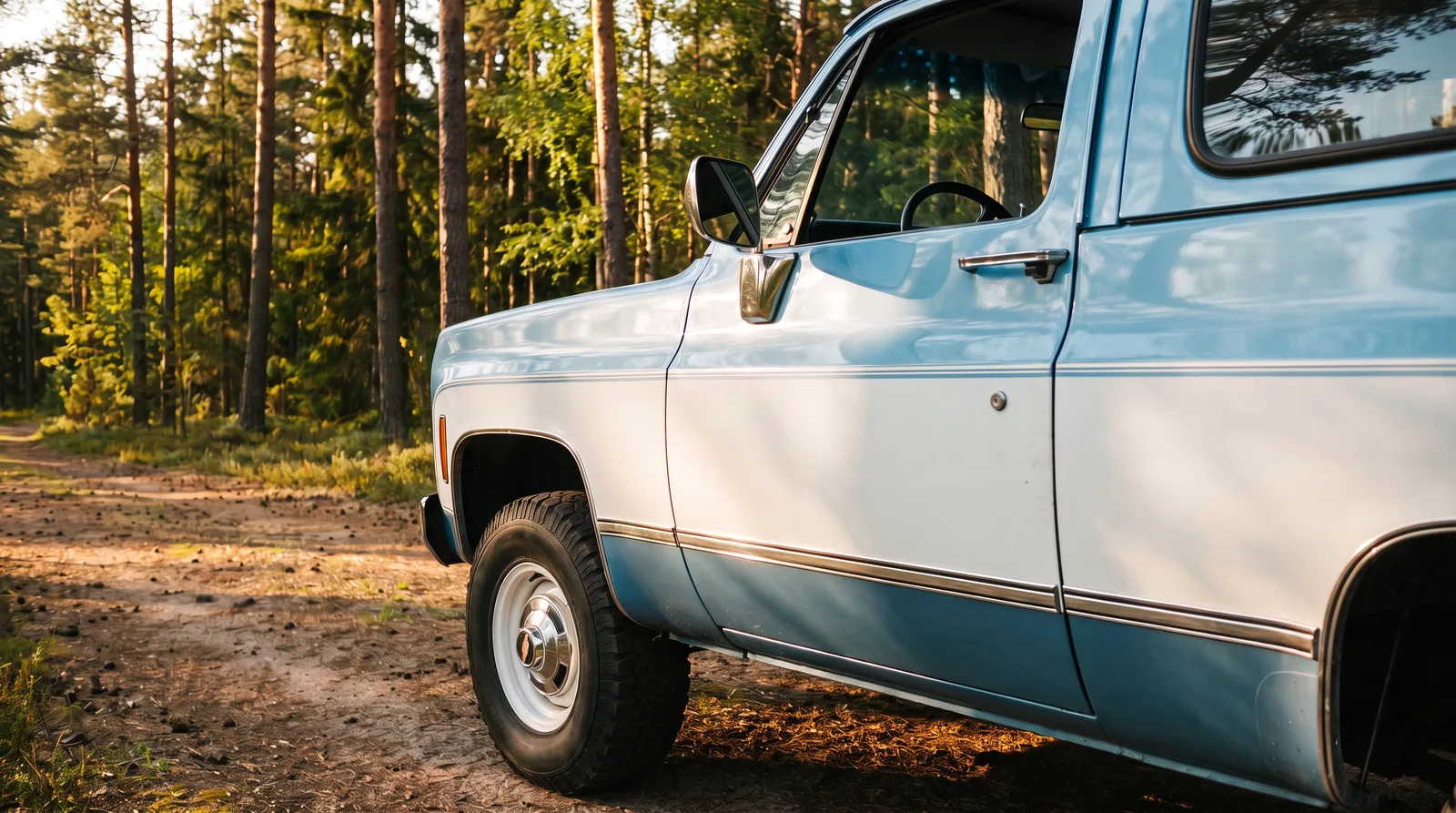
A factory option, not an afterthought
Two-tone paint on the squarebody Blazer was never a custom shop trick bolted onto the truck after the fact. It came from the factory as an ordering option, laid out with a division line that typically ran along the beltline of the truck, body color below, a contrasting roof and upper trim color above. Buyers picked from a published palette each model year, and the combinations changed as GM refreshed its color offerings through the 1970s and 1980s. A Silverado or Cheyenne trim truck was the most likely candidate to leave the lot two-toned, since those trim packages leaned into the option as part of a more finished, upscale look.
The application itself was straightforward but not cheap. Painting a division line cleanly meant careful masking, and GM's factory paint shops had the tooling to do it consistently across thousands of trucks a year. That consistency is part of what makes an original two-tone K5 recognizable today, the line sits exactly where it should, the transition is crisp, and the two colors were chosen from combinations that GM's designers had actually tested against each other rather than left to chance.
Why the look worked on this particular truck
Part of what makes two-tone paint suit the squarebody Blazer so well is the shape of the truck itself. The removable and later fixed hardtop sits as a distinct visual element above the bed and cab, a natural break point for a color change that a sedan or a pickup without a cap simply does not have in the same way. Painting the top a contrasting color emphasizes that the Blazer is built as two separate structures, cab and cargo box down low, a full roof up top, and the paint scheme makes that structural honesty into a design feature instead of hiding it.
There is also a period logic to it. Two-tone paint on trucks and SUVs through the 1970s echoed what full-size cars were doing at the same time, roof colors distinct from body colors was a broadly fashionable choice across GM's entire lineup, not something invented specifically for the Blazer. The truck just happened to have a shape that showed the idea off particularly well.
"A good two-tone K5 photographs like it was styled by someone who understood proportion, because it was. That paint line is doing real work, it is not decoration slapped on top of a shape that did not ask for it."
- Nora Beckett
Popular combinations and what they signal
Certain color pairings turn up more often than others in surviving trucks and period photography, warm earth tones like cream over brown or tan over dark brown, cooler pairings like silver over blue, and high contrast combinations that put a white roof over a bold body color. The specific paint codes and exact combination names shifted year to year with GM's broader color catalog changes, and tracking the correct code for a given model year takes a factory build sheet or a period color chart rather than a general list, but the general instinct stayed consistent, pair a lighter or neutral roof color with a body color that had some presence to it.
Reading a two-tone combination on an original truck can also tell you something about how it was likely used. Earth-tone combinations were common on trucks ordered for ranch, farm, and outdoor recreational use, the kind of buyer who wanted the truck to look purposeful rather than flashy. Brighter or higher contrast combinations tended to show up more on trucks aimed at buyers who wanted the Blazer to double as a family vehicle, something that looked good parked at a school or a store, not just out at a job site.
Two-tone paint in restoration and the collector market today
For today's owners and restorers, an original two-tone K5 carries a certain credibility that a single-color repaint does not automatically have, even if the underlying truck is mechanically identical. Getting the division line right during a repaint is fussier than most people expect, it requires careful reference to factory photos or documentation for the correct year, since a line placed even an inch off the original spec reads as wrong to anyone who has spent time around these trucks. Shops that specialize in squarebody restorations treat the two-tone line the same way they treat any other factory-correct detail, worth getting exactly right rather than approximating.
That attention to detail matters because two-tone examples tend to draw more interest at shows and in private sales. A clean, correctly executed two-tone truck reads as more finished, more intentional, than a comparable single-color example, even when the mechanical condition is identical. It is one of those details that separates a truck someone restored carefully from one that was simply repainted whatever color was on sale.
Where two-tone fits in the bigger squarebody story
Paint is one detail among many that defines this generation of Blazer, but it is one of the most visible, and it rewards a closer look every time. For more on the square body blazer, the full retrospective covers the mechanical and cultural side of the story that the paint options were always riding on top of. Readers who want the complete arc from the first K5 in 1969 through the end of the line can find our complete history useful context as well.
If a two-tone squarebody has caught your eye and you are thinking about buying one, there is no substitute for seeing a few in person and comparing how different combinations hold up in daylight versus how they photograph. You can browse classic K5 Blazers on the market right now and start noticing which paint pairings catch your eye the way that cream and brown truck outside the feed store caught mine.
Sources and notes
Related Reading
Have a
Chevrolet Blazer
for Sale?
Reach thousands of serious classic car collectors across the US.
Sell It Here →
Selling a classic? Here's how: compare the places to sell classic cars
Are You a Classic Car Dealer?
List your full inventory and connect with targeted classic car buyers.
Join as a Dealer →

About the author
Nora Beckett
Automotive features writer and photographer who tells the human stories behind the cars, from show fields to cross-country road trips.
Related Listings - Chevrolet Blazer

Comments
Be the first to comment on this article.