
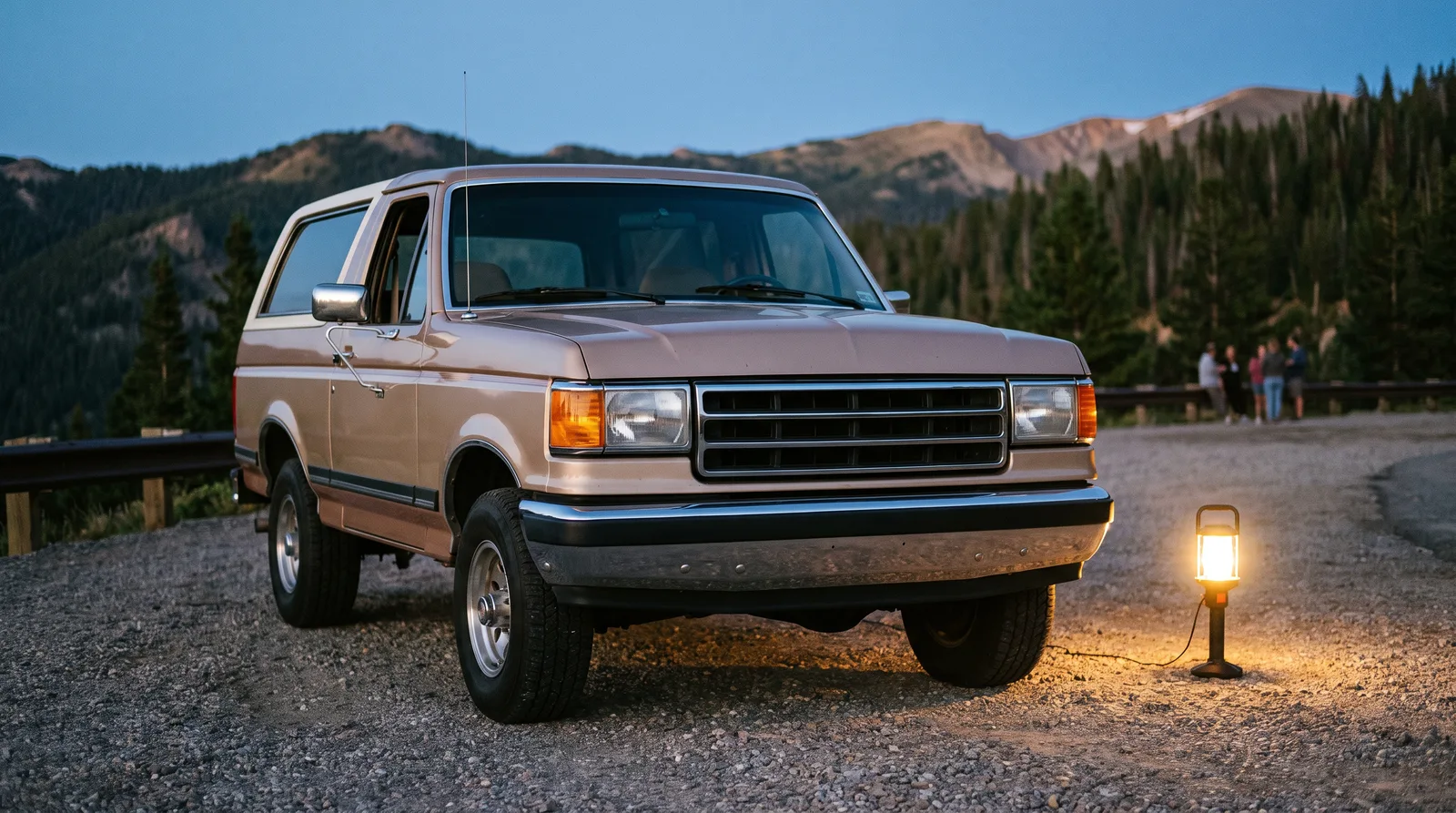
Park a squarebody GMC Jimmy next to its Chevrolet K5 Blazer sibling and most people walking by will not clock the difference right away, and that is exactly the point. The k5 blazer squarebody jimmy twin relationship is a straightforward badge-engineering story, but it is also a case study in how GM used its two truck divisions to reach two overlapping but distinct customer bases with what was, underneath the trim, the same truck.
Car Features
7 min read
The Squarebody GMC Jimmy Alongside the Blazer
The squarebody GMC Jimmy shared nearly everything with the K5 Blazer except the badge, the grille, and the dealership it was sold from.
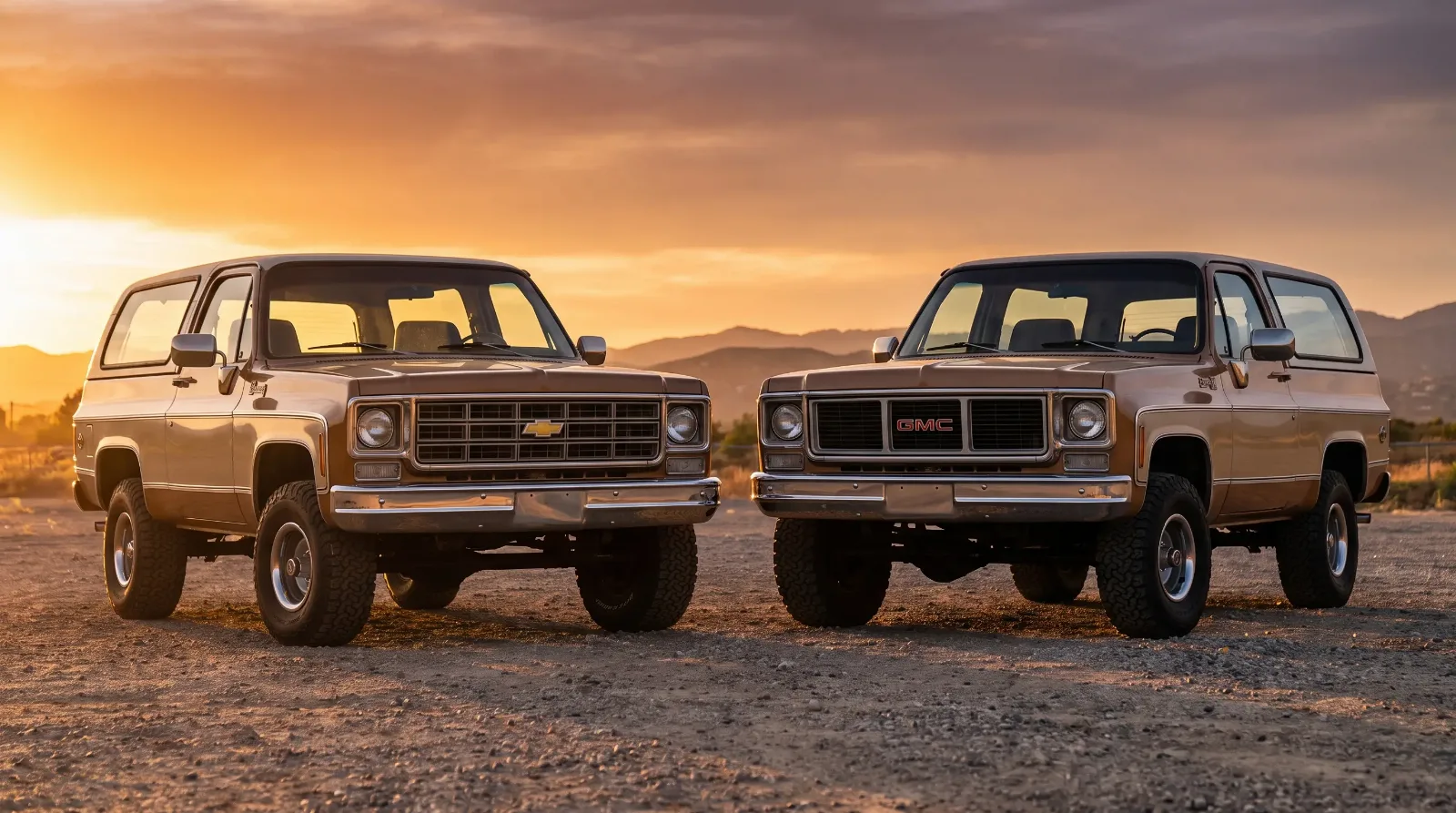
Same bones, different dealer floor
Chevrolet and GMC were separate divisions with separate dealer networks, and GM's long-standing strategy was to let each division sell a version of the same core vehicle to its own customer base rather than compete directly against itself. The squarebody Jimmy shared its frame, body structure, removable and later fixed hardtop, and drivetrain options with the K5 Blazer, built on the same assembly logic as the corresponding full-size pickups. What differed was trim, badging, grille design, and the marketing pitch each division built around the truck.
GMC positioned its trucks with a slightly more work-oriented, fleet-friendly identity through much of this era, while Chevrolet leaned into broader consumer volume. That meant a Jimmy buyer was often walking into a GMC dealership already thinking about the truck in more utilitarian terms, even though the vehicle underneath could be optioned up just as plush as any Cheyenne or Silverado Blazer if the buyer wanted it that way.
What actually differed on the outside
The most obvious identifiers between the two trucks sit at the front end. Grille design, headlight bezel treatment, and hood ornamentation carried distinct GMC or Chevrolet styling cues even in years when the rest of the sheet metal was identical between the two. Badging on the tailgate, front fenders, and dash also carried the division-specific identity, small details that mattered enormously to a buyer loyal to one brand or the other but meant almost nothing mechanically.
Beyond the styling details, the two trucks ran the same range of engine options across most of the production years, the same transmission choices, and the same basic chassis and suspension hardware. A shop pulling parts for a Jimmy could, in most cases, reach for a Blazer part and expect it to fit, and vice versa, which is a big part of why the two trucks share such a deep, overlapping parts and knowledge base in the restoration community today.
"I have had guys bring me a Jimmy convinced it needs some special part because it says GMC on the tailgate, and ninety percent of the time the part bin does not care what badge is on the truck. Underneath, it is the same build."
- Jim Vasquez
Why the Jimmy sold in smaller numbers
Despite sharing nearly everything mechanically with the Blazer, the Jimmy consistently sold in lower volume across the squarebody run, a reflection of GMC's smaller dealer footprint and different customer base rather than any real difference in the truck itself. That lower production number has an effect on today's market, surviving Jimmys are somewhat scarcer than comparable Blazers given GMC's smaller dealer network through this era, and that scarcity has started to translate into real collector interest from buyers specifically hunting the GMC badge rather than treating it as a Blazer substitute.
For builders and restorers, that scarcity cuts both ways. Finding a clean donor Jimmy can take longer than finding an equivalent Blazer simply because fewer were built and fewer survive, but a well-preserved Jimmy also stands out more at a show precisely because it is less common, which some owners consider a real advantage over building yet another Blazer.
The dealer experience buyers actually got
Stepping onto a GMC lot versus a Chevrolet lot in the 1970s or 1980s meant a genuinely different sales conversation, even for what was mechanically the same truck. GMC salesmen leaned on the brand's reputation for commercial and fleet vehicles, trucks, medium-duty haulers, and work-focused equipment, positioning the Jimmy as part of a lineup built around dependability for people who needed a vehicle to earn its keep. Chevrolet's much larger dealer network and broader consumer marketing pushed the Blazer harder toward family and recreational buyers, with advertising that emphasized weekend adventure and versatility over pure utility.
That difference in framing shaped who actually walked away with each badge, even when the trucks on the lot were functionally identical. A buyer who already trusted GMC for a work truck often bought a Jimmy for the same reasons, brand loyalty and a sense that GMC understood what they needed the vehicle to do. A buyer cross-shopping family SUVs was far more likely to end up at a Chevrolet dealership simply because that is where the marketing and the foot traffic pointed them.
Working on one versus the other
From a hands-on perspective, there is very little practical difference in owning a Jimmy over a Blazer. Mechanical work is identical, parts sourcing overlaps almost completely, and the restoration knowledge built up around the Blazer over the decades applies directly to the Jimmy with only badge and trim-specific exceptions. The decision between the two really comes down to personal taste, brand loyalty, and in some cases what happens to be available and in good condition in your area, since the Jimmy's lower survival numbers mean patience is sometimes required to find the right example.
Collector interest today, badge by badge
The current collector market has started to notice the Jimmy's relative scarcity in a way it did not a decade ago, and specialty buyers who specifically want a GMC badge over a Chevrolet one are a real, if smaller, segment of demand. That said, price parity between a comparably equipped and conditioned Blazer and Jimmy is closer than the scarcity numbers alone might suggest, because the buyer pool for Blazers is still considerably larger overall, and larger pools tend to produce more competitive bidding even against a scarcer but less broadly desired counterpart. A savvy buyer who is not wedded to one badge over the other can sometimes find better relative value in a well-preserved Jimmy simply because fewer people are actively searching for one.
My advice to anyone shopping between the two is not to overthink the badge question if the real priority is getting the best truck for the money. Evaluate condition, documentation, and drivetrain the same way regardless of which division built it, and let the badge be a preference rather than the deciding factor.
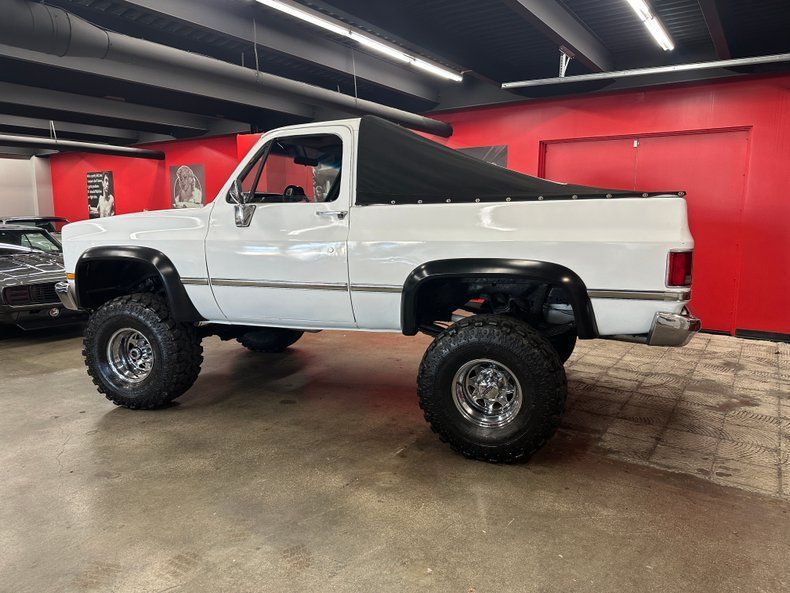
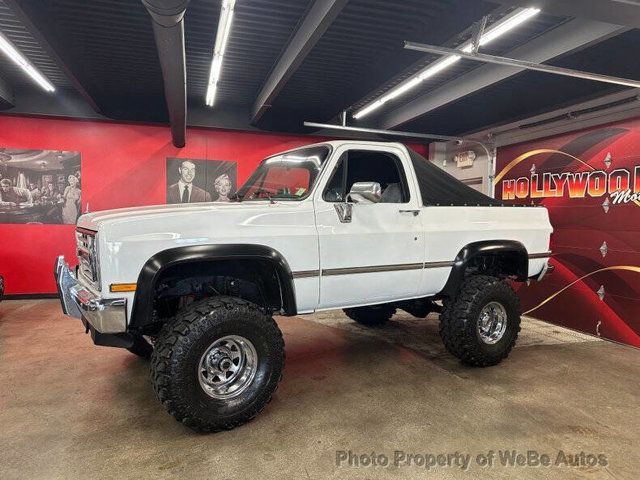
The Jimmy and Blazer story is really one story told through two dealer networks, and for anyone digging into the full squarebody history, the full story covers the platform both badges were built on. If you want to see notable examples of this generation, whether Chevrolet or GMC badged, they are worth a look too. And if a clean example of either badge is what you are after, you can shop classic K5 Blazer listings and see what is currently available.
Sources and notes
Related Reading
Have a
Chevrolet Blazer
for Sale?
Reach thousands of serious classic car collectors across the US.
Sell It Here →
Selling a classic? Here's how: compare the places to sell classic cars
Are You a Classic Car Dealer?
List your full inventory and connect with targeted classic car buyers.
Join as a Dealer →

About the author
Jim Vasquez
Southern California hot rod and custom car builder with roots in the traditional kustom kulture scene.
Related Listings - Chevrolet Blazer
Comments
Be the first to comment on this article.