
The first time I saw a 1971 K5 Blazer with its top off, the owner was standing next to it at a beachside cruise-in in a faded surf shop t-shirt, explaining to a teenager that no, this was not some custom job, this is how General Motors actually built the thing. The kid did not believe him until the owner pulled out the four bolts holding the rear section down and showed him the empty channel where the roof panel had sat that morning. That reaction, disbelief followed by genuine delight, is the whole reason the K5 Blazer vs Bronco open air comparison still gets people talking decades later. Two of Detroit's biggest names both decided, independently, that a proper SUV should be able to lose its roof.
Car Features
7 min read
Two Takes on the Open-Air SUV: K5 and Bronco
Chevrolet built the K5 Blazer as a genuine full convertible truck, while Ford split the same idea across separate Bronco body styles. Both chased the same open-air romance in different ways.
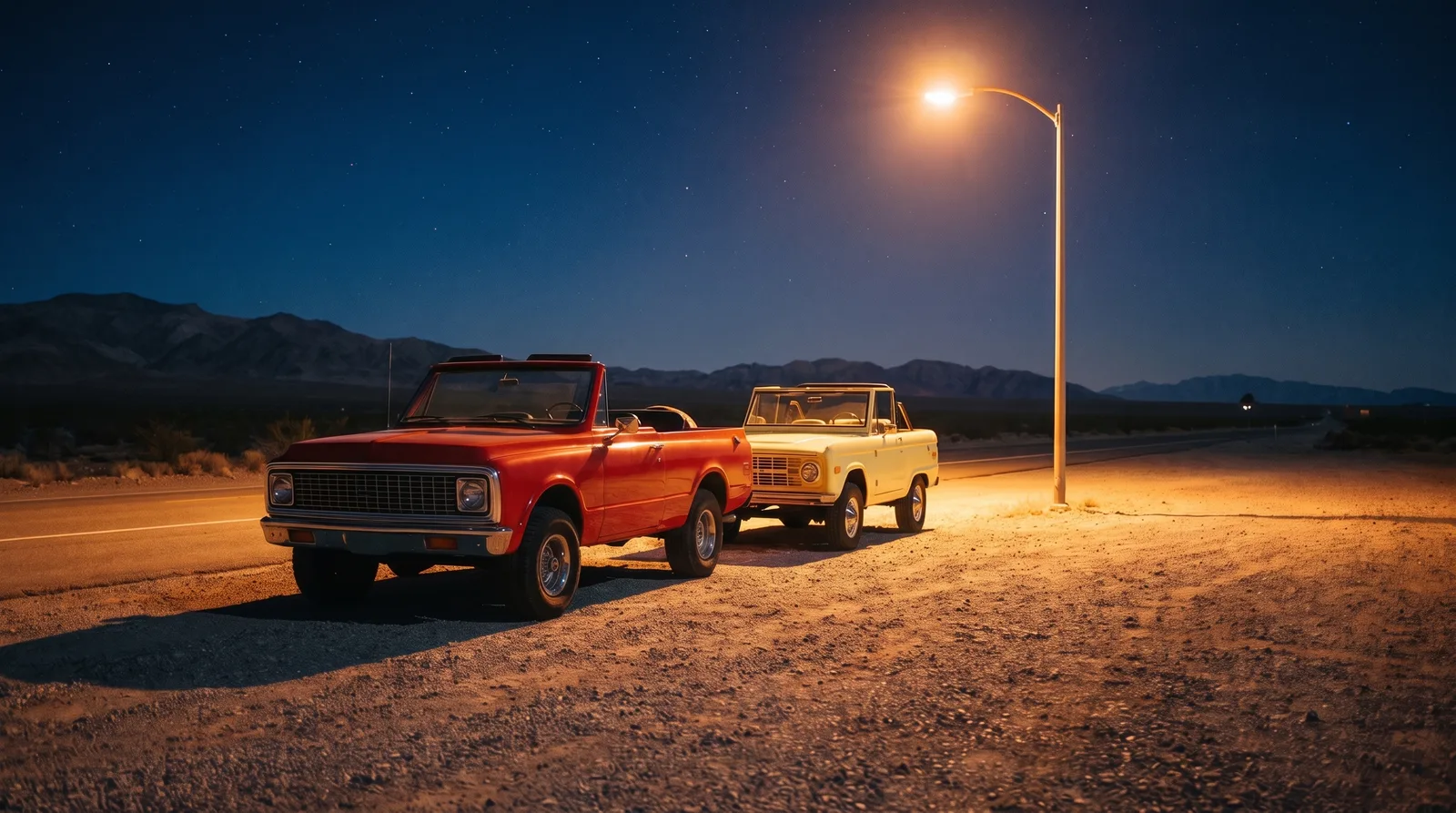
Two ways to build a convertible truck
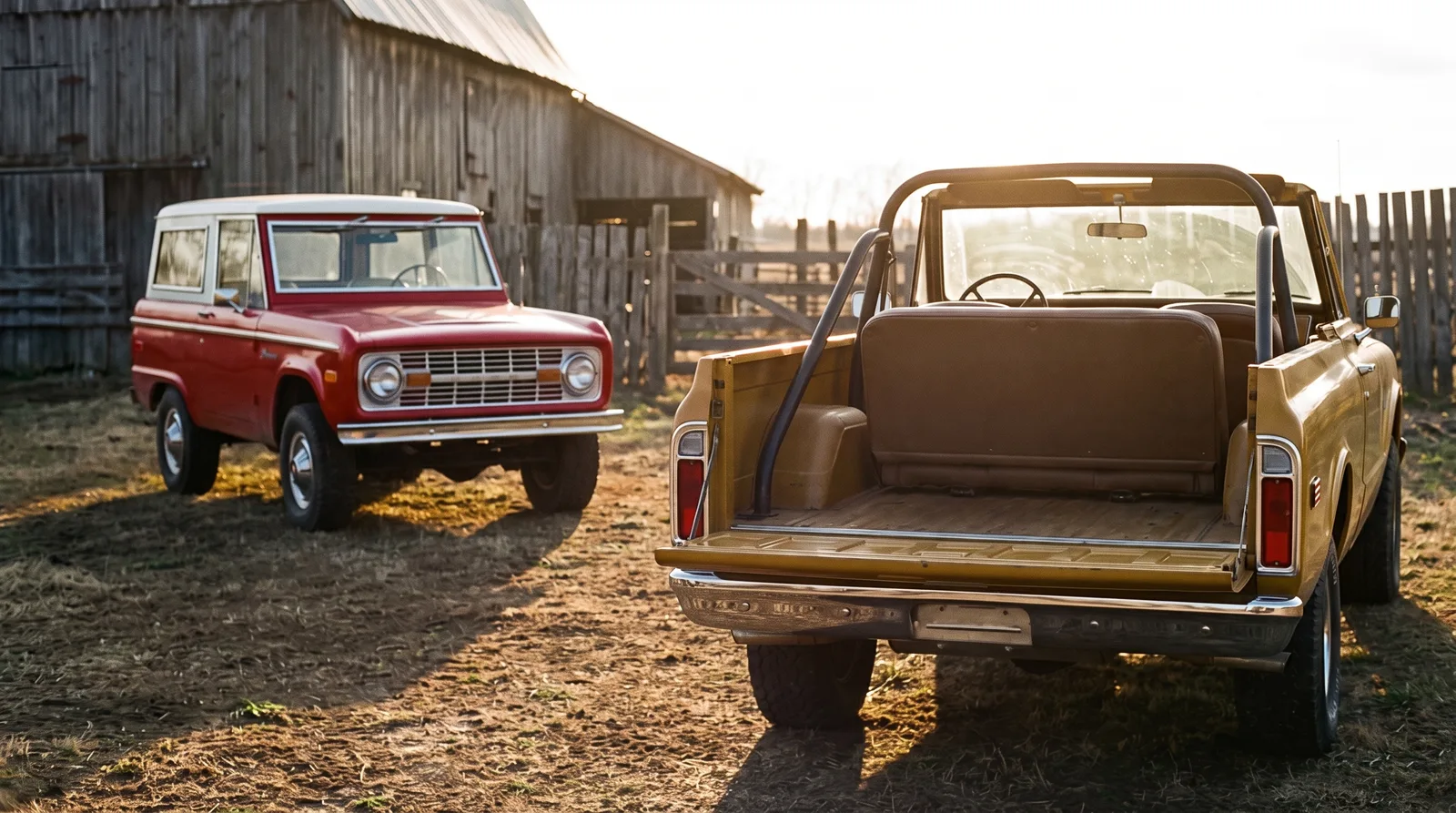
Ford got there first with the 1966 Bronco, and its approach was almost casual by comparison. Early Broncos came in a Roadster body style with no top at all, plus a Half-Cab and a fully enclosed Wagon, meaning Ford essentially built three separate configurations rather than one convertible truck. Buyers picked their level of exposure to the elements at the factory and largely stayed there.
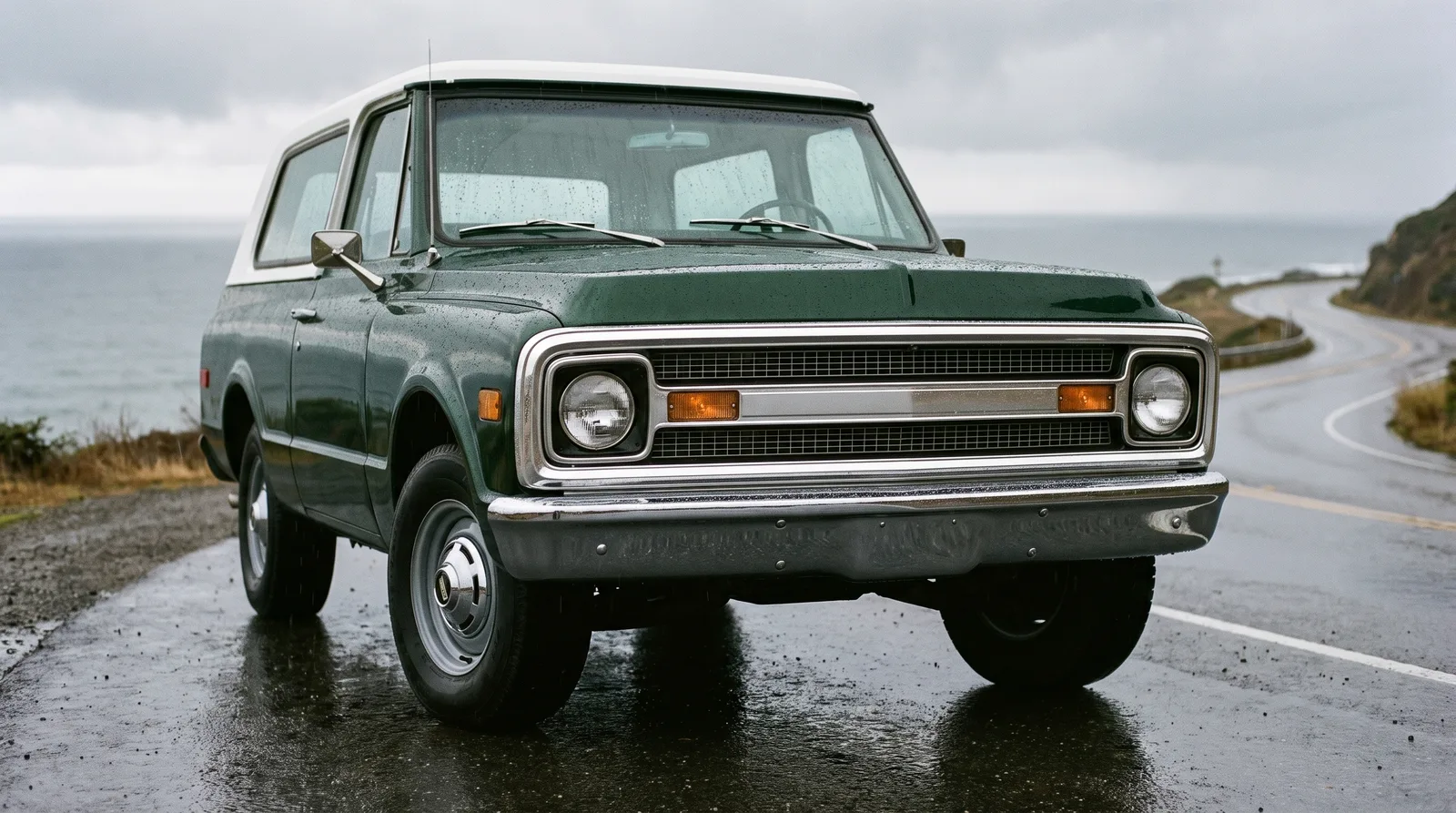
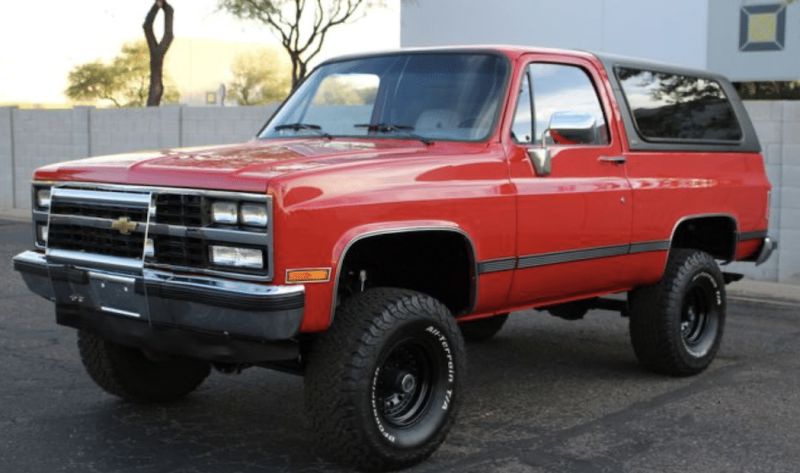
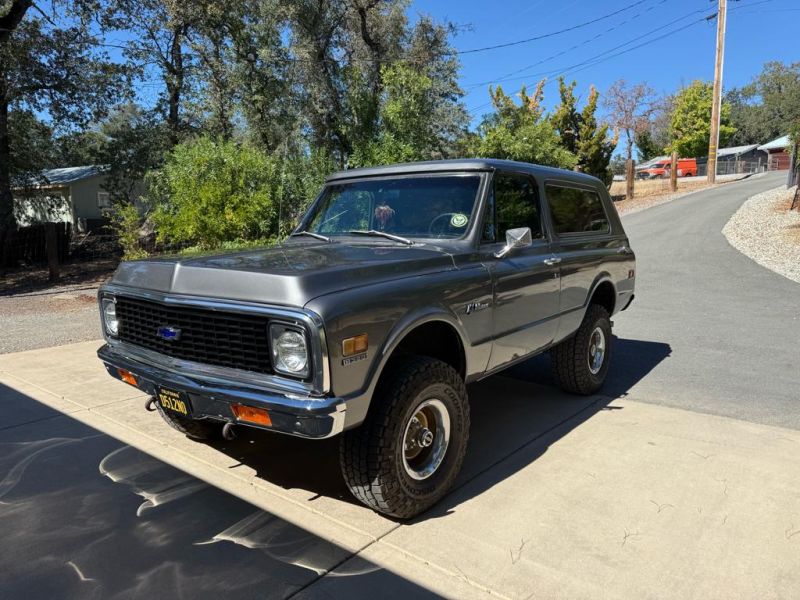
Chevrolet, arriving three years later with the 1969 K5 Blazer, took a more theatrical approach. Every early K5 came as a genuinely convertible full-size truck, its fiberglass hardtop designed to be unbolted and lifted away by a couple of people on a Saturday afternoon, transforming a family hauler into something closer to a beach buggy with a pickup's bones. It was not a separate model, it was the model. That single decision, one vehicle that changes character depending on whether the roof is on, is what gives the K5's first generation its particular romance among people who were not even alive to see it happen new.
"There is something almost theatrical about a full-size truck losing its whole roof for the summer. Ford gave you a choice at the factory. Chevrolet gave you a truck that could change its mind."
- Patrick Walsh
What the open-air years actually felt like
Owning one of these trucks in the first generation era meant a genuine seasonal ritual. Come spring, the top came off, sometimes literally left leaning against a garage wall until fall, and the truck became something closer to a rolling beach party than a work vehicle. That kind of transformation was rare in Detroit's lineup at the time. Most trucks were trucks, full stop, built for one job and one silhouette. The K5 and the early Bronco both broke that rule, and both did it in a way that tapped into a very particular late-1960s and early-1970s optimism, the sense that a vehicle could be practical on Monday and completely different on Saturday.
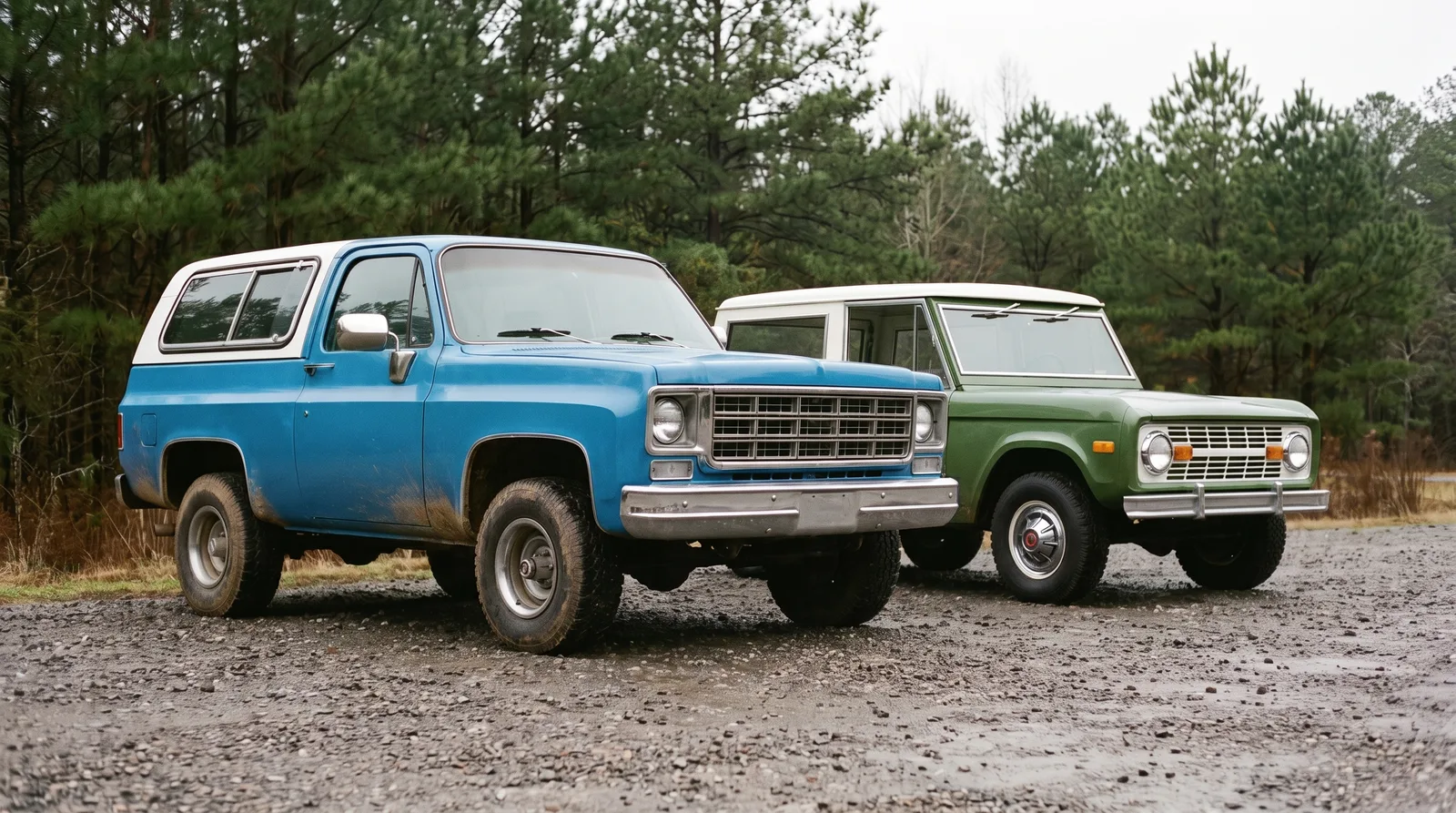
Chevrolet's second-generation K5, arriving for 1973, kept the fully removable top through the 1975 model year before switching to a fixed half-cab roof for 1976, largely for rollover-safety reasons, ending the full convertible experience of those first years. Ford, for its part, kept the Bronco's smaller dedicated body through 1977 before the 1978 redesign moved it onto the full-size F-150 platform and changed its own proportions dramatically. Both trucks evolved away from their most playful early configurations as buyer expectations shifted toward comfort and quiet running gear over open-top novelty. That shift is part of why the earliest examples of each truck, the true open-air years, carry such outsized appeal with today's collectors.
What the roof did to how each truck got used
Taking the top off a K5 or an early Bronco was not a quick five-minute job the way it is with a modern convertible, and that friction actually shaped how owners used the feature. Removing the K5's hardtop sections took planning, a second set of hands, and usually a dry stretch of weather ahead of it, so owners tended to commit to the open-air configuration for whole seasons rather than swapping back and forth on a whim. Early Bronco Roadster owners who wanted a top at all had to add one aftermarket, since the base configuration shipped without one, which meant the decision to run open or covered often got made once, at the dealership, rather than revisited every weekend.
That commitment is part of what makes surviving examples from those years feel so specific to their owners' original choices. A K5 that spent its early life with the top off in a warm climate wears that history in ways a garaged, top-on truck from the same year does not, and the same logic applies to a Bronco Roadster that never had a top bolted on at all. Collectors chasing an accurate restoration today have to account for that history rather than assuming every truck from the era was configured the same way.
Why the open-air years still define the rivalry
Ask any longtime member of a K5 or Bronco club which years they would want parked in their driveway, and the conversation almost always drifts back to the open-top era, 1966 through 1972 for the Bronco's original small-body run, 1969 through 1972 for the Blazer's fully convertible first generation. There is a reason for that beyond nostalgia. Those years represent the purest expression of what made each truck different from an ordinary pickup or wagon, a genuine willingness by two competing companies to build something a little bit fun into a segment that could easily have stayed strictly utilitarian.
For readers who want the full arc of how these two trucks squared off across their entire histories, we have more on the k5 blazer vs bronco comparison that traces both nameplates generation by generation. And if you are curious how the K5 nameplate itself got its start before the rivalry even had a name, that is where this started. Nothing beats standing next to one of these trucks with the top off to understand the appeal, and there are always classic K5 Blazers on the market if that beachside cruise-in feeling is calling your name.
Weather sealing, or the lack of it, was another part of the open-air bargain buyers accepted without complaint back then that would draw more scrutiny today. Neither truck's early removable top system was engineered to modern standards of keeping water and wind noise out once reinstalled, and owners of both trucks learned to live with a certain amount of seep during a hard rain rather than treat it as a defect. That tradeoff, some inconvenience in exchange for a genuinely transformable vehicle, was simply part of the deal in an era before weatherstripping technology caught up with the ambition of building a convertible truck in the first place.
The roof comes off, the character changes
What sticks with me from that cruise-in, beyond the surprised teenager, is how much personality a truck can carry just from the presence or absence of its roof. The K5 Blazer and the early Bronco were both, in their own ways, arguing that a working vehicle did not have to stay serious all year round. That argument still lands with people fifty years later, which is about as good a definition of a genuine classic as I know how to give.
Sources and notes
Related Reading
Have a
Chevrolet Blazer
for Sale?
Reach thousands of serious classic car collectors across the US.
Sell It Here →
Selling a classic? Here's how: compare the places to sell classic cars
Are You a Classic Car Dealer?
List your full inventory and connect with targeted classic car buyers.
Join as a Dealer →

About the author
Patrick Walsh
Automotive journalist covering classic car shows, events, and the enthusiast community across North America.
Neighbor kept his top in the haymow.
honestly same energy as my supra's targa panel, it lives behind the couch half the year