
The land yacht was not one car. It was a thirty-year idea, and each decade built its own version of it. The tailfinned Cadillac of 1959 and the downsized Fleetwood of 1980 were both land yachts in spirit, but they looked and felt like different animals. Tracing the icons decade by decade is the clearest way to see how American luxury kept redefining what "big" and "important" meant on four wheels, right up until the whole idea ran out of road.
Car Features
6 min read
Land Yacht Icons by Decade: The Models That Defined the Era
From 1959 Cadillac fins to the downsized Fleetwood, the land yacht icons that defined American luxury decade by decade.
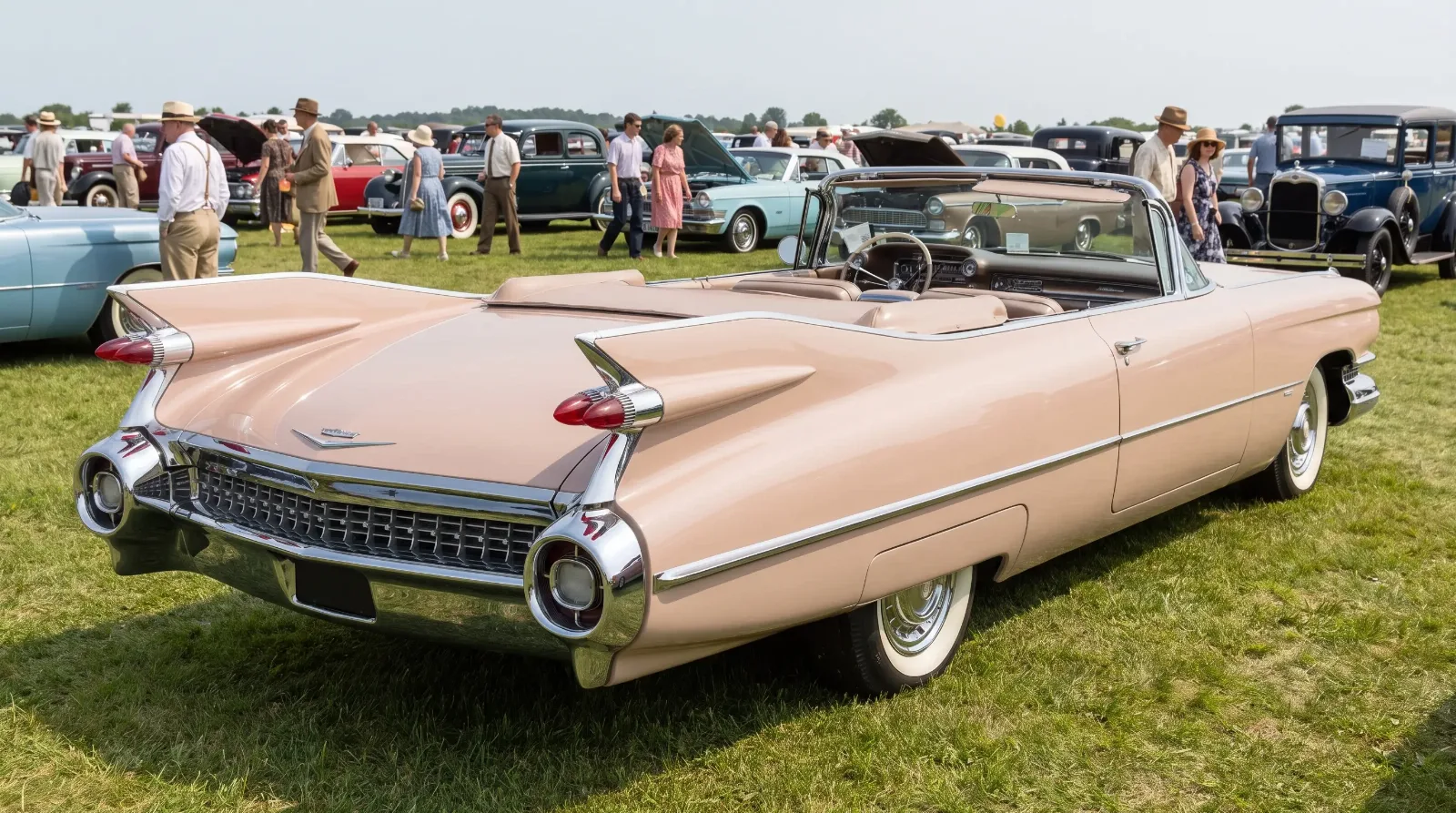
What follows is a short field guide to the cars that defined each stretch of the era. These are the models people picture when they picture a land yacht, and they explain why land yachts got so big in the first place. If you want the wider arc, it sits inside the complete classic luxury car story. Here we go car by car.
The 1950s: fins and the first excess
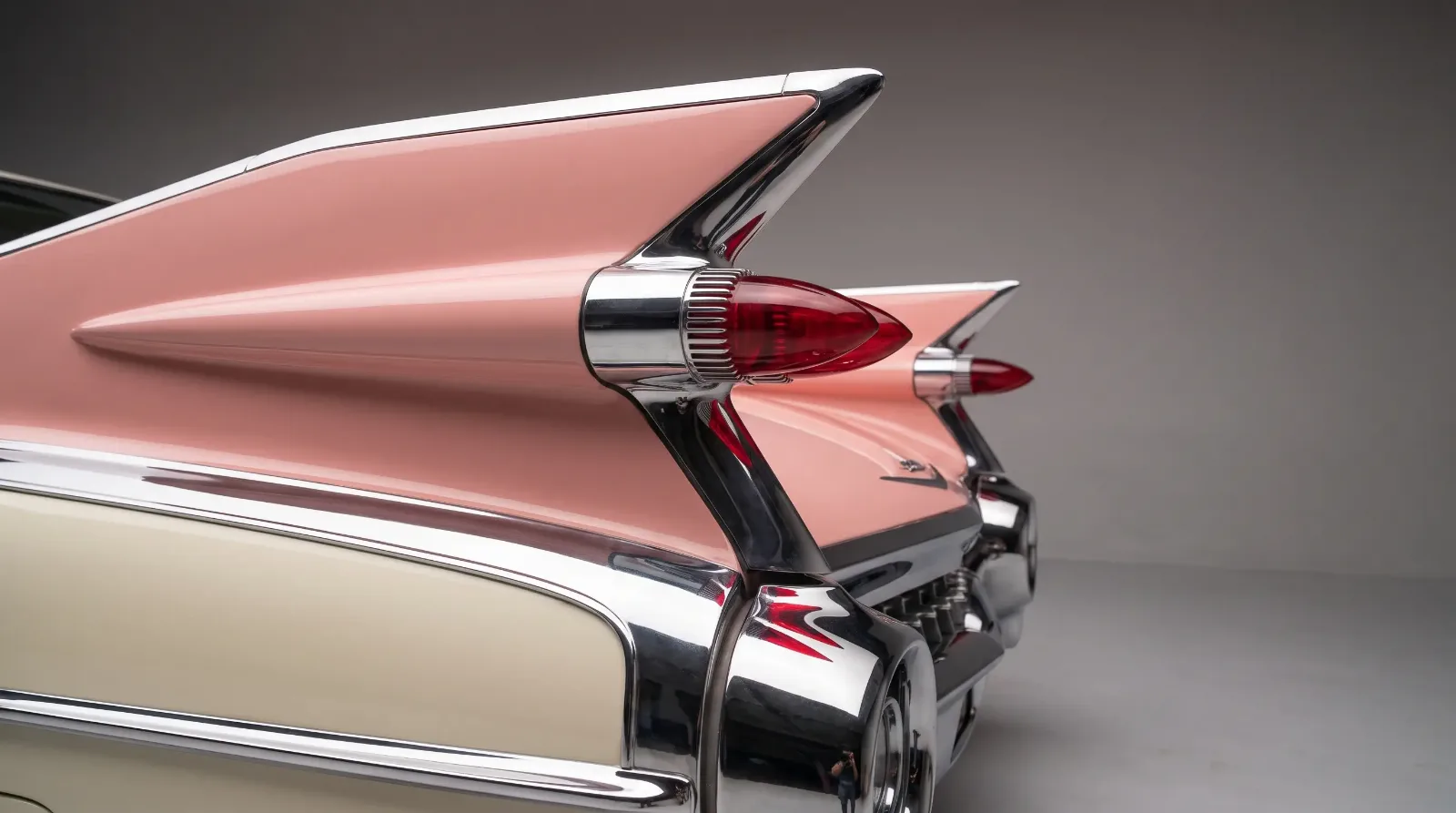
The postwar boom put chrome and horsepower within reach of the middle class, and the luxury makers answered by going big and bright. The defining car of the decade is the 1959 Cadillac, which wore the tallest tailfins the company ever built, tipped with twin bullet taillights. It was rolling sculpture, more about presence than engineering, and it remains the single most recognizable shape of the fin era.
Cadillac did not have the field to itself. The Lincoln Premiere and the Imperial, Chrysler's newly separated luxury brand, both fielded large, heavily styled cars aimed at the same buyer. The Eldorado Brougham, a low-volume hand-finished Cadillac, pushed the price ceiling into rarefied territory. These were the cars that established the template: length, chrome, and a silhouette designed to be read from across a parking lot.
The 1960s: the clean slab-side era
Then taste turned, hard. The car that turned it was the 1961 Lincoln Continental. After years of ever-taller fins, Lincoln introduced a clean, slab-sided sedan with no fins at all, framed by rear-hinged back doors that became its signature. It was more restrained than the Cadillacs it competed with, and it aged far better. The four-door convertible version became one of the defining American images of the decade, in private driveways and in the presidential fleet.
Cadillac answered with its own crisper styling through the Fleetwood Sixty Special and the Sixty-Two, while Imperial fielded the Crown and the top LeBaron. The 1960s land yacht was still enormous, but it had swapped flamboyance for a kind of confident formality. The excess was in the length and the equipment now, not in the fins.
The 1970s: peak land yacht
This is the decade the phrase "land yacht" was made for. Everything got longer, heavier, softer, and more baroque before the energy crisis forced a rethink. The Cadillac Fleetwood and Fleetwood Brougham anchored the range, and the four-passenger Fleetwood Talisman of 1974 to 1976, with its console-divided crushed-velour cabin, sat at the very top. Lincoln countered with the Continental and the personal-luxury Mark series, the Mark IV and the truly vast Mark V, a two-door coupe that stretched past eighteen feet.
Below the flagships, the full-size field was crowded with icons. The Oldsmobile Ninety-Eight, the Buick Electra 225, the Imperial LeBaron, and the Chrysler New Yorker all played the same game of length, quiet, and equipment. This was the moment the land yacht was both at its most extreme and its most vulnerable, because the 1973 fuel crisis had already started the clock on cars this thirsty.
What set the 1970s cars apart from their 1960s parents was the sheer weight of standard equipment. Power windows, power seats, power locks, climate control, and elaborate vinyl-roof and opera-window treatments moved from the option sheet to the expected fitment. The cars grew heavier partly to carry all of it, and the styling turned formal and upright, with sharp rooflines and long hoods that made even a two-door coupe read as a stately object. It was the most self-consciously luxurious the American car ever got. If you are shopping the survivors from this decade among classic luxury cars for sale, the 1970s flagships are the definitive expression of the type.
| Decade | Defining icons | What set the tone |
|---|---|---|
| 1950s | 1959 Cadillac, Eldorado Brougham, Imperial | Tailfins, chrome, sheer presence |
| 1960s | 1961 Lincoln Continental, Cadillac Fleetwood, Imperial Crown | Clean slab sides, formal restraint |
| 1970s | Cadillac Fleetwood Talisman, Lincoln Mark V, Electra 225 | Peak size, plush cabins, vinyl roofs |
| Late 1970s / 1980s | Downsized Cadillac Fleetwood, Lincoln Town Car | Shrinking footprint, same luxury intent |
"You can date an American luxury car within a year or two just by reading its proportions. The height of a fin, the flatness of a flank, the length of an overhang. Each decade had a house style, and the icons are simply the cars that expressed that decade's idea most completely."
Sarah Whitfield
The end of the line: downsizing
The land yacht did not die suddenly. It shrank. General Motors downsized its full-size cars for the 1977 model year, cutting length and weight substantially while trying to keep the interior room and the luxury feel intact. The 1977 Cadillac Fleetwood and de Ville were noticeably smaller than the 1976 cars, yet still unmistakably Cadillacs. Lincoln held out longer with its enormous late-1970s cars before following with its own downsizing.
The nameplates survived even as the dimensions came down. The Cadillac Fleetwood Brougham and the Lincoln Town Car carried the boulevard-luxury idea through the 1980s in a more compact package, and the Town Car in particular kept the body-on-frame, soft-riding formula alive for years after most of its rivals had moved on. The true land yacht, the eighteen-foot barge, was gone by the early 1980s, but its DNA lingered in these last full-size holdouts.
Read as a sequence, the icons tell a clean story. Each decade took the same brief, the biggest and most comfortable expression of American status, and answered it in the visual language of its moment. The cars changed completely from 1959 to 1980 while chasing exactly the same goal. That status was reinforced everywhere these cars appeared, and nowhere more than on film, which is next: Land Yachts on Screen.
Related Reading
Have a
Classic Car
for Sale?
Reach thousands of serious classic car collectors across the US.
Sell It Here →
Are You a Classic Car Dealer?
List your full inventory and connect with targeted classic car buyers.
Join as a Dealer →
#classic luxury cars
#Lincoln Continental
#land yacht
#Cadillac Fleetwood
#buick electra 225
#car history

About the author
Sarah Whitfield
Third-generation classic car collector specializing in pre-war American and European coachbuilt automobiles. Researcher and concours enthusiast.




Comments
Be the first to comment on this article.