
The words look like typing errors to anyone who meets them cold, and in a sense they are deliberate ones. On the Model A Tudor and Fordor, the names say exactly what the car is: a two-door sedan and a four-door sedan, spelled to carry the Ford name and to stick in a buyer's ear. Behind those two words sit a set of body codes, builders and price points that tell a collector far more than the door count. This article works through what the names meant, where they came from, and how the two cars differ on the floor of a show today.
Car Features
6 min read
Model A Tudor vs Fordor: What the Names Mean
Tudor means two-door, Fordor means four-door. Where the Model A names came from, the body codes behind them and how the prices compared.
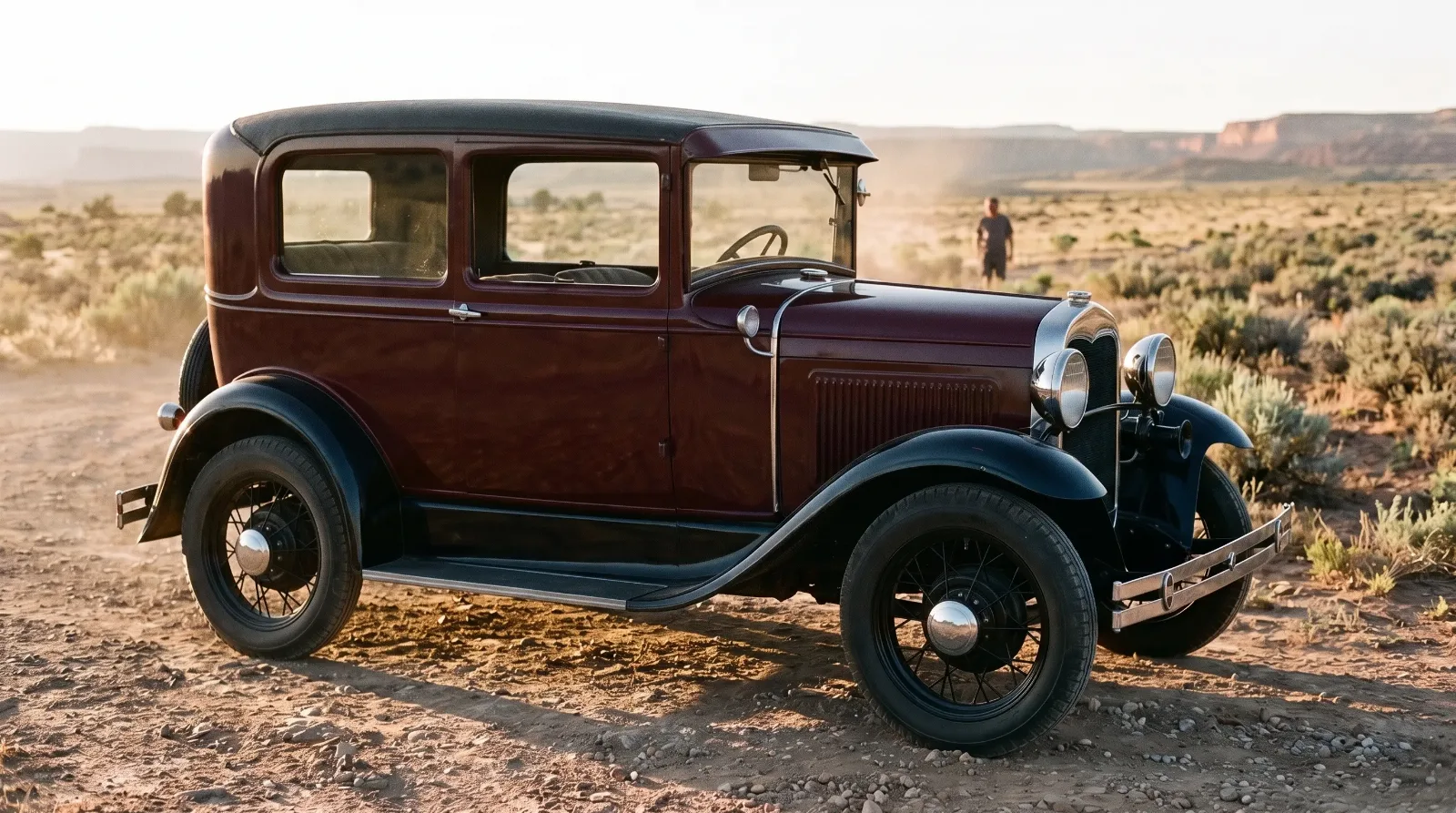
For the complete Model A catalog, from coupes to the station wagon, our overview of Tudors, Fordors and roadsters sets every style side by side. Here the focus is the two sedans.
What Model A Tudor and Fordor actually mean
Tudor means two-door. Fordor means four-door. The sources agree that the spellings were a marketing choice, a phonetic pun that put "Ford" inside one name and turned "two" into a word with a ring of history. Some hobby references read Tudor as a nod to the English royal house that ruled from 1485 to 1603. That reading fits the sound of the word, but no Ford document we have found says it was the intent, so treat it as a likely joke rather than a recorded one.
The names were not new with the Model A. Ford used them on the Model T first: the Fordor sedan as a 1923 model, photographed by Ford in September 1922, and the Tudor sedan from August 1923, as a 1924 model. When the Model A arrived, the words were already familiar in Ford showrooms, and they carried straight over. The history of that earlier car is covered in our early Ford guide.
The Tudor: one body, two generations
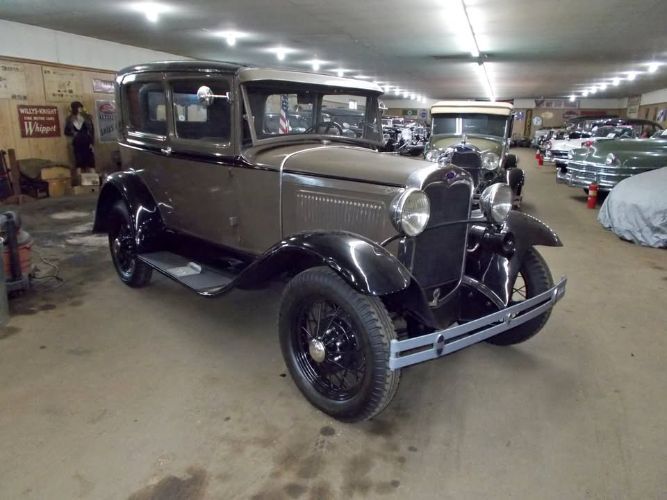
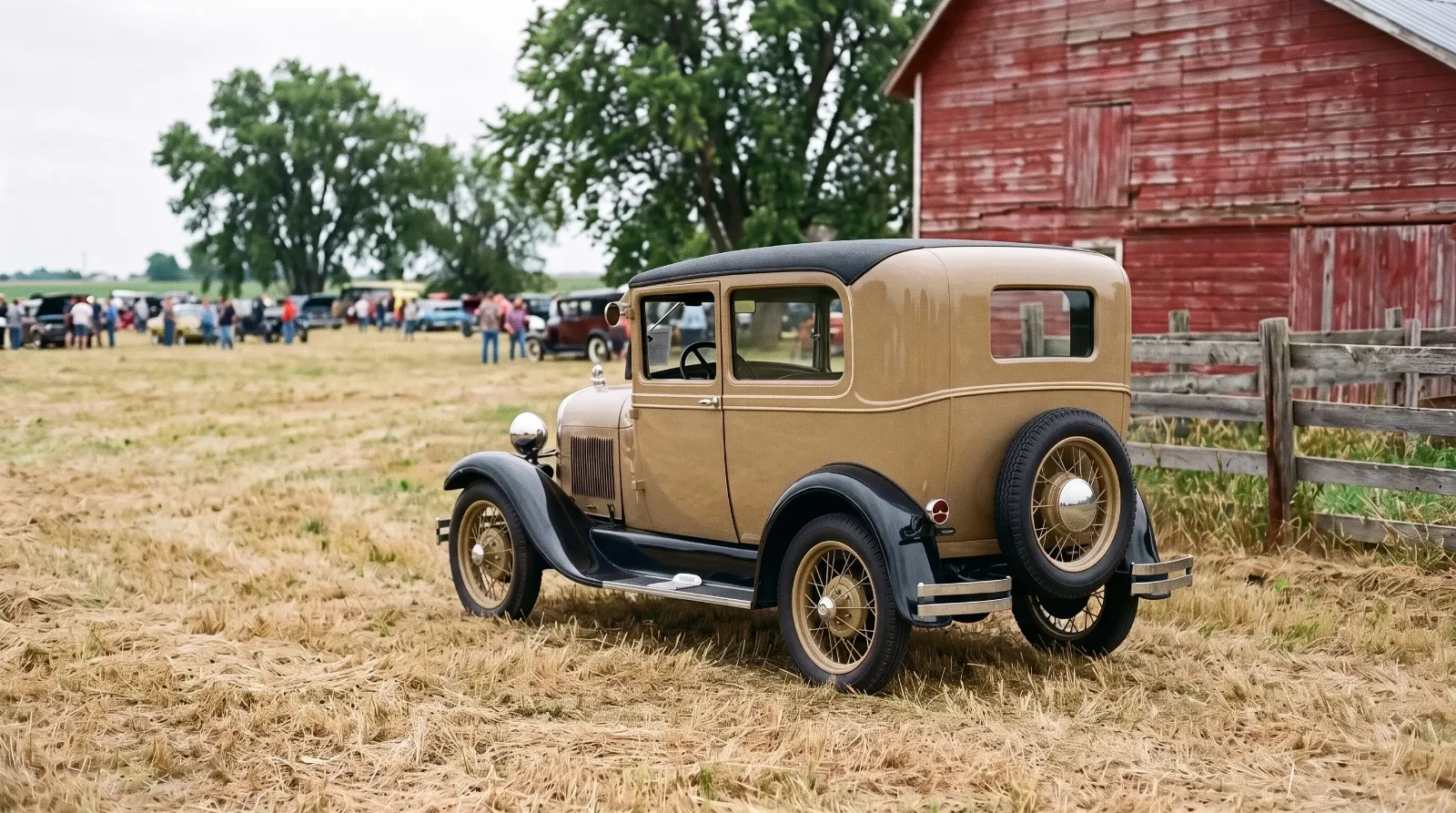
The Tudor was the volume car of the Model A range. About 1,387,270 were built, nearly 29 percent of all Model As, which makes it the most common body style by a wide margin. Fewer than 24,000 of those were De Luxe Tudors.
It was there from the start. A Tudor was among the cars shown at the Kansas City launch exhibit in December 1927, and an engine-number record dates an early Tudor with engine A-1149 to the first days of that month.
Ford's style numbers divide the Tudor into two generations. The 55-A of 1928 and 1929 has a curved cowl. The 55-B of 1930 and 1931 was mildly restyled with a straight cowl. A De Luxe version of the 55-B followed in June 1931. Bodies came from Ford's own shops or from Briggs, which built in leased space inside the Highland Park plant, and Budd supplied panel assemblies for the 55-A.
"A Tudor is easy to dismiss because there are so many of them. That is precisely why it repays study. With well over a million built, the small differences between a curved-cowl 55-A and a straight-cowl 55-B are the whole story of the car."
Sarah Whitfield
The Fordor: a family of four-door bodies
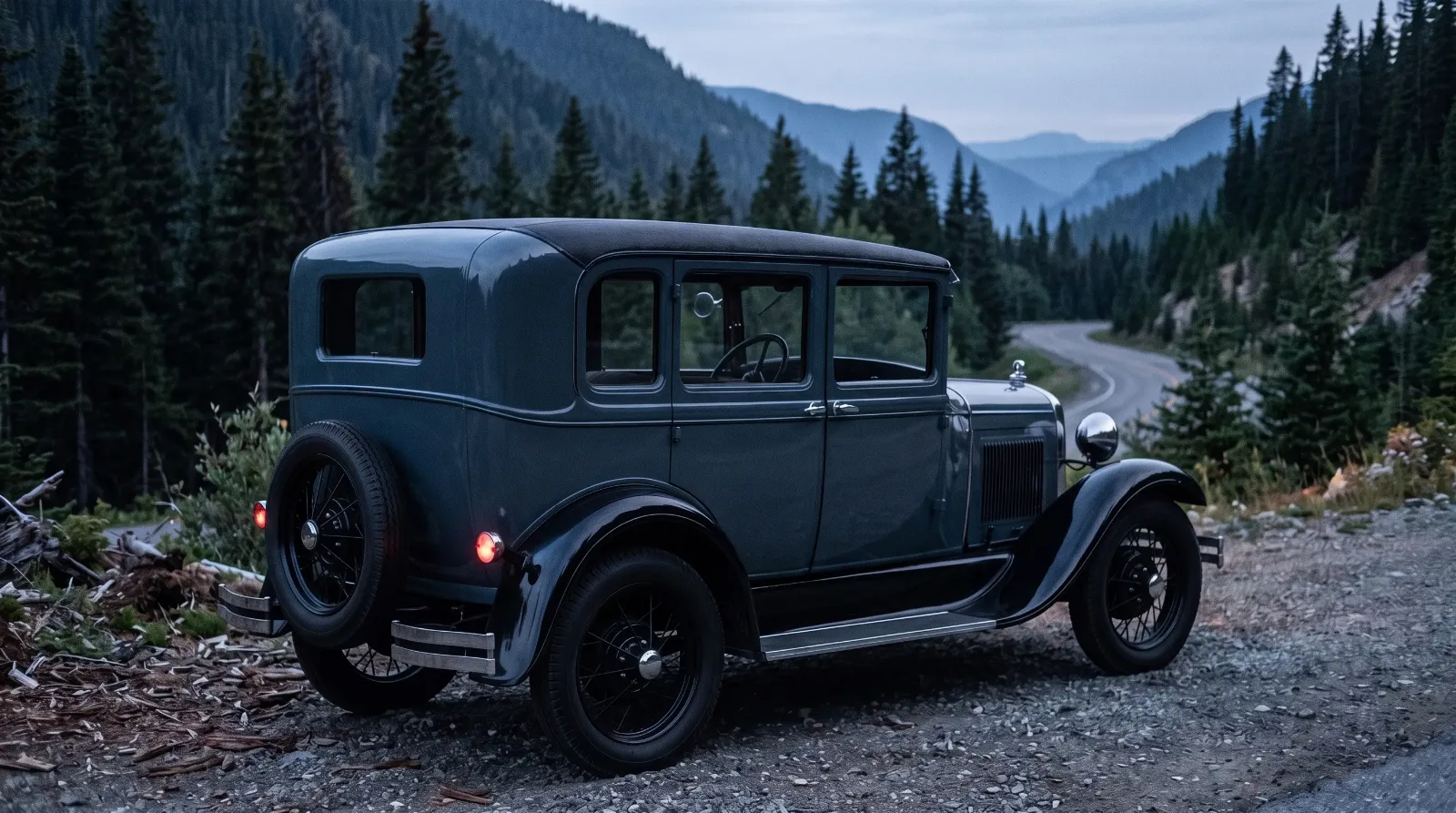
The Fordor was named from the start: Ford's December 1927 announcement listed a Fordor enclosed sedan at $585, and one stood in the Kansas City exhibit. Buyers waited for it, though. The first production Fordor, the two-window style 60-A with a Briggs body, was introduced in May 1928, and the 1928 list price settled at $570. From there the name grew into a family rather than a single body, and this is where the codes earn their keep.
The two-window Fordors (60-A, 60-B, 60-C, and later 170-A and 170-B) were Briggs bodies; the 60-C is the Briggs blindback of 1929. The three-window Fordors (the 165 series) came from Murray and Briggs. The Town Sedan (the 155 series) was the better-trimmed version. From March 1931 the slant-windshield 160-series Fordors joined the range, with Murray and Briggs building identical bodies with interchangeable parts.
The builder often shows in the glass. Murray door windows have a slight arch at the top, while Ford and Briggs windows run straight across, except on the 1931 slant-windshield Fordors, which are all arched.
Tudor vs Fordor in the price list
The difference in doors was also a difference in money. The table gives US list prices, FOB Detroit.
| Year | Tudor | Fordor | Fordor premium |
|---|---|---|---|
| 1928 | $495 | $570 | $75 |
| 1929 | $500 | $600 | $100 |
| 1930 | $495 | $600 | $100 |
| 1931 | $490 | $590 | $100 |
The upper trims widened the gap. The De Luxe Fordor listed at $640 in 1930 and $630 in 1931, and the Town Sedan at $670 in 1929, $640 in 1930 and $630 in 1931. The De Luxe Tudor listed at $525 in 1931.
The Model T had priced its sedans further apart. In 1923 a Model T Tudor cost $595 and a Fordor $725, a $130 gap. On the Model A the premium for two extra doors shrank, and the Tudor itself became one of the cheapest closed cars in the line.
Which one to choose, and the cars in between
The choice today turns on use and on what you value in a body. The Tudor is plentiful, so parts and reference cars are easy to find, and its single body family makes originality simpler to judge. The Fordor is the more varied car: two-window, three-window and Town Sedan bodies from two builders give a collector more to research and more to get wrong.
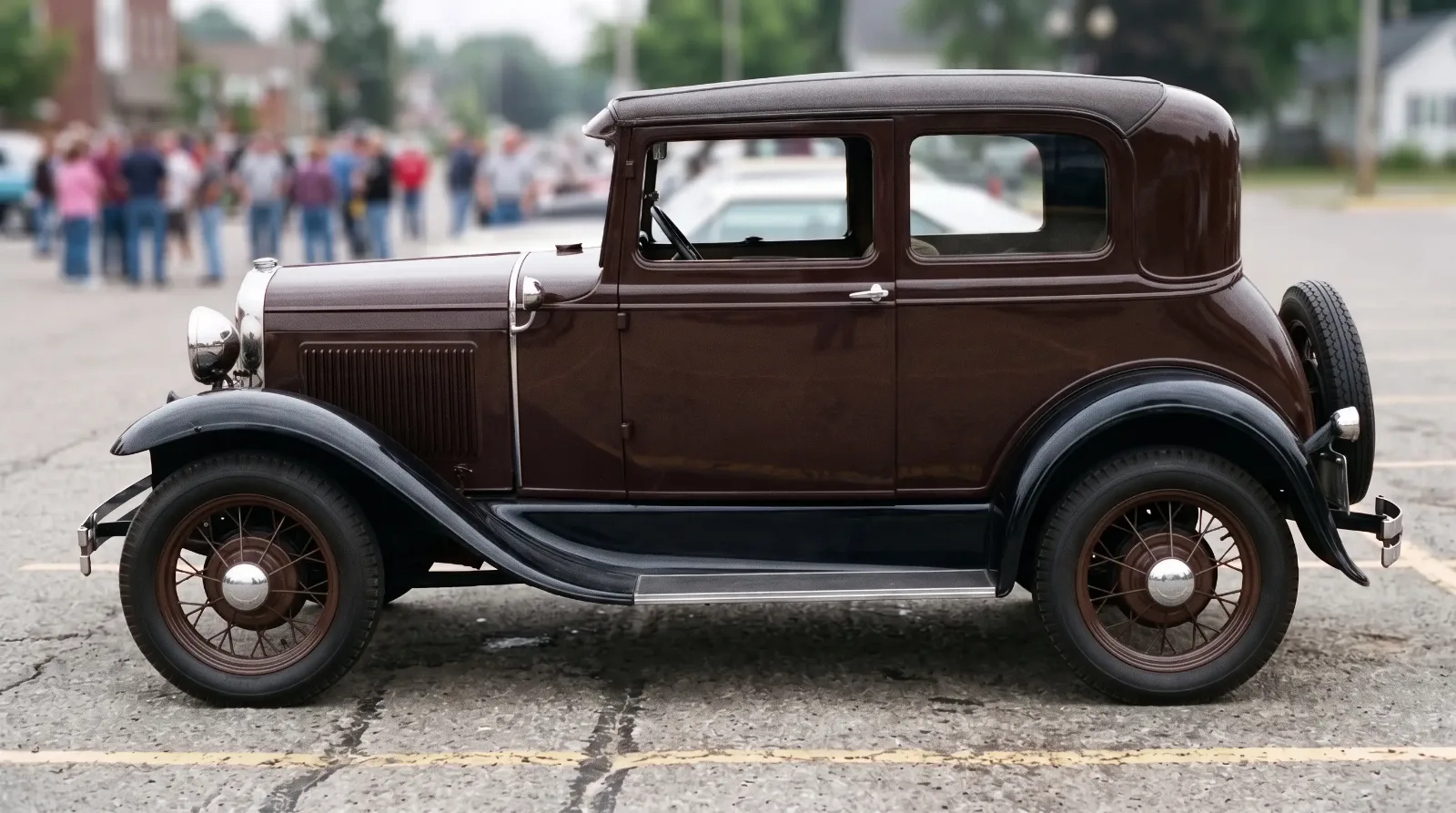
Not every closed Model A fits the two-name scheme. The 1930 to 1931 Victoria is a two-door closed car with its own bustle back and slanted windshield, and it sits outside both families; see our piece on the Victoria. The coupes and the Town Car have their own codes as well.
Whichever you favor, judge the car by its tag, its cowl and its glass before its asking price. When you are ready to compare real examples, browse the current Model A Tudors and Fordors for sale with the codes above in hand.
Sources and notes
- Mac's Motor City Garage: the 1928 to 1931 Model A Tudor
- Ford Garage: US Model A body style numbers and builders, 1928 to 1931
- Model A Ford Club of America: new car prices, 1928 to 1931
- The Restorer (MAFCA): Introduction of the New Ford
- The Henry Ford: "First Pictures of the New Ford Car" advertisement, December 1, 1927
- Mac's Motor City Garage: 1923, the Model T's biggest year
Related Reading
Have a
Ford Model A
for Sale?
Reach thousands of serious classic car collectors across the US.
Sell It Here →
Selling a classic? Here's how: sell my classic car
Are You a Classic Car Dealer?
List your full inventory and connect with targeted classic car buyers.
Join as a Dealer →
#ford model a
#Model A body styles
#Early Ford history
#Model A body codes
#Model A Tudor
#Model A Fordor

About the author
Sarah Whitfield
Third-generation classic car collector specializing in pre-war American and European coachbuilt automobiles. Researcher and concours enthusiast.
Related Listings - Ford Model A

Comments
Be the first to comment on this article.