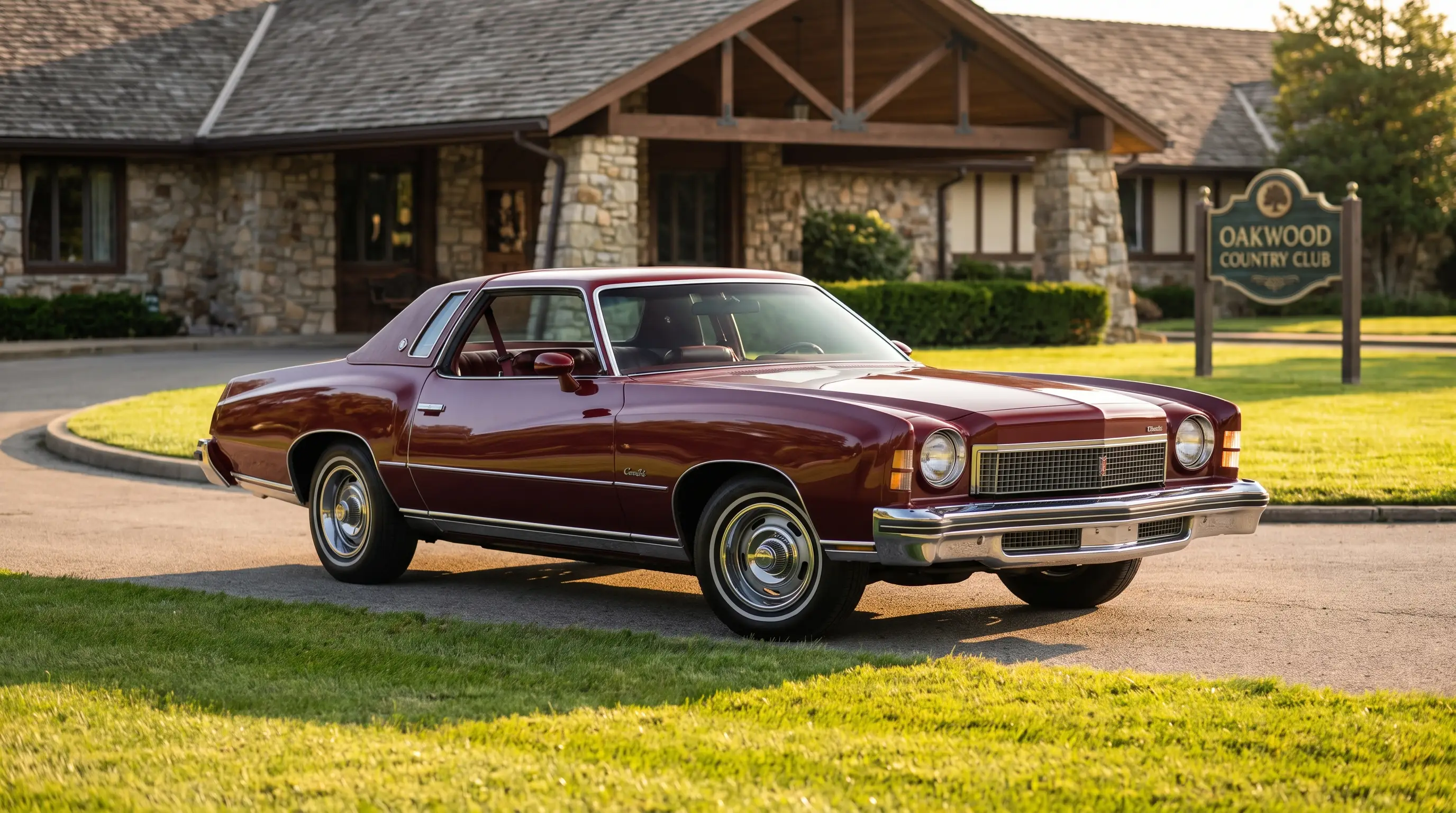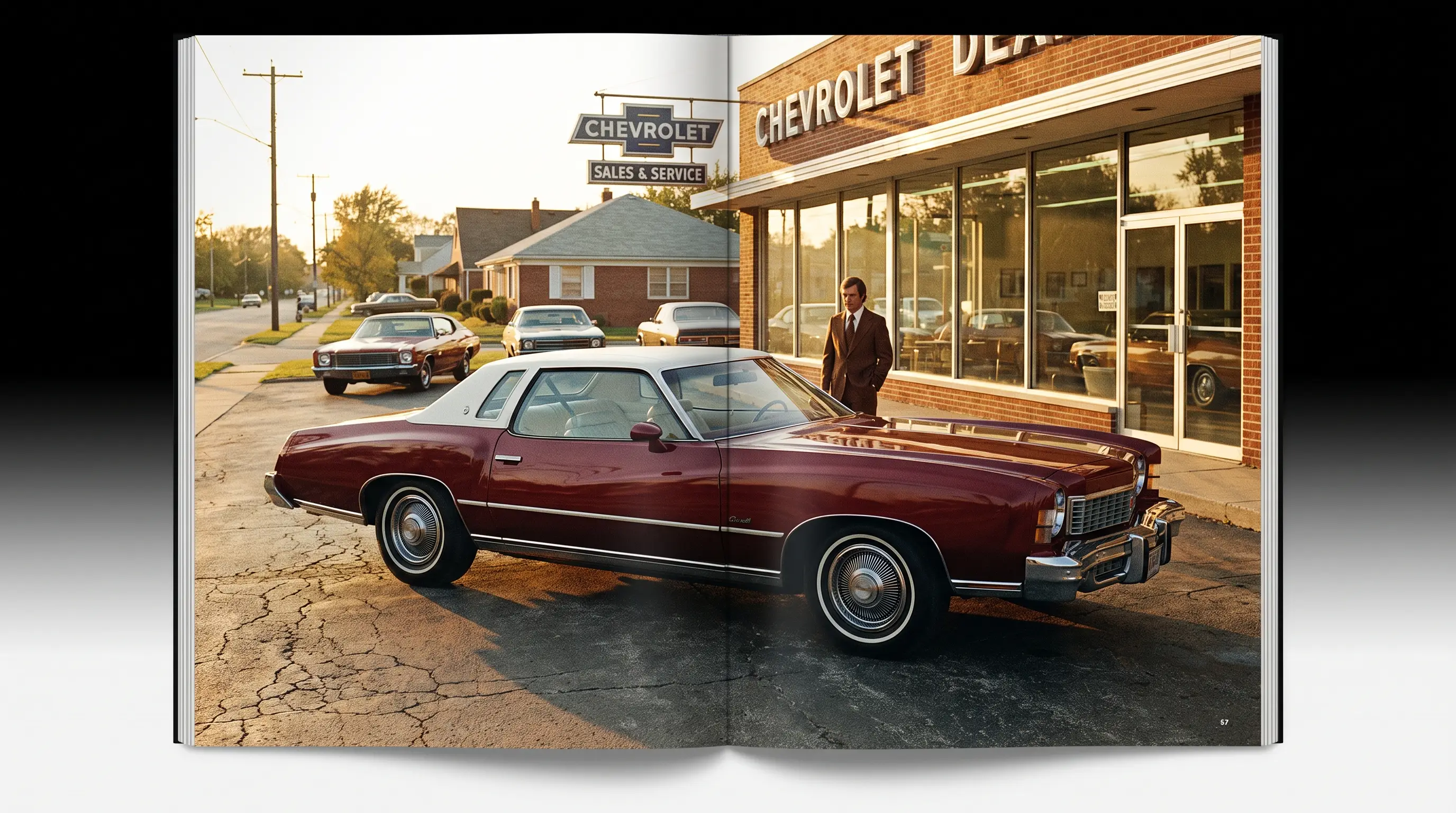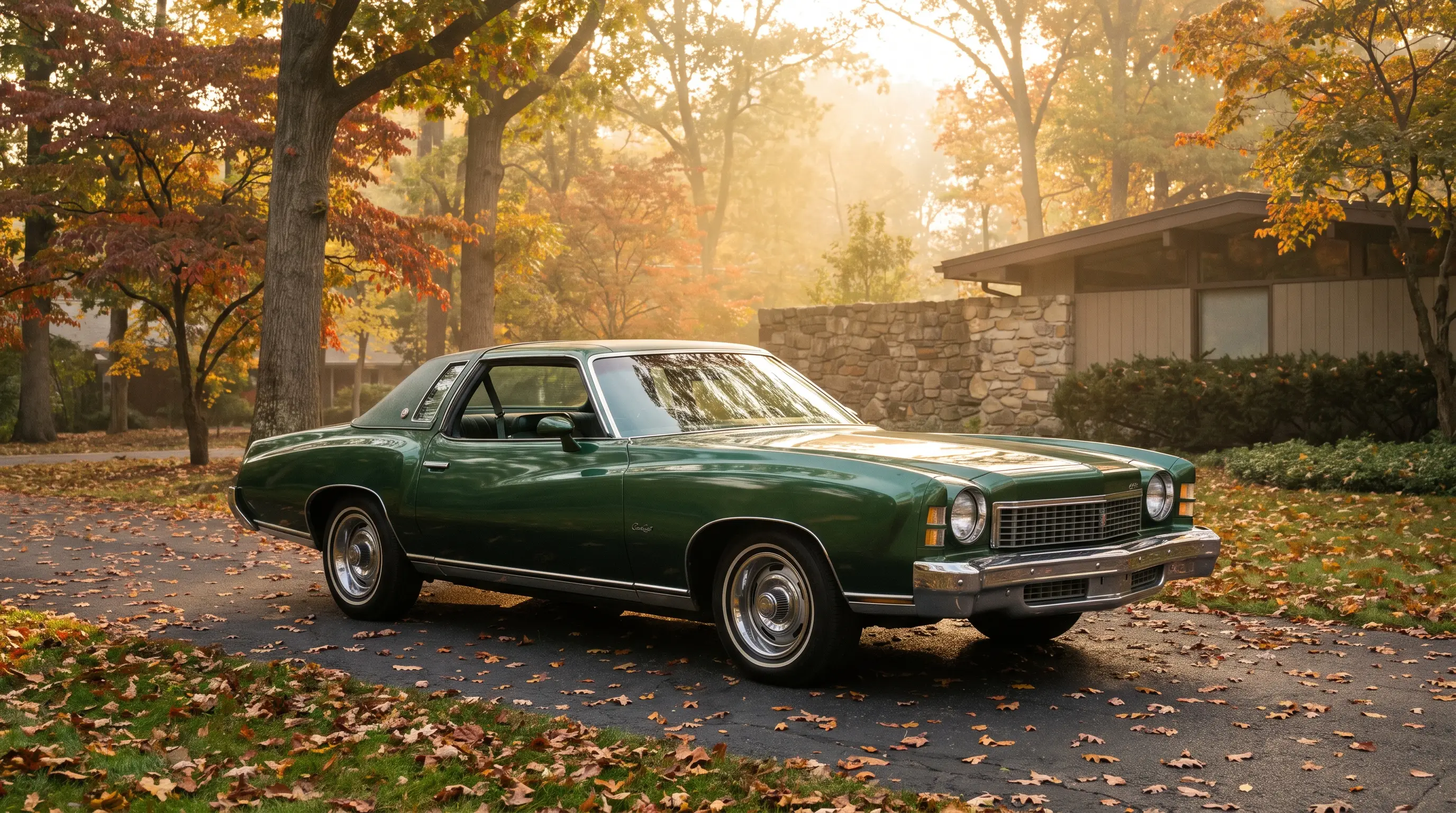
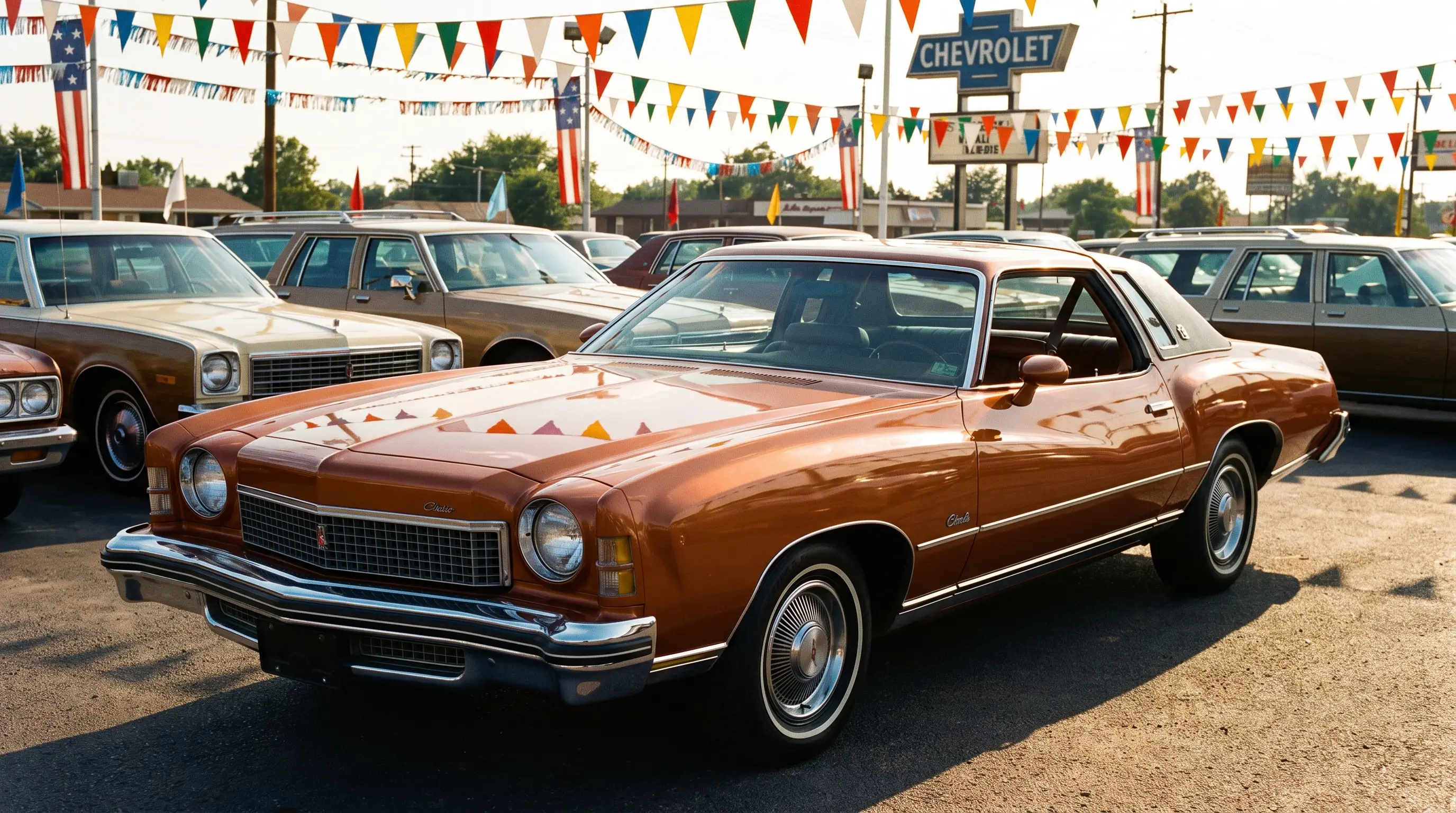
Chevrolet took a real gamble when it rebodied the Monte Carlo for 1973, dropping the crisp, semi-fastback lines of the first generation in favor of the heavier, fixed-pillar Colonnade design that federal rollover proposals had pushed General Motors toward across its mid-size line. What could have been a sales disaster instead turned into one of the biggest success stories in the nameplate's history, and the numbers from that first Colonnade year are still worth examining closely.
A redesign that arrived at exactly the right moment
The timing of the 1973 Monte Carlo redesign mattered as much as the styling itself. American buyers were shifting away from raw muscle car performance and toward comfort, quiet, and a sense of personal luxury that did not require a Cadillac budget to obtain. Chevrolet had already proven with the first-generation Monte Carlo that there was an appetite for a mid-size coupe dressed up with a long hood, a formal roofline, and a plush interior, and the 1973 model doubled down on all three qualities. The Colonnade body style, with its thicker pillars and fixed rear glass, actually suited that formal personal luxury image better than the outgoing car's sportier lines had, even though the change was driven by safety regulation rather than styling preference.
Buyers responded immediately. Where the first-generation Monte Carlo had built a loyal following, the 1973 redesign expanded it dramatically, pulling in customers who had never considered the nameplate before and giving Chevrolet dealers a genuine hit on their hands in a year when much of the industry was bracing for the fuel shocks that would hit later that same year.
The numbers that made this a blockbuster
Sales for the 1973 Monte Carlo climbed sharply over the outgoing model, with Chevrolet building around 233,700 units that model year, a jump substantial enough to catch the attention of rival Ford and Oldsmobile product planners who were watching the personal luxury segment closely. That surge came despite the oil embargo hitting in the fall of 1973, which should by all logic have hurt a car built around a long hood and available big-block power. Instead, the Monte Carlo's broad range of engine choices, including smaller V8s that softened the fuel economy hit compared to a full-size car, let it ride out the crisis better than many of its size-class competitors.
The blockbuster nature of 1973 was not a one-year fluke either. It set the sales trajectory for the rest of the Colonnade generation, with the Monte Carlo continuing to post strong numbers through 1977, eventually becoming one of the best-selling nameplates Chevrolet offered outside its core sedan and truck lines. That consistency across five model years is the real proof that 1973 was not a lucky bounce but a genuine shift in what American buyers wanted from a mid-size coupe.
What buyers were actually choosing when they bought one
Part of what made the 1973 Monte Carlo sell so well was how it positioned itself against its own corporate siblings. It cost less than a Buick Riviera or an Oldsmobile Toronado while offering a comparable sense of occasion, with a long hood, a formal grille, and an interior dressed up with options like a tilt steering wheel, power windows, and available bucket seats with a center console. Chevrolet marketed it as an attainable luxury statement rather than a sports coupe, and buyers moving up from a Chevelle or an Impala found exactly the step up in perceived status they were looking for without a corresponding jump in price that would push them toward a different brand entirely.
Dealers reported that many 1973 Monte Carlo buyers were repeat Chevrolet customers trading up rather than conquest sales stolen from Ford or Chrysler, which tells its own story about brand loyalty within General Motors during this period. The car did not need to win over skeptical outsiders. It needed to give existing Chevrolet buyers a reason to spend more at the same dealership, and the 1973 redesign did exactly that.
"What strikes me looking back at the 1973 sales figures is how little the oil embargo actually dented Monte Carlo demand. Chevrolet had built a car that buyers wanted for reasons that had nothing to do with fuel prices, and that kind of demand is hard to manufacture on purpose."
- Sarah Whitfield
Why the 1973 sales story still matters to collectors
Understanding just how large 1973 production actually was changes how collectors should think about rarity within this generation. A well-documented 1973 Monte Carlo is not automatically a rare car simply because it is fifty years old. What makes an individual example valuable is condition, options, and paperwork, not scarcity of the model year itself, since Chevrolet built these cars in huge numbers during what was genuinely a blockbuster season for the nameplate. Readers who want the 1973 monte carlo story in full detail, including how the redesign came together before it ever reached dealer lots, will find the background context useful before evaluating any individual car for sale. For the broader arc of how this single generation fits into the nameplate's entire run from 1970 through the 1988 Aerocoupe, the full story lays out the connections between eras that a single sales year cannot capture on its own.
For buyers today, that abundance is actually good news. Because so many 1973 Monte Carlos were built and sold, parts availability and community knowledge around the car remain strong decades later, and shoppers browsing classic Monte Carlos on the market can afford to be selective about condition and documentation rather than settling for whatever survives.
How this compares to the rest of the personal luxury field
Placing the 1973 Monte Carlo's sales figures alongside its closest rivals makes the achievement clearer. Oldsmobile's Cutlass Supreme was building its own following in the same segment, and Ford's Thunderbird still carried real prestige, yet neither matched the Monte Carlo's combination of volume and price accessibility that model year. Chevrolet had priced the car just high enough to feel special without pricing out the mainstream Chevrolet buyer entirely, a positioning gap that its General Motors siblings and Ford's competing product did not occupy quite as effectively.
That gap explains why so much of the 1973 sales boom came from within Chevrolet's own existing customer base rather than genuine conquest sales pulled from other brands. Dealers found it easier to move a loyal Chevelle or Impala owner up into a Monte Carlo than to convince a committed Oldsmobile or Ford buyer to switch brands entirely, and 1973's numbers reflect a manufacturer that understood exactly which sales it could realistically capture rather than chasing every corner of the market at once.