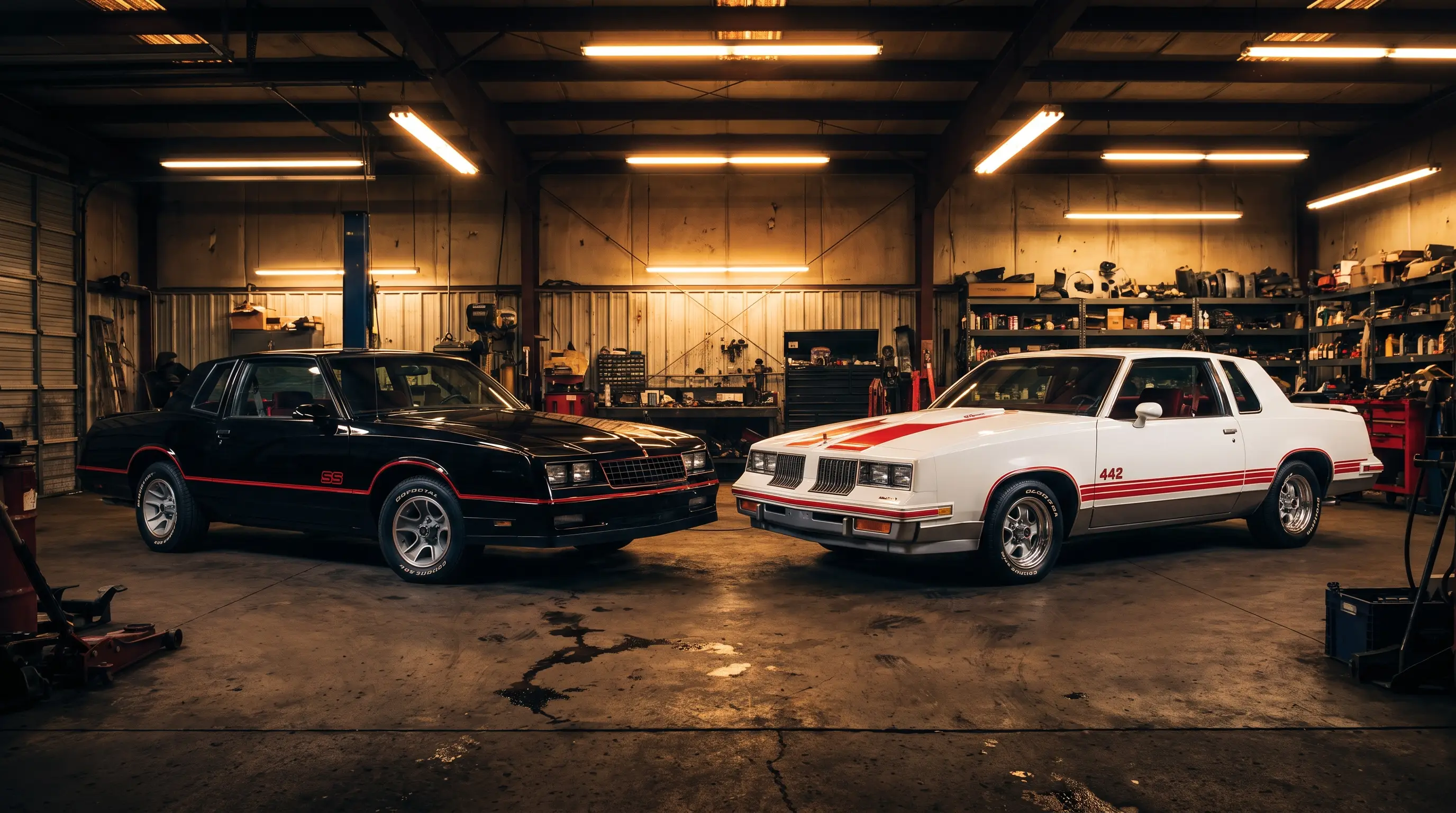
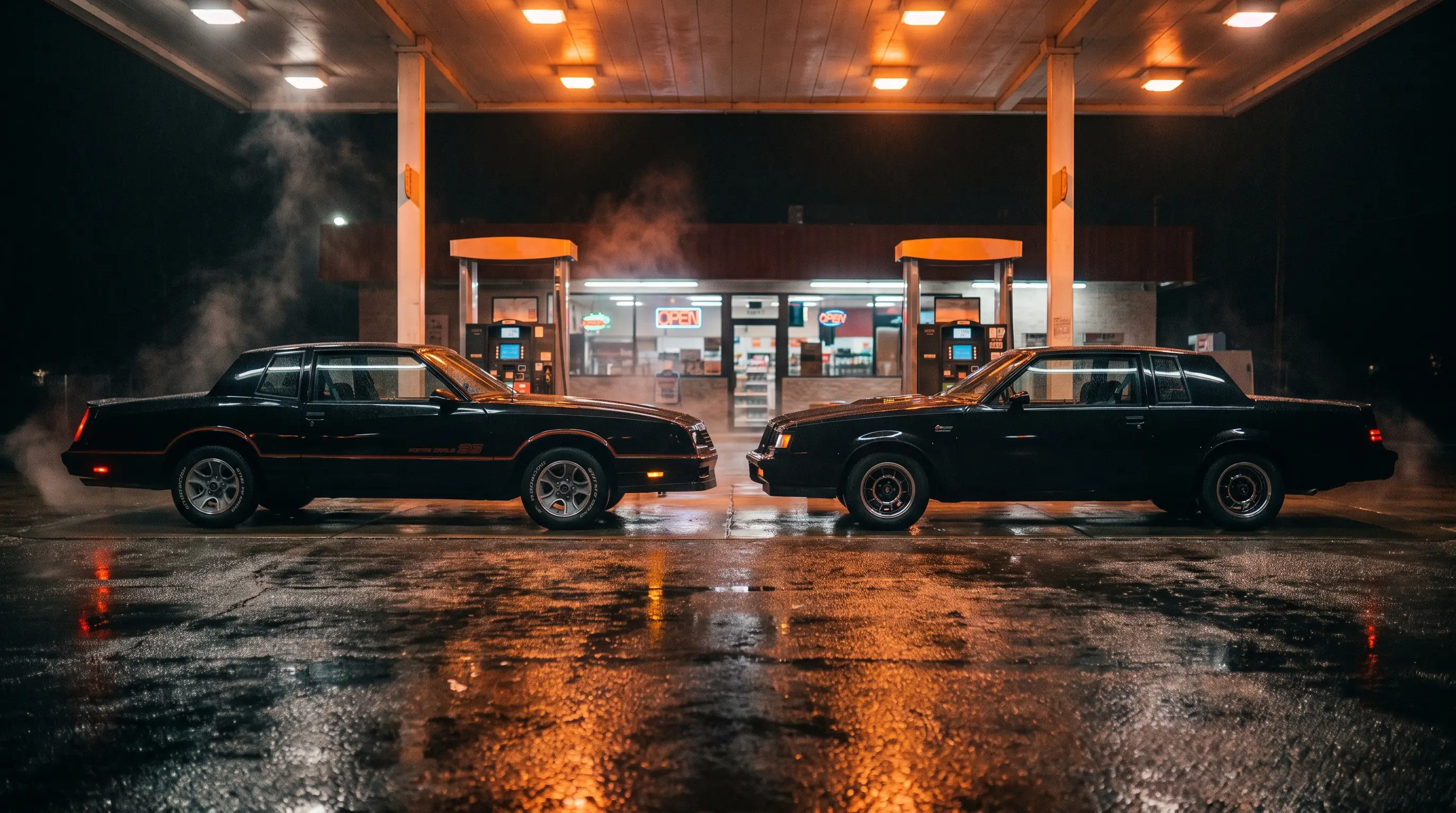
Park a 1986 Chevrolet Monte Carlo SS next to a Buick Grand National of the same year and you are looking at two answers to the same question, arrived at from opposite directions. The monte carlo 1986 ss vs grand national comparison gets treated like a rivalry today, but at the time it was closer to two General Motors divisions solving the same regulatory puzzle with completely different engineering philosophies, and the historical record makes that clear once you set the mythology aside.
Two G-bodies, two philosophies
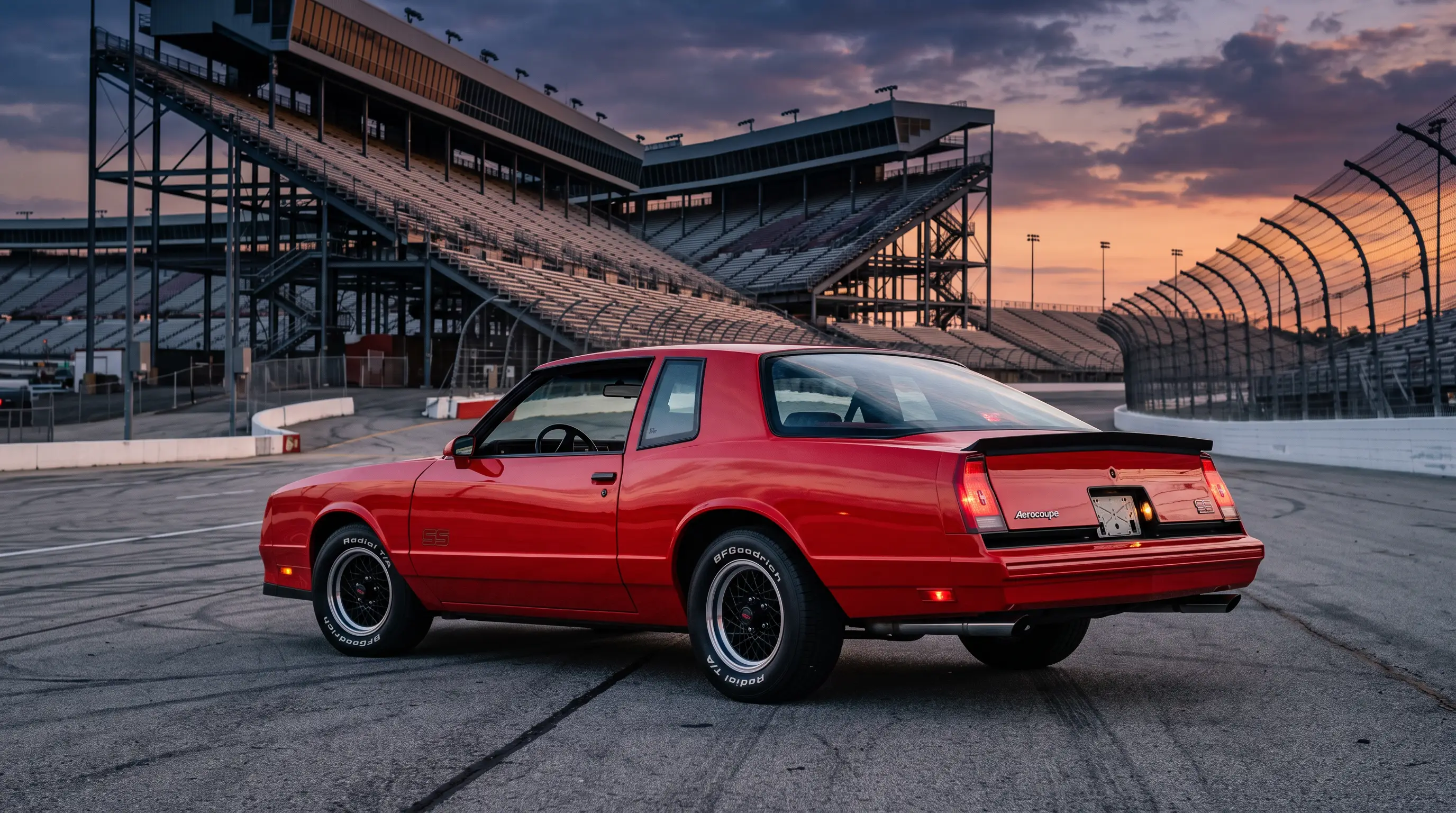
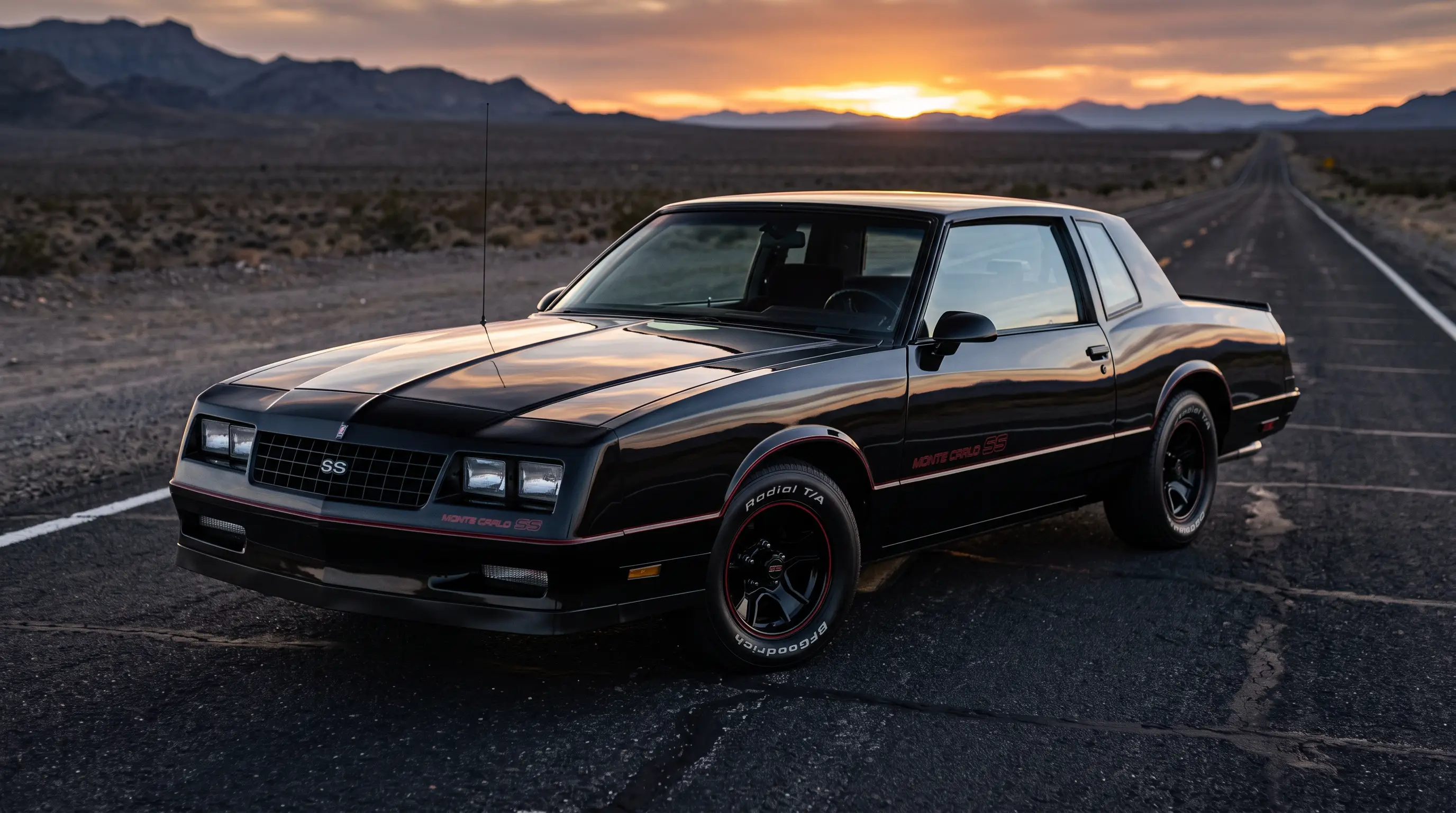
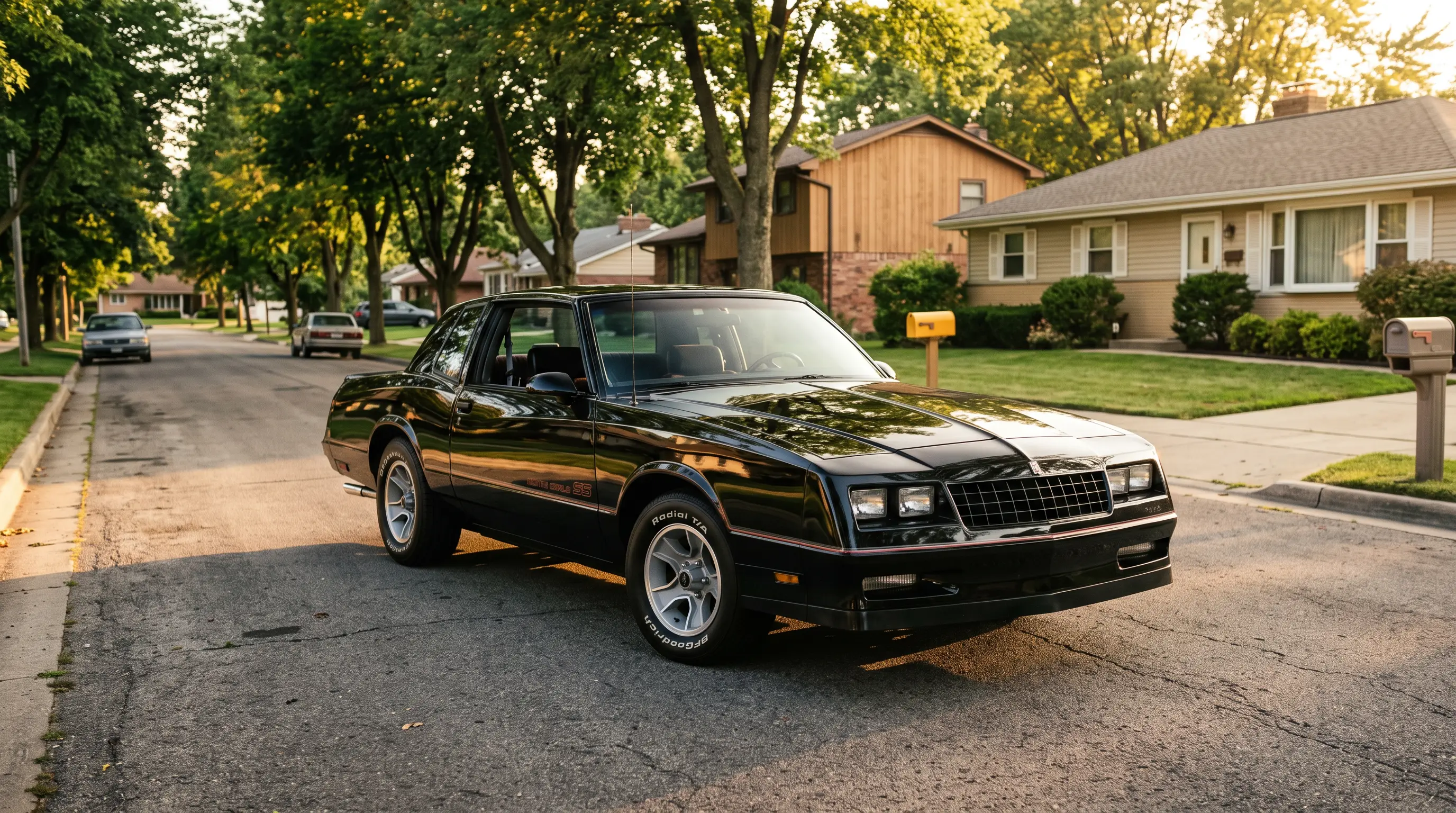
Both cars shared the same General Motors G-body platform, the same basic proportions, and roughly the same era of fuel economy pressure squeezing every American manufacturer's engine lineup. Chevrolet answered with the L69, a naturally aspirated 305 cubic inch small block tuned for a distinct exhaust note and midrange pull, wrapped in an aero-nosed body developed specifically for NASCAR relevance. Buick answered with a turbocharged 3.8 liter V6, a genuinely unconventional choice for an American performance car in 1986, wrapped in a menacing all black package that leaned into intimidation as much as engineering.
These were not competing products chasing the same buyer. Chevrolet's SS was a continuation of a stock car racing identity that had been building since 1983. Buick's Grand National was closer to an engineering skunkworks project that happened to reach production, born out of Buick's turbocharged Regal experiments earlier in the decade. Treating them as identical rivals flattens a more interesting story about how differently two divisions of the same corporation approached the same problem.
What the record actually shows on power
The number that ended most bench racing arguments then and still ends them now is straightforward. The Grand National's turbocharged V6 was rated at 235 horsepower in 1986, a figure that climbed further in the following seasons as Buick refined the turbo system. The Monte Carlo SS's L69 was rated at 180 horsepower. On paper, that is not a close contest, and in period magazine testing it generally was not close in a straight line either. The Grand National's turbo lag was real, but once the boost came in, the car pulled harder than its displacement had any right to suggest.
What period buyers valued differently was character. The Monte Carlo SS sounded like an American V8 because it was one, with a Quadrajet carburetor and a cam profile built for exhaust note as much as output. The Grand National sounded like nothing else on the road, a whistling, hissing V6 that confused people who expected a muscle car to announce itself with displacement. Neither approach was wrong. They were simply aimed at different instincts.
Where the Monte Carlo actually won
Straight line performance was never the Monte Carlo SS's argument, and pretending otherwise does the car a disservice. Its case rested on NASCAR relevance that the Grand National never had. The aero-nosed SS body, and later the fastback Aerocoupe, existed because Chevrolet raced this shape on Sunday and wanted showroom traffic on Monday. Buick's Grand National had no equivalent stock car pedigree in the same period. It was a street and strip phenomenon, not a superspeedway one, and that distinction mattered enormously to buyers who followed Winston Cup racing rather than drag strip time slips.
There is also a documentation angle worth noting for anyone researching these cars seriously today. The Monte Carlo SS benefited from a decade of racing coverage that left a clear paper trail connecting specific race cars to specific street models. The Grand National's history is better documented through drag strip time slips and dealer literature than through any racing series, since it never competed in NASCAR in comparable form. Researchers working from primary sources find two very different kinds of archives depending on which car they are chasing.
"The mistake is treating these as the same car with different badges. They were built by different engineering cultures inside the same company, aimed at different instincts in the same buyer pool, and the archive each one left behind reflects that difference just as clearly as the cars themselves do."
- Sarah Whitfield
How each division marketed the difference
Chevrolet's dealer literature for the Monte Carlo SS leaned heavily on motion and competition imagery, tying the car visually to the stock car program even in ordinary print advertisements. The pitch was continuity. Buy this car and you are buying into the same identity that runs at Daytona on Sunday afternoons. Buick took the opposite approach with the Grand National, embracing menace over motorsport. The all black paint, the blacked out trim, the near total absence of chrome, all of it was designed to look faintly sinister sitting still in a parking lot. Buick's advertising copy from the period played up exactly that reputation rather than any racing connection, because there was no racing connection to point to.
That marketing split says something honest about how each division read its own buyer. Chevrolet assumed its customer wanted to feel connected to a racing tradition. Buick assumed its customer wanted a car that unsettled people at a stoplight regardless of what happened on any track. Both bets paid off commercially, which is part of why this comparison still generates genuine debate rather than a settled consensus. Neither company was wrong about its own audience.
It is also worth noting how differently each car aged in enthusiast memory. The Grand National's reputation only grew as turbocharging became mainstream engineering rather than an oddity, giving the car a kind of retroactive vindication that the Monte Carlo SS did not need because its racing credibility was never in question to begin with. That difference in how each car's legend developed over time is as much a part of this rivalry as anything the original spec sheets recorded.
The honest historical verdict
Neither car beat the other in every category that mattered, because they were not built to compete in the same categories. The Grand National wins the outright performance argument decisively, backed by contemporary road tests and a documented history of drag strip results that the Monte Carlo SS never claimed to match. The Monte Carlo SS wins the racing relevance argument just as decisively, backed by an actual NASCAR record the Grand National could not claim. Collectors today tend to gravitate toward whichever story appeals to them personally, and that split explains why both cars still command serious attention decades later rather than one eclipsing the other.
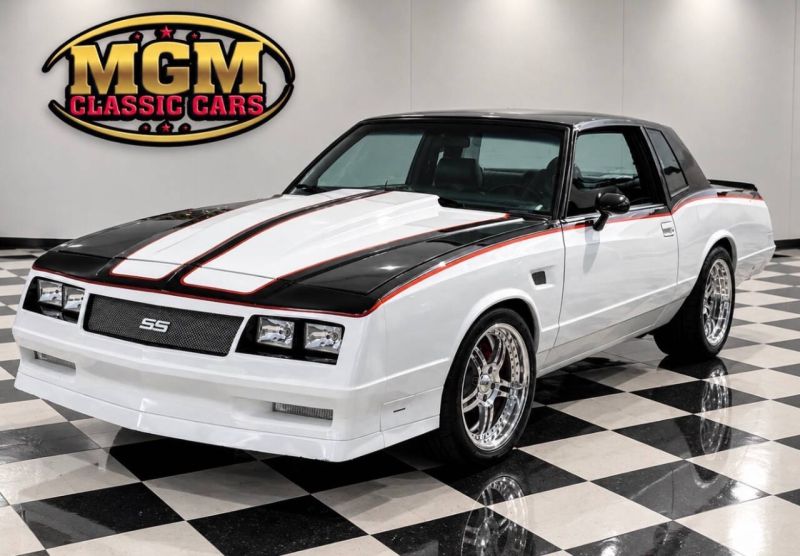
More on the 1986 Monte Carlo SS covers the model year in full if you want the complete picture beyond this specific rivalry, and where this started traces the nameplate back to its earlier generations for anyone curious how the SS fit into the broader Monte Carlo story. If the comparison has you shopping seriously, classic Monte Carlos on the market is a reasonable place to start looking at what survives today.