
For a couple of years at the end of the 1960s, the factories built some of the strangest cars in American history, and they did it for one reason. To win on Sunday, they had to sell it on Monday. NASCAR had a rule. If you wanted to race a body or an engine on its superspeedways, you had to build a minimum number of street versions the public could buy. That rule handed us the winged Dodges, the drooping Ford noses, and a Mustang with an engine that never should have fit. Welcome to the aero wars.
Car Features
6 min read
NASCAR Homologation and the Aero Wars
The winged Charger Daytona, Superbird, Torino Talladega and Boss 429. How NASCAR's homologation rule built the strangest, fastest muscle cars ever.
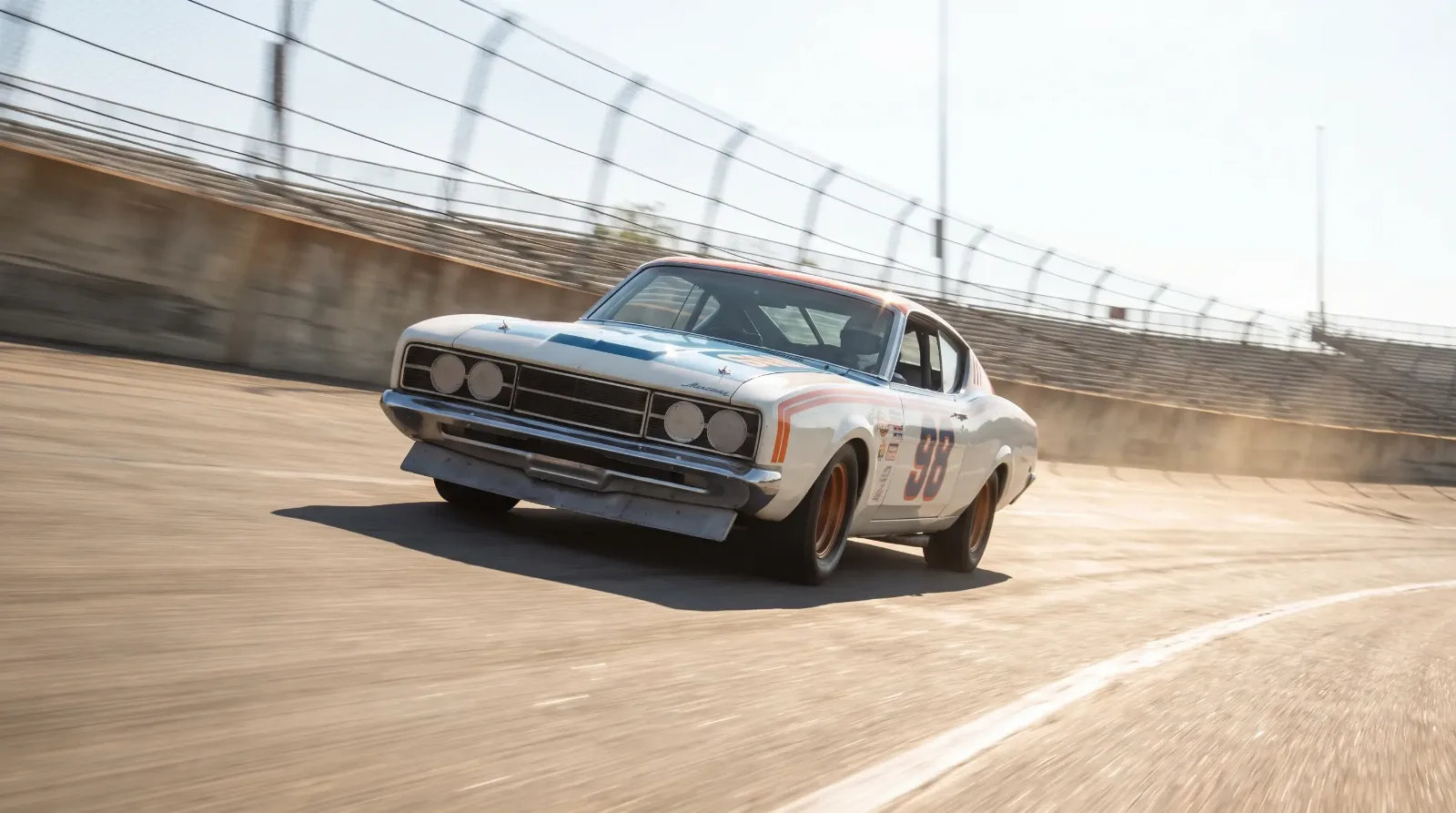
I have worked on enough of these cars over the years to tell you they were not built to be practical. They were built to satisfy a rulebook and go fast on a two and a half mile oval. Everything else was an afterthought. The drag strip had its own version of this fight, and the the drag racing history story covers that side. This one played out at Daytona and Talladega.
What homologation actually meant
Homologation is a fancy word for a simple deal. NASCAR did not want pure prototypes racing. It wanted stock cars, so it required the manufacturers to actually produce and sell the hardware they raced. The exact number moved around, but the idea held. Build enough street copies, and your race car was legal. Skip that step, and you sat in the pits.
The number the manufacturers had to hit is where things got interesting. When NASCAR said you needed to build 500 of something, the factory built 500 and not one more than it had to. When the rule tightened to roughly one car per two dealers, the numbers jumped. That single rule is why these cars exist at all, and why some are rare and some are merely uncommon.
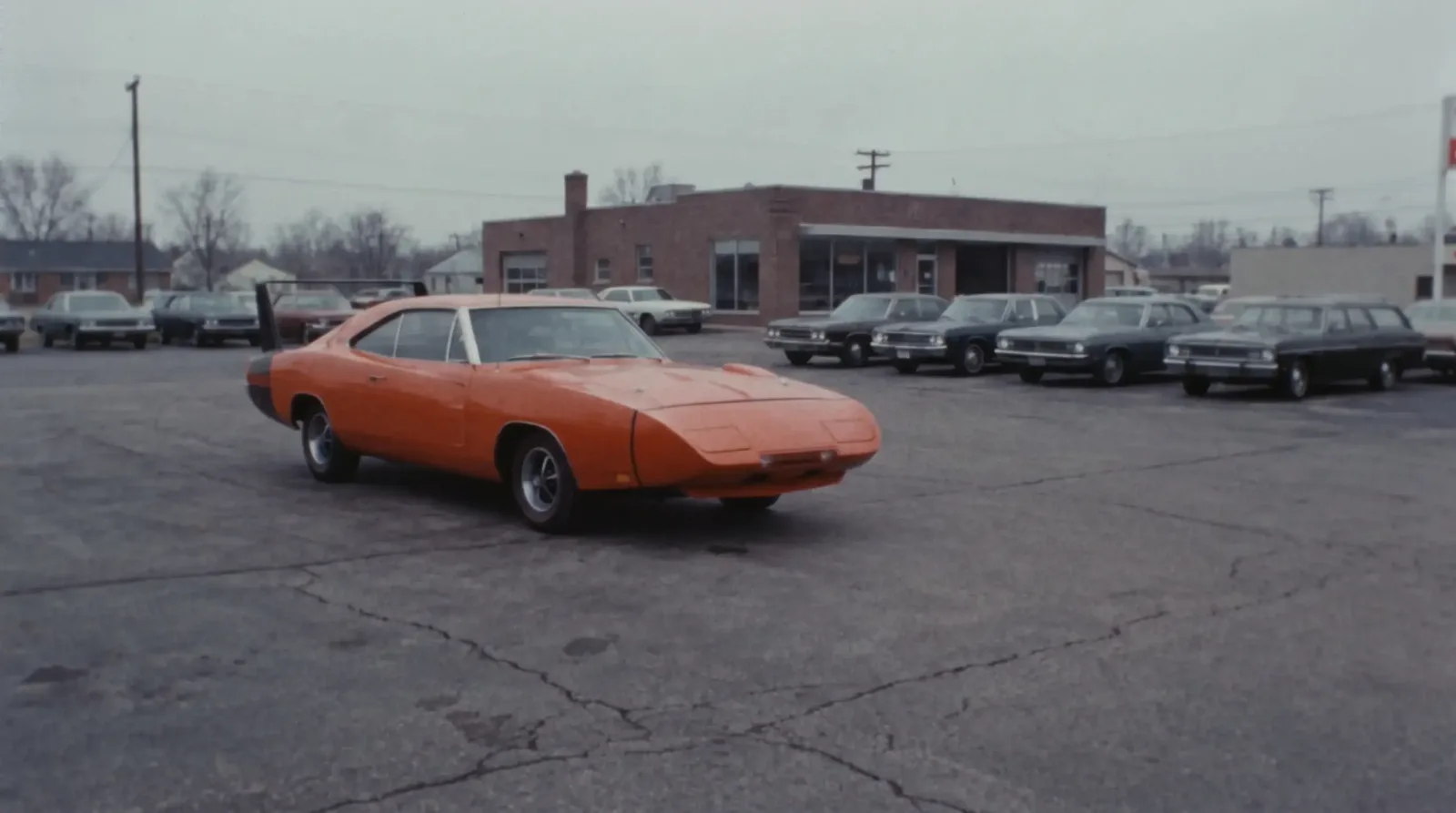
Here is the part that always got me working on them. The street versions were a headache to sell. Dealers did not know what to do with a winged Dodge that barely fit in a service bay and scared off the average buyer. Some sat on lots for months, discounted, because nobody wanted a car that looked like it came from another planet. The factory did not care. The street cars were never the point. They were a tax the manufacturers paid to get the race body legal, and once the paperwork cleared, the mission was done. The irony is that those slow-selling oddballs are now the crown jewels, worth more than almost anything else the era produced.
The winged Mopars
Chrysler went furthest. The 1969 Dodge Charger Daytona and the 1970 Plymouth Superbird are the cars everybody pictures when they hear aero wars. Both got a long pointed nose cone and a tall rear wing, and neither was styling for the sake of styling. Wind tunnel work showed the nose cut drag and the wing planted the back end at speed. On a superspeedway it worked. In a parking lot it looked like a spaceship.
The Charger Daytona came first, built in a run of around 500 cars to meet the rule. The Superbird followed for 1970 in much larger numbers, roughly 1,900 built once the homologation math changed. Buddy Baker ran a Daytona past 200 miles per hour on the closed Talladega track in early 1970, the first time that had been done on a closed course. Bobby Isaac took the K&K Insurance Daytona to a championship season. These cars earned their reputation on the banking.
Ford's answer and the Boss 429
Ford was not going to watch Chrysler take the speedways without a fight. Its aero cars were subtler, the 1969 Torino Talladega and the Mercury Cyclone Spoiler II, both with extended, flush front ends worked out for high speed. Around 750 Talladegas were built to satisfy the rule. They did not have wings, but they cut through the air, and they won races.
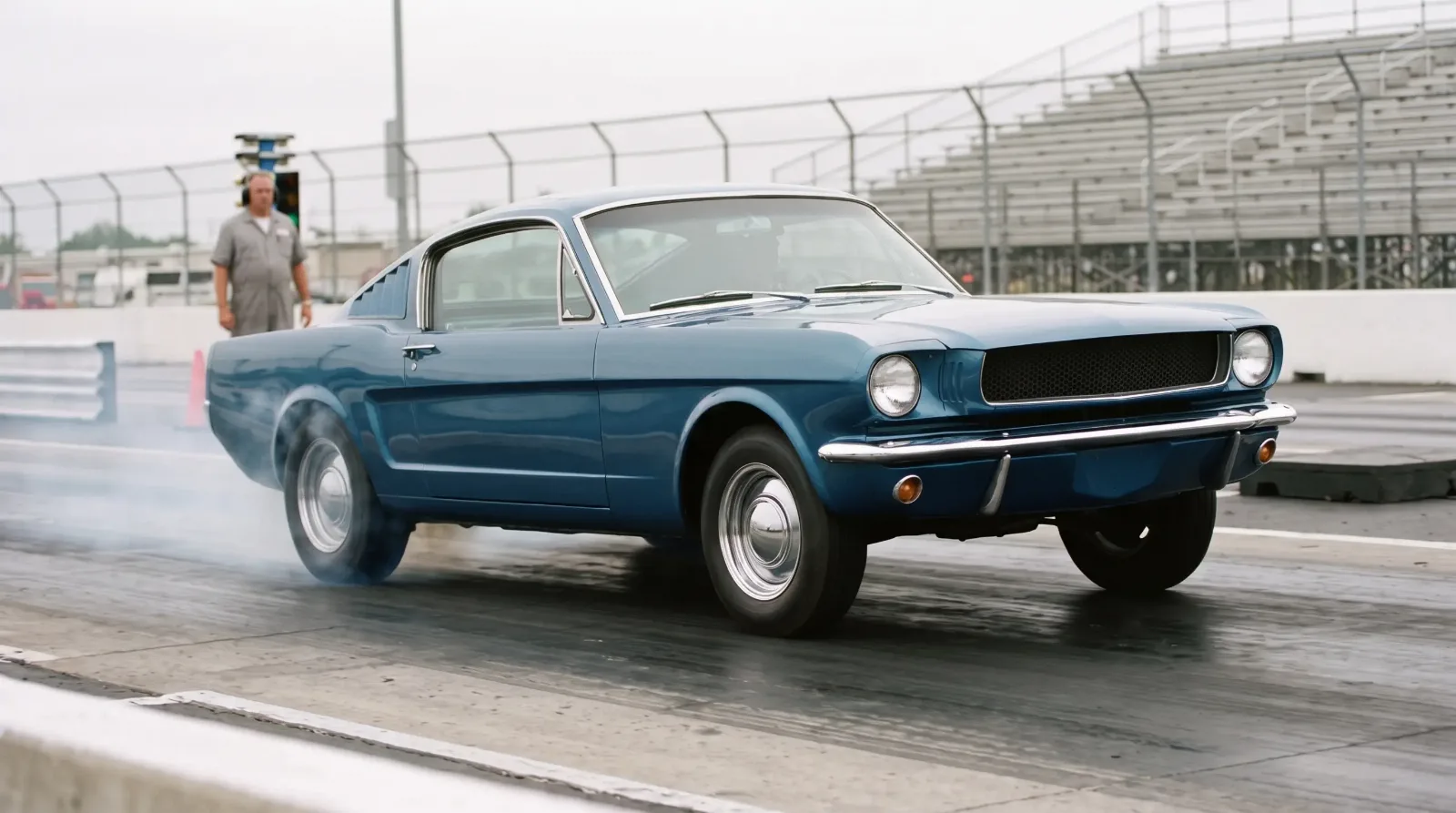
Then there is the Boss 429, which is a homologation story of a different kind. Ford wanted to race its big semi-hemi 429 engine in NASCAR, and the rule said that engine had to appear in a production car. So Ford stuffed it into the Mustang, a job so tight that Kar Kraft had to modify the shock towers to make it fit. Roughly 1,350 Boss 429 Mustangs were built across 1969 and 1970. The engine was really meant for the ovals. The Mustang was just the delivery vehicle. If you want the broader picture of how these racing programs shaped the street cars, the whole muscle car story ties it together.
| Car | Year | Aero feature | Approx. built |
|---|---|---|---|
| Dodge Charger Daytona | 1969 | nose cone and rear wing | around 500 |
| Ford Torino Talladega | 1969 | extended flush nose | around 750 |
| Plymouth Superbird | 1970 | nose cone and rear wing | around 1,900 |
| Boss 429 Mustang | 1969-70 | 429 engine homologation | around 1,350 |
How it ended and what it left
The aero wars burned out fast. For the 1971 season NASCAR changed the rules to choke the special cars, limiting the engine size the winged bodies could run, which killed their advantage overnight. The factories moved on. The cars that were built for a straightforward reason, to satisfy a rulebook, suddenly had no job left to do.
That is exactly why they are worth what they are now. A documented Charger Daytona or a real Superbird is one of the most valuable American production cars you can own, because so few were built and every one of them carries the story. If the era pulls at you, it is worth time to explore classic muscle car listings and see what has survived. Most of these will never leave a collection, but the everyday muscle cars they inspired still turn up.
"Nobody built a winged Daytona because it was pretty. They built exactly as many as the rulebook demanded, sold them off the lot, and went racing. The street car was the price of admission."
Mike Sullivan
The same homologation logic ran through the drag world too, where factories built featherweight specials to beat the class rules. For that side of the fight, read the full story.
Related Reading
Have a
Classic Car
for Sale?
Reach thousands of serious classic car collectors across the US.
Sell It Here →
Are You a Classic Car Dealer?
List your full inventory and connect with targeted classic car buyers.
Join as a Dealer →

About the author
Mike Sullivan
Detroit-area muscle car enthusiast and restoration specialist with three decades of hands-on experience working on American iron.
Comments
Be the first to comment on this article.