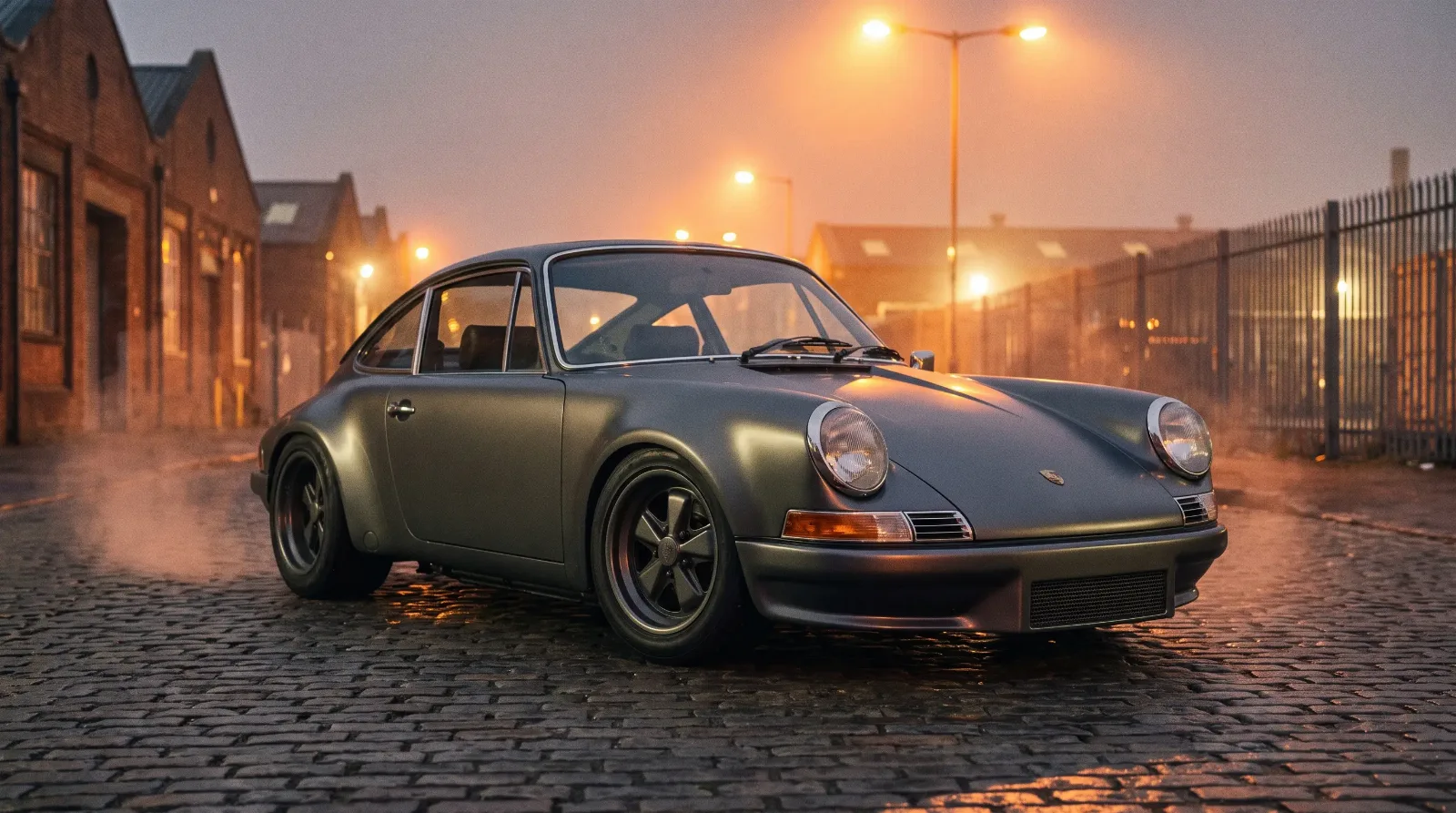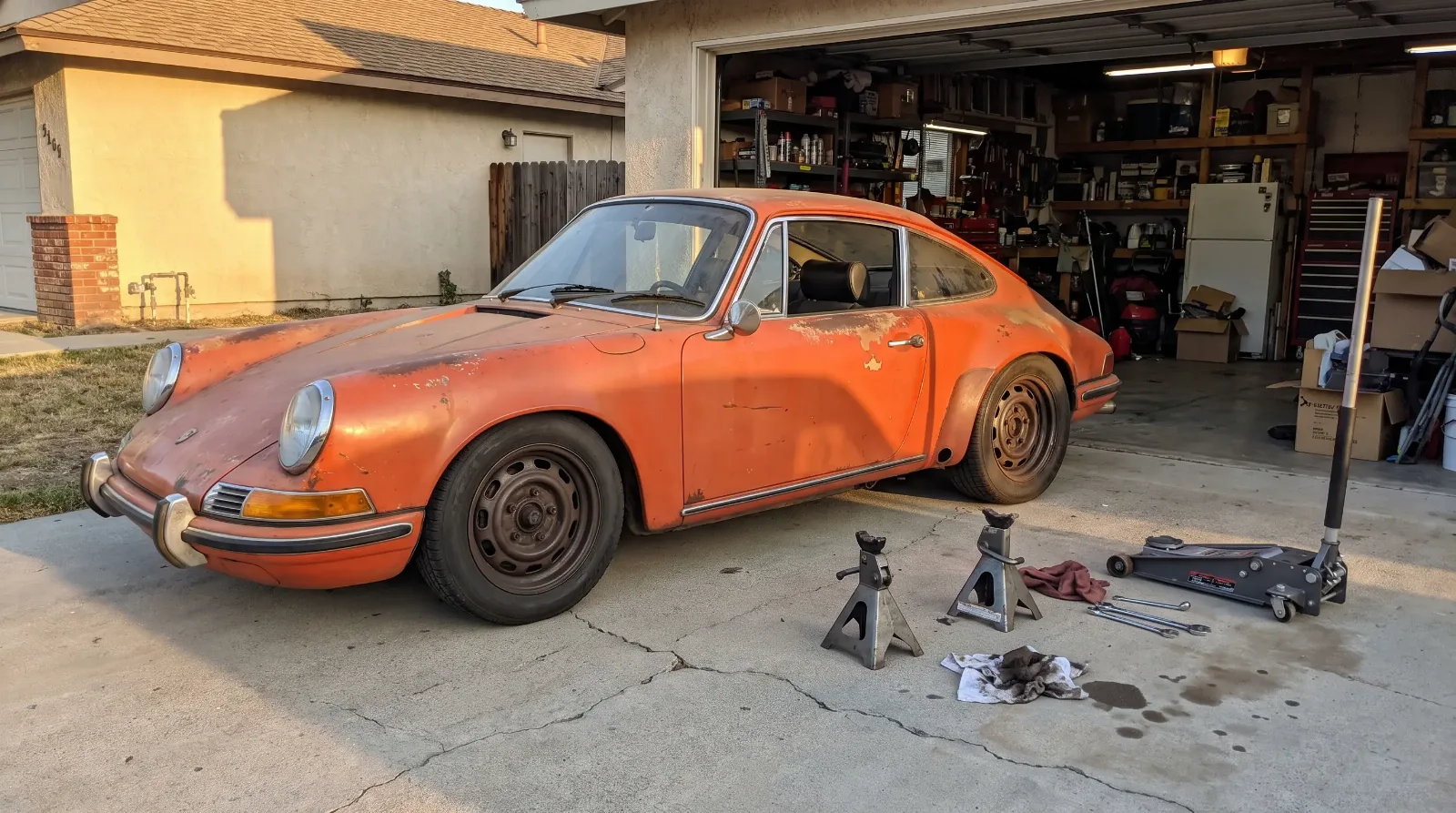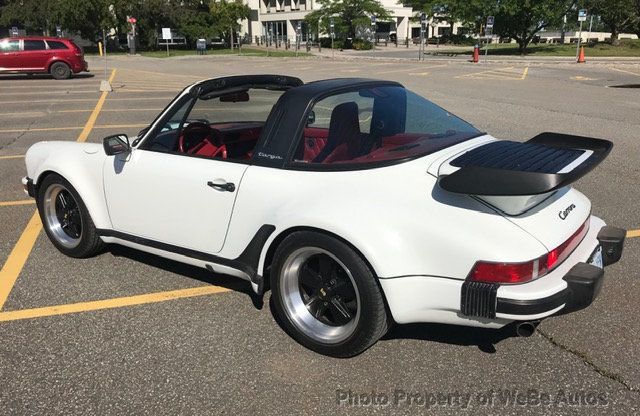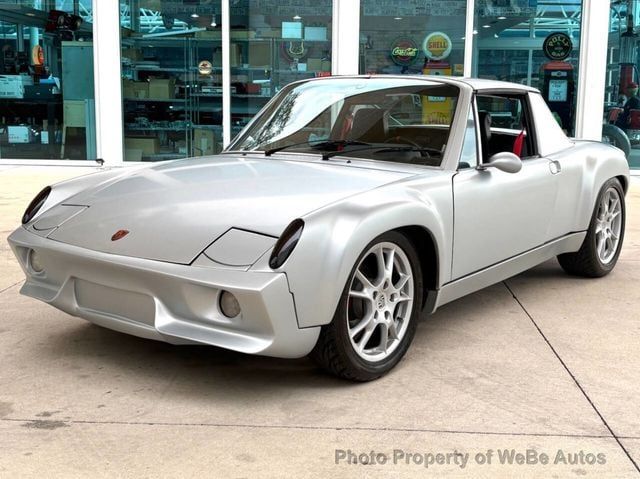
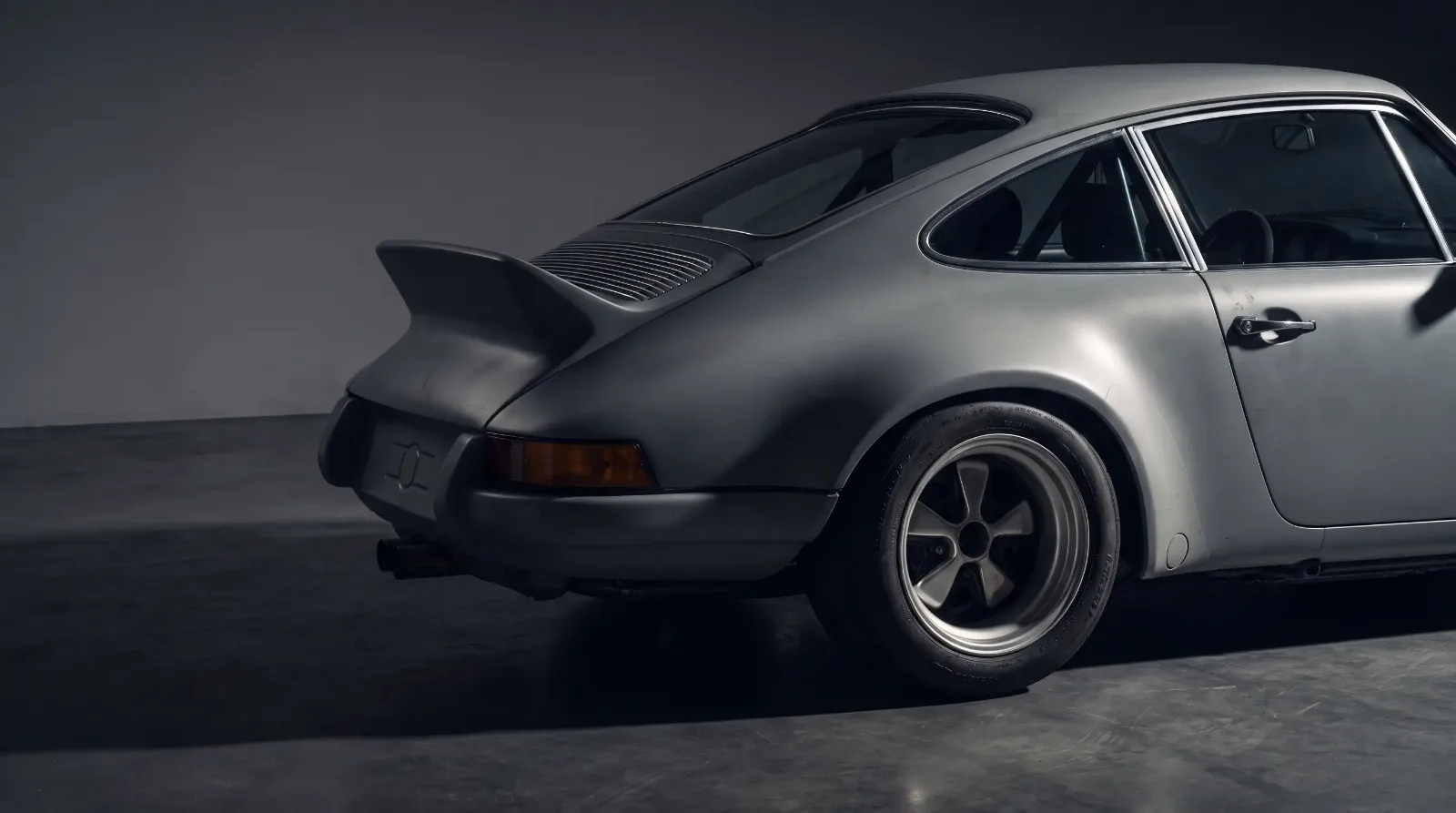
A client called me last year wanting his 911 sprayed in matte gray because he'd seen a build on Instagram. I asked him why that car, why that finish, why now. He didn't have an answer beyond "it looks cool." I turned the job down. Not because matte paint is wrong, it's a legitimate finish with real history behind it, but because he wanted the look without understanding what it's supposed to communicate. Outlaw aesthetics on a Porsche aren't decoration. They're a set of choices that tell you something about how the car was actually built and used, and when you fake that language without earning it, anyone who knows what they're looking at can tell in about four seconds.
What matte finish actually signals on an outlaw build
Matte paint on these builds isn't just a texture preference. It grew out of a practical tradition, cars that got resprayed cheaply and often as owners modified them year after year, and a flat finish hid the inconsistencies of amateur bodywork better than gloss ever could. When the outlaw scene picked it up deliberately decades later, it became shorthand for a car that prioritizes substance over show polish, one that's meant to be driven hard and touched up again rather than trailered to a concours lawn. A matte 911 tells you the owner isn't precious about a scratch. That's the whole message, and it only works if the rest of the build backs it up.
The mistake I see constantly is a matte wrap slapped over a car with a stock suspension and unmodified stance. That's not an outlaw build, that's vinyl on a showroom car. The finish has to be the last thing you add, not the first, because it's only honest once the mechanical work underneath actually matches the attitude of the paint.
Louvers, decklids and the engineering behind the look
Louvered decklids get treated like a styling accessory, but they started as functional parts. Early 911 owners running larger engines with more heat to shed added louvered lids to improve airflow to the engine bay, especially once turbocharged and hot-rodded builds started pushing more power through an air-cooled flat six than the factory ever designed the compartment to handle. A well-made louvered lid still does that job today. A cheap stamped one bolted on for looks does nothing but add weight and rattle at highway speed.
Good louvers are hand-formed or at minimum properly engineered for airflow, with the pitch and spacing calculated rather than copied off a template because it looked right in a photo. I've seen builds ruined by louvers cut into steel that was never reinforced underneath, and within two years the panel cracks along every seam. That's the difference between a detail that respects the car's engineering and one that's just theater.
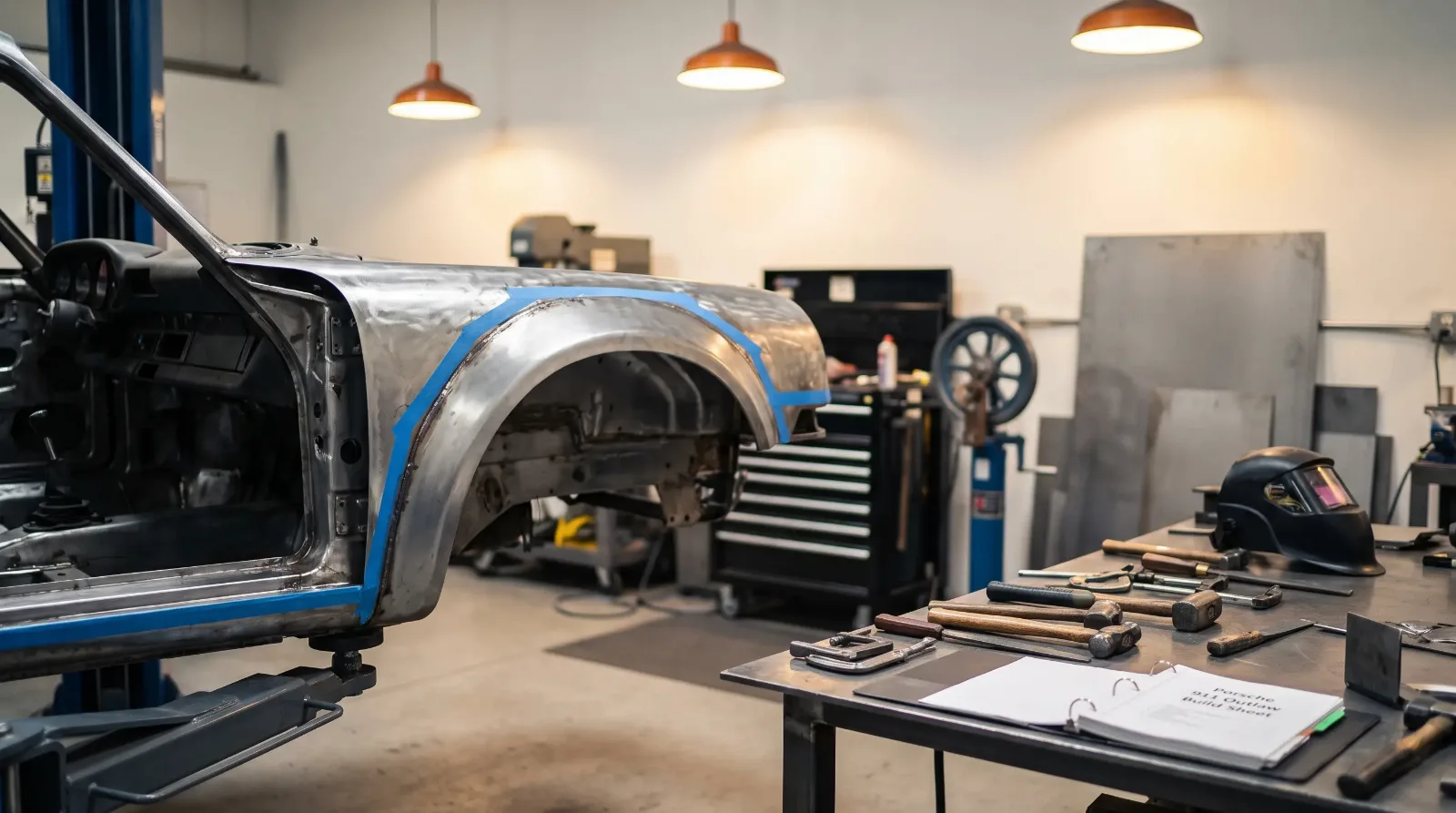
The same logic applies to flared fenders, which get bolted on far more often than they get built. A real flare exists because the car is running wider wheels for more contact patch and better grip, and the bodywork has to be widened to physically clear the tire without rubbing under compression. A bolt-on flare kit installed over a stock suspension with narrow wheels underneath is just a shape with no job to do. It looks aggressive in photos and does nothing on a real road.
| Element | Functional origin | Common mistake |
|---|---|---|
| Matte finish | Hides amateur bodywork, signals a driven car | Wrapped over an unmodified, unchanged car |
| Louvered decklid | Improves engine bay airflow for hot-rodded builds | Stamped copy with no real airflow benefit |
| Flared fenders | Clears wider wheels needed for improved grip | Bolt-on kit with no matching suspension work |
| Lowered stance | Lower center of gravity for better handling | Slammed low enough to scrape on real roads |
Why restraint separates a real outlaw build from a costume
The best outlaw Porsches I've worked on all share a quality that's hard to teach. Every visual choice has a reason, and the owner can explain that reason without hesitating. Ask why the fenders are flared and you get an answer about wheel width and track. Ask why the paint is matte and you get an answer about the build's whole philosophy, not just a screenshot from a phone. That consistency is what separates the outlaw chapter of Porsche's history from a trend that a lot of shops are happy to sell you a shortcut into.
Getting the finish right without faking the story
If you're building toward this look instead of buying a finished car, start with the mechanical decisions and let the paint come last. Decide on wheel width and offset before you flare a fender. Decide on ride height based on actual road use, not a photo angle, before you lower the car. Once those choices are made honestly, the matte finish or the louvered lid becomes a natural conclusion instead of a costume applied over a car that hasn't earned it.
"Paint is the last sentence in a story, not the whole book. If the mechanical work underneath doesn't back up the look, all you've built is a really convincing photo."
— Jim Vasquez
For a look at how these same visual principles show up in the shops that now build entire cars around this aesthetic from the ground up, a companion piece covers the builders turning this whole approach into a full-time business. The finish only ever tells the truth about the build underneath it, and that's exactly why it's worth getting right.
Sources and notes
- StanceWorks: Magnus Walker's 1971 Porsche 911 "277"
- Speedhunters: Celebrating the Urban Outlaw, 10 Years On
- Hagerty: Magnus Walker's Outlaw Collection at the Petersen Automotive Museum
- Wikipedia: Porsche 911 (air-cooled)
- Pelican Parts: Porsche 911 technical archive
- Man of Many: Magnus Walker's Outlaw Collection