
A young engineer sketching a concept for a fast, affordable coupe in 1985 probably never thought about a 1964 Pontiac option package, but the shape of the decision he was making, take an existing platform, add the biggest engine that will fit, price it for a buyer who wants status without a luxury car budget, traces directly back to that original GTO memo. Influence works that way sometimes. It stops being a direct reference and becomes just how an industry solves a certain kind of problem, so quietly that nobody making the decision remembers where the template came from.
Car Features
6 min read
How the GTO Influenced Every Muscle Car That Followed
A paperwork workaround at Pontiac in 1963 quietly became the formula every muscle car built afterward, in Detroit and well beyond it.
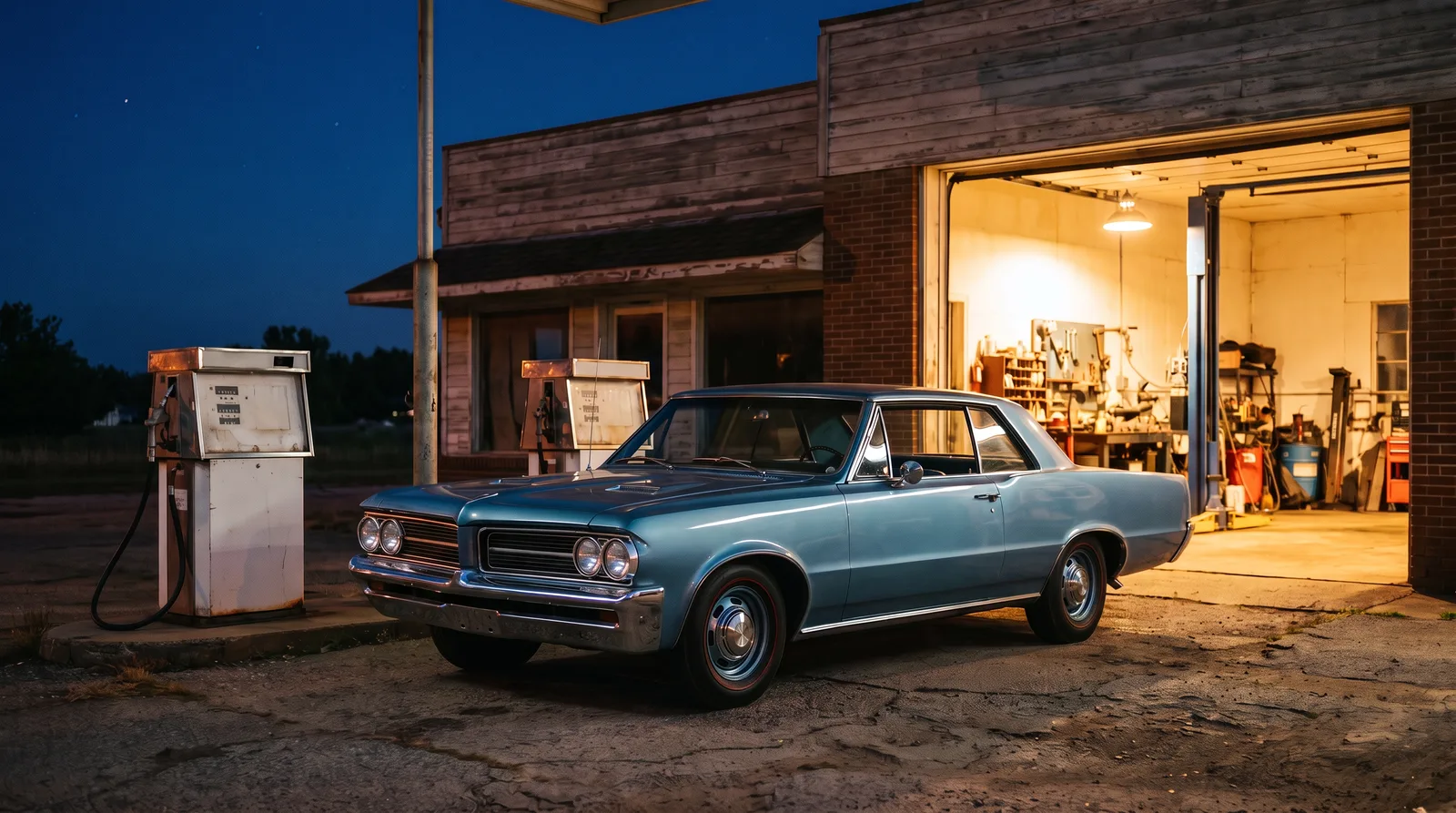
That's the real measure of the GTO's legacy. Not how many direct descendants carried the name, though plenty did, but how thoroughly its basic formula got absorbed into the DNA of an entire category that outlived the original car by decades.
The formula that became an industry standard
Every muscle car that followed the GTO, whether built by GM, Ford, or Chrysler, followed roughly the same playbook Pontiac established in 1964. Start with a mid-size, mass-market platform. Fit the largest engine that will physically fit under the hood, regardless of what corporate policy originally intended for that chassis. Price the result aggressively enough that a young buyer with a decent job could actually finance one. Market it on attitude and identity rather than pure engineering credentials. That template, invisible as a formula because it feels so obvious in retrospect, didn't exist as an obvious path before Pontiac proved it worked.
You can see the direct line from the GTO through the Chevelle SS, the Road Runner, the Torino Cobra, the Duster 340, and eventually into the pony car segment's performance variants. Each one adjusted the formula for its own brand and price point, but none of them had to invent the basic logic from scratch. Pontiac had already done that work and published the results in sales figures every competing division could read.
Beyond Detroit's borders
The GTO's influence didn't stop at American shores. Australian manufacturers, working within their own domestic muscle car tradition through the late 1960s and 1970s, borrowed directly from the American formula of big engines in mid-size bodies marketed on performance and image. That parallel development wasn't purely coincidental. Global automotive journalism covered the American muscle car boom closely, and engineers and marketers overseas paid attention to what was working in the world's largest car market. The formula proved portable in ways few American automotive concepts of that era managed.
| Legacy element | Where it shows up later |
|---|---|
| Mid-size plus big engine formula | Chevelle SS, Torino Cobra, Duster 340 |
| Attitude-first marketing | Road Runner cartoon campaign, most 1970s muscle ads |
| Option package over new model | Nearly every GM muscle car variant through 1970 |
| Global muscle car adoption | Australian and other overseas performance segments |
Understanding this legacy means going back to where it started, and the Goat's mythology lays out exactly how a borrowed Italian racing designation became the name every rival eventually had to reckon with, one way or another.
The legacy survives the fuel crisis and beyond
Modern performance variants of ordinary family cars, the kind of factory hot rod that takes a mainstream sedan or crossover platform and adds a bigger engine, sharper suspension tuning, and aggressive styling cues without creating an entirely new model line, are running the exact same playbook Pontiac wrote in 1964, whether or not the engineers involved would frame it that way. The specifics have changed completely, turbocharging instead of displacement, all-wheel drive instead of a live rear axle, but the underlying business logic of proving a performance concept through an option package before committing to a standalone model remains identical.
Even after the original muscle car era ended in the mid-1970s, squeezed out by insurance surcharges, tightening emissions rules, and the 1973 oil crisis, the GTO's core formula kept resurfacing whenever market conditions allowed. Performance variants of otherwise ordinary cars, built by taking a mainstream platform and pushing the engine and marketing as far as regulations allowed, echo the same logic decades later. The specific engines and displacement numbers changed dramatically as the automotive world shifted toward efficiency and emissions compliance, but the underlying business logic, prove the concept with an affordable option package before committing to a dedicated model, remained a viable playbook other manufacturers returned to again and again.
"Influence is a strange thing to measure in cars. It's not just the direct copies, it's every engineer who never drove one but grew up hearing what a GTO could do, and let that story shape what they thought a fast car should feel like decades later without ever tracing the idea back to its source."
Patrick Walsh
The counterfactual worth considering
It's worth asking what the muscle car era would have looked like without a GTO leading the way, if only because the exercise clarifies how much weight that first mover advantage actually carried. Oldsmobile's engineers had the technical capability to build something similar well before 1964, and Chevrolet certainly had the big-block engines sitting on the shelf to do it too. What none of them had, until Pontiac's sales figures forced the issue, was proof that corporate leadership would tolerate the risk of a mid-size car carrying an engine well outside its intended weight class.
Without that proof, it's entirely plausible the muscle car era arrives later, smaller, and more cautiously, spread across more model years with less of the concentrated cultural impact that made the late 1960s such a distinct and memorable period for American performance cars. Counterfactual history is always speculative, but in this case the speculation is grounded in something concrete: internal GM policy that existed specifically to prevent what Pontiac ultimately did, and every other division's documented hesitation right up until the GTO's sales numbers made that hesitation look like a costly mistake.
Why the influence still matters
What makes the GTO's legacy worth revisiting isn't nostalgia for a specific engine or a specific model year. It's the recognition that a single, somewhat reckless decision inside one division of one automaker, born from an engineer willing to work around his own company's rules, ended up shaping how an entire industry thought about performance, pricing, and marketing for the following decade and beyond. Few production cars can claim that kind of reach, and fewer still can claim it started with a paperwork technicality rather than a grand strategic plan.
The story of how that specific car came together, and why it worked when GM's own internal logic said it shouldn't have, is worth reading in full. The full GTO story covers that ground in depth. And if you're curious how the nickname that outlasted the marketing campaigns actually took hold, read on for that piece of the legend.
Sources and notes
Related Reading
Have a
Pontiac GTO
for Sale?
Reach thousands of serious classic car collectors across the US.
Sell It Here →
Selling a classic? Here's how: compare the places to sell classic cars
Are You a Classic Car Dealer?
List your full inventory and connect with targeted classic car buyers.
Join as a Dealer →

About the author
Patrick Walsh
Automotive journalist covering classic car shows, events, and the enthusiast community across North America.
Related Listings - Pontiac GTO

Comments (1)
L
Linda Kowalski
1 week ago
Actually, the 1970 Torino Cobra came with a 429 as standard equipment, which ties it even more tightly to the GTO's biggest-engine-that-fits formula.