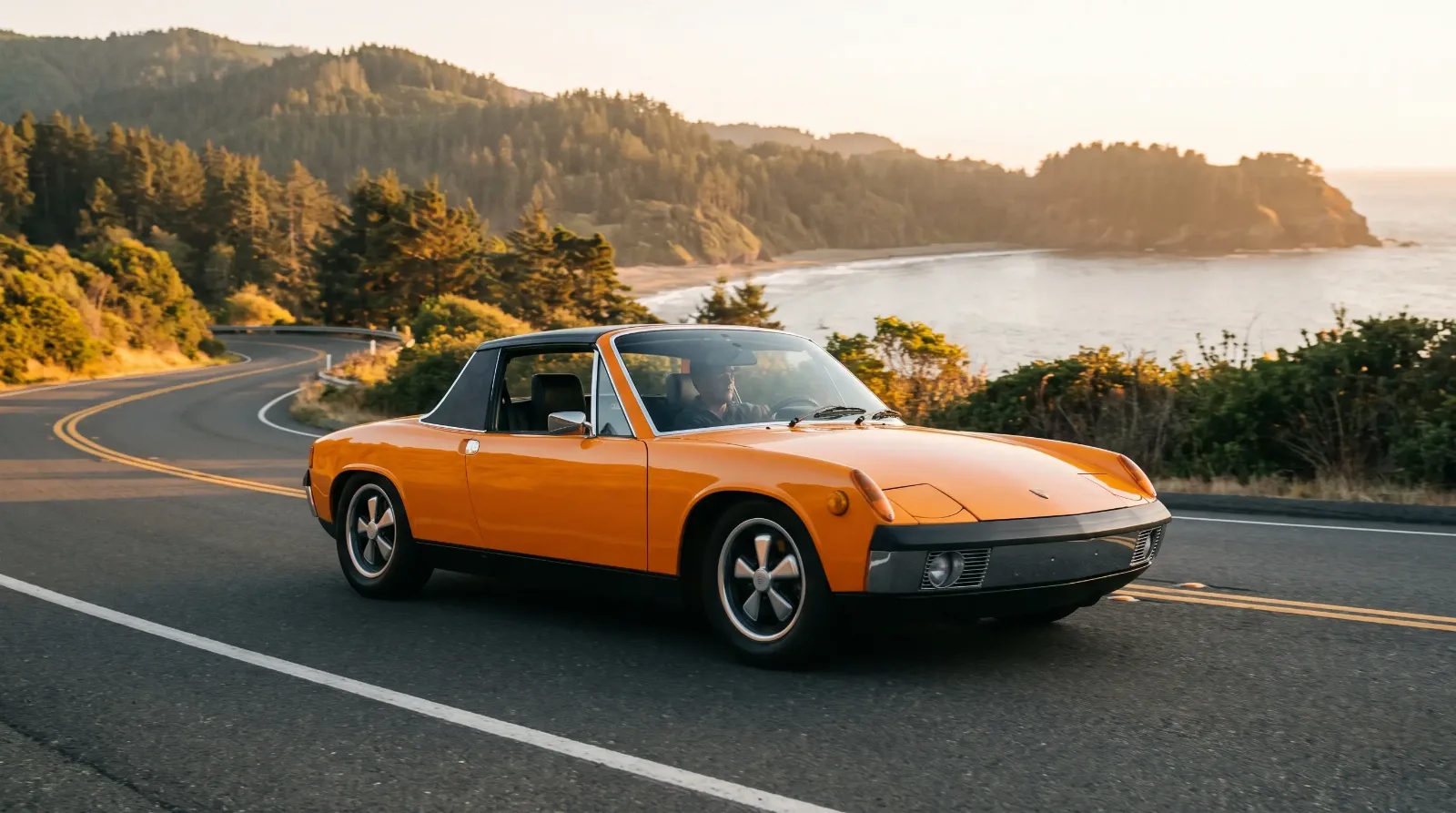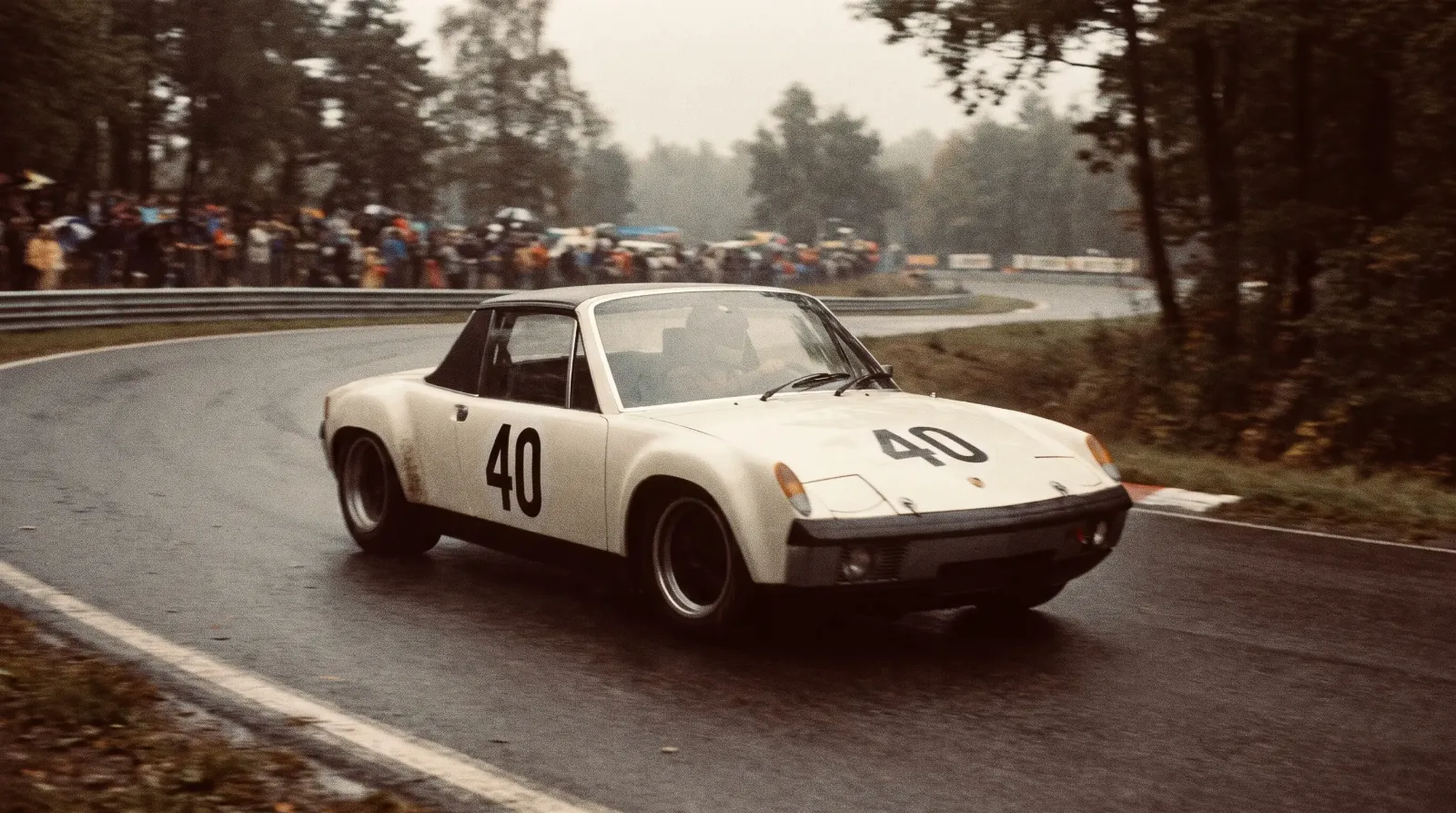
The Porsche 914 gets called a lot of things: the parts-bin Porsche, the VW-Porsche identity crisis, the bargain entry point into a lineup that otherwise starts at 911 money. What gets skipped over in that argument is the discipline behind the car's shape. Porsche 914 design was function-first packaging dressed in flat planes and hard edges, and once you look at it that way the panel lines stop looking like a compromise and start looking like a decision.
A body built to solve a packaging problem, not to chase a trend
By the late 1960s Porsche needed a car below the 911 and Volkswagen needed a replacement for the aging Karmann Ghia. The joint venture that produced the 914 set two hard requirements before anyone touched a design sketch: the engine had to sit behind the passenger compartment for weight distribution, and the car had to accept either a VW flat-four or a Porsche flat-six without a redesign of the body shell. That is an engineering brief, not a styling brief, and it shows. The wedge profile, the flat deck lines front and rear, the near-vertical glass, none of it is there for drama. It is there because a mid-engine layout with two trunks and two engine options does not leave much room for sculptural flourish.
Porsche's own account credits Heinrich Klie, then head of the Porsche Design Studio, with the winning sketch from an in-house competition held around 1964 to find a 912 successor. A rival theory, built around a similar-looking study from the German design firm Gugelot, has circulated for decades, but Ferry Porsche rejected it outright, saying Gugelot "never did anything to the car." What is not in dispute is the outcome: a low, flat-sided coupe with almost no ornamentation, built around a passenger cell and two cargo areas rather than around a signature grille or a sweeping fender line.
Flat planes, hard edges, and the Bauhaus comparison
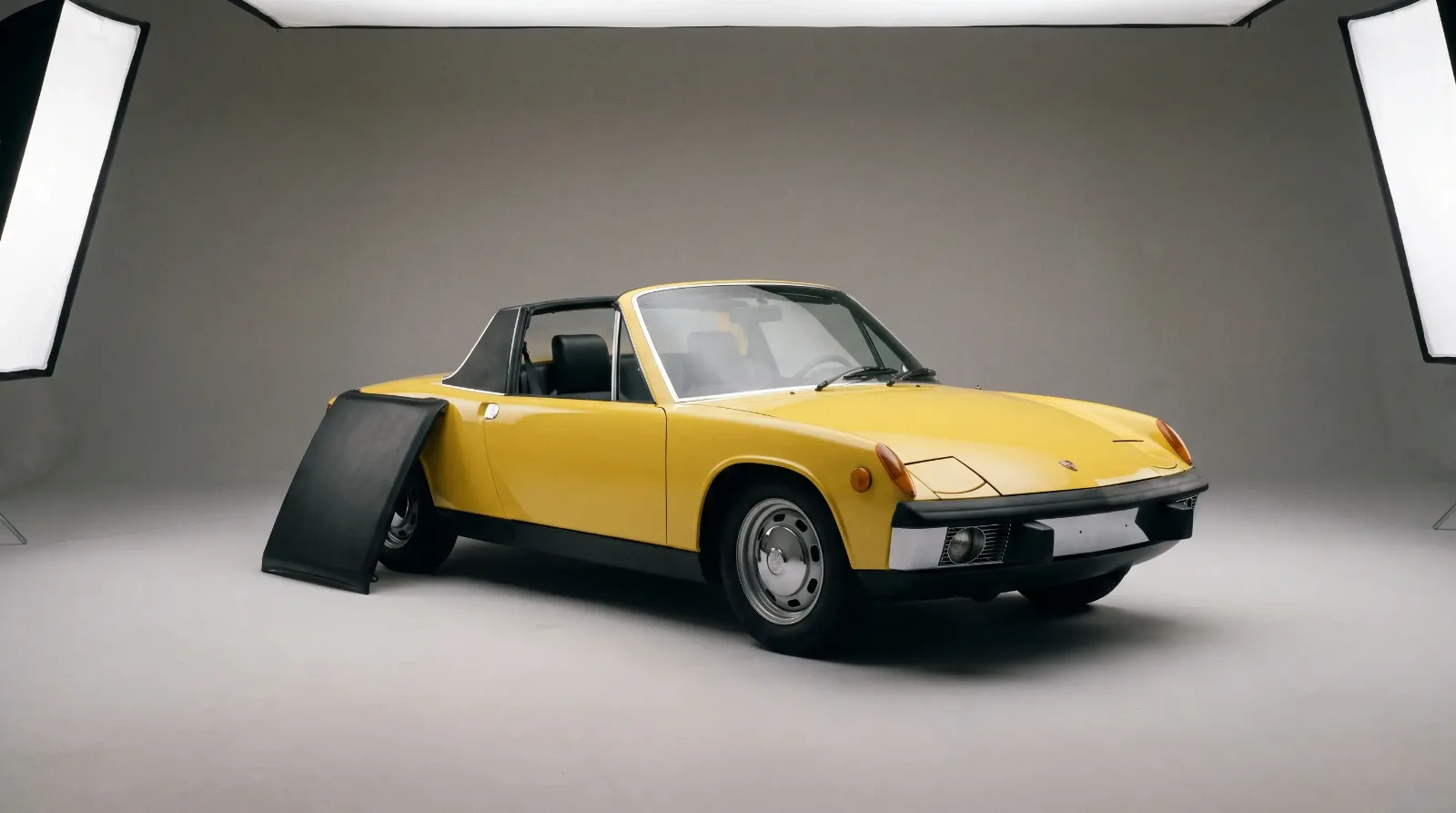
Calling the 914 a Bauhaus design is shorthand, not art history, but the comparison holds up better than it does for most cars people say it about. Bauhaus design privileges honest structure over applied decoration: form follows what the object has to do. The 914's flat door panels, its unbroken beltline, and its almost total absence of brightwork or chrome trim are the same instinct applied to sheet metal. There is no character line pretending to suggest speed. There is no fake vent stamped into a fender. The surfaces read as flat because they are flat, and the car does not apologize for it.
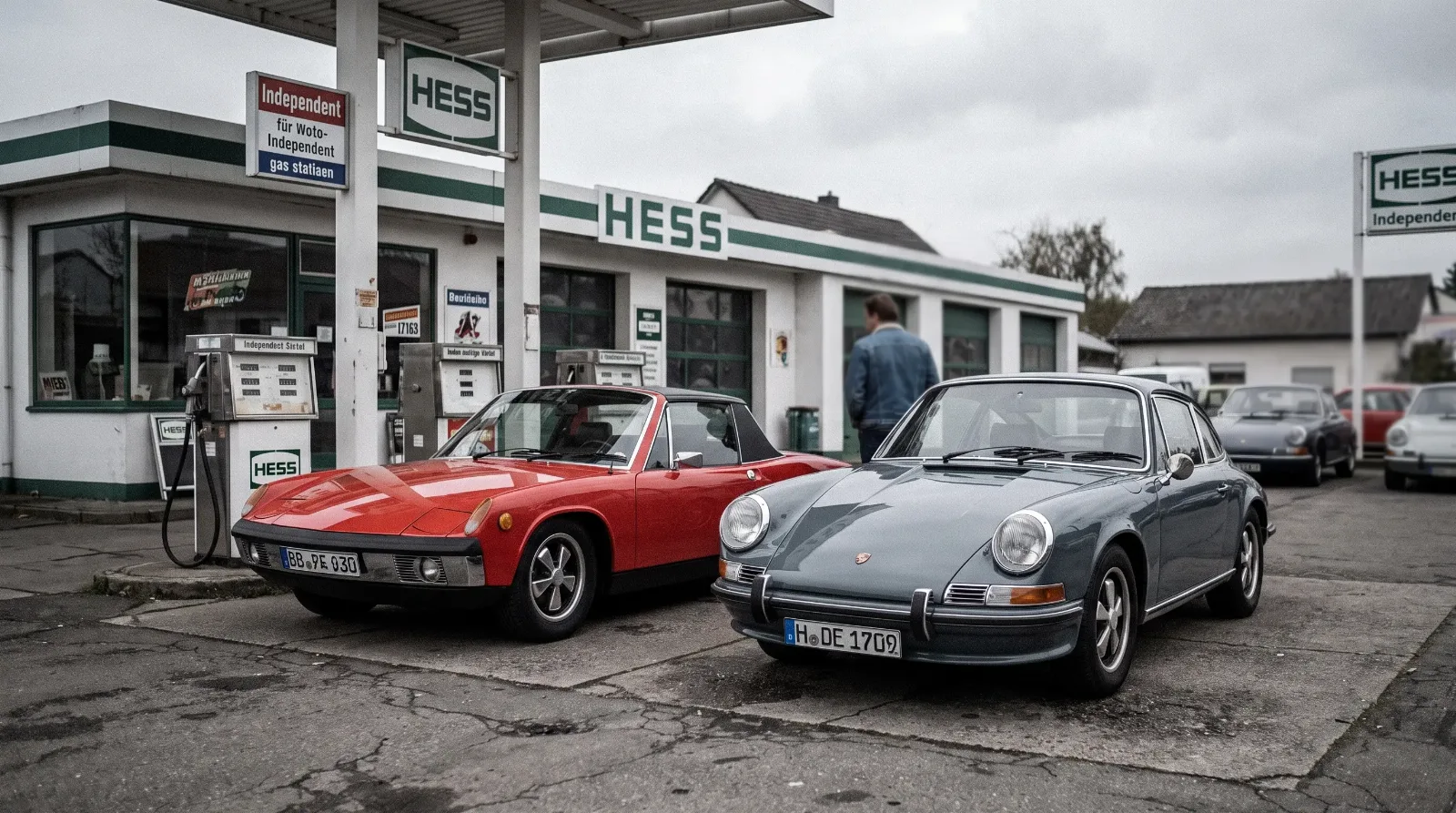
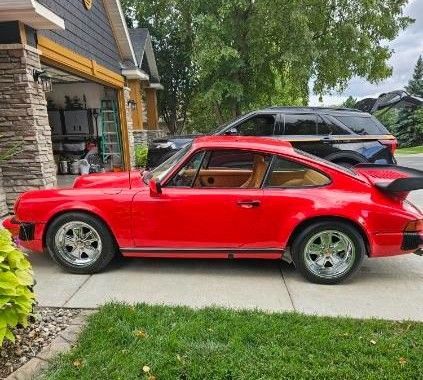
Compare that to the 911 sitting one rung up the range. The 911's shape is built around a curved greenhouse and swelling rear haunches that telegraph the flat-six sitting over the rear axle. The 914 has no equivalent flourish because it did not need one. The engine sits low and mid-ship, the weight distribution does the talking, and the body just has to get out of the way. That restraint is the whole design argument, and it is why the shape still photographs cleanly fifty years on. Nothing about it depends on trim that has since gone out of fashion.
The targa roof as a design decision, not a styling touch
The lift-out roof panel is the single most recognizable element of the shape, and it is worth being precise about why it exists. This is not a targa bar bolted on to suggest the 911 Targa's look. It is a structural answer to building an open car around a mid-engine chassis without a full convertible top mechanism competing for space with the engine bay. The result is a fixed roll hoop, a flat roof panel that lifts out by hand, and a beltline that stays visually continuous whether the roof is on or off. Few open cars from this era manage that continuity. Most either look unfinished with the top down or bulky with it up. The 914 looks like one consistent object in both states, and that is a harder trick to pull off than it looks.
"People assume a shape this plain must have been the cheap option, and I get why, because visually there is nowhere to hide a flaw. But flat panels only look clean if the proportions underneath are actually right. Get the cowl height wrong or the wheelbase-to-overhang ratio wrong on a car this stripped down and everyone sees it immediately. The 914 gets away with almost no ornamentation because the proportions were sorted before anyone drew a line."
— Emily Chen
Where the design language bent under regulation
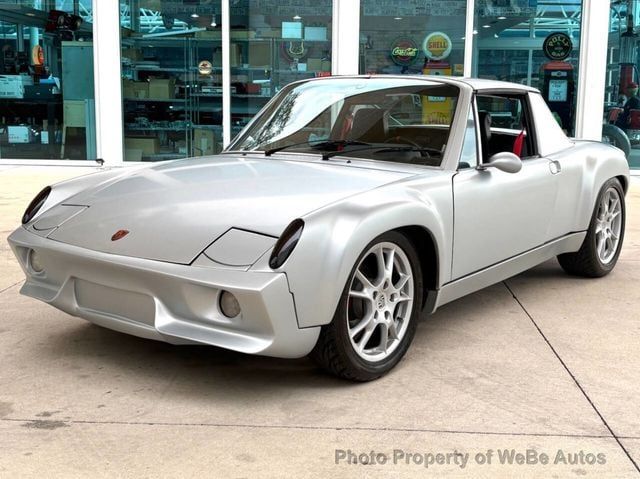
The clean early cars did not survive US federal bumper rules unchanged. Federal Motor Vehicle Safety Standard 215 required new cars sold in the US to withstand a 5 mph front and 2.5 mph rear impact without damage to lights or fuel systems starting with the 1974 model year, and the 914 picked up its first impact-absorbing bumpers that year, heavier than the slim chrome units on 1970 through 1973 cars but still lighter than what came after. By 1975 and 1976 those units were replaced again with even heavier rubber-covered bumpers. On a car whose entire design case rested on flat, unbroken surfaces, a heavier bumper reads as a bigger disruption than it would on a car built around more sculptural forms. The pre-1974 cars keep the flush, minimal look that makes the Bauhaus comparison work. The later federal cars are still recognizably the same shape, but the design language that made the early cars distinctive is diluted by hardware the original brief never accounted for.
| Design element | Early 914 (1970-1973) | Later federal-spec 914 |
|---|---|---|
| Front/rear bumpers | Slim chrome overriders, flush to body | 1974: impact-absorbing units meeting FMVSS 215; 1975-1976: heavier rubber-covered bumpers |
| Overall visual effect | Continuous flat beltline, minimal interruption | Bumper mass breaks the flat-plane read |
| Targa panel and roll hoop | Unchanged across production | Unchanged across production |
Why the shape still reads clean today
Design language dates fastest when it depends on trend, and it ages best when it depends on proportion. The 914's flat sides and minimal brightwork were never fashionable in the way a period muscle car's chrome and scoops were fashionable, which means they never went out of fashion either. What holds up is the packaging logic underneath: a mid-engine layout, a lift-out roof that does not compromise the beltline, and a body that has almost nowhere for a design flaw to hide because there is so little decoration to distract from one. If you want the fuller account of how this car came to exist at all, the 914 chapter covers the joint-venture backstory in more depth, and the wider context of where this fits among Porsche's other classics sits inside the classic Porsche story. The design conversation naturally leads into how that same low weight and mid-engine balance performed once these cars left the showroom, which is exactly where the next story in this set picks up.
If the flat-plane, no-nonsense approach to a sports car appeals to you more than another round of chrome and curves, a look at classic Porsche 914 for sale listings is the practical next step. Original, unmodified bumpers and an intact targa panel are the two things worth checking first on any car you view in person.