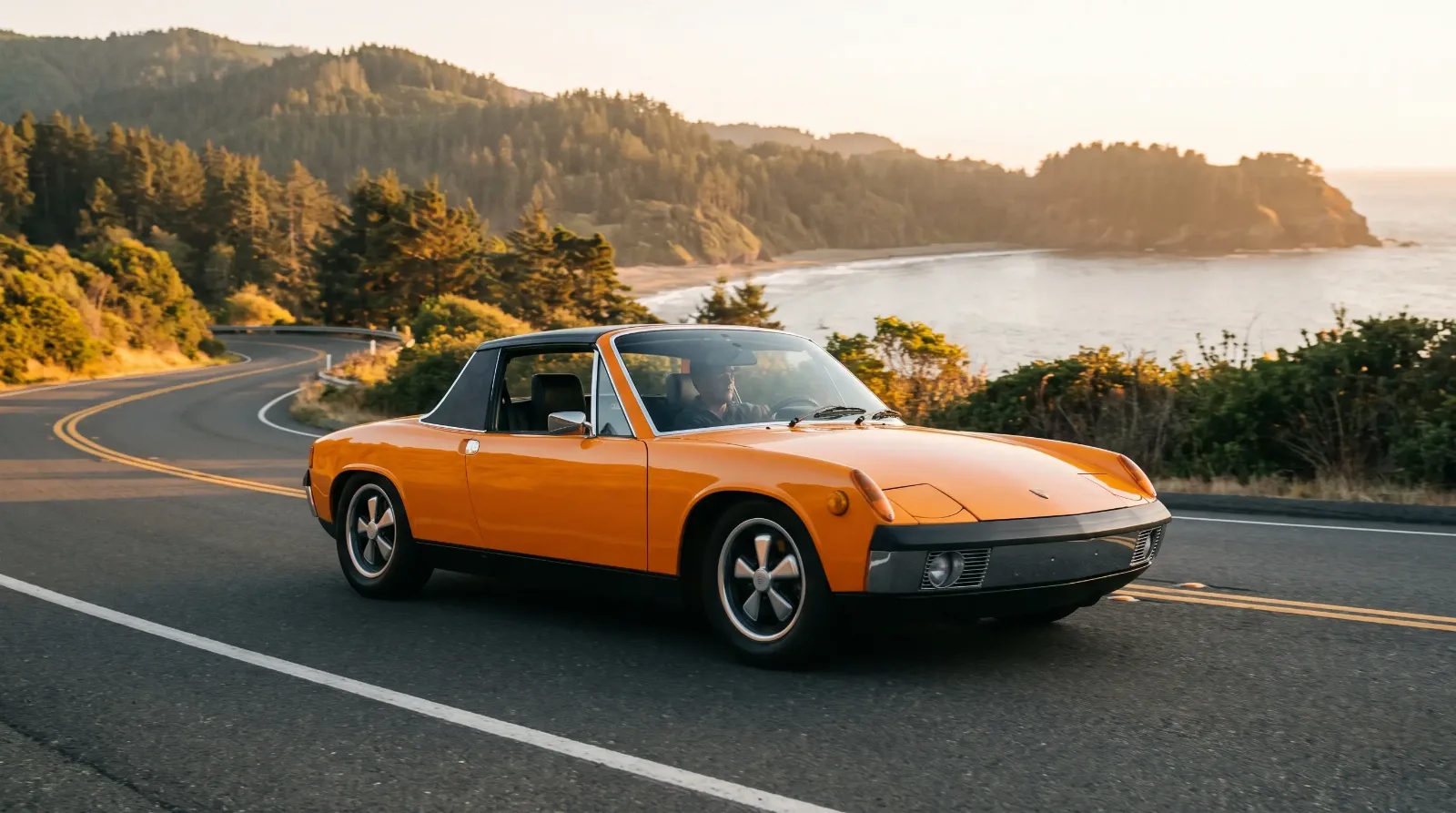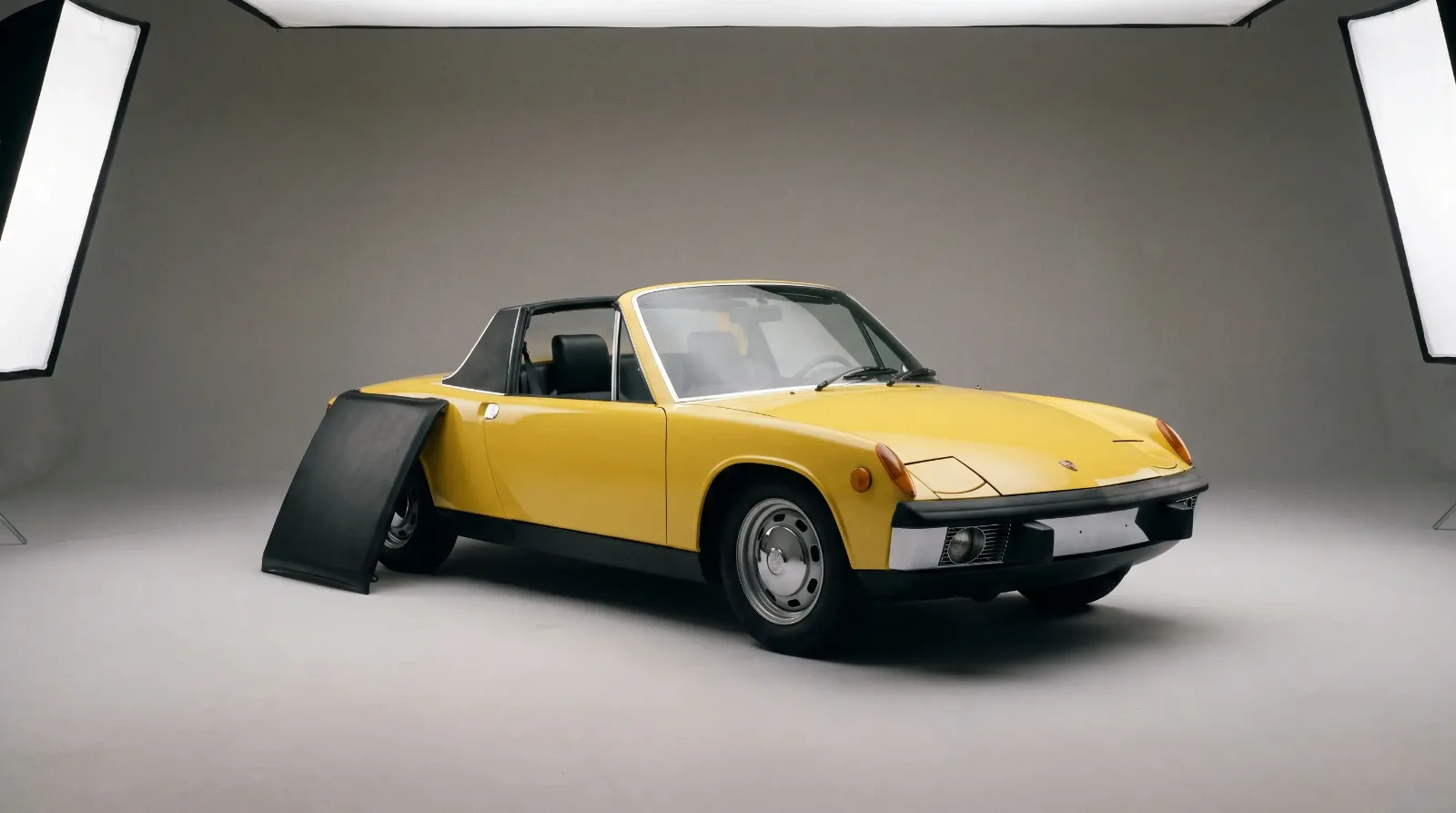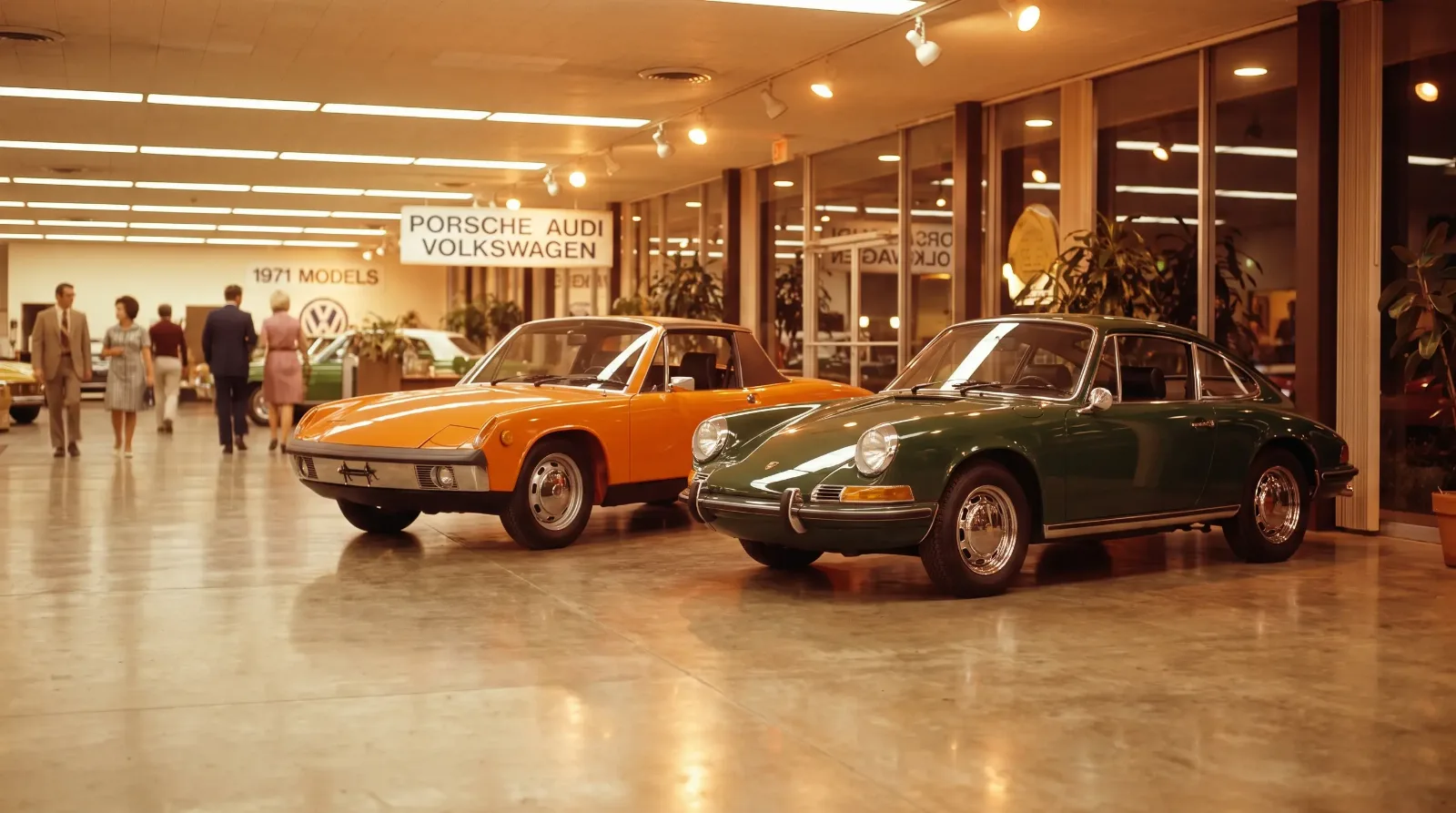
Porsche 914 racing history does not get the shelf space that 911 racing history gets, and that is mostly a marketing problem rather than a performance one. The 914 was never built as a halo car, but the same mid-engine layout that made it an odd fit in showrooms next to the 911 made it a genuinely capable weapon on a race track and, more quietly, on an autocross course, where it built a reputation that outlasted the factory's own interest in the model.
The 914/6 GT and the factory's brief works
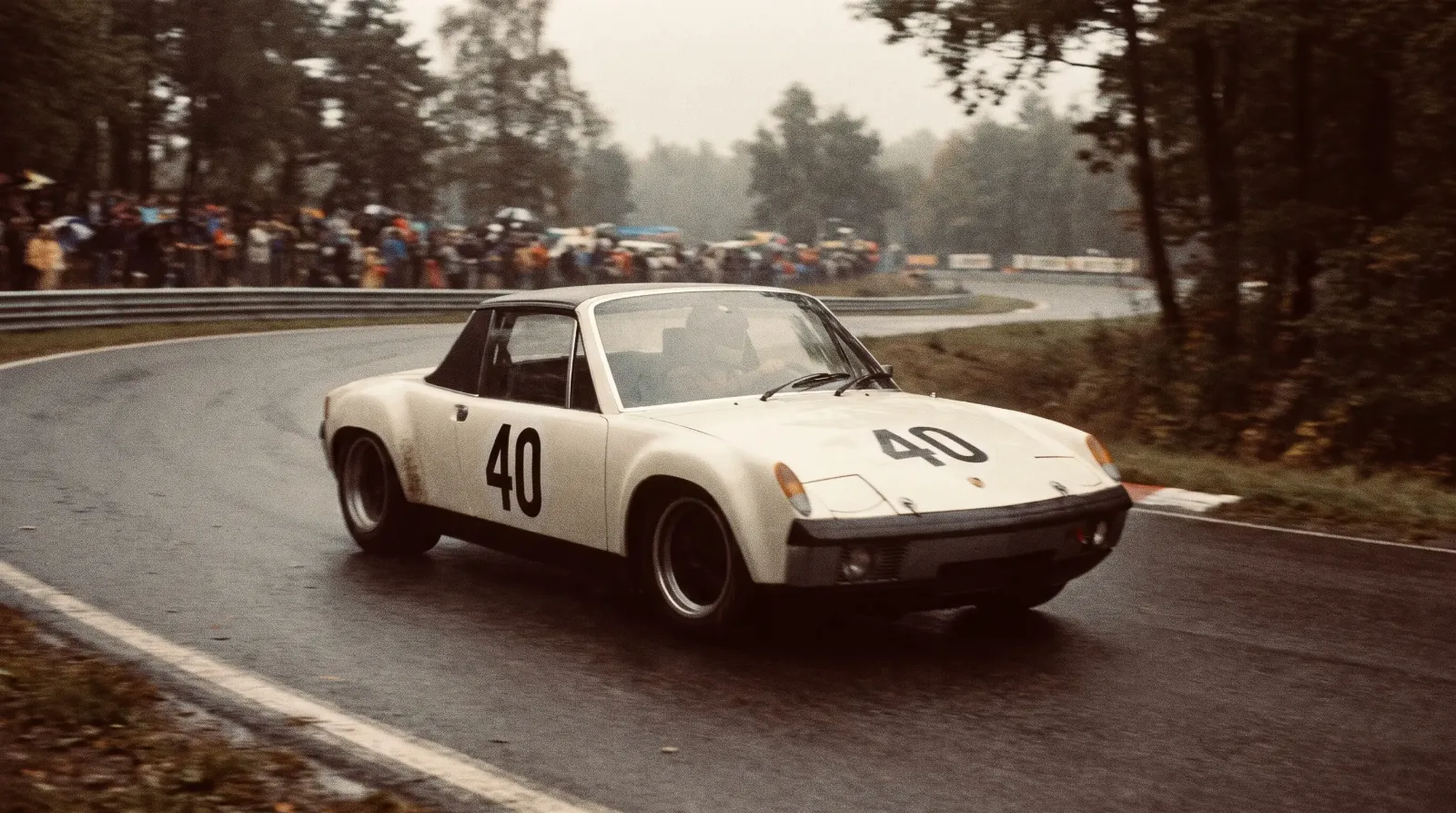
Porsche's factory-backed racing effort centered on the 914/6 GT, a lightweight version of the six-cylinder 914 built with flared fiberglass fenders, thinner glass, and a roll cage in place of the road car's interior trim. Where the standard 914/6 was already a reasonably quick car for its class, the GT version stripped enough weight and added enough suspension stiffness to make it competitive against purpose-built GT machinery, not just other showroom sports cars. Porsche entered a 914/6 GT at the 1970 24 Hours of Le Mans, car number 40 driven by Claude Ballot-Lena and Guy Chasseuil, and it finished sixth overall while winning not just its own GT 2.0 class but the GT 2.5 class above it as well, beating every factory 911S entry in the process. The same chassis went on to a class win at the 1971 24 Hours of Daytona. The point of these entries was never to beat the outright prototypes. It was to prove the platform could survive endurance racing intact, and it did.
Why the mid-engine layout mattered more on a track than a spec sheet suggests
On paper the 914/4's flat-four never looked like a race engine, and the 914/6's flat-six was a detuned version of what the 911 was already running. What the spec sheet does not capture is polar moment of inertia, which is the resistance a car has to changing direction, and it is where the 914 quietly beat cars with more power. Putting the engine just ahead of the rear axle rather than hanging it out behind the axle, as the 911 does, pulls mass toward the center of the car. A car with mass concentrated near its center changes direction faster and more predictably than one with mass at the extremes, even if the two cars have similar horsepower. That is an engineering answer to a question most fans ask in a much simpler way: why did a car with modest power feel so good to drive fast.
SCCA autocross: where the 914 actually built its legend
Le Mans entries make for a better headline, but the 914's real competition record was written in SCCA Solo autocross paddocks across the United States, where the car became a fixture in its class for years after Porsche stopped building it. Autocross rewards exactly the trait the 914 has in abundance: quick direction changes through tight, low-speed courses where outright horsepower matters less than how fast a car can be pointed at the next cone. Privateers who could never afford a 911's engine bill found a 914 with modest engine work could out-corner cars with far more power on a technical course. That reputation did not need a factory marketing budget behind it. Autocross results circulated by word of mouth and club newsletters, and the 914 earned its place the slow way, one regional event at a time.
| Context | 914/4 | 914/6 (factory GT spec) |
|---|---|---|
| Primary competition venue | SCCA Solo/autocross, club racing | Endurance racing (Le Mans, Sebring), club racing |
| Chief advantage | Low weight, balanced handling | Six-cylinder power plus the same balance |
| Typical weak point flagged by racers | Limited top-end power from the flat-four | Cost and rarity relative to the 914/4 |
IMSA, Trans-Am support classes, and the privateer scene
Beyond the factory's own Le Mans and Daytona entries, privateers ran 914s in IMSA's GTU class and in various SCCA road racing categories through the 1970s, usually against Datsun 240Z and MG entries competing for the same customer base. Walt Maas was among the privateers who successfully campaigned a 914/6 GT in the IMSA series during this period. These were rarely the headline races of a weekend program, but the 914 held its own in that company, which says something given how modest its published power figures looked next to cars people assumed were faster. The car's advantage in that company was almost never a straight line. It was consistency through the technical sections, corner after corner, where a chassis with its mass centralized simply does not lose as much time as a nose-heavy or tail-heavy car does when the pavement gets twisty.
Surviving race-prepared 914s from this era are scarce, and documentation on them is thinner than for factory Le Mans cars, since most were privateer builds without a paper trail anyone thought to preserve at the time. Anyone chasing a genuine period race car rather than a modern tribute build should expect to spend real time on provenance before trusting a seller's story.
What the racing record tells you about the road cars
The competition history is not just trivia, it is a buyer's cheat sheet. A 914 that handles the way period racers described should still feel tight and direct if the suspension bushings, torsion bars, and steering components are in good condition. If a car feels vague or floaty on a test drive, that is a maintenance problem, not a character flaw baked into the model. The balance that won autocross trophies is still there in every surviving car, it just needs the underlying hardware to be sound to show up. For the fuller story of how this chassis came to exist in the first place, the 914 story covers the joint-venture origins that led to this layout, and the complete Porsche history places the model in context against the rest of the lineup it was racing alongside. If you want the angle on how this same car fit Porsche's broader model strategy in period, a companion piece covers exactly that ground.
None of this required a factory that took the 914 seriously as a flagship. It required a chassis with its mass in the right place, and that turned out to be enough.
"I've run the numbers on enough autocross-prepped 914s to say this plainly: the car does not need to be fast to win. It needs to change direction without arguing with the driver first. That is a mass distribution problem, not a horsepower problem, and Porsche solved it before anyone was racing the thing."
— Emily Chen