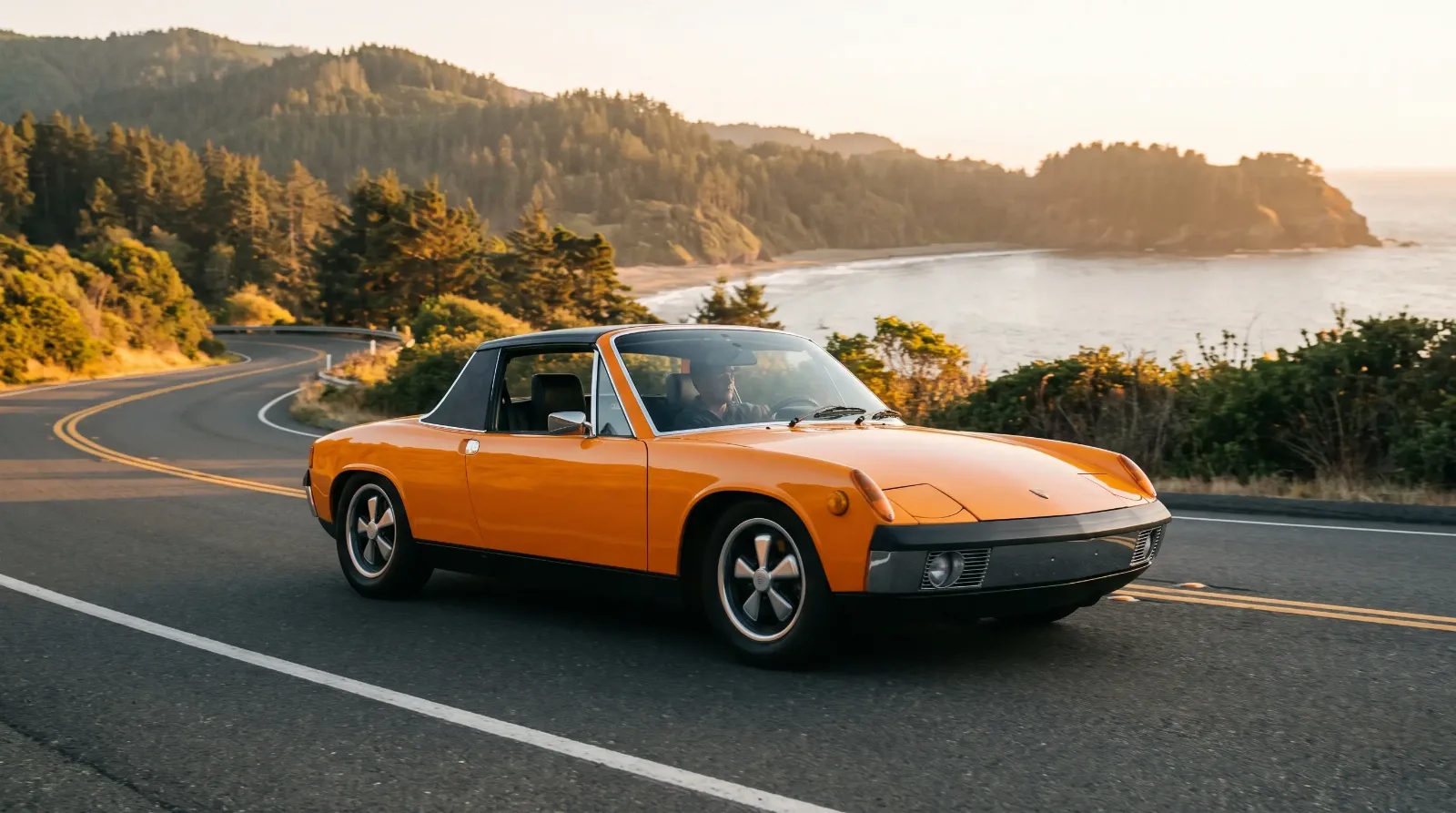
Porsche 914 model history only makes sense once you stop reading it as a Porsche and start reading it as a position on a price list. The 914 existed to fill a gap below the 911 that Porsche could not fill profitably on its own, and understanding where it sat in the 1970s lineup explains almost every strange fact about the car, from its badging to its short life as a six-cylinder model.
A joint venture built to solve two separate problems at once
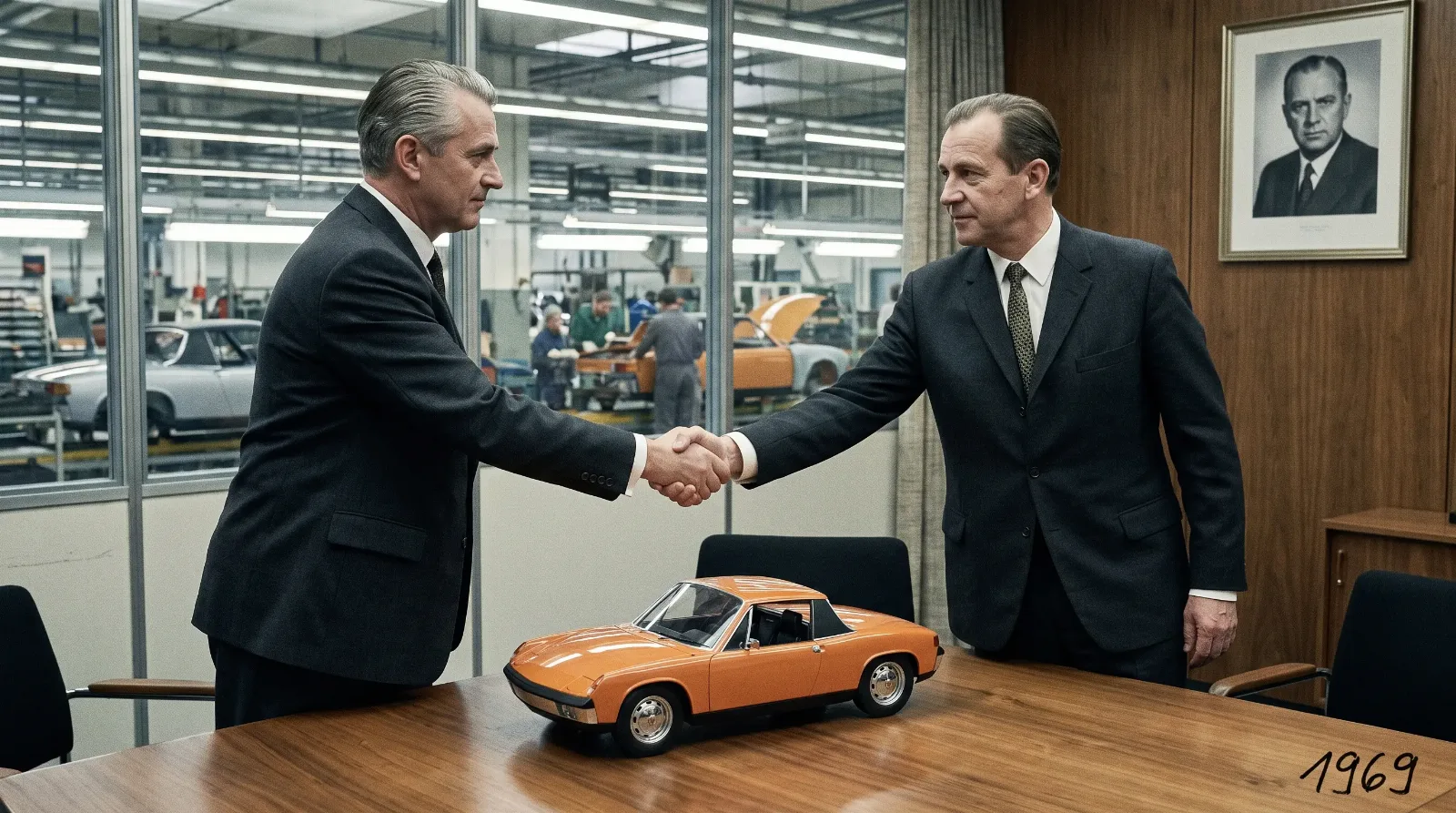
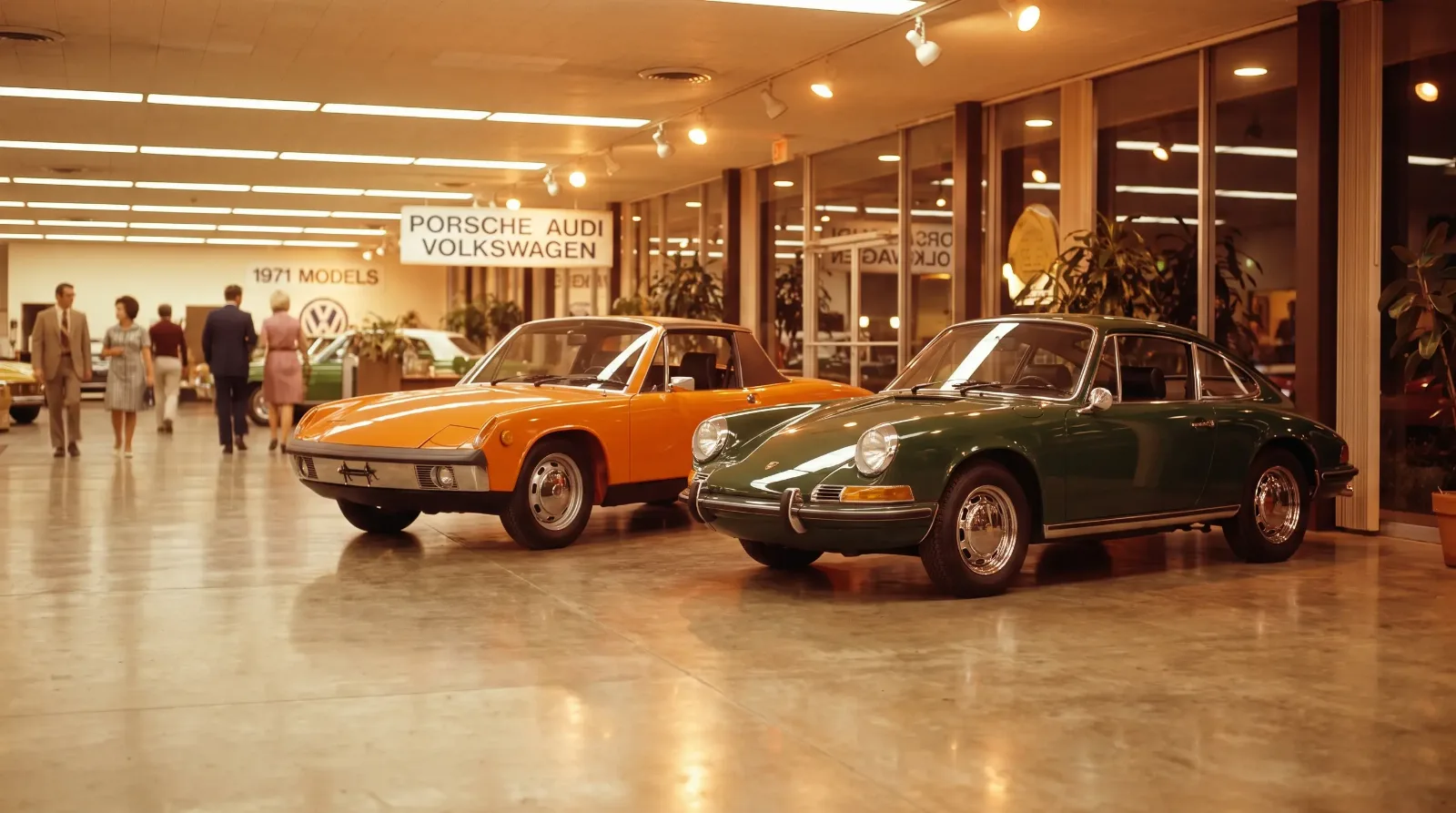
By the late 1960s Porsche needed an entry-level model priced well under the 911, and Volkswagen needed a modern replacement for the Karmann Ghia, which was aging against increasingly capable competition. Rather than each company developing a separate car, the two firms agreed to share a platform. Volkswagen would build the bulk of the four-cylinder cars using its own engines, and Porsche would fit its own flat-six into a smaller run of higher-specification versions. The arrangement kept tooling costs manageable for both parties, which is precisely why the resulting car looks like neither a pure Volkswagen nor a pure Porsche. It is a shared answer to two different corporate problems, wearing one body.
Two badges, two markets, one car
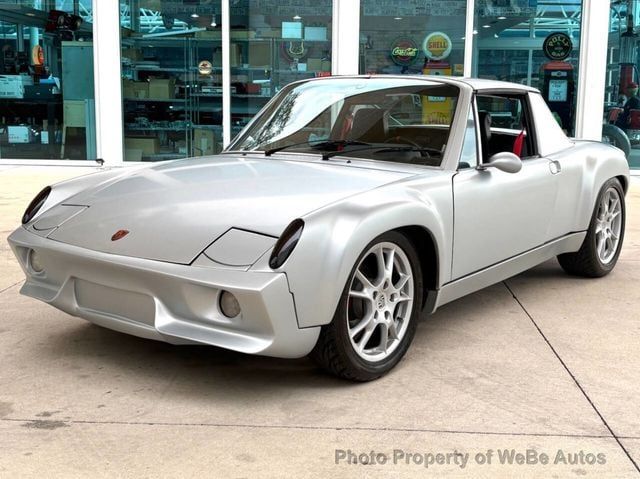
The clearest evidence of that shared arrangement is in the badging itself. In Europe, the four-cylinder car was sold through Volkswagen dealers as the VW-Porsche 914, a name that told buyers exactly what compromise they were getting. In the United States, where Volkswagen's dealer network and brand positioning worked differently, the same car was sold simply as a Porsche, without the VW name attached. That distinction was not cosmetic. It shaped how the car was perceived on each side of the Atlantic almost from the day it launched, and it still affects how originality and provenance are read on surviving examples today. A European market car with its original badging tells a documentation story an American market car cannot, and the reverse is equally true.
Where the 914/6 collided with Porsche's own lineup
The six-cylinder 914/6 is the clearest case of a model undone by its own parent company's price list. Fitted with a detuned version of the 911's flat-six, the 914/6 was quicker and more refined than the four-cylinder car, but it was priced close enough to the entry-level 911T that Porsche's own dealers found themselves selling against their own product line. A buyer weighing a 914/6 against a 911T was, in Porsche's internal logic, a buyer who should have been steered toward the 911 in the first place, since that car carried a healthier margin and the brand equity Porsche wanted to protect. The 914/6 was discontinued in 1972 after a relatively short production run of roughly 3,300 cars built since 1969, while the four-cylinder 914 continued for several more years. That is not a story about the car failing on its own terms. It is a story about a car succeeding well enough to threaten its own sibling's sales.
| Model | Position in the lineup | Engine | Production span |
|---|---|---|---|
| 914/4 | Entry point below the 911, VW dealer network in Europe | VW flat-four, multiple displacements across the run | 1969 to 1976 |
| 914/6 | Positioned to overlap the entry-level 911T | Detuned Porsche flat-six | 1969 to 1972 |
| 911T (contemporary) | Entry-level 911, protected flagship margin | Porsche flat-six | Overlapped both 914 variants |
The 924 and the strategy that outlived the 914
Reading the 914 purely as a one-off experiment misses how directly it set the template Porsche kept using afterward. When the 924 arrived in 1976 to take over the entry-level slot, it followed the same basic logic the 914 had established: a shared platform, a partner manufacturer absorbing part of the development and production burden, and a clear separation from the 911 in both price and mechanical layout. The 924 used components and manufacturing capacity tied to Audi and Volkswagen in ways that echoed the 914 arrangement almost exactly: the car was built at the former NSU plant in Neckarsulm using Volkswagen production-line labor under Porsche supervision, and early cars used a VW-sourced 2.0-liter inline-four engine shared with the Audi 100 and the VW LT van. Porsche did not stumble into that strategy twice by accident. The 914 proved the approach could work commercially even while creating internal friction with the 911, and the 924 refined it rather than replacing it with something new.
What the lineup position means for how the car is judged today
Treating the 914 as a diminished 911 misreads what the car was built to do. It was never meant to compete with the 911 on prestige. It was meant to widen Porsche's customer base at a price point the 911 could never reach without cheapening the flagship, and it did that job for seven years across two badges and two engine families. When the model was finally replaced in 1976 by the 924, another car built through cooperation with a partner manufacturer, Porsche was continuing the same strategic logic the 914 had established: keep the entry point separate from the flagship, and let the partnership absorb the cost of building it. Reading the 914 this way, as a deliberate piece of range strategy rather than an afterthought, changes how you look at an original build sheet or a period sales brochure. The car's place in the story is not a footnote to the 911. It is a chapter with its own logic.
For the fuller account of how this platform came together mechanically before it ever reached a price list, the 914 chapter is the place to start, and the complete Porsche history sets this model against the rest of the marque's output through the decade. The badging arrangement described here also sits at the center of another angle on the same car, which goes further into how the Volkswagen partnership was negotiated.
"A car's place in a manufacturer's range tells you as much about it as the car itself does. The 914 was never trying to be a lesser 911. It was doing a job the 911 was never priced to do, and once you read the badging and the price lists that way, the whole model makes a great deal more sense."
— Sarah Whitfield