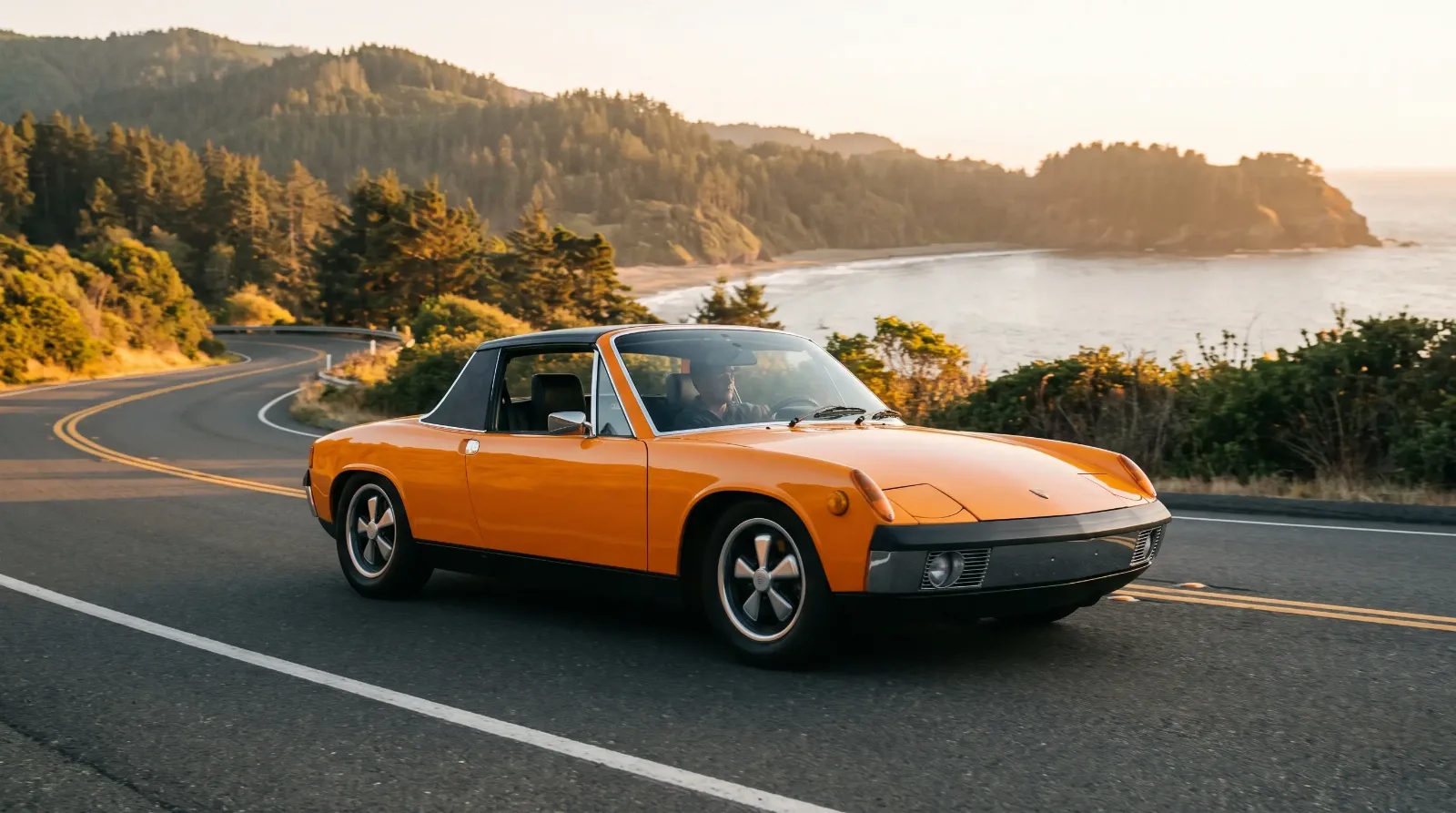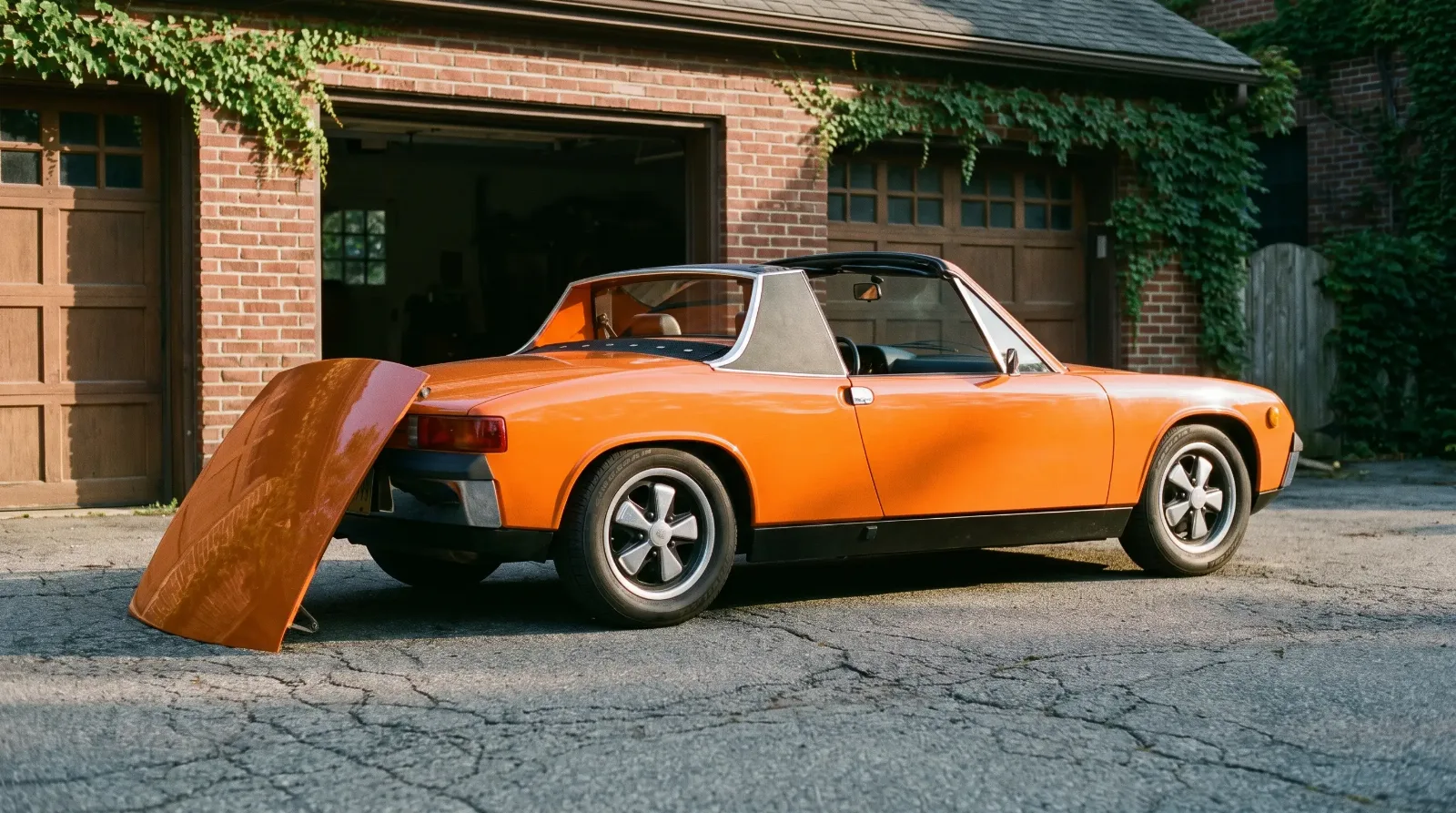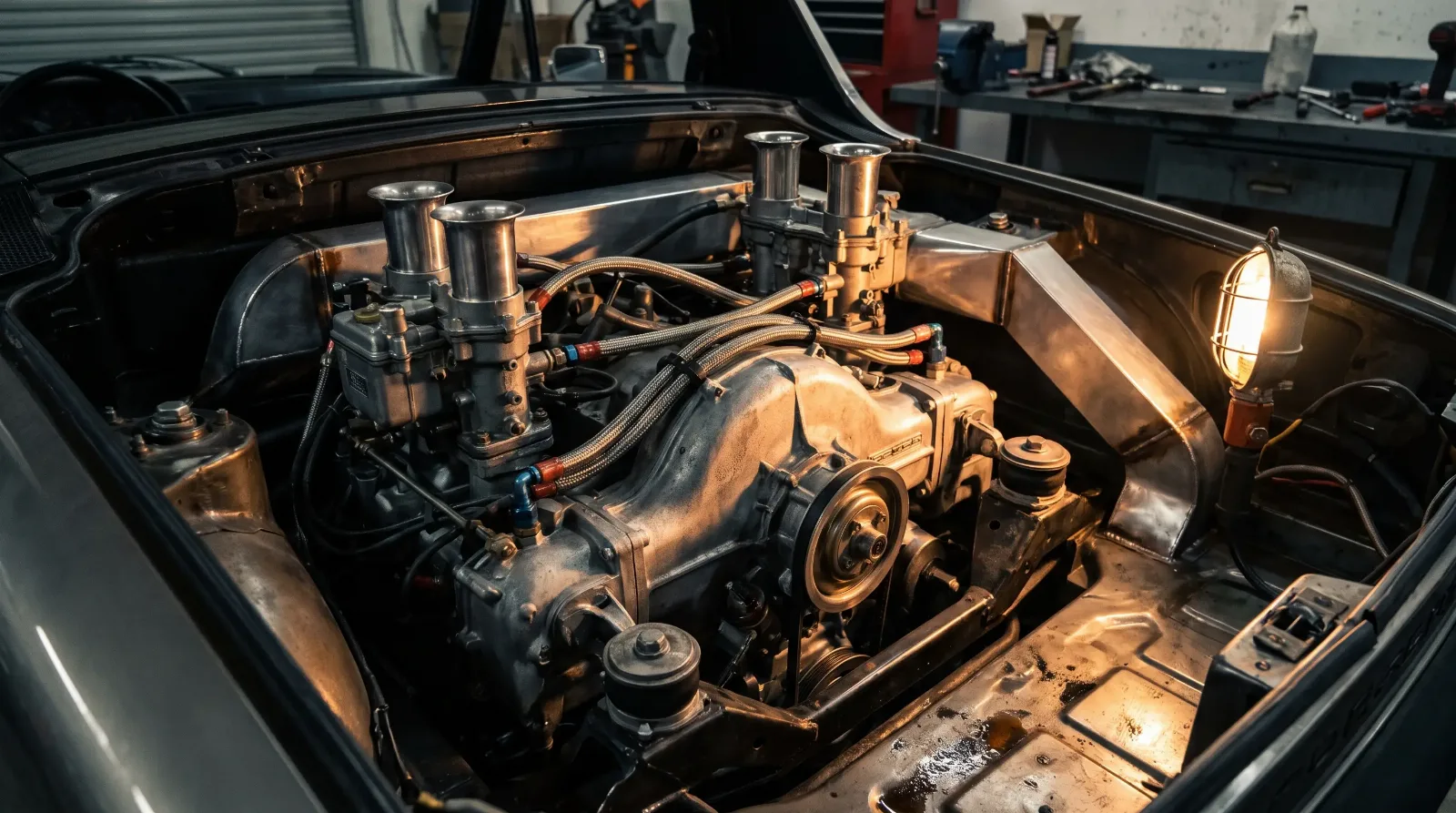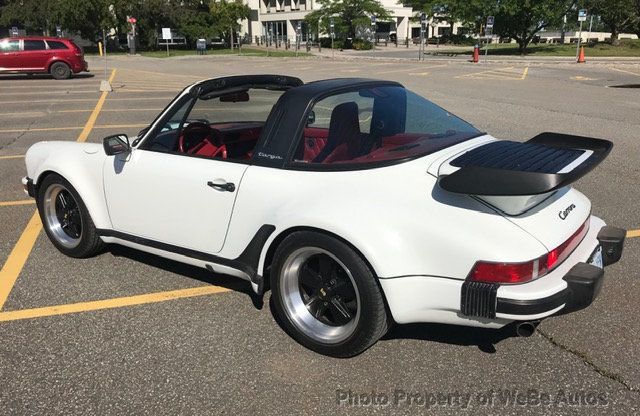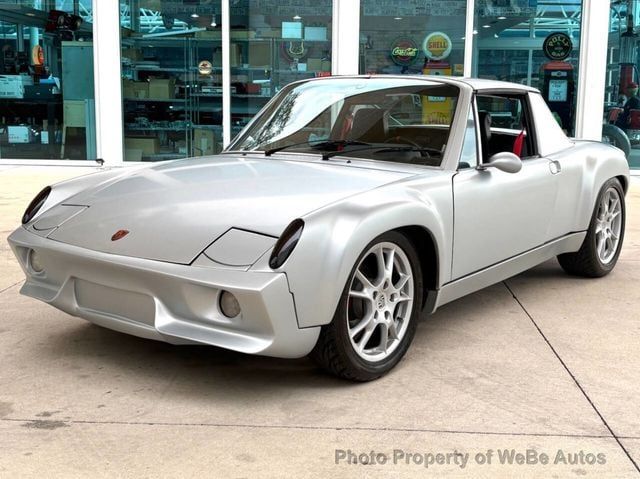
Most conversations about the rarest porsche 914 variants begin and end with the 914/6, the six-cylinder version built for a few short years before Porsche discontinued it. That is the right starting point, but it is far from the whole picture. The 914 program produced a scatter of variants, homologation specials, and near-prototypes that never reached anything like volume production, and several of them are more obscure, and arguably more significant, than the car most people mean when they say "the rare one."
Treating the 914 purely as a shared Volkswagen-Porsche economy car misses what actually happened on the factory floor between 1969 and 1976. Alongside the ordinary four-cylinder cars sold in the tens of thousands, Porsche built small batches meant for racing homologation, engineering trials, and in at least one case a factory exercise so limited that survivors today are catalogued individually rather than counted in production runs.
The 914/6, and why it is rarer than its reputation suggests
The 914/6 used a detuned version of the 911T's 2.0-liter flat-six, producing about 110 horsepower, mounted in the same mid-engine bay as the four-cylinder cars but paired with the 911's five-speed transmission and larger brakes. Porsche built the 914/6 from 1970 through 1972, and total production is generally put at 3,332 cars, a small fraction of the roughly 115,600 four-cylinder 914s that made up most of the model's 118,978-unit total run.
What makes the 914/6 worth separating from ordinary rarity claims is documentation. Six-cylinder cars carry a different chassis number sequence than four-cylinder 914s, and coachwork details, badging, and engine mounts differ enough that an original 914/6 is straightforward to authenticate against a four-cylinder car with a later six-cylinder engine swapped in. That distinction matters enormously to collectors, since the swap culture around this platform is well established and a converted car, however well executed, is not the same object as a factory 914/6.
| Variant | Years built | Approximate production |
|---|---|---|
| 914/4 (four-cylinder) | 1969 to 1976 | ~115,646 |
| 914/6 | 1970 to 1972 | 3,332 |
| 914/6 GT | 1970 to 1972 | Fewer than 40 full-race examples, estimates up to 43 works and customer cars |
| 916 prototype | 1971 to 1972 | 11 built |
The 914/6 GT, built for the track rather than the showroom
Above the standard 914/6 sat the 914/6 GT, a homologation special fitted with flared fenders, a modified suspension, and in most cases engines built to a higher state of tune for FIA Group 4 competition. These cars raced at Le Mans and in European rally events during the early 1970s, and their factory production run was small enough that surviving examples are documented individually by marque historians rather than treated as an anonymous production figure. The GT's flared bodywork is the visual giveaway, wide enough that period photographs make an ordinary 914/6 sitting next to one look almost like a different car entirely.
Originality on a GT is a different kind of question than it is on a standard car, because so much of what made a 914/6 GT a GT was competition preparation done outside strict factory consistency. Two cars built for the same season can differ in engine specification, aerodynamic details, and interior fittings, which means authentication rests more on period race records and chassis-specific documentation than on comparing a car against a single factory reference sheet.
The 916, a car most 914 owners have never seen in person
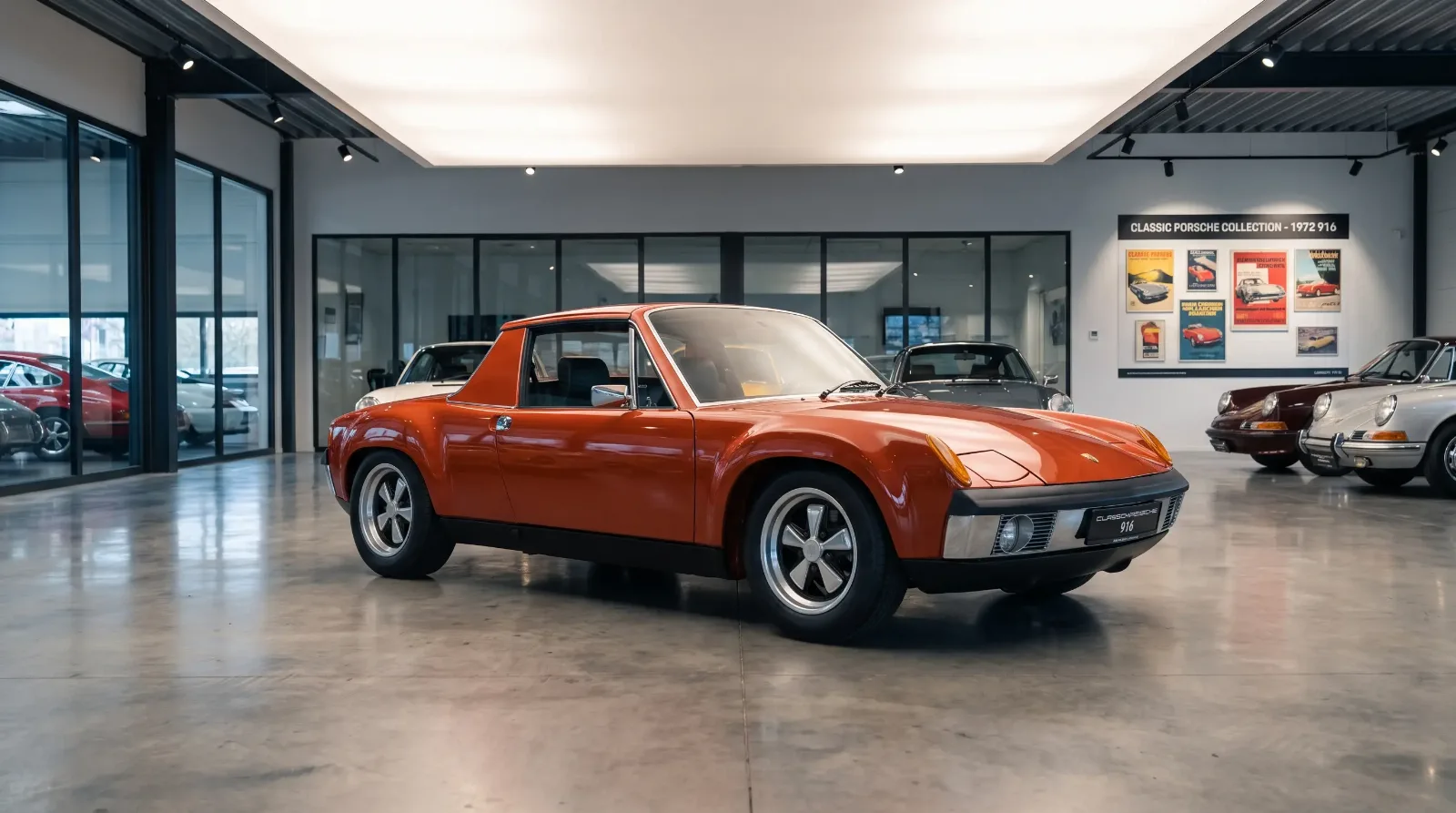
The rarest variant by a wide margin is the 916, a limited engineering exercise built in 1972 using a fuel-injected version of the 911S's 2.4-liter flat-six, fixed steel flares in place of the GT's applied fender flares, and a fixed roof rather than the standard targa panel. Porsche built just 11 of these cars, intended originally as a higher-performance flagship for the 914 line, and abandoned the project when the projected retail price came out close to that of a 911 Carrera, undercutting the entire reason for the 914 program's existence as a more accessible alternative.
"What strikes me about the 916 is how close it came to never existing as a footnote at all. It was meant to be the flagship, the car that justified the whole platform's engineering. Instead it became the rarest thing Porsche built on that chassis, precisely because it worked too well and priced itself out of the job it was designed for."
— Sarah Whitfield
Reading originality across the variant tree
Anyone researching the mid-engine 914 as a collecting category quickly learns that the variant tree matters more here than on most classic Porsches, because the gap between an ordinary four-cylinder car and a documented 916 is not a matter of trim level. It is a matter of an entirely different engineering brief, executed on a shared body structure that most casual observers would never think to separate. Coachwork details, chassis number sequences, and period documentation are the tools that settle these questions, not casual visual comparison, since flared fenders and six-cylinder badges can both be added to a car that started life as something far more ordinary.
That distinction is the reason these variants command the attention they do among Porsche researchers specifically, rather than among collectors chasing rarity for its own sake. A correctly documented 914/6 GT or 916 is a specific historical object with a specific, traceable story, and that traceability is worth more to a serious buyer than any number stamped on a badge. Readers who want the fuller picture of how enthusiasts have modified ordinary 914s to chase that same six-cylinder character should continue to the next story in this set, which covers the swap culture built around cars that were never factory sixes to begin with.